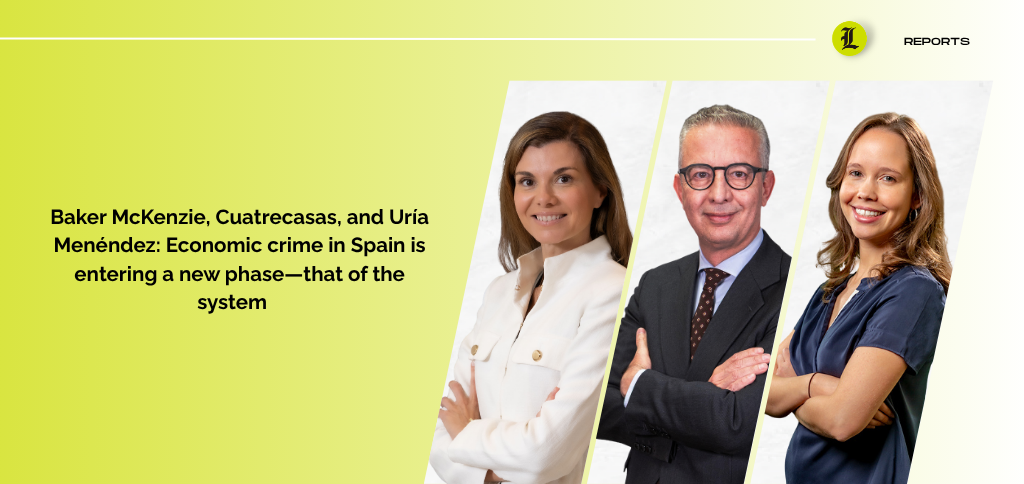



In this third and final installment, coinciding with International Women’s Day, we spoke with Sasha Mirpuri, Communications Leader for Latin America at Baker McKenzie, Helena Gaya Sopena, Director of External Communications at EY Spain, and Constanza Silva Puga, Regional Director of Communications at Philippi Prietocarrizosa Ferrero DU & Uría (PPU), about the evolution of strategic communication in law firms.
According to experts, lawyers are much more aware of the importance of having communication strategies. They state that specialization in corporate communication for the legal sector has become a discipline in itself, requiring technical knowledge and a deep understanding of the sector. Furthermore, law firms have placed communication departments in a strategic position for business and digital transformation.
Regarding whether or not there has been progress in the legal sector in terms of equal opportunities and the promotion of inclusion, the BDs agreed that there is still a long way to go, but the necessary efforts are being made to achieve a more equal and diverse sector.
We also spoke with the communication experts about their more human side, the personal side, the one we sometimes don’t know, but that is there, and that the media rarely makes known.

Sasha Mirpuri is a young woman from Lima, Peru, of Indian and Hindu descent. She was born in Peru but studied in the United States and was a Fulbright scholar from her undergraduate studies. While attending Hofstra University (Long Island), she served as co-chair of the Pride Network, an organization created to foster a safer, more social, stronger, and more unified LGBTQ+ community on campus.
She was also a member of the Public Relations Student Society of America (PRSSA) where, along with a group of students from other universities, she helped non-profit organizations boost their media visibility through interviews, social media, and other platforms.
She has loved music since she was very young. When she was 13, Sasha played saxophone in an Afro-Peruvian jazz orchestra in Lima.
Helena Gaya Sopena prefers getting to know people and being known by them to explaining who she is; however, she did attempt to create a personal profile. She studied journalism out of a sense of vocation and later law, coming from a family of doctors. “I know I made the right choice because ours is a demanding profession, but very rewarding.”
She’s married to Àlex—whom she met at university—and has two mischievous and very funny children, Pau and Oriol, who keep her up at night. She loves walking on the beach or in the mountains, swimming, and making plans with friends… “I always have a million things to do, several places I want to go, plays, movies, and exhibitions I want to see… because I’m very restless. I often think I’ve exhausted my husband, the children, and my family and friends. But for now, they’re all holding up.”
Constanza Silva Puga is a journalist with 25 years of experience in strategic communication, she is married and is the mother of three daughters.
You might be interested in: The communications directors of Fieldfisher, Ontier, Pinsent Masons and RocaJunyent reflect on the strategic communication of law firms (I)
Looking back and comparing it to our present, how much has strategic communication evolved in law firms?
According to Sasha Mirpuri of Baker McKenzie, “lawyers – especially those with decision-making power on boards of directors – are now much more aware of the importance of having a cohesive and efficient communication strategy to prevail with the public by identifying and targeting the right audiences.
Therefore, at an external level we see that firms are increasingly prepared with corporate positioning, good reputation management, and a crisis communications plan.
Likewise, internally, firms keep their employees—both lawyers and other business professionals—much better informed in every respect. Communications are sent out regarding the organization’s strategy, processes, and objectives, and additional channels exist so that members of different offices (if the firm has more than one office and/or is international) can get to know each other, collaborate, and strengthen their work on projects involving different jurisdictions.
For her part, Helena Gaya Sopena of EY continued, noting that “specialization in corporate communication for the legal sector has become a discipline in itself, requiring technical knowledge and a deep understanding of the sector. At the same time, the media has created more space for legal information with the increase in specialized publications, the creation of dedicated sections in major business newspapers, and journalists exclusively focused on the sector who provide valuable information. All of this has compelled law firms to be much more proactive in their communication strategies.”
Constanza Silva Puga, from PPU, said that “law firms have placed communications departments in a strategic position for business and digital transformation, which accelerated post-pandemic, and has been the common denominator for this industry.”
How to balance what is communicated by the firm to gain visibility, positioning and reputation with the protection and discretion inherent to law firms regarding their clients and matters?
Sasha Mirpuri of Baker McKenzie said, “For a transaction and/or advisory engagement to be disclosed, authorization from the client must first be obtained. If it is a confidential matter, it could not be disclosed through traditional channels (media, social networks, etc.). However, it could be reported to international directories, expressly stating its confidentiality. In this way, the firm would have a better chance of being ranked in the practice area where the advisory engagement took place.”

To the above, Helena Gaya Sopena of EY added that “confidentiality and discretion are in our DNA and can coexist perfectly, as the profession is demonstrating, with communication and marketing strategies to improve our reputation and knowledge in the market, especially among our main stakeholders.”
Constanza Silva Puga, of PPU, asserted that “lawyers are very clear about which topics can be discussed and which are strictly confidential. The client is in charge, and that is the limit.”
For the experts, it’s clear that the legal profession has grasped the importance of communication. Sasha Mirpuri believes that, although there’s greater understanding, “there’s still room for improvement.” She noted that many, “both inside and outside the field, continue to wonder what a communications specialist does in the legal sector. While the answer is broad, some examples include drafting all kinds of press releases, media relations, disseminating information about the firm’s transactions, managing social media, and ensuring that clients (current or potential) are aware of the firm’s experience and expertise so they can ultimately hire it.”
According to Helena Gaya Sopena, “what is not explained is interpreted. The legal profession has understood this, although at times certain obstacles or reluctance must be overcome. That is why it is important to remember that communication is a strategic pillar of our firms.”
Meanwhile, Constanza Silva Puga noted that “absolutely. Lawyers are, in essence, intelligent and astute professionals and quickly understood that what is not communicated, does not exist.”
How much has the culture and mindset of law firms changed?
Sasha Mirpuri of Baker McKenzie says, “The legal profession has changed more in the last 20 years than in the previous two centuries. As part of this transformation, investment in the legal technology market is constantly accelerating: the COVID-19 pandemic has acted as a catalyst, but more importantly, lawyers have come to understand the relevance of digital transformation to the practice of their profession and the evolution of their careers.”
For offices, the pandemic also accelerated the inevitable: a more flexible culture. From the implementation of a hybrid model to a more casual dress code, people are thinking more about comfort and practicality.
Meanwhile, Helena Gaya Sopena of EY said that “firms are striving to adapt to the new reality marked by innovation and digitalization, in which the pandemic has acted as a driving force for change. The legal sector has stepped out of its comfort zone, and it is our task as communications teams to keep them there.”
We have also made progress on crucial and priority issues such as sustainability and social impact. A few days ago, we learned the results of Merco—the benchmark index for reputation. EY has climbed 18 places in the category of the most responsible companies in Spain, reaching 62nd place, and is ranked number 1 within our sector. Furthermore, within the three categories analyzed (Environment, Social, and Governance), its 48th position in social impact stands out.
Another aspect we’ve focused on at EY is flexibility. This doesn’t mean abandoning our values, but rather finding creative ways to apply them in a constantly evolving world, while maintaining our ethics and responsibility at all times.”
Finally, Constanza Silva Puga, from PPU, believes that “it has evolved with the times, but always with a cautious approach, which allows for a slightly slower but steady progress. Law firms don’t sell a mass-market product. In the case of PPU, it offers sophisticated, regional legal advice, so internal and external communication must be consistent with that identity and always up to par. Simply being visible has never been our policy.”
How beneficial is the development of marketing, communication, and business development strategies for the legal sector?
Sasha Mirpuri of Baker McKenzie emphasized that “all three are necessary strategies to generate opportunities for the firm. In the case of marketing and business development, the focus is on building new relationships and identifying revenue streams, for example, through cross-selling to existing clients and adding new practice areas to the organization. Furthermore, clients are increasingly requesting proposals that require considerable resources and time to prepare. Until recently, many firms lacked the resources or business processes to meet this new demand. Skillfully crafting a proposal can determine whether or not a firm wins a project or consultancy engagement.”
In terms of communication, I would emphasize the value of disseminating information about operations to the media in order to give visibility to the work and/or awards that the firm supports, as well as reports prepared by the different practice areas whose information may be relevant to the target audience.Furthermore, communication is key to maintaining and growing reputation.”
Helena Gaya Sopena, from EY, followed, noting that “these are fundamental elements. Protecting our reputation means differentiating ourselves among our stakeholders. Communication efforts allow us to create solid, two-way relationships between the firm and our audiences in a transparent and fluid way. That’s why we’ve moved from storytelling to storydoing.”
For her part, Constanza Silva Puga, from PPU, highlighted that “it is beneficial because in an increasingly competitive environment, lawyers can continue to dedicate themselves to what they know how to do, which is providing excellent legal advice, and the National Relations and Communications departments take care of market intelligence and discriminating and generating quality content.”
Looking to the future of legal marketing, what opportunities do you think are coming up in the profession?
Sasha Mirpuri of Baker McKenzie said, “In recent months, openAI developed ChatGPT, which launched in late 2022 and has taken the world by storm. From a marketing perspective, we’ve seen ChatGPT and other AI technologies capable of writing blog posts, determining SEO keywords, creating FAQs, generating social media posts, and much more.”
These tools will not replace the work of marketing and/or communications teams, but will facilitate some tasks, thus leaving more time for strategic planning.”
According to Constanza Silva Puga, from PPU, “continue implementing technology tools and always be at the forefront.”
You might be interested in: The communications directors of Ceca Magán, CMS Albiñana, Clifford Chance and Gericó Associates reflect on the strategic communication of law firms (II)
From your perspective, how important is it for the firm, its lawyers, and clients to appear in legal rankings?
Sasha Mirpuri of Baker McKenzie stated that “whether we like it or not, legal directories are used by clients, prospects, and the press. While the decision to hire one firm over another for a matter will never be based solely on a directory ranking (or lack thereof), it does help identify which firms or lawyers are experts in different practice areas. Rankings definitely have some influence on the decisions of clients or prospects.”
Helena Gaya Sopena, from EY, followed, noting that “all those rigorous and independent rankings that endorse our work and effort are important, and we take them very much into account at our firm. It’s common to do an internet search before choosing an advisor or lawyer, and appearing in these legal rankings is a plus for our professionals’ positioning.”

According to Constanza Silva Puga of PPU, “in reputational terms, always occupying a good place in a prestigious ranking validates your position in the market and among your peers.”
How do you lead in such turbulent times as these?
Sasha Mirpuri of Baker McKenzie believes that “good leadership is inclusive and that leaders must commit to ensuring that all team members are treated fairly, feel a sense of belonging and value, and have the resources and support they need to reach their full potential.”
Helena Gaya Sopena, from EY, pointed out that “from transversality, flexibility, analytical capacity and being side by side with the team.”
Constanza Silva Puga, from PPU, added that “with horizontal leadership, where all members of the firm have space to develop their capabilities, skills and talents.”
One of the issues that is always at the forefront is how much progress has been made in the legal sector in terms of equality and whether law firms are truly making an effort to ensure that women can develop professionally without hesitation in balancing their personal and professional lives.
Today, International Women’s Day, communications experts responded that “progress varies by region; however, there is still a long way to go to achieve gender equality in the legal sector overall.” Sasha Mirpuri of Baker McKenzie said she is “proud to be part of the first firm globally to establish 40:40:20 gender targets, representing 40% women, 40% men, and 20% flexible (women, men, or non-binary individuals). We are currently continuing with our aspirational goal for 2025, seeking to achieve equity in leadership roles and on the firm’s committees.”
Helena Gaya Sopena of EY added that “gender equality is a priority in the legal sector, and in recent years great efforts have been made to advance in this area. Policies and practices have been established to promote inclusion and equal opportunities, and while they are beginning to bear fruit, they are still not enough, so we must continue to move forward.”
To the above, Constanza Silva Puga, from PPU, added that “the legal industry has advanced, as have all sectors. For PPU, diversity, equity, and inclusion are strategic values and essential elements of its success and purpose of professional, business, and social excellence.”