

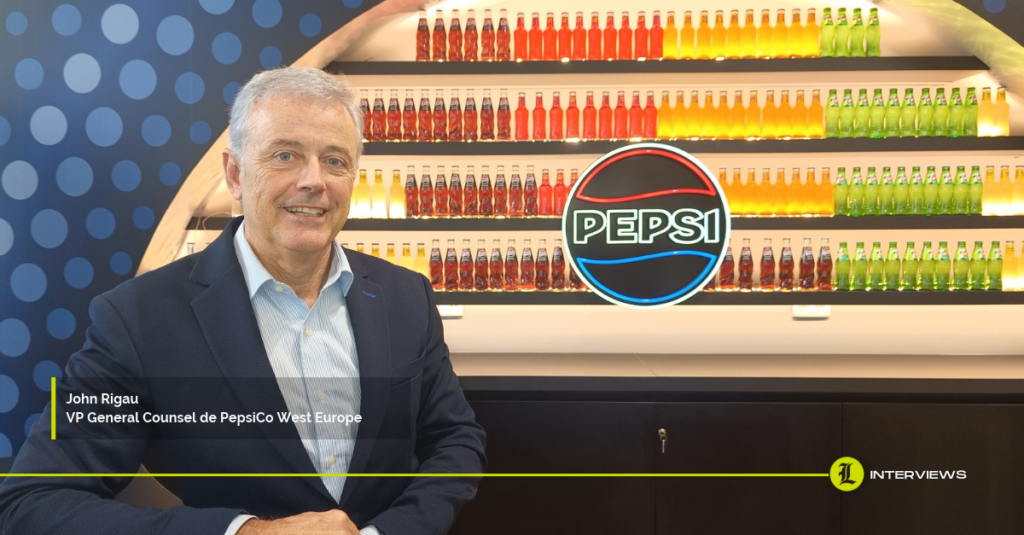
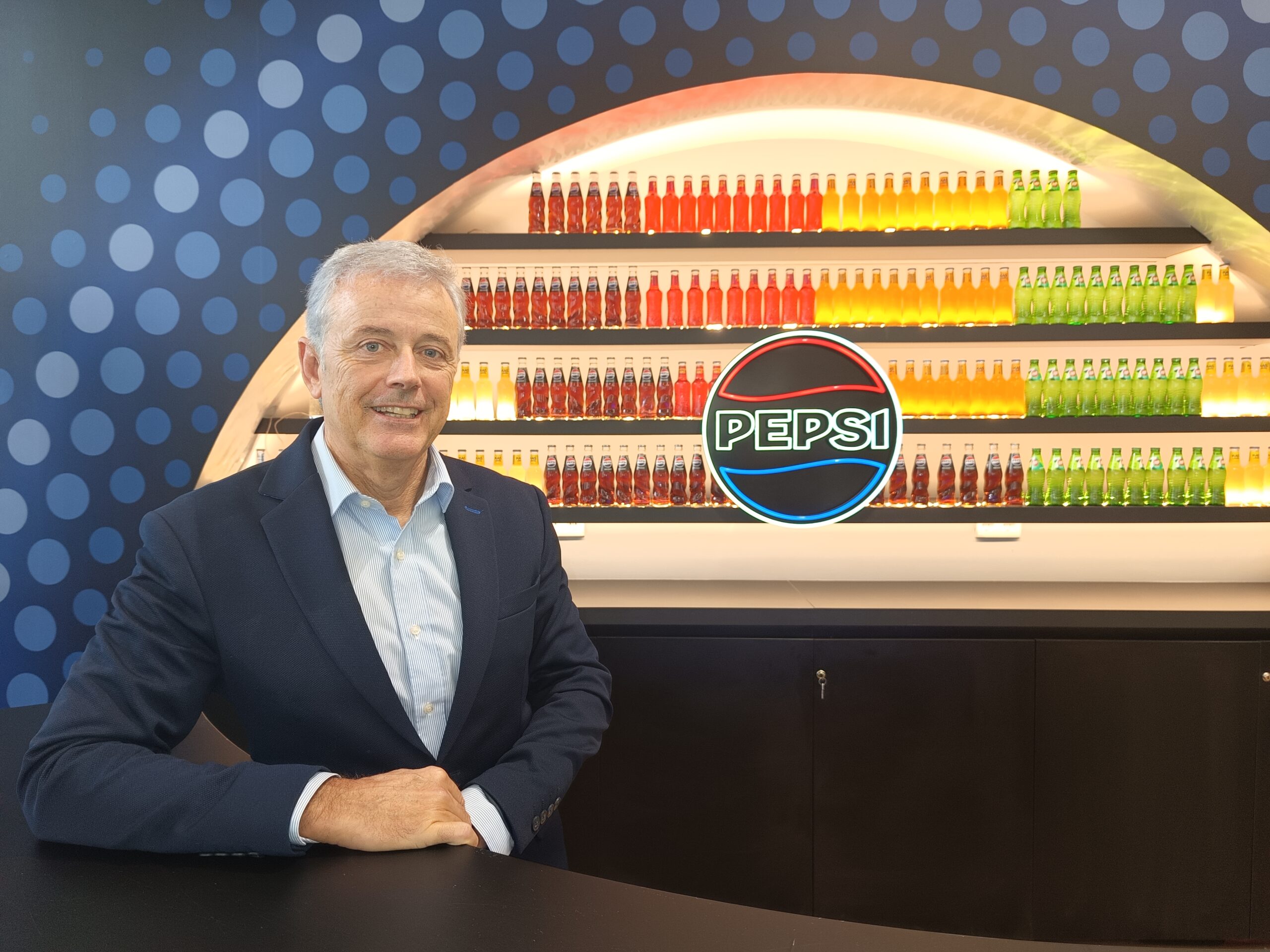
Five years after his last conversation with Líder Legal, John Rigau, VP General Counsel of PepsiCo West Europe, explains that his leadership style has evolved toward talent development and collaboration. His goal is for teams to have “the necessary context and confidence to make decisions.” In a legal function organized into hubs in Barcelona, Paris, Utrecht, and Frankfurt, this confidence translates into lawyers leading projects and taking ownership of the results. Rigau believes it is essential that everyone also knows when a matter should be escalated within the organization. He sees artificial intelligence as a support for this model, because it allows more time to be dedicated to strategic activities, although he cautions that it will never replace the lawyer’s professional judgment. For Rigau, the manager is at the service of the team: “I always say that the role of managers is to remove obstacles and help the team succeed.”
It’s been five years since our last conversation at Líder Legal. What has changed in your leadership style since then?
Five years at an organization like PepsiCo is a long time. During this time, we’ve evolved our Western Europe Legal function, integrating it into a broader and more diverse EMEA (Europe, Middle East, and Africa) structure, encompassing both mature markets and others with enormous growth potential.
We have also experienced a profound transformation of the legal function. Today we are much more focused on generating tangible value for the business, simplifying, eliminating operational complexity, digitizing, and implementing processes with artificial intelligence.
Personally, I believe I’ve evolved toward a leadership style more focused on developing talent, fostering collaboration, and helping teams gain the context and confidence they need to make decisions. Ultimately, leadership is less about having all the answers and more about creating the conditions for the team to perform at its best.
Your legal team works in different European jurisdictions, in a coordinated manner and close to the business. What does it take to lead a team with that model?
Our Western Europe team is organized into different hubs located in the markets where the business is most relevant. From Barcelona we focus on Spain, Portugal, and Italy; from Paris on France; from Utrecht we support Benelux and the Nordic countries; and from Frankfurt we support Germany, Switzerland, and Austria.
Leading a team like this requires striking the right balance between being close to the business and maintaining consistency as a legal function. We want to be involved in local decisions and understand the specific needs of each market, but at the same time, we want to act as a single organization that shares values, resources, talent, and best practices.
It also involves strengthening Legal’s role as guardian of PepsiCo’s corporate values, protecting the company’s reputation and managing risks with the least possible impact to accelerate business growth.
One of your convictions is that it makes no sense to hire intelligent people and then tell them what to do. How does that idea translate into your leadership style?
We firmly believe in the autonomy and empowerment of our lawyers. It’s part of PepsiCo’s culture and how we work.
We strive to give each professional the opportunity to lead projects, make decisions, and take ownership of the results. This allows us to be more agile and spend less time on control or reporting processes that add little value.
At the same time, it is crucial that every lawyer understands when a matter has broader implications for the company and needs to be escalated within the organization. This isn’t about telling people what to do, but about creating a culture based on trust, accountability, and risk anticipation.
I always say that the role of managers is to remove obstacles and help the team succeed. In a way, the traditional pyramid is inverted.
Artificial intelligence is accelerating the digitization of legal work. What role does it play in the transformation of your legal team?
I believe that artificial intelligence represents the most important transformation for the legal profession in decades. It’s not simply about doing what we already do today faster, but about rethinking how we work and how we generate value.
My goal is to build a more agile, efficient, and business-focused legal function, and AI is a fundamental tool for achieving this. It helps us access knowledge faster, increase productivity, and dedicate more time to strategic activities.
However, AI will never replace a lawyer’s judgment, experience, or professional expertise. Its true value emerges when combined with a deep understanding of the business and a strong ability to manage risk and make decisions.
We will also see significant changes in the relationship with external firms, because both in-house teams and law firms will have access to similar tools. The difference will continue to lie in the quality of judgment and the ability to provide practical solutions.
Health and sustainability are increasingly shaping consumer trends, in a context of intense legislative activity. What challenges does this scenario pose for those leading the legal function?
At PepsiCo, we understand sustainability as an essential part of our business strategy and long-term value creation. Through our Pep+ agenda, we work to promote regenerative agriculture, reduce emissions, better manage water, advance packaging circularity, and continue evolving our product portfolio.
For those of us who lead the legal function, the challenge lies in helping to transform that ambition into real, measurable, and verifiable results. Increasing regulatory complexity demands close collaboration with the business to ensure that our initiatives comply with new legal requirements and meet the expectations of consumers, clients, and regulators.
Our role is not solely to manage risks. We must act as responsible facilitators of transformation, helping the business move forward and communicate its progress clearly, transparently, and credibly. When companies are able to demonstrate results, not just intentions, they help build the trust that consumers expect.
You are a member of the jury for the 2026 National Law Gala – Legal Leadership Awards , which recognize excellence in marketing, communication, and business development within the legal sector. What role does communication play today in building a lawyer’s personal brand?
First, I want to thank initiatives like the Legal Leadership Awards for giving visibility to in-house talent. For a long time, the conversation focused mainly on law firm brands, and perhaps less so on the value that in-house lawyers bring.
Personal branding is important, but I believe it should be the result of a job well done, a solid team, and an organization that offers you opportunities to grow and develop.
Communication helps to make that journey visible and to share experiences, but true reputation is built by consistently providing value, generating trust, and helping the people around you grow. In my experience, the best personal brands are often those that are more focused on collective success than on individual recognition.
The conversation with John Rigau reveals a recurring theme throughout his answers: credibility is earned through demonstrable results. Regarding sustainability, Rigau points out that the legal challenge lies in translating the ambition of the Pep+ agenda into “real, measurable, and verifiable” outcomes. In the legal market, he anticipates changes in the relationship with external firms, as in-house teams and firms will have access to similar AI tools. He notes that the difference will continue to lie in the quality of judgment and the ability to provide practical solutions. The same logic guides his view of the in-house lawyer’s personal brand, which he considers a consequence of high-quality work and a strong team. For Rigau, the best personal brands are those focused on collective success.