

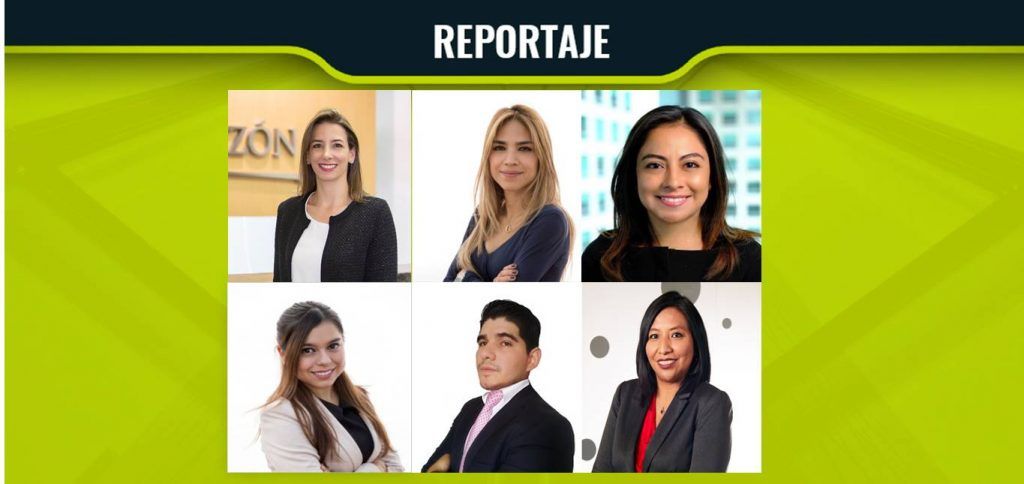
In previous reports, we discussed the need for women to have quality jobs that guarantee them a sufficient salary to overcome poverty, providing them with self-sufficiency and economic security. We spoke with experts about the factors affecting women’s labor force participation, how to achieve a more inclusive Latin America, and what labor-related issues remain unresolved in Latin America regarding the protection of women.
In this edition, we discussed how to build systems, in general, that equalize opportunities for women compared to men, we consulted experts on the five challenges facing Latin America to achieve real equality, and looking to the future, specialists put forward the laws that are urgently needed in Latin America regarding gender.
According to Sonia González, associate at Mijares Angoitia (Mexico), the best way to build systems that equalize opportunities for women compared to men is by “implementing public policies, introducing equality criteria in the three levels of government and the three branches of the Mexican State.”
Natalia García, a partner at Gómez-Pinzón (Colombia), stated that these systems are built by “raising awareness within organizations about the benefits of diversity and inclusion in terms of financial performance, market value, corporate transparency, responsiveness to market demands, innovation, and reputation. Likewise, leaders and other members of companies should be encouraged to participate in workshops that allow them to identify unconscious biases, perceptions, and stereotypes, so that these do not affect the evaluation of a woman in the workplace during hiring, retention, or promotion.”
Mariana Vargas, a senior associate at Basham, Ringe (Mexico), believes that education is fundamental to building any system, and “it carries a meaning beyond intellectual learning. Education also refers to the process of understanding and achieving self-recognition, both as individuals and as a society, that allows us to develop, evolve, and, of course, build. It is important that we understand and are informed about what gender equality entails, that both men and women understand our reality and the challenges we face in this area. We cannot build if we don’t know where we stand. We need to recognize that men and women have differences, but this does not mean that opportunities should be different, much less that these differences should create obstacles. Equality must begin within our families and permeate our workplaces, where talent is the gateway to opportunities.”
For her part, Tania Neri Gutiérrez, senior associate at AVA Firm (Mexico), stated as a starting point “the creation of gender equality plans in each country that express their commitments to equality and that constitute the axis around which internal public policies should be governed. These policies should undoubtedly aim to improve the living conditions of women as well as guarantee their human rights.”
If we could talk about five challenges that Latin America faces in achieving real equality between men and women, what would they be?
Alfredo Chávez, consultant at AVA Firm (Mexico):
- Homeschooling so that there is no distinction between men and women.
- Social communication to promote values.
- Elimination of patriarchy and sexism.
- Promotion of jobs with equal working conditions and equal pay.
- Apply incentives to institutions to promote gender equality.
Sonia González, associate of Mijares Angoitia (Mexico):
- Women’s economic empowerment.
- Active parental co-responsibility, meaning that the task of educating and caring for sons and daughters is not solely the exclusive responsibility of women.
- Comply with existing laws, because although the criminal justice system has transformed with respect to gender violence, this has been a problem that continues to this day. Authorities must prosecute those guilty of violence against women and provide reparations and solutions to women for the violations they suffered in order to put an end to impunity.
- Ensure an education system that empowers girls and boys in ways that promote gender equality and solidarity.
- Include young people in the dissemination and implementation of current policies, as they will be the next advocates for change.
- To give women the opportunity to develop in fields that have been exclusively for men (technology, construction, etc.).
Meanwhile, Natalia García, partner at Gómez-Pinzón (Colombia), pointed out that the challenges to be faced are “a machista culture, domestic violence, inequality in the distribution of domestic burdens, wage inequality, and higher unemployment among women compared to men.”
Mariana Vargas, senior associate at Basham, Ringe (Mexico), highlighted the following challenges: “The elimination of violence against women is urgent in Mexico and Latin America, and gender-based violence and femicides must be addressed. I think a very obvious one is women’s labor equality and economic independence, equal paternity leave in the workplace, and flexible working conditions that allow both men and women to maintain a fulfilling personal life, not just a professional one. Gender equality from a social perspective is also crucial; we need to break down paradigms and social stigmas. Women in Latin America are undervalued, but at the same time, men have labels and a certain social burden, such as being seen as merely providers.” Women’s Empowerment. Women need to recognize our differences and qualities, understand the tools we have at our disposal, acquire the necessary resources, and know that we are capable of accessing decision-making and leadership positions. Of course, this leads us to the challenge for society as a whole: to build systems and structures that allow women access to these leadership and decision-making positions.
Together with experts, we looked to the future, and Natalia García, a partner at Gómez-Pinzón (Colombia), told us what she believes are the most urgent gender-related laws in Latin America. “Gender equality must be a priority on the public policy agenda of every Latin American country, and there is much work to be done on issues such as domestic violence, equal pay, extended maternity and paternity leave, quotas, incentives to hire female talent, and reducing the unemployment rate, among others.”
Meanwhile, for Sonia González, associate at Mijares Angoitia (Mexico), the laws that are urgently needed are “the right to childcare in the workplace, the implementation of gender parity, primarily in public and private workplaces, and the implementation of an education that eliminates stereotypes deeply rooted in society.”
To this, Mariana Vargas, senior associate at Basham, Ringe (Mexico), responded that what is needed are “laws against gender violence, including domestic violence and digital violence and cyberbullying, paternity rights for men, decriminalization of abortion and the creation of laws that guarantee equal pay.”
For her part, María Angélica García Pinto, an attorney at AVA Firm (Mexico), said that “currently there are a large number of laws and international instruments that seek to support women, so I don’t believe the problem lies primarily in a lack of regulations, but rather in a lack of compliance. Some examples we can see in Mexico are the 2019 reform to the Federal Labor Law, which requires employers to implement a protocol to prevent discrimination based on gender and to address cases of violence, harassment, or sexual harassment; however, most companies have not implemented this protocol to support women and even men who have also been victims of such conduct.”
Furthermore, we must not forget that on October 23, 2018, NOM-035-STPS-2018 was published, which, among other things, seeks to prevent workplace and sexual harassment within companies; however, it has not received the dissemination and importance that it should from companies.
It is important that workplaces themselves begin to comply with the regulations in force in all countries to prevent inequality between men and women, and not only the regulations they choose; as well as that authorities begin to be trained so that the laws that already exist and are being overlooked are enforced.”
But what do experts say about the World Economic Forum’s 2020 Global Gender Gap Report, which warned that it will take the world a century to achieve equality between men and women, and that Latin America and the Caribbean will take 56 years to close that gap?
Mariana Vargas, senior associate at Basham, Ringe & (Mexico), “I believe that much more decisive actions must be implemented by political and governmental actors. I think the private sector must play a much more proactive role in contributing to reducing this gap. We must not forget that various analysts have considered that as countries achieve the reduction and eventual eradication of this wage gap, it would be reflected in an increase in Gross Domestic Product. As I mentioned before, education and the normalization of issues of gender equality, inclusion, and diversity will play a fundamental role in the evolution of our country and the rest of Latin America.”
Natalia García, partner at Gómez-Pinzón (Colombia), “efforts to close the gap must be intensified with the help of all members of society with concrete and achievable actions and objectives that seek greater results in the short term (five-year action plans to change current trends).”
María Angélica García Pinto, lawyer at AVA Firm (Mexico), “Many of the countries included in this report have made significant progress in recent years towards achieving gender equality, especially in health and education, where the gap is closer to disappearing.
However, I believe it is essential that all countries focus on reducing the equity gap that currently exists in matters of economic and political participation, as these are the most concerning issues.”
Sonia González, associate at Mijares Angoitia (Mexico), “Significant progress has been made in the last 30 years toward gender equality; however, the COVID-19 pandemic has caused a setback in this area, as many women have either lost their jobs to perform domestic chores and care for their families, or have voluntarily chosen not to return to work during the crisis because they have no one to leave their children with, since, as is well known, public and private schools have remained closed for almost a year. Therefore, governments must, now more than ever, emphasize policies that reduce the inequalities between men and women.”
Alfredo Chávez, consultant at AVA Firm (Mexico), “I believe that in Latin America we have ingrained machismo and patriarchy as a behavior that has been part of our culture for years, but that must disappear as soon as possible, starting within the family, since parents are the primary teachers of the behaviors our children learn. If we begin today to change our behaviors and teach our children that men and women have similar aptitudes and abilities, in the future we won’t have to talk about gender equality.”
How to achieve greater representation of women in management or leadership positions?
Natalia García, partner at Gómez-Pinzón (Colombia), “Currently in Colombia, only 17% of board members are women, and out of 130 securities issuers, 48 do not have a single woman on their boards. The goal is to change this trend so that in the coming years, 30% of board positions will be held by women, representing a critical mass and contributing their expertise to generate greater diversity.”
To achieve this, several efforts are underway, one of them led by a highly regarded university in Colombia (Colegio de Estudios Superiores de Administración – CESA). Together with various institutional and private partners, they are not only compiling a database of resumes of leading women in different sectors to be considered in selection processes for these positions and help close the gender gap, but are also training them in corporate governance so they can contribute to companies with best practices. This initiative already brings together 120 women, 80% of whom have held positions on boards of directors in Colombia, and it is expected that this number of women will continue to rise to achieve greater representation in senior management positions nationwide.
Sonia González, associate at Mijares Angoitia (Mexico), “In recent years the proportion of women in senior management positions has increased; however, they are still a minority in management positions compared to men. I believe that many organizations do not pay attention to gender parity within their organizations, so it is important to promote it within management committees, with the purpose of boosting the development and retention of female staff.
Creating an inclusive environment is essential to attracting and retaining top talent, including female talent. A key element in fostering this type of culture is ensuring that people feel they can freely express their opinions, however different they may be from others, that they can make small mistakes without being censored for them, and that managers are willing to listen to their ideas.
Mariana Vargas, Senior Associate at Basham, Ringe (Mexico), “It’s important to recognize talent regardless of gender. I believe that current leaders, both men and women, have a responsibility to consider talent for leadership positions. Furthermore, female talent must be supported, not only because they are women, but because historically we have this misconception that women cannot or should not reach these positions. Therefore, conscious support from current leaders is necessary to motivate women to apply and strive for these roles, with the assurance that they will be recognized for their talent.”
Women need to see themselves reflected in other women so they know they can aspire to and reach those leadership positions. Throughout history, we’ve been taught that as women and men we should have certain roles, and that’s what we learned. Today, we must learn that we have the freedom to decide.
Tania Neri Gutiérrez, senior associate at AVA Firm (Mexico), “Starting from the premise that, unfortunately, the inequality in question constitutes a historical, cultural, and/or social issue, I believe it is vitally important that we begin to promote, raise our voices, and/or request the necessary support to access these kinds of positions; even more so when, currently, there are a large number of perfectly qualified women who have all the preparation, knowledge, characteristics, and tools necessary to successfully carry out the projects entrusted to them and/or placed in their hands.
In addition to the above, I believe that both the public and private sectors need to adopt certain internal organizational policies that ensure senior management or leadership positions are filled by both men and women, plans that promote the female workforce—such as continuous training, mentoring, coaching, career development plans, management support—salary equity programs, developing and implementing measures against harassment and sexual harassment, maternity leave, and/or programs that allow for flexible work schedules as long as the established objectives are met.
Likewise, I firmly believe that all of us women who hold management and/or leadership positions must encourage, support, guide, and mentor female talent so that they acquire the knowledge, tools, and confidence necessary for optimal, outstanding, and excellent career growth.”
What achievements can be seen –in your country and in Latin America– in terms of gender equality, diversity and reducing the wage gap?
Sonia González, associate at Mijares Angoitia (Mexico), “mainly the reforms to the Federal Labor Law of May 1, 2019 and January 12, 2021, since Article 132 Section XXXI mentions for the first time as an obligation of employers to implement a protocol to prevent discrimination based on gender and to address cases of sexual harassment or abuse (although in these latter issues regulatory legislation is lacking).
In relation to teleworking, the employer has the obligation to promote a balance in the labor relationship so that employees enjoy dignified, decent work and equal pay. Furthermore, the employer must observe a gender perspective that allows for the reconciliation of personal life and the availability of teleworkers.
In terms of unions, efforts will be made to promote the presence of women and increase their activity in this sector under the gender parity initiative.
Likewise, as a result of the procedural reform to the Federal Labor Law, the need arose to create the new labor courts, and with this, the first 45 judges were appointed, of which 23 are women and 22 are men, thus fulfilling gender parity.”
Mariana Vargas, senior associate at Basham, Ringe (Mexico), “There is a Mexican Standard on Labor Equality and Non-Discrimination (NMX R 025 SCFI 2015) which is a voluntary certification mechanism to recognize workplaces that have practices in labor equality and non-discrimination to promote the integral development of workers.
In 2018, the Supreme Court of Justice of the Nation ruled that the voluntary enrollment of domestic workers in the Mexican Social Security Institute (IMSS) was discriminatory. As a result, in 2019 several amendments were made to the Federal Labor Law and the Social Security Law to recognize the rights of domestic workers, as well as the implementation of a pilot program for their enrollment.
Also, in 2018, Mexico managed to reduce the wage gap by around 5% according to the World Economic Forum’s Global Gender Gap Index.Furthermore, we can see greater representation of women in political positions such as Secretaries of State, state governors, and presidents of the Senate and the Chamber of Deputies. As of 2020, the Supreme Court of Justice of the Nation has three female justices among its 11 positions. Likewise, in 2021, women have assumed leadership roles in bar associations and law schools.
In terms of diversity, more and more states in Mexico are allowing same-sex marriage and adoption by same-sex couples. Similarly, legislative initiatives have been proposed to safeguard the culture and identity of Indigenous and Afro-Mexican communities.
Natalia García, partner at Gómez-Pinzón (Colombia), “I hardly see any achievements in terms of gender equality, as the pandemic has increased inequalities, female unemployment, and reversed the few advances that had been made to date. I see a lot of work to be done.”
Why is the Anglo-Saxon world more advanced in diversity and equality policies than Latin America?
Natalia García, partner at Gómez-Pinzón (Colombia), “In Latin America, this discussion is only just beginning, so it’s still not common to see companies committing to specific, achievable goals. The issue needs to be developed further, awareness needs to be raised about the importance of diversity and inclusion within organizations, and regular metrics need to be established to reflect the current situation within companies and provide a realistic picture of the situation. This would foster interest in setting goals for greater diversity that can be met at all levels, including senior management, with the support of organizational leaders.”
Mariana Vargas, senior associate at Basham, Ringe (Mexico), “In Latin America, the cultural (and even religious) aspect plays a fundamental role. For the most part, starting with Mexico, we are countries with a traditionally machista culture; Mexican men are almost synonymous with “machos.” Countries like Mexico find it difficult to shed this idiosyncrasy that has been passed down from generation to generation.
Likewise, education (literacy) represents a fundamental aspect; for example, in Mexico, the literacy rate for women remains lower than that for men, and although the gap has narrowed, current indicators still show a lower level of education for women.
And finally, but no less importantly, the issue of security is a factor that directly influences this, since, while in the Anglo-Saxon world the focus is on building policies of diversity and equality, in Latin America and especially in Mexico, many of the efforts, and quite rightly so, are concentrated on eliminating gender violence and femicides.”
María Angélica García Pinto, lawyer at AVA Firm (Mexico), “I think the reason for this imbalance stems from the fact that the Anglo-Saxon world began to anticipate the inequality that existed between both genders; for this reason, starting in the seventies, these situations began to be regulated in order to eradicate them, through the well-known “feminist jurisprudence”, in which the understanding and regulation of the complex reality that women experienced in relation to men was sought.
In other words, the strategy of equal opportunities between both genders emerged in the Anglo-Saxon world; which has resulted in both its legal and political systems aiming to eradicate the problem.
Meanwhile, in Latin America, the inequality between men and women has not even been acknowledged by society as a whole; this has resulted in years of disadvantage compared to the Anglo-Saxon world. Not to mention that the existing regulations are not enforced by the authorities.