

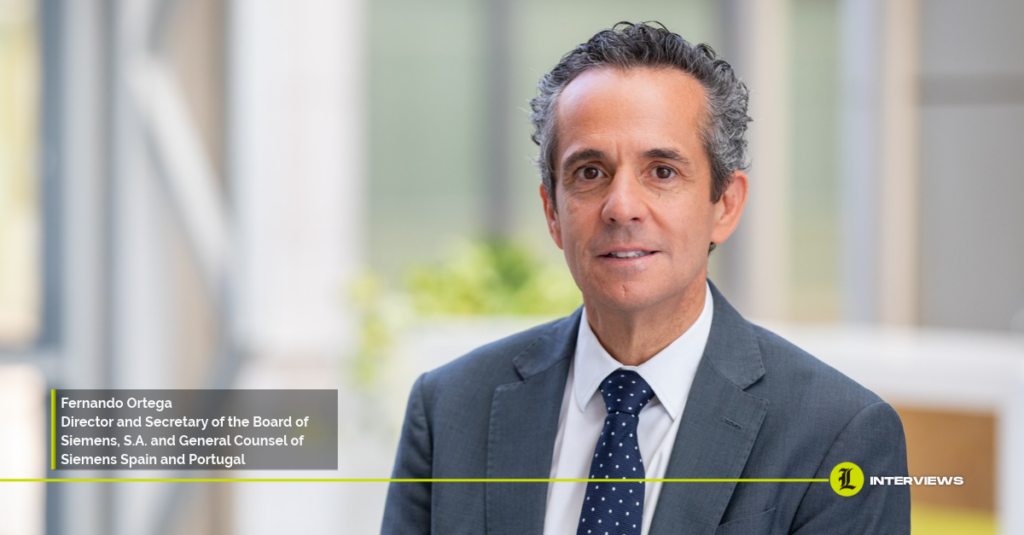
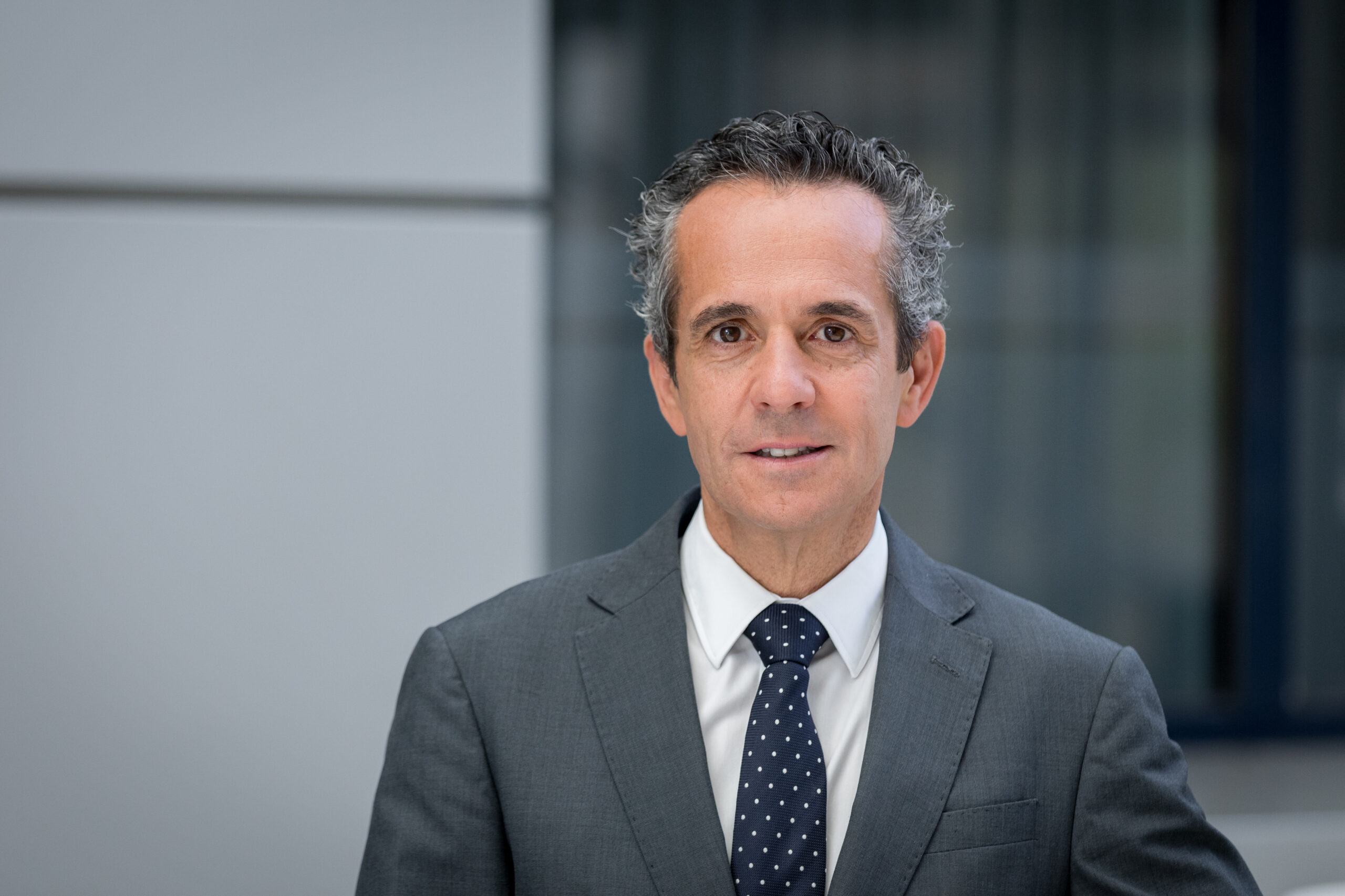
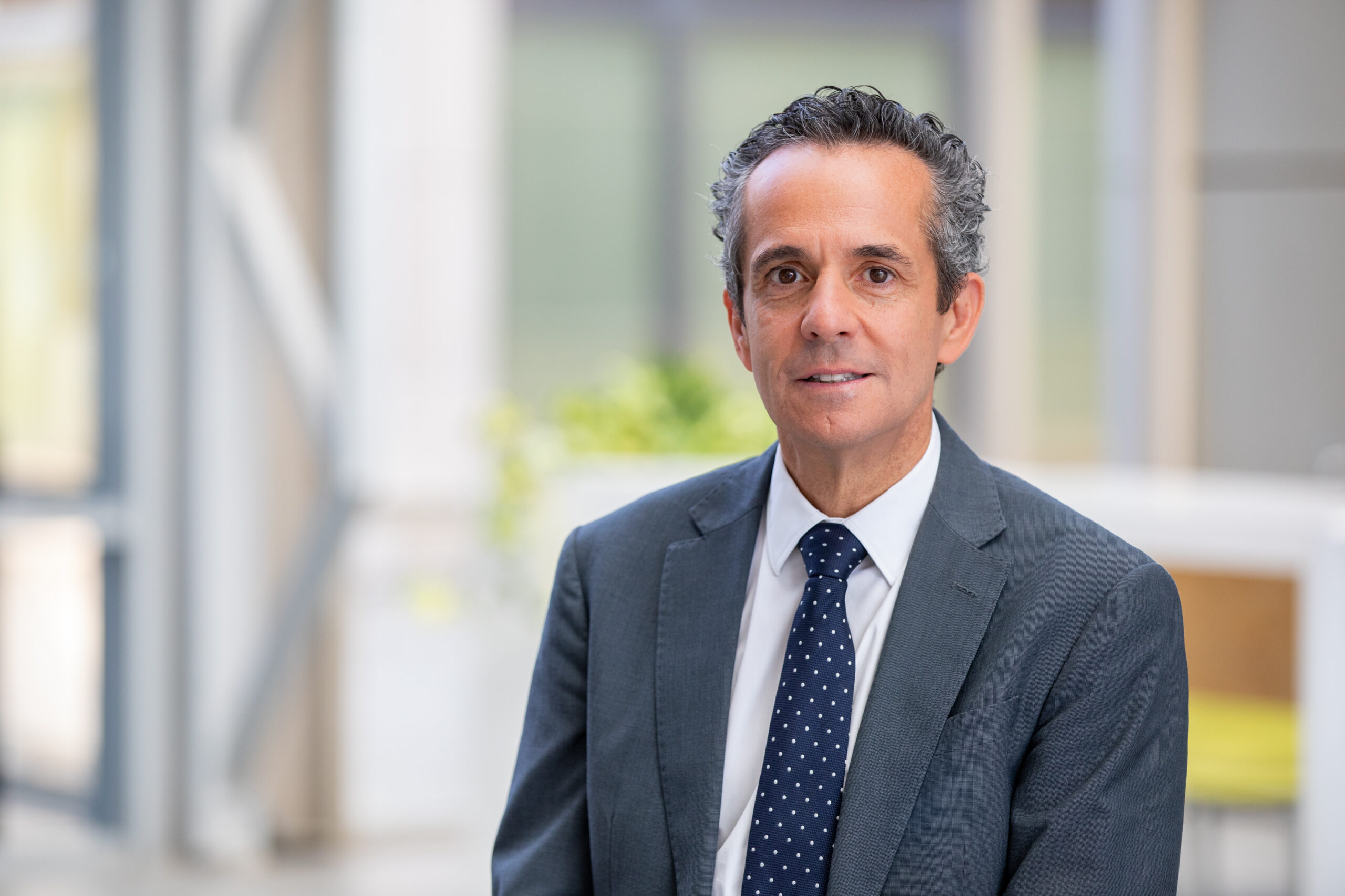
Fernando Ortega, Secretary-Councilor of Siemens, SA and General Counsel of Siemens Spain and Portugal, heads the legal department of a technology company whose risks evolve in tandem with data, cybersecurity, artificial intelligence, and geopolitics. From this position, he places the legal department at the negotiating table alongside the commercial and operations areas, and demands that lawyers translate risk into consequences, probabilities, impact, and alternatives. His analysis also extends to the structure of the profession: he believes that AI will force law firms and in-house legal departments to rethink their mindset and structures, going beyond simply incorporating tools. “Influence isn’t gained by citing articles or hiding behind volumes of case law,” he warns.
The influence of in-house counsel depends largely on the business understanding their recommendations. How is legal risk translated into business language?
This is one of the key differentiators of our profession. We not only need to know the law, but we also need to understand business and speak its language. Influence isn’t gained by citing articles or hiding behind volumes of case law. Translating legal risk means explaining its consequences in terms that allow us to answer these questions: what can happen, how likely is it, what will its impact be, and what alternatives do we have? In this way, legal not only assists in decision-making, but is a key element in that process.
To achieve this, we must be at the forefront of business and customer relations. It’s crucial to internalize that the Legal department is not a separate support area. We must understand our role as an integral part of the business, and success hinges on the company perceiving us as such. It’s no coincidence that we sit at the negotiating table with clients and suppliers, alongside our colleagues from sales and operations.
In a technology company, being on the front lines of the business means knowing the product being sold and the risks involved.
The digitization of industry and infrastructure raises new legal issues regarding data, cybersecurity, and technology contracts. What does this require of the legal function to support this transformation?
It is crucial that we stay abreast of technological developments and their impact on society. Siemens is a technology company, and to support its growth from a legal perspective, we need to understand the technology we develop and make available to our clients. This also requires ongoing training for lawyers in new business models that are rapidly replacing traditional ones. The same applies to risk analysis. In addition to traditional risks, we now have to consider those related to data, cybersecurity, and AI itself, plus many others stemming from the rapid evolution of technology. Furthermore, there are risks not directly linked to technology, such as those arising from geopolitics. While it’s true that the pace of new legal risks doesn’t always align with the traditional legal timeline, it’s equally true that in-house lawyers must adapt to the speed of change and the transformation of our companies without exception.
That same speed is now reaching the legal sector itself and the way in which law firms and consultancies generate value.
You are a member of the jury for the Legal Marcom Awards, which recognize excellence in marketing, communication, and business development in the legal sector. How do you think AI will change business development in the legal profession?
It’s clear that AI is the most disruptive tool in our sector and seems destined to influence business development. I foresee a radical transformation in our profession in the short term. In my opinion, the question we need to ask ourselves is not so much how to develop the legal business, but what the business of law firms will be like when legal AI reaches the levels of reliability required in the legal field. The answer to that question will largely determine the future of law firms, but also of in-house legal departments. In other words, using AI and continuing to work with the same mindset and structures as in recent decades will not help the legal business develop.
Companies expect more from their lawyers than mere formal compliance with regulations. What role does the legal function play in building a culture of integrity?
It is essential that lawyers understand that we are a key element in ensuring that businesses operate legally and ethically. Article 1 of the Statute of the Spanish Legal Profession places integrity among the guiding principles and core values of the legal profession. Integrity is not simply about complying with regulations. It also involves fostering a culture where certain behaviors are not even considered acceptable. Businesses are only truly businesses if they are clean and legal. I believe that lawyers must recognize the importance of our role in contributing to a more just society as a whole.
Maintaining that standard on a daily basis depends, to a large extent, on the team that exercises it.
Leading a legal team requires combining technical rigor with a personal touch. How do you find that balance?
I am very fortunate to work with a fantastic team of people who are also superb lawyers and professionals. Technical excellence requires individual dedication and study, as well as the exchange of knowledge and experience with the rest of the team and the company. Siemens fosters a culture of excellence in everything we do. I believe the key is to recognize the contribution of each team member and help them grow, while at the same time creating a space and environment where everyone feels comfortable developing their own personality and realizing their personal and professional aspirations.
Your career has led you to head the legal department of Siemens in Spain and Portugal. What lessons from your early years in the field do you still apply today?
I’ve been fortunate to have worked with some very bright people who gave me a lot of freedom to do my job and grow. When you’re a young lawyer, constant training and study are essential, something you can never abandon. Among those initial lessons, I would mention remaining calm in complex situations and building trust. Our profession is based on trust, and to earn it, it’s crucial to listen to and understand the people we interact with. Ask questions and listen to the answers. Trust is earned and maintained through values and principles; through upholding what is ethical and legal. For me, that’s non-negotiable and at the heart of how I understand my work and our profession.
Faced with the speed of technological change, Fernando Ortega identifies one constant: trust. Among the lessons he learned in his early years, he cites remaining calm in complex situations and the ability to listen, linking trust to the values and principles he considers essential. This same conviction underpins his understanding of integrity, which he anchors in Article 1 of the Statute of the Spanish Legal Profession and describes as a culture in which certain behaviors are simply unacceptable. While anticipating a radical transformation of the legal profession due to AI, Ortega places ethics at the heart of the profession and attributes to lawyers a crucial role in building a more just society.