


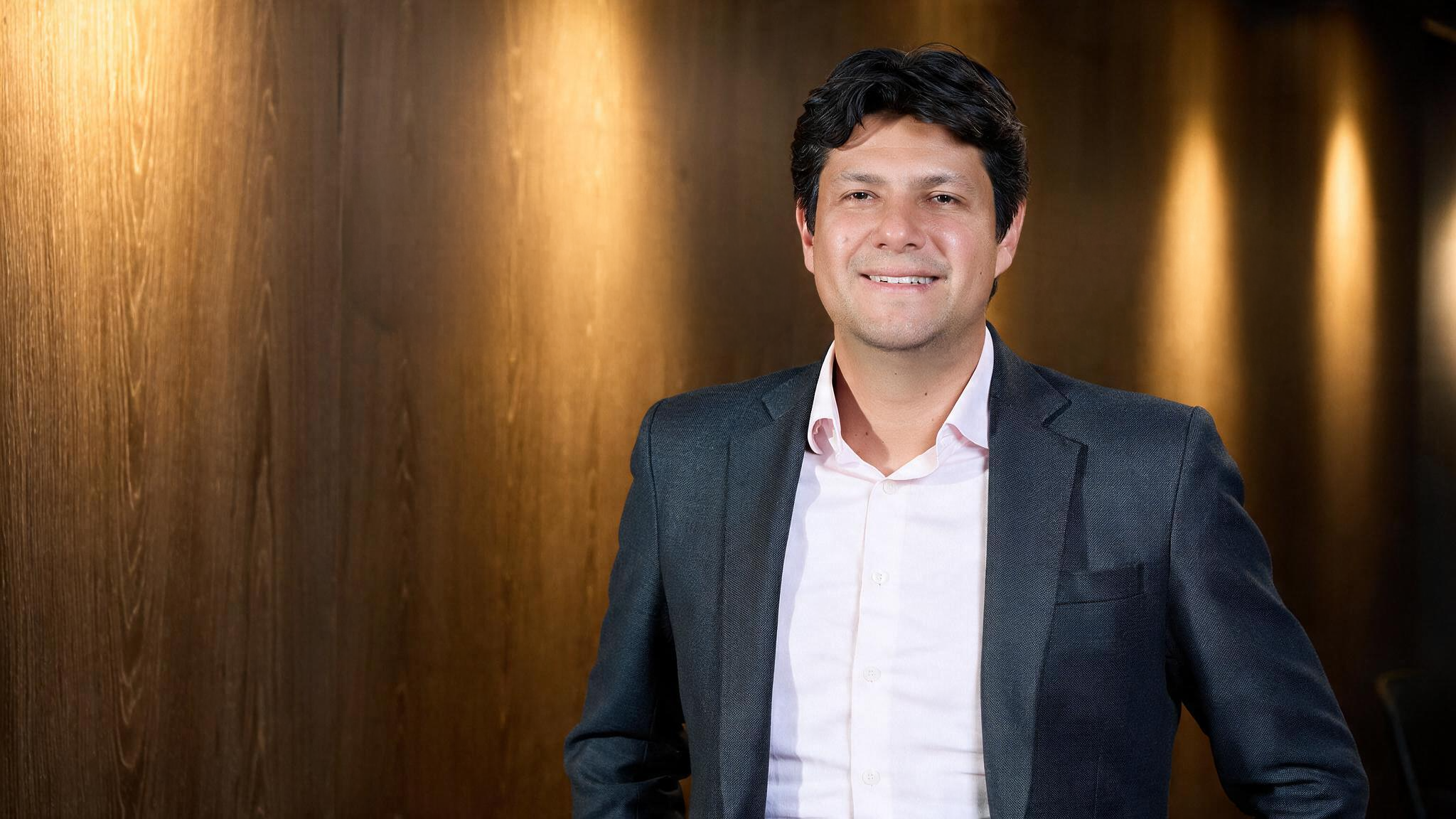
In the Colombian legal market, integrations are multiplying: local firms are merging with Spanish partners or hiring entire teams in search of scale. Esguerra JHR also underwent an integration process, between Esguerra Asesores Jurídicos, with over 40 years of history, and Jiménez Higuita Rodríguez, with just seven, seeking to combine specialties that neither firm possessed separately. A year and a half later, its managing partner, Jairo Higuita Naranjo, explains what was most difficult about uniting two such different cultures. He asserts that the firm now combines lawyers, accountants, and financial analysts in a way that is unparalleled in the country, and outlines the growth strategy for the next three to five years, with Louis—its artificial intelligence legal assistant—as one of its key initiatives.
Esguerra Asesores Jurídicos and Jiménez Higuita Rodríguez entered into this merger with very different backgrounds: one recognized for its expertise in competition law, arbitration, and public law; the other as a leader in tax, customs, foreign exchange, and estate planning matters. What specific capabilities has this combination generated that neither firm could offer separately before the merger?
Specifically, the firm has developed capabilities that it previously couldn’t offer in tax matters (which apply to all clients) and foreign exchange. Issues related to finance, competition, corporate law, labor law, health, and corporate structures must be addressed in conjunction with the tax implications that this type of advice entails. This has worked in our favor, and clients have realized that, by acquiring these capabilities as an established firm, we are much more strategic.
Regarding foreign exchange, every foreign investor or Colombian resident looking to invest abroad must analyze this matter, from capitalization or debt to exports or imports. Whether for multinational Latin American or Colombian clients investing abroad, or for companies entering Colombia, having foreign exchange capabilities is essential today for any type of structure and for any area of the office we support.
On the other hand, there are sectors where we are very strong, such as finance, where we have many clients for legal and tax advice. Approaching a private equity fund issue, regulations, or a trust structure from a legal, financial, and tax perspective is very powerful, because any suggestion is framed from that viewpoint, generating advantages and positive effects for the client. The most interesting aspect has been integrating into a single firm and gaining capabilities we didn’t previously possess individually.
Every integration process between firms involves difficult decisions regarding corporate governance, culture, and leadership distribution. What were the biggest internal challenges you had to overcome during the process, and what lessons learned from that stage would you apply today if you had to lead a similar integration?
The most complex challenges were cultural differences. Esguerra Asesores Jurídicos had been in the market for over 40 years, while Jiménez Higuita Rodríguez had only been there for seven; the cultures and average age in both firms were quite different. However, these asymmetries enriched the firm by contributing new perspectives and viewpoints that enriched discussions. During the transition, aligning culture, objectives, and values was one of the first challenges we wanted to address in order to begin instilling a new identity. The move to new offices helped us understand that Esguerra JHR is a new firm, a new concept, and a new vision. We successfully conveyed this perspective and its differentiating factors to the teams, partners, and clients, strengthening the culture through these differences.
To lead this, the key takeaway is honest conversations and defining expectations: understanding what we’re looking for and the higher purpose of these integrations. These conversations shouldn’t stem solely from business or profitability; the most important thing to remember is that our most valuable asset is our people.
First, we must discuss expectations based on values, people, and the higher purpose. By taking care of each member of the organization, everything else flows: administrative processes, human resources, communications, and the financial model. The most important thing is to align values and the higher purpose.
In May 2025, another integration was announced that set a trend in the Colombian market: Gómez-Pinzón fully merged, both legally and financially, with the Spanish firm Pérez-Llorca, incorporating a team of 120 lawyers between Bogotá and Medellín to strengthen its M&A, international arbitration, and corporate law practices. Does Esguerra JHR foresee these types of moves—new integrations, the hiring of entire teams, or international alliances—or does its growth strategy lie in other avenues?
At this time, we are not considering a merger like the one between Gómez-Pinzón and Pérez-Llorca. If it were on the table, we would analyze it in detail, but it is not currently part of our plans. We want to strengthen Esguerra JHR’s capabilities and leverage the international network we are part of to consolidate the firm both nationally and internationally. This does not preclude us from remaining vigilant in the market for new opportunities or the integration of new practice areas, which would require in-depth analysis, but is not entirely ruled out.

What are Esguerra JHR’s specific priorities for the next three to five years, both in terms of legal practice and geographical presence?
Our legal priorities for the next three to five years are to continue strengthening our practices. Last year, we integrated Corporate Criminal and Oil & Gas, which remain fundamental. Our innovation process is also very important. We have an innovation management team and develop products in-house. Today, we have Louis, a virtual legal assistant, and we continue to refine our model to align our capabilities with artificial intelligence. This is essential for providing higher quality, faster, and more efficient service, adding value for the client beyond hourly billing, so that any strategic decision impacts the company across multiple dimensions.
From a geographical standpoint, we need to evaluate things carefully. We’re already in Medellín and Bucaramanga, but we need to analyze cities like Cali and Barranquilla. This process must go hand in hand with acquiring clients in those jurisdictions; we’ll evaluate it as conditions allow.
Beyond the Colombian market, what role does regional—or even international—projection play in that strategic planning?
Regional and international reach has always been a strategic priority. We are part of the Andersen network, with a presence in more than 180 countries, and of RLI, which integrates firms in Latin America and Spain. This strengthens our position and allows our clients to access legal and professional support with just a phone call for any need in these jurisdictions. This pillar has been present since the integration.
According to the most recent study by the Superintendency of Companies, the 100 law firms with the highest operating income in Colombia billed a combined total of more than $1.7 trillion in 2024, in a market where leadership in M&A and transactions is increasingly concentrated in a small group of firms. What does “competing” with these full-service firms mean for Esguerra JHR: matching their size and transaction volume, or differentiating itself through a service model that doesn’t depend exclusively on scale?
Esguerra JHR has successfully competed in the transactional market by providing a service that integrates professionals from multiple disciplines, including lawyers, accountants, and financial analysts. This unique ability in Colombia to combine disciplines allows us to offer a differentiated service, attractive for complex transactions requiring speed. This is complemented by a service of the highest quality with the direct involvement of the partners, who contribute their legal and business expertise to each transaction.
If you had to define in one sentence what Esguerra JHR is today that didn’t exist before the integration, what would it be?
Today, Esguerra JHR can support the client in a truly comprehensive way: in a single firm, you will find legal, tax, accounting and business capabilities, supported by multidisciplinary teams and an international network.