

In 2016, Women in the Profession (WIP) – Peru was founded when 11 lawyers from law firms and private practices decided to join forces to work towards the advancement of women in the legal profession in Peru. WIP is an initiative of the Cyrus Vance Center for International Justice, with the mission of strengthening the rule of law and promoting access to justice. One of its lines of action is to promote the role of women in the legal profession, for which it has created a network of lawyers in various locations throughout Latin America.
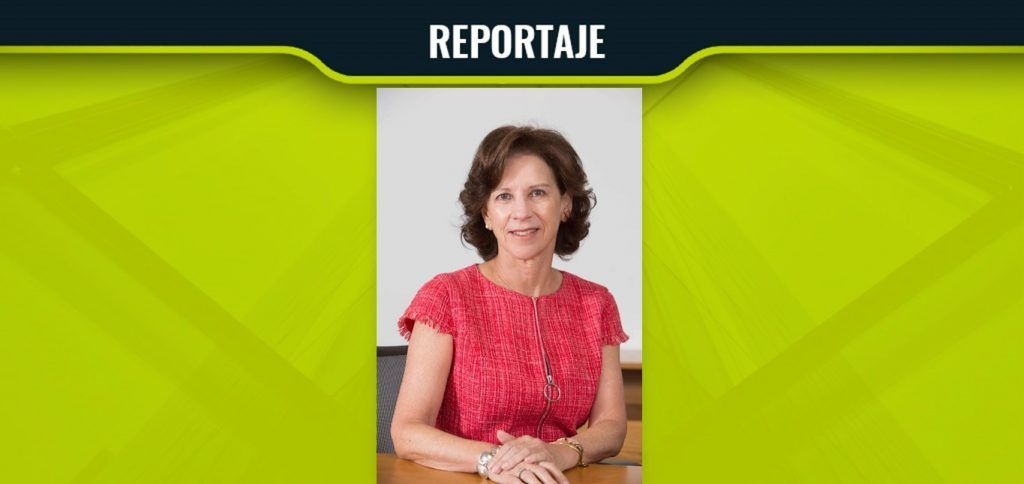
To discuss this transformative movement and how to make the practice of law more diverse and inclusive, in this first installment, we spoke with Gianna Macchiavello Casabonne, Director of Legal Services and Compliance Officer at Repsol Peru, and founder and leader of the rules of engagement committee of this foundation. The lawyer is a university professor, has worked at prominent law firms in the country, and served as Chief of Staff to the Minister of Justice and Vice Minister of Justice of Peru.
What needs did WIP Peru come to fulfill?
WIP Peru has been very well received because there was a need to analyze why women were not reaching top positions or were leaving the profession. In the legal profession, the number of women decreased steadily as we looked at the most important positions. This has been happening in all countries that have conducted studies on the subject. We have taken action on various fronts, achieving results, and we continue to make progress in addressing the challenges that arise daily to promote the advancement of women lawyers in our country.
Why do they use the hashtag #lawyerswithpurpose?
Those of us who founded WIP Peru are lawyers who have “broken the glass ceiling.” Some are partners in prominent law firms in Lima or top managers at leading companies in their respective fields. Over the five years we have been working, we have been joined by lawyers who are in the early stages of their careers, who are facing obstacles to further development, or who are trying to balance their work and family lives in rigid organizations. So, what it’s all about is working together, from wherever we are, to make the practice of law more diverse and inclusive.
Our work at WIP gives us a transcendent purpose, as we believe it benefits not only the advancement of women in the legal profession but also the need to attract top talent to improve client outcomes. We believe that working in inclusive environments is motivating, fostering creativity and innovation, which are key to success.
Who are the targets of WIP Peru?
Female lawyers from all over Peru who want to enhance their professional development in law, participating in a transformative movement and being willing to contribute their experiences and skills in favor of a transcendent goal.
How do they promote women’s leadership and advancement?
We have identified that developing our own capabilities is fundamental. That’s why one of WIP Peru’s lines of action is “leadership,” where, with the support of experts, we work on our leadership skills. In addition, we offer mentoring programs to help younger lawyers find their path in the profession.
What is the scope of WIP Peru?
WIP is an international initiative operating in more than 15 Latin American countries. In Peru, we began our work in Lima. In 2019, we held an event in Trujillo that was very well received, and plans to continue expanding the network to other regions of the country were suspended in 2020 due to the pandemic lockdown. We hope to resume expansion as soon as possible.
In recent articles published in Líder Legal , Peruvian lawyers explain that Peru’s biggest problem—in terms of gender equality and the wage gap—is informality and sexism. How does WIP contribute to changing this situation?
In my opinion, the main barrier is cultural. First, it’s crucial to become aware of the normalized sexist behaviors. When we lawyers at WIP share our experiences, we agree that we have all, in one way or another, been victims of biases that have disadvantaged us, relegating us to a secondary role. Once we understand the reasons for this, we can begin to change things.
Informality in Peru is very high and occurs in all sectors, including the legal sector, so many female lawyers do not enjoy labor rights that could give them greater stability during such sensitive periods as maternity leave.
The road is long, because changing the culture takes time; the change has to happen in ourselves and in others.
What are the existing gender gaps in legal practice?
The most striking thing is the very small number of female partners in these firms. In the early stages of their careers, there are a significant number of women, but then they become “invisible,” and at the highest levels, they disappear. In some companies, processes are more standardized, and women achieve better positions, but in many others, this is still not the case.
What barriers have you identified that could compromise the professional growth of women in Peru and the region?
Law is a traditional profession that has been practiced by men who have organized the practice as they saw fit and is based on the trust of clients, who are generally also men.
Women who have entered the legal profession over the past three decades have encountered numerous obstacles in assuming leadership roles, advancing at the same pace as men in career paths (whether in a firm or a company), being considered for key client meetings and business development activities, and being invited to speak or participate as panelists at events or seminars. If female lawyers cannot secure clients, it is very difficult for them to become partners or establish their own firms. Frustrated by their unmet expectations of advancement, many female lawyers in firms decide to move to private practices, where they find a more inclusive environment. Others choose to leave the legal profession altogether to pursue other careers, resulting in a significant loss of talent.
Why divide this social project into five thematic areas?
We worked on five thematic areas that were the result of strategic planning.
We understand that women often face barriers that are a product of the prevailing culture and that, therefore, it is necessary to work on ourselves and become aware of what can hinder our development. We do this by working on leadership, visibility, and mentoring.
Furthermore, we have identified structural issues affecting the professional development of women lawyers, so we set out to measure the situation through surveys and conduct them periodically to gather more information and compare the progress made. We also formed a committee, which we call the “rules of the game,” to break down traditional frameworks that have failed to consider diversity and inclusion and are therefore rigid and exclusionary for many women lawyers.
Each thematic area is complementary, reflecting the complexity of the challenge ahead. Work on each area is voluntary, and working committees are formed.