
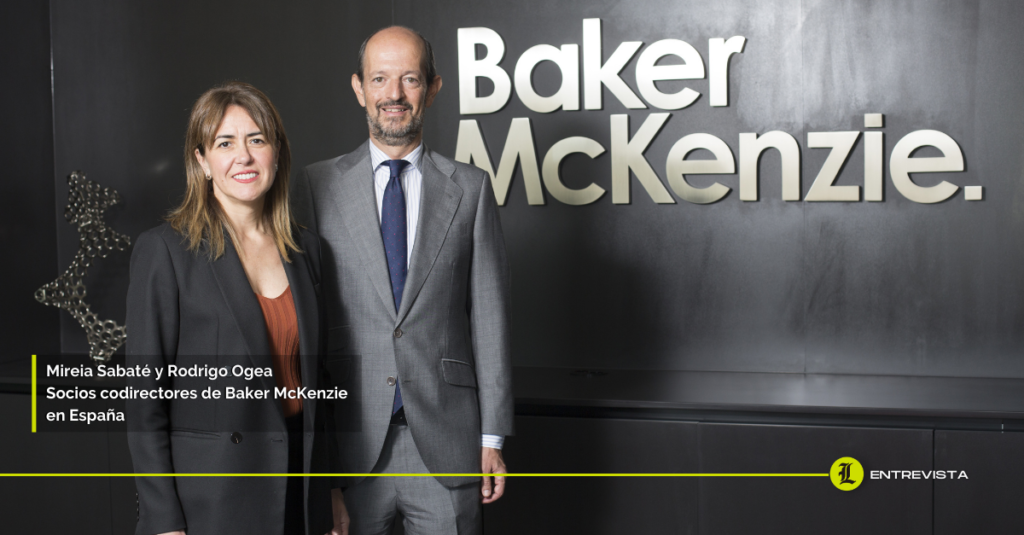
Some law firms grow organically, while others grow through conscious reflection on their model, culture, and role in the market. Baker McKenzie in Spain clearly belongs to the latter group. After exceeding €115 million in revenue in 2024 and registering 15% growth, the conversation with Mireia Sabaté and Rodrigo Ogea moves beyond current data to a more structural level: how to build a legal project today capable of growing without losing its identity in an increasingly demanding, regulated, and competitive environment.
Exclusively for the special Leaders 2026: vision and challenges of Spanish law firms , the co-managing partners of the Spanish office have a clear idea: size only matters if it is accompanied by judgment, specialization and culture.
Far from triumphalist rhetoric, they both share a vision based on balance. Growth, yes, but with sound judgment. Investment, yes, but without eroding the culture. Innovation, yes, but without losing sight of the added value that customers expect.
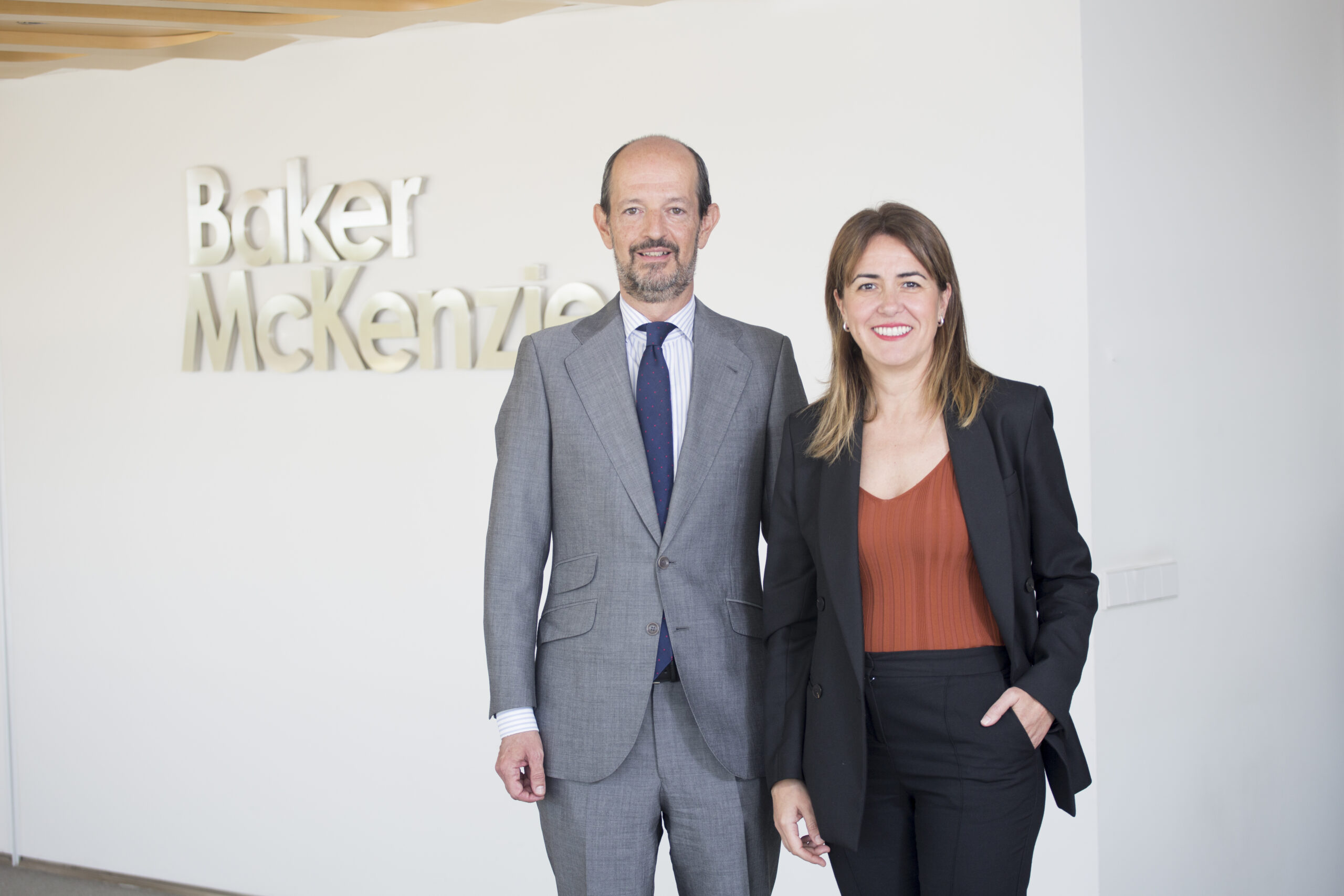
“Our commitment is to sustainable profitability with selective growth”
When they talk about the coming years, they don’t speak in terms of specific figures, but rather in terms of their trajectory. The goal, they explain, is to consolidate what they have achieved and continue advancing in those areas they consider fundamental to the current legal business: Digital Law, Energy, Labor Law, Tax Law, and M&A, with a clear sectoral focus on technology, energy, pharmaceuticals, and consumer goods.
“Our focus is on sustainable profitability with selective growth. Growing without a healthy profitability base erodes the firm, and pursuing only margin can stifle innovation and service.”
From this perspective, growth ceases to be an end in itself and becomes a consequence of well-made decisions over time.
Specialization and transversality
The core of their strategy involves combining technical depth with a cross-functional vision. For Sabaté and Ogea, isolated specialization is no longer sufficient in a market characterized by the regulatory and operational complexity of clients.
“We will continue to focus on the specialization and cross-functionality of our teams, offering excellent and pragmatic service, and strengthening key sectors such as technology, energy, pharmaceuticals, and consumer goods.”
For Baker McKenzie’s co-managing partners, connecting disciplines, sectors, and jurisdictions is not only a competitive advantage, but a necessity to support clients operating in increasingly sophisticated environments.
Red global, criterio local
One of the firm’s distinguishing features continues to be its ability to integrate the international dimension with a deep knowledge of the Spanish market.
“Thanks to our deep local knowledge and a consolidated global network, we offer comprehensive, multi-jurisdictional solutions that meet the needs of multinational companies.”
This combination, they claim, allows resources to be mobilized from different offices when the nature of the matter requires it, maintaining consistency, agility and proximity in execution.
“Artificial intelligence allows us to focus on added value”
Technological transformation permeates the entire conversation, but without grandstanding. For Sabaté and Ogea, artificial intelligence is no longer a promise, but a tool that is redefining the practice of law.
“Artificial intelligence is already one of the elements transforming the legal profession, allowing for a reduction in time spent on repetitive tasks and increasing efficiency in service delivery.”
In this sense, they state that the goal is not to automate for the sake of automation, but to free up time for strategic advice, risk anticipation and complex decision-making, without losing sight of cybersecurity, ethics and continuous talent development.
“Anticipating risks and opportunities is what allows for sustained growth”
The scenario they envision for the coming years combines sector consolidation, macroeconomic pressure, and a significant increase in regulatory requirements.
“At the regulatory level, regulations on sustainability, international taxation, data protection, and artificial intelligence will be intensified.”
They also indicate that they will adapt their “model by consolidating specialization in these areas, investing in technology and forming multidisciplinary teams.”
For the firm’s management, the key is not to react, but to anticipate and support clients from a comprehensive view of risk and opportunity.
“Culture is our main asset and differentiating factor”
When the conversation shifts to leadership, the tone becomes more personal. For both of them, a company is built on culture much more than on an organizational chart.
“We have worked to create environments that promote well-being and performance, attract and retain specialists in high-demand areas, and above all, maintain our culture as our main asset and differentiating factor.”
Mireia Sabaté and Rodrigo Ogea agree that “culture unites teams and withstands market fluctuations.” In a context of constant change, protecting this asset is, in their view, a strategic responsibility.
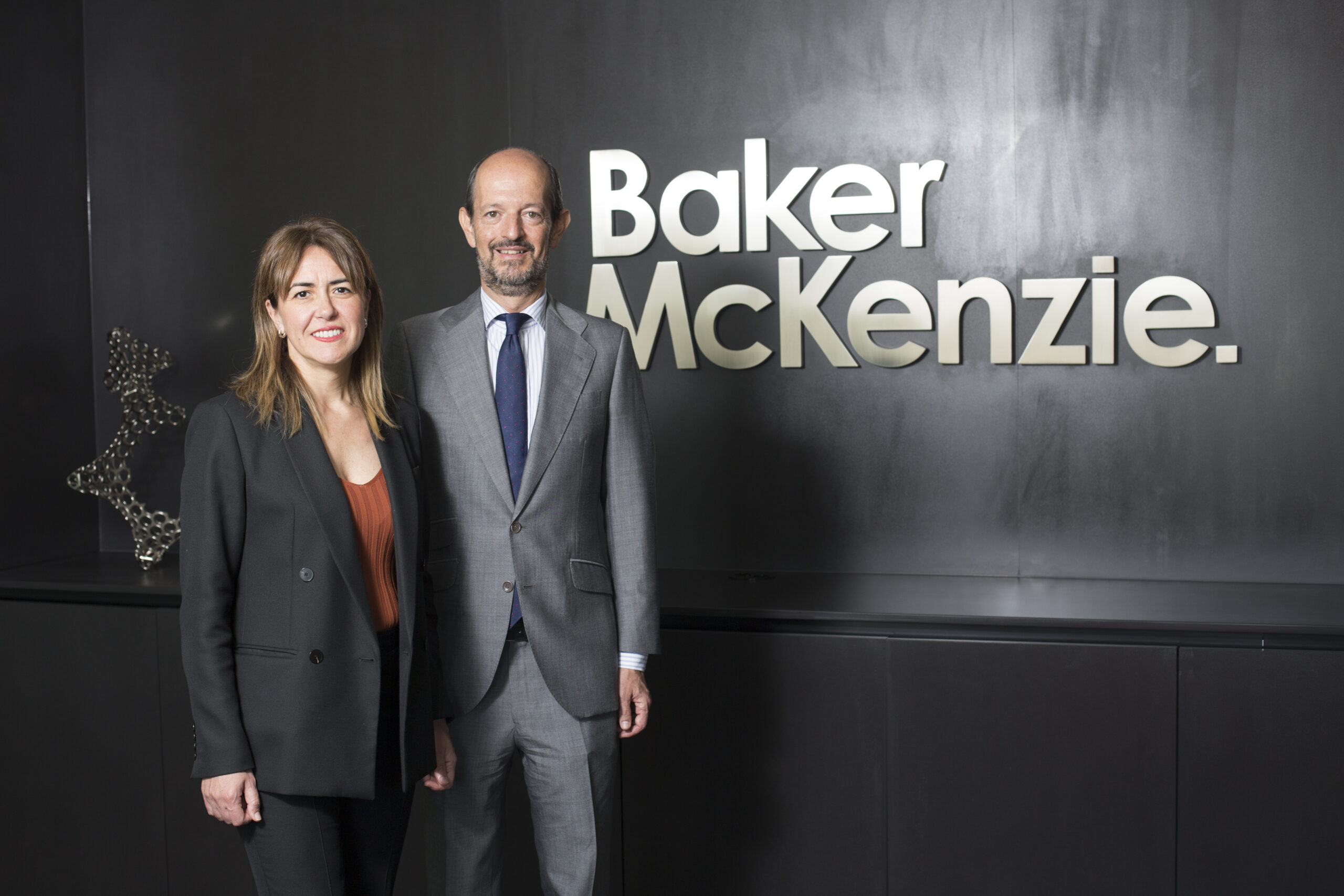
“Patience is not passivity, but strategic discipline”
Their vision of a legal career deliberately avoids immediate success. Building a solid career, they maintain, requires time, sound judgment, and perseverance in a field where pressure for quick results can obscure professional purpose.
“Patience doesn’t mean passivity, but rather strategic discipline: setting achievable goals, measuring progress, and maintaining quality in every delivery.” Reputation, they remind us, is built cumulatively and lost much faster than it is gained, so every decision—however small it may seem—ultimately has a real impact in the long run.
They apply this same approach to younger lawyers. They encourage them to be bold, but not impulsive: with method, with intention, and with an honest understanding of the context in which they develop their careers. “Failing early and learning quickly is part of the process; the essential thing is to maintain curiosity, rigor, and purpose.”
Mastering emerging regulations, understanding the client’s business, incorporating technology, and seeking international exposure are, in his view, part of a roadmap that remains valid in an increasingly demanding and competitive market.
The final reflection is clear and consistent with everything mentioned above: growth matters, but what truly sets Mireia Sabaté and Rodrigo Ogea, co-managing partners of Baker McKenzie in Spain, apart is not how much growth there is, but how it occurs. Specialization, cross-functionality, and culture are not rhetorical concepts, but rather the levers that, when properly connected, allow a legal project to be sustained in the long term.