

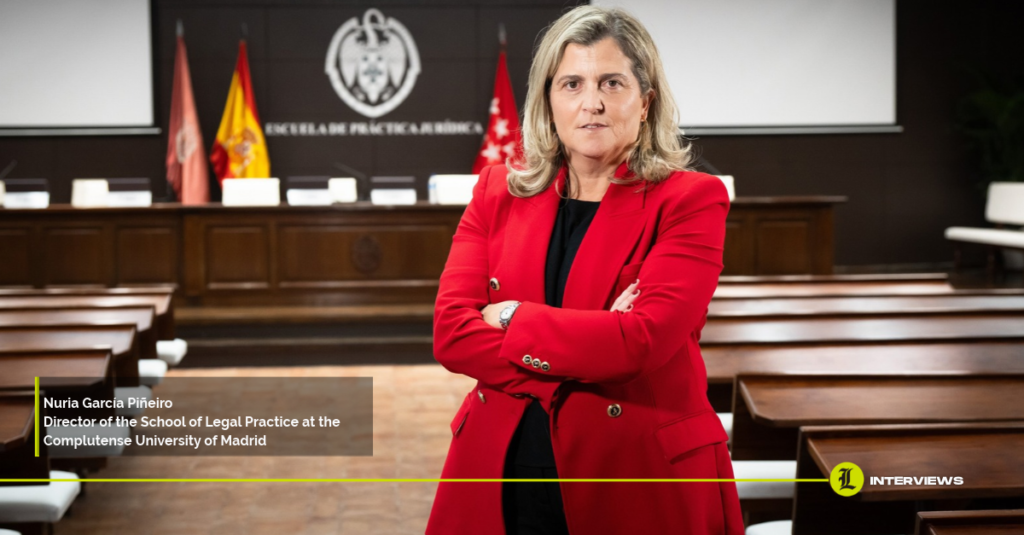
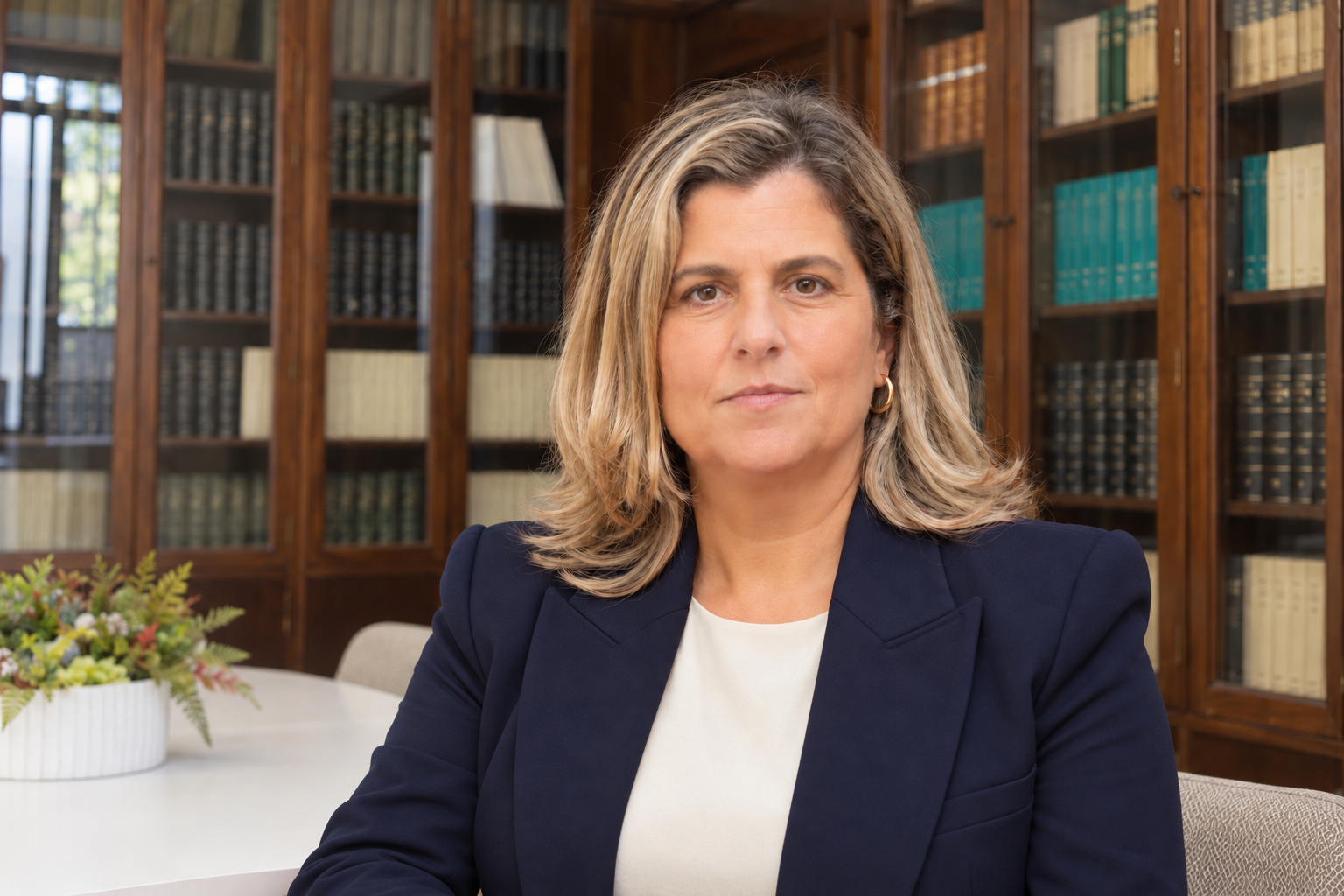
Nuria García Piñeiro is marking almost a year as the first woman to head the School of Legal Practice at the Complutense University of Madrid. Her mandate has a clear focus: to make Latin America the School’s international priority and offer lawyers in the region access to the Spanish legal system within its European context, with specialized training directly applicable to their practice. Aware of the significance of an appointment that she hopes will encourage other women to see their own paths to positions of responsibility in academia and law, she clearly states her priority: “I would like this period to be valued above all for what we have managed to build.”
A first year to evolve
You’ve been in the position of the first woman to head the Complutense University’s School of Legal Practice for almost a year. What’s your assessment of this first phase?
It has been an intense and very positive year. We have made progress in areas that I consider fundamental for the future of the School: strengthening our training offerings, getting closer to the real needs of professionals, and boosting our international presence, especially in Latin America.
Being the first woman to head the UCM’s School of Legal Studies has a special meaning, but I would like this stage to be valued above all for what we have managed to build and for our ability to prepare the School for the challenges of the current legal profession.
From what starting point did you define the priorities for this new stage?
I found an institution with an extraordinary history, a top-notch faculty, and a community of alumni deeply connected to the School. My approach was never to break with the past, but rather to evolve upon it.
The legal profession has changed, and training must keep pace with that change. That’s why we want a School that is more connected to the professional market, more internationally open, and capable of building long-term relationships with students, law firms, and institutions.
Latin America, a strategic priority
Why does Latin America occupy that priority place at this time?
Latin America is a natural fit for the School. For years we have maintained relationships with some of the region’s most prestigious universities in the field of Law, and our on-campus programs also include students from various Latin American countries.
We share a language, a similar legal tradition, and a very strong historical link with Spain and the Complutense University of Madrid. Now we want to take a further step and strengthen these relationships by expanding our presence and collaboration within the Latin American legal ecosystem. Understanding other legal systems can also broaden our perspective and foster understanding among professionals with different experiences and viewpoints.
What are lawyers in the region looking for today when they decide to specialize in Spain?
They primarily seek specialization, practical application, and professional connections. Simply obtaining a degree is no longer enough: they want to know what they will be able to apply to their practice and what professional perspective they will gain.
I believe we have room to offer a more complete experience, combining rigorous training, practical experience, and professional networking.
And also training that adapts to the real needs of those who practice. The combination of in-person and online training allows students to continue their professional development while working and facilitates access to the School from other locations.
You are also invited to visit and explore the facilities and resources available at the School of Legal Practice in the capital. Enjoy the opportunity to connect with professors and fellow students, network, and gain practical experience.
An offer designed for those who practice
What exactly is the EPJ strengthening in its offering for these professionals?
We are strengthening an offer aimed at professionals who are already working and are looking for specialized training that is directly applicable to their activity.
Through the General Course, the Advanced Courses and the extensive academic program, we offer Latin American professionals an update on the Spanish legal system in a European context.
But our commitment goes beyond training programs. We want to offer an experience that combines learning with contact with practicing professionals, knowledge of the Spanish and European legal environment, and the opportunity to expand your professional network. That’s why we have an extensive Training Program .
The range of legal training opportunities in Spain for professionals from the region is extensive. What does a Latin American lawyer gain from the EPJ that they wouldn’t find in another program with a similar profile?
The UCM School of Legal Practice offers a very particular combination: the backing of the Complutense University, with more than six decades of experience, an eminently practical approach and a faculty closely linked to professional practice.
In addition, we have a community of professors, professionals, and alumni, which we aim to strengthen as a true asset for those arriving from Latin America. The School is not only a place where training programs are offered; it is also a meeting place centered around legal knowledge. Through seminars, webinars, and other open activities, professionals with diverse backgrounds and interests can share questions, experiences, and perspectives. This exchange between different generations of legal professionals is also an integral part of the learning process.
The legal criterion regarding AI
How should legal training prepare for the arrival of artificial intelligence?
The School is connected to the real-world evolution of the profession and strives to anticipate new challenges, from artificial intelligence to issues such as digital inheritance and the impact of new technologies. AI can help us delegate certain tasks, but there is something we cannot delegate: legal judgment. Therefore, training must prepare professionals not only to use new tools, but also to analyze, interpret, and make sound decisions.
A bridge between both sides of the Atlantic
If the gamble pays off as expected, how do you envision the relationship between the School and the Latin American legal ecosystem in two or three years?
I would like the School to be recognized as a leading institution for specialized legal training between Spain and Latin America.
We want to enhance and strengthen our relationship with universities and professional associations in the region, promote collaborations and joint programs, encourage the exchange of professors and professionals and continue to generate spaces for meeting and training, such as the Winter Courses.
In an increasingly fragmented world, we believe that legal education and practice can also help build bridges and strengthen ties between professionals, institutions, and societies. Ultimately, this will help create a more connected legal community on both sides of the Atlantic.
The legacy of the first female director
As the first woman in this position, what would you like this period to leave in place at the School, beyond the measurable results?
I want to leave behind a School that is more open, international and connected with the professional world, but faithful to the identity and value of an institution with such a long history.
And personally, I hope my time as director will demonstrate that it’s possible to lead with approachability, active listening, and the conviction that there’s always room for improvement. If, in addition, my arrival helps other women see that it’s possible to occupy positions of responsibility in academia and law, that will be an added satisfaction. Ultimately, more than leaving a personal mark, I would like to contribute to the School’s continued growth and its impact on future generations of legal professionals.
After its first year, Nuria García Piñeiro has set the course for the UCM School of Legal Practice: to maintain its trajectory and practical focus, while decisively opening it up to Latin America and addressing the challenges that technology poses to the legal profession. The next stage will be measured by concrete actions, including joint programs with universities and associations in the region, exchanges of professors and professionals, and forums such as the Winter Courses. If this approach succeeds, the School aspires to establish itself as a leading center for specialized legal training between Spain and Latin America, with legal expertise as something that, in her words, cannot be delegated.