


It is undeniable that technology presents a challenge in many aspects of daily life, including the growing development of virtuality, for example, created with the metaverse, which poses a significant legal challenge. With all the advancements of recent years, everything is now easier and simpler to do online, and this is where cryptocurrencies are also booming, modifying markets and transforming them from physical to digital processes.
Many Latin American countries have embraced cryptocurrencies in their economies as a method of payment for some goods or services and even in both national and international transactions. Their proliferation is a reality worldwide, and Latin America, where regulation on the matter is still incipient and in some countries has not yet been developed, is no exception.
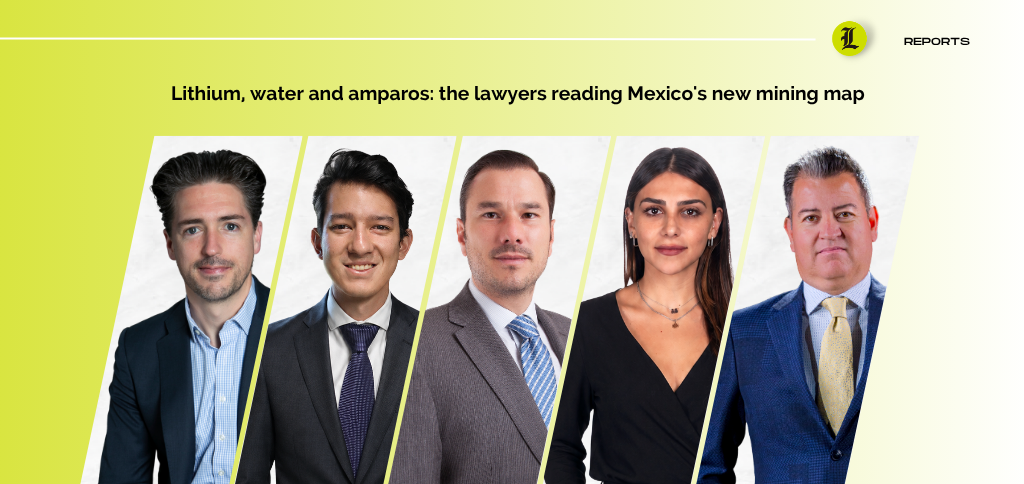
In this context, in this first installment, we review Mario Lozano, partner at Arias (El Salvador); María Shakespear and Daniel Levi, partners, and Jorge Pico, associate at Beccar Varela (Argentina); Andrés López, partner at BLP (Costa Rica); and Ernesto Rodríguez, partner at Guerra González Abogados (Mexico), what is the regulatory situation regarding the use or circulation of cryptocurrencies in these countries and the steps being taken in this area where technology comes into play with finance.
Less than a year has passed since El Salvador accepted Bitcoin as legal tender; we asked Mario Lozano, partner at Arias, how positive and beneficial its implementation has been for the country’s economy.
“The implementation of Bitcoin as legal tender has brought some positive aspects to the country, as it has placed El Salvador on the radar of companies and investors in the cryptocurrency industry, which has experienced considerable growth in recent years. Furthermore, it has been announced that a series of laws are being drafted to further promote the use of Bitcoin with a clear legal framework that will attract greater interest from both the international community and Salvadoran citizens who wish to conduct business using it. However, considering that less than a year has passed since its approval as legal tender, we believe it is too early to draw a definitive conclusion.”
For their part, María Shakespear and Daniel Levi, partners, and Jorge Pico, associate at the Argentine firm Beccar Varela, commented that the use of cryptocurrencies in the country “is growing exponentially year after year. It is estimated that more than 12% of Argentinians use or have used this technology, compared to just 8% in Latin America.”
Given the current economic climate in the country, cryptocurrency transactions have become a useful tool for addressing some of the challenges of the local situation. These assets play a significant role in the savings and investment strategies of a large segment of the population.
On the one hand, stablecoins offer a hedge against inflation in a country accustomed to buying dollars (historically a store of value for Argentinians), which is now restricted. They also allow users to earn interest on certain platforms. On the other hand, there are more speculative assets, such as Bitcoin and Ether, which are widely used in the country, not only as investments but also as a means of transaction or payment, even for sending remittances abroad.
Argentina is recognized worldwide for its innovative crypto developers and projects, dating back to the very beginning of the ecosystem. From the first wallets and exchanges, today the country is also the birthplace of cutting-edge DeFi solutions that aim to decentralize finance. Some local governments have even begun to explore the benefits of their usability.
In a country with a low rate of banking penetration and little transparency in its transactions, cryptocurrencies also contribute to the financial inclusion of many people, in a traceable and secure framework, at low cost, thanks to blockchain technology.
Meanwhile, Andrés López, a partner at BLP (Costa Rica), reacted by pointing out that “digital assets are not regulated in any way by Costa Rican law and, therefore, there is no prohibition for people in general to buy and sell digital assets.
Similarly, there is no regulation stating whether a digital asset can be considered currency or not. However, the Central Bank of Costa Rica (BCCR), the entity in charge of monetary policy in our country, has issued its opinion regarding the possibility of cryptocurrencies being considered currency.
In this regard, the Central Bank of Costa Rica (BCCR) has stated that cryptocurrencies cannot be classified as legal tender because they do not meet the characteristics of that type of currency.
On the other hand, the BCCR has interpreted that cryptocurrencies and digital assets in general, although not considered currency, are movable goods that can be validly the object of transactions between the parties according to the value they assign to them.
From this point of view, we can conclude that digital assets are neither prohibited nor regulated, and individuals can conduct business with them, as long as such business is lawful and does not contravene public order or the rights of third parties.
Finally, the Central Bank of Costa Rica (BCCR) has warned the public that, given the use and type of transactions that have been carried out over the years with cryptocurrencies and the consequences that have arisen, people who carry out transactions with this type of asset will do so at their own risk and responsibility.
Meanwhile, Ernesto Rodríguez, a partner at Guerra González Abogados, pointed out that “Mexico is a country with a great opportunity for digital transformation and financial inclusion, although cryptocurrency adoption is happening at a slower pace than in other countries. The authorities have worked quickly to respond to global demands by offering a regulatory framework that protects users and prevents money laundering. However, much remains to be done.”
According to the annual study conducted by Chainalysis, Mexico ranks 44th out of 154 countries in terms of cryptocurrency adoption and 4th among Latin American countries.
Implementation in our country has been accelerating in recent years; however, it has not yet reached a significant penetration level to measure the benefits it has had in Mexico.”
It is said that the main appeal of cryptocurrencies is their decentralization, which in regions like Latin America allows for a new form of wealth that is not controlled, restricted, or blocked by a country, government, or public or private banking institution… What do you think about this?
Mario Lozano, partner at Arias (El Salvador): “That is definitely one of the biggest challenges of using cryptocurrencies, since it is necessary to create a regulatory framework that provides sufficient guarantees for their use to comply with applicable legislation in areas such as Commercial Law, Criminal Law, and laws against money laundering and asset laundering, among others, without distorting their main characteristics, which include decentralization. In other words, creating a reliable ecosystem for the use of Bitcoin/cryptocurrencies in different economic activities.”
María Shakespear, Daniel Levi and Jorge Pico (Beccar Varela – Argentina): “This disruptive technology changes the rules of the game for a large number of actors in the traditional economy. The concept of decentralization is very interesting, but at the same time it must be analyzed with some care, because often that decentralization is relative or, when it exists, its effects are not properly communicated to users.
Well-conceived decentralization, in theory, brings two main advantages: resistance to censorship, on the one hand, and the possibility of decisions being made collectively, without intermediaries, on the other.
However, while many projects are advertised as decentralized, they are not always so in reality, and in the end they end up being dominated and governed by a few people who make the decisions, behind a certain cloak of anonymity that then dilutes responsibilities.
All of this is extremely challenging for traditional legal analysis because the law is not accustomed to dealing with structures without identified representatives. When things are going well, only the benefits are considered, but it is also true that when significant losses or thefts occur, as we have seen in some recent cases, people are still accustomed to looking for someone to blame.
So, along with all the virtues that decentralization offers, there is also a great need for user education, as users must learn to take responsibility and accept the risks that all this new freedom brings.”
Andrés López, partner at BLP (Costa Rica): “Indeed, characteristics such as decentralization allow the use of digital assets for means of payment, mechanisms for representing values or goods, investment instruments, etc.; conditions that also make it possible to revitalize markets and facilitate the exchange and transactions between people and companies, especially across borders.
Unfortunately, they can also be used for speculation and the financing of illicit activities, which also generates some degree of insecurity. It is in this regard that we see areas for improvement, which consist of creating the conditions, as has been done in other cases, for the exchange to take place on the basis of clear rules.”
Ernesto Rodríguez, partner at Guerra González Abogados (Mexico): “As we discussed earlier, while decentralization allows for a new way to generate wealth anonymously and without regulation, it leaves victims of fraud and cyberattacks unprotected. Although cryptocurrencies are securely generated using blockchain technology, once stored in digital wallets they can disappear without any possibility of recourse.”
This explains why countries like Argentina, Brazil, and Venezuela are ahead of Mexico in cryptocurrency holdings, as their citizens are willing to take the risk to counteract the significant erosion of their wealth they would suffer by leaving their money in the local currency.
The relative stability of the peso and the Mexican economy plays an important role in a Mexican’s decision about whether or not to buy cryptocurrencies.
Furthermore, the significant volume of remittances to our country requires a highly efficient financial transfer infrastructure. This is also a factor in the slow adoption of cryptocurrencies, since transferring fiat currency remains faster, safer, and more efficient for recipients in Mexico.
Are there political and economic motivations in governments for implementing these digital assets?
Mario Lozano, partner at Arias (El Salvador): “We believe there is indeed interest among governments in implementing digital assets, considering that these types of assets represent a significant investment in the future. Furthermore, within the firm, we are very aware that technology is advancing rapidly, a trend accelerated by the COVID-19 pandemic. That is why, a couple of months ago, we specifically launched the Fintech and Cryptocurrency department, as these areas are intrinsically intertwined and, as we mentioned before, represent the future, offering the potential for significant efficiencies across various business models.”
María Shakespear, Daniel Levi and Jorge Pico (Beccar Varela – Argentina): “The trend towards decentralization proposed by cryptocurrencies has initially sparked some reactive concern in the government and monetary authorities of the countries, who today are beginning to see in this technology an opportunity to recover lost ground or to improve public policies.
Around the world, governments and central banks are innovating with solutions that use blockchain technology in their daily operations. According to the Basel Committee (which brings together the world’s leading central banks), 80% of central banks are analyzing or testing these types of experiments.
Central Bank Digital Currencies (CBDCs) are already being tested in some jurisdictions and are getting closer to becoming a reality. These are digital currencies issued and backed by central banks themselves, as a way to capture the security, speed, and transparency advantages of the cryptocurrency world, but without relinquishing centralization and government control of monetary transactions.
Another area of study for governments is the use of blockchain technology for the registration and traceability of public documents and records, such as for the implementation of a digital identity “fingerprint”, the management of academic degrees, or public bidding processes, among many other projects, including those promoted or financed by multilateral organizations.
Andrés López, partner at BLP (Costa Rica): “Except for what was expressed by the Central Bank that we indicated, there are no criteria or pronouncements from public entities in this regard, so there is no evidence of motivations to implement cryptocurrencies.”
Ernesto Rodríguez, partner at Guerra González Abogados (Mexico): “Yes. Precisely because one of the attractions of digital assets is their independence from central banks, coupled with the difficulty of taxing these assets, the vast majority of governments do not fully support this alternative.
At least in Mexico, the current government has sought to centralize the economy, and it is difficult to imagine that it will create an environment for decentralization that would lead to a loss of control and oversight of economic activities.
I believe that the level of adoption will generate sufficient mass, as in the case of fintechs, for the government to promote its implementation.
Currently, PRODECON issued several recommendations to strengthen the law for these assets, preventing money laundering, tax evasion, and the defenselessness of victims in an ecosystem like that of cryptocurrencies.”
Legal challenges and opportunities in the face of the increased adoption of digital assets
For Mario Lozano, a partner at Arias in El Salvador, the main legal challenge is “having an adequate regulatory framework so that the digital asset ecosystem can function dynamically, bringing benefits to commerce and stimulating economies, with clear regulations and the necessary legal certainty to attract investment and enable Latin American countries to achieve greater economic growth using these disruptive tools.”
For their part, María Shakespear, Daniel Levi and Jorge Pico de Beccar Varela pointed out that “the world of digital assets brings numerous challenges for the legal field, which is not used to dealing with structures without clearly identifiable representatives or intermediaries, or that are not based in any specific territory.
In this sense, there are still many discussions to be held on these issues, not only at the local level but also internationally, regarding the distribution of rights and responsibilities, and the resolution of disputes, in the face of increasing decentralization and anonymity.
One of the main challenges for lawmakers will be protecting consumers from scams and Ponzi schemes, perpetrated by individuals who take advantage of the lack of regulation to commit these types of crimes. To achieve this, investment in financial education will be essential.
However, it would be a mistake for regulators to perceive the world of crypto assets solely as a threat. While new risks emerge, valuable opportunities also arise. Therefore, in the interest of providing greater protection, legislators should avoid imposing unnecessary or excessive barriers that ultimately stifle innovation. We believe this will be the primary challenge.
Andrés López, a partner at BLP, said that “Costa Rica has legislation that generally covers many aspects related to the operation of digital assets. However, as mentioned, there is no specific regulation. We have rules on public offerings of securities, data protection, consumer protection, prevention of money laundering, etc., which definitely apply to crypto assets. However, the lack of specific regulations leads to misinterpretations and often causes insecurity.”
The biggest challenge is to create regulations that provide security and define a framework for the operation of these assets, generating confidence and stability in the market.”
Finally, Ernesto Rodríguez, partner at the Mexican firm Guerra González Abogados, pointed out that among the challenges are “strengthening the Fintech Law; having a uniform criterion from the administrative authorities regarding the use of these assets; eliminating tax and audit ambiguities and preventing money laundering.”
Legal frameworks vs. real risks of crypto assets
Mario Lozano, a partner at Arias in El Salvador, emphasized that “there is indeed a Bitcoin Law, regulations, and legislation that outline its applicability and certain regulatory requirements for companies wishing to offer Bitcoin-related services in El Salvador. It is important to note that, due to Bitcoin’s recent recognition as legal tender, this legal framework is still under development. Our firm’s objective is to closely monitor the enactment of these laws, acting as pioneers in informing the national and international community of any relevant developments or news that may be of interest for exploring business opportunities in our country.”
In the case of Argentina, María Shakespear, Daniel Levi, and Jorge Pico de Beccar Varela explained that “as in other countries, the Argentine regulator has preferred not to intervene hastily on these issues, but rather to let the market evolve, while still alerting the public to the risks involved. Cryptocurrency transactions are not currently specifically regulated in the country, except for some isolated provisions regarding taxes or the prevention of money laundering.”
However, depending on the functionality assigned to the use, subsidiary regulatory frameworks may apply, especially if the regulator understands that a certain operation is carried out to evade current regulations or to commit crimes.
In this sense, we see a local regulator that is increasingly attentive and proactive, so a gradually increasing level of regulation is expected.
For example, the central bank recently launched investigations into companies offering cryptocurrency investments with questionable returns, and even prohibited local banks from offering their clients the option to transact with digital assets. New bills have also emerged to attempt to regulate the sector, primarily regarding the prevention of money laundering.
The opposite is true in Costa Rica, where Andrés López, a partner at BLP, stated that “it does not exist; although, as we said, general rules, particularly those concerning public offerings and the prevention of money laundering, can be applied to mitigate risks.”
In Mexico, Ernesto Rodríguez, a partner at the firm Guerra González Abogados, stated that “currently, the legal framework for cryptocurrencies is the Fintech Law, which is not robust enough to cover all cryptocurrency-related issues. The Fintech Law was published in 2017, and it was in this law that the terms digital or virtual assets were mentioned for the first time. Currently, these are not recognized by the Bank of Mexico as legal tender because they do not function as a store of value or a means of accounting, but rather as crypto assets, according to the [unclear/unclear].”Fintech law and recognized as means of exchange. They can be used for the acquisition of goods or payment of services, but given their volatile value, it also depends on other merchants accepting them as a means of payment, and there is no guarantee to protect the user in case of losing their money accidentally or through some type of attack.”
Cryptocurrencies, a phenomenon that Latin America cannot ignore
“It is important to constantly monitor the development of this issue in different jurisdictions. From our perspective, we believe this is something being analyzed not only in Latin America, but also internationally, since this type of operation will definitely continue to be used to streamline and grow trade in general,” said Mario Lozano, partner at Arias in El Salvador.
María Shakespear, Daniel Levi and Jorge Pico de Beccar Varela added that “while the volatility of these assets often negatively influences market perception, it seems an indisputable fact that cryptocurrencies (and the phenomenon of crypto assets in general, with all that this implies) have arrived to generate changes that can hardly be ignored.
Probably, on the path to its widespread and lasting use, there will still be advances and setbacks, with successes and failures, but we have no doubt that the use cases will continue to grow.
One need only look at the maturity of existing companies, as well as the unstoppable emergence of new projects, even in the face of adverse conditions. The increased attention from governments and regulators is also an indication of the impact generated.
Education will also play a fundamental role in the positive adoption of this technology, and fortunately we see many people involved in this mission.”
Finally, Andrés López, a partner at BLP, concluded by saying that “the trend is toward the use of digital assets in their various forms and uses, and therefore we can say that they will continue to be used in Latin America. The process is not as fast as some stakeholders perceive or would like, and governments and regulatory bodies follow a different process than the market, but one that is very necessary. Hence, the incorporation of cryptocurrencies in Latin America is a work in progress.”
Regulations are gaining ground in Latin America
In El Salvador, as we know, the main applicable regulations are the Bitcoin Law and its implementing regulations, as well as other rules issued by the Central Reserve Bank. Experts stated that, while most Latin American countries do not have specific regulations on the matter, some have made progress with individual regulations or have projects in the approval process.
For example, at one extreme is Bolivia, which considers cryptocurrency transactions illegal. At a more intermediate level is Mexico, whose regulation is governed by its Fintech Law, and Brazil, which is in the process of approving a comprehensive regulatory framework for the ecosystem.
The Peruvian Congress is currently debating the Framework Law for the Commercialization of Cryptoassets. However, the legislator clarified that in his proposal, cryptocurrencies would not be considered legal tender, as they are in El Salvador. In Panama, a Crypto Law bill has also been introduced that would regulate Bitcoin and Ether. It establishes that cryptoassets would be an alternative global payment method for any civil or commercial transaction in Panama.
In Chile, a Bitcoin Bill was also introduced, responding to the need to create a secure environment that protects all stakeholders. In Uruguay, it wasn’t until 2021 that the Central Bank issued a statement confirming that it had a working group dedicated to studying the issue that year. Later, through its financial innovation program Nova BCU, it published a report laying the groundwork for potential regulation. Paraguay approved a bill seeking to regulate cryptocurrency activities in the country to guarantee the legal, financial, and fiscal security of businesses linked to crypto assets; and in 2018, Venezuela enacted the Constituent Decree on Crypto Assets to regulate them. Thus, the Venezuelan state began the process of establishing a regulatory framework for cryptocurrencies, and in February 2022, the national government approved the Law on Taxes on Large Financial Transactions, which also covers cryptocurrencies.
What is clear is that each of these countries has opted for a different system; some are more restrictive, others more comprehensive. Experts agreed that overly broad or restrictive regulations are not advisable, but neither is a lack of regulations, as both negatively impact the market. They concurred that the best approach is a balanced regulatory framework that provides the necessary structure and security without stifling commercial activity.
In the next installment we will discuss the landscape of the use of crypto assets and their regulations in Spain, Venezuela and Colombia…