

Las mujeres del sector legal se enfrentan día a día al llamado techo de cristal, que a pesar de ser invisible, les impide escalar dentro de las organizaciones. El techo de cristal se explica en la actualidad con las barreras externas e internas que aún enfrentan las mujeres para llegar a posiciones de liderazgo en América Latina.
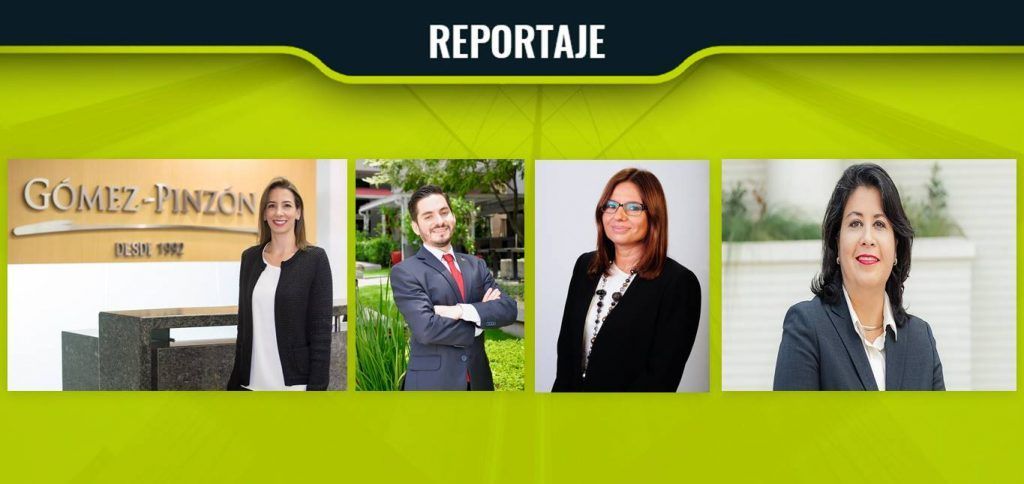
This is the first of two installments in which experts from the law firms Écija, Gómez-Pinzón Abogados and Marval O’Farrell Mairal present their views on gender diversity and the policies their firms are taking to address barriers of inequality and exclusion.
The gender equality agenda is a process that has been gaining momentum worldwide, and the legal sector is no exception. Currently, Anglo-Saxon organizations are leading the way in this area. For example, in 2017, the British firm Pinsent Masons announced the acquisition of Brook Graham, a market-leading Diversity and Inclusion (D&I) consultancy. With this acquisition, the firm aims to create a diverse and inclusive workplace and provide its clients with advice on these issues. Anglo-Saxon firms also lead rankings such as Vault’s “Best Place to Work” for diversity.
The Ibero-American legal sector, however, has much to do in this field, although there are some firms that tackle the problem head-on and are leading in this area.
For example, Cuatrecasas signed collaboration agreements with the Spanish Ministry of Health. The firm, along with eight other large Spanish companies, committed to achieving at least 25% female representation on its Board of Directors by 2020 and 33% by 2024. Garrigues and Deloitte also have equality plans in place.
Linklaters Spain runs a Women’s Leadership Programme. At PwC Spain, it’s called “Woman in PwC,” and at DLA Spain, it’s “DLA Woman in Law and Leadership Alliance for Women.” EY Abogados Spain has a program called “Women Fast Forward.” Ashurst Spain has a diversity committee, “Diversity.” And at Bird & Bird Spain, the majority of equity partners are women.
Returning to our initial point, in Latin America, although significant progress has been made, challenges remain in this area. Within the legal sector, many firms in Latin America have programs dedicated to protecting diversity and equality.
According to information from the World Economic Forum, the ILO and the OECD, women receive lower salaries for performing the same work, and even with the professional skills and education to assume leadership positions, they are not considered for positions of power within organizations and companies.
A recent study by Aequales shows that only 23% and 32% of board members and senior management positions in Latin American companies are women. Similarly, the Center for Corporate Governance Studies at CESA analyzed data from the 500 largest companies in the capital markets of Argentina, Brazil, Chile, Colombia, Mexico, and Peru. With boards of directors averaging eight members, one woman was found on every two boards, representing a 6.2% participation rate in these governing bodies. Colombia, the leader in the region, shows a 10.7% participation rate, followed by Brazil with 7.9%, Peru with 6.4%, Mexico with 5.3%, Chile with 4.9%, and Argentina with 4.4%.
“This data highlights the gender gap that exists in Latin American companies, which is why it is necessary to raise awareness among them that this is a real problem that affects us all and that only through a genuine commitment to changing this trend will adjustments be made that allow women to apply for and access the highest positions in organizations,” commented Natalia García Arenas, partner in the corporate and mergers and acquisitions area and member of the Diversity and Inclusion Committee of the Colombian firm Gómez-Pinzón Abogados.
For his part, Daniel Valverde Mesén, a partner in the labor and human rights area at Écija, pointed out that inflexible work schedules, or working grueling hours, continue to be a “glass ceiling” that women face in the region. “In our region, we urgently need more initiatives and regulations to make work schedules and hours more flexible, in addition to addressing the gender pay gap.”
Daniel, who is also the Chief Diversity Officer (CDO) in Écija, Costa Rica, responsible for cultivating a work environment that fosters and respects diversity and inclusion, emphasized that “flexible work schedules, the absence of inflexible workdays, and the option to work from home some days are tools that could help break down the glass ceiling that women face, empowering them to reach more prominent positions within organizations. It is also necessary to strengthen the legal stipulations of ‘equal pay for equal work’ so that they are not merely empty words.”
What is the role of the legal profession in promoting equality/diversity?
Natalia García Arenas (Gómez-Pinzón Abogados): “The principle of equality should be in the DNA of all lawyers, so we have a responsibility to generate these changes at the societal level. Through our interaction with clients from different industries, we have the opportunity to open discussion forums and begin analyzing these issues within organizations. At GPA’s Diversity and Inclusion Committee, we have a line of action dedicated to gender equity, where we have promoted workshops and events with clients to discuss these issues and raise awareness.”
Daniel Valverde Mesén (Écija): “Our profession gives us a leading role in promoting inclusion and diversity in society. As consultants, we advise our clients on the non-discrimination standards they should apply in their business and/or employment relationships. We can assist in including contractual clauses that obligate contractors and suppliers to meet minimum diversity standards and commit to not engaging in discriminatory practices. As employers in the legal industry, we also have an important role in putting diversity into practice: avoiding bias during hiring, fostering trust to allow for more flexible work schedules, or enabling teleworking, which can be applied widely in our profession.”
Why is it more common to see diversity policies in the Anglo-Saxon world that even announce specific and compliance objectives than in Latin America?
Daniel Valverde Mesén (Écija): “We believe this is due to differences in corporate culture. Clearly, to measure whether a policy has achieved the expected results, there must be compliance targets. Our region needs to move towards this model, where we can quantify the impact of diversity policies and see the progress or challenges we face in this area.”
Natalia García Arenas (Gómez-Pinzón Abogados): “In Latin America, this discussion is only just beginning, so it’s still not common to see companies committing to specific, measurable objectives. The issue needs to be developed further to establish metrics that can be met with the support of organizational leaders.”
According to BCG Analysis, while only 66% of women compared to 83% of men apply for promotions in companies with little commitment to gender equality, in companies committed to gender equality, 83% of women and 87% of men apply.
In the case of law firms, the more women who become partners, the greater the likelihood that younger female lawyers will see that position as a viable career path to which they have dedicated years of effort. Therefore, firms should work to increase female representation in their partner teams, not only to improve corporate governance but also to ensure the firms’ future survival.
Are companies prepared for this new model of society where there are no barriers of inequality and exclusion?
Natalia García Arenas (Gómez-Pinzón Abogados): “Voices are beginning to be heard, particularly among the younger generations, who are pushing for change. There are already law firms with a real commitment, and this is creating market pressure for other firms to join this initiative, in a profession that in Colombia has become predominantly female.”
Daniel Valverde Mesén (Écija): “Law firms are not exempt from the endemic problems we have mentioned, particularly with regard to the participation of women in the highest hierarchies of organizations, as partners in them.
Unfortunately, we see that in law firms, the highest positions have minimal female representation. In fact, there are firms that don’t have any female partners.
In Écija, we have worked towards an environment where a person’s gender or background is irrelevant; their success within our organization depends solely on their abilities and leadership. While we still face challenges, all our colleagues should share this same goal.”
Several studies have confirmed that diverse groups make better decisions and contribute to progress. On this point… What are the firm’s tangible policies and commitments to address potential gaps in terms of gender equality (pay gap, equal representation of partners, and discrimination in promotions)?
Daniel Valverde Mesén (Écija): “One of Écija’s fundamental pillars has been its commitment to diversity. Our Costa Rica office strengthened its standards in 2018 when it enacted a diversity and inclusion policy, and recently in 2020, the firm created the position of Chief Diversity Officer.[/chief diversity officer.] The Chief Diversity Officer (CDO) is responsible in Écija for cultivating a work environment that fosters and respects diversity and inclusion. To this end, they will develop initiatives that promote inclusion, such as providing training or organizing activities. The CDO must identify areas where the organization can improve in terms of diversity and inclusion. They may investigate or request redress in the event of a reported act of discrimination, and may support (or be part of) the office’s investigative committee to review sexual harassment in the workplace.
In Latin America, although there has been significant progress in the inclusion of women in the labor market, there are still important challenges that must be faced.
María Inés Brandt (Marval O’Farrell Mairal): “For more than four years, Marval has been working with a strong commitment to gender equality, with the goal of progressively increasing the number of female and male lawyers in career positions within a maximum of five years. Through individualized guidance and specific, systematic support, we promote the career advancement of female lawyers at a similar pace to that of their male counterparts. We have established policies that favor the retention of female talent.”
The Diversity Committee and the Human Resources team spearheaded the Empower Program. This program consisted of four modules, each with two or three workshops, involving approximately 20 professionals per workshop. Through various activities, exercises, and videos, they addressed topics such as:
- Recognition and revaluation of women’s unique characteristics in the workplace.
- Strategic Career Planning.
- Positioning and Personal Branding.
- Leadership.
In 2018, within the same framework, we invited our male and female professionals to a new series of talks, exploring everyday situations that compel us to reflect on diversity and our stance towards it. We held the workshop on three dates, and nearly 100 professionals, including members, associates, and technicians, registered.
In 2019, we emphasized the various diversities and formed specific working groups for each one. Specifically regarding gender issues, the Women’s team sponsored the opening of our first lactation room, supported women and men in helping their children adjust to school age, and began outlining the firm’s soft landing policy.
2020 is a unique year, but the work continues. We are currently preparing a business development and women’s leadership workshop that we will be offering in October and this November.
Natalia García Arenas (Gómez-Pinzón Abogados): “We have gender equity policies focused on providing the same opportunities to men and women. Promotion and recruitment are based on objective factors and without gender distinction. We have salary ranges for the firm’s lawyers without gender distinction that allow for equal pay for equal work.
30% of our partners are women (when the average for firms in Colombia is approximately 15%) and we are committed to ensuring that there is always at least one woman as a member of the firm’s executive committee.”
At Líder Legal, we are committed to contributing to positive change, and as a media outlet, we have an important role to play. Today, we reflect diverse perspectives, speaking with experts from leading firms in Latin America about gender and racial diversity, equality, and exclusion. We are committed to a more inclusive society, and therefore, we will be the platform to showcase all initiatives in these areas promoted by the legal sector.
To be continued…