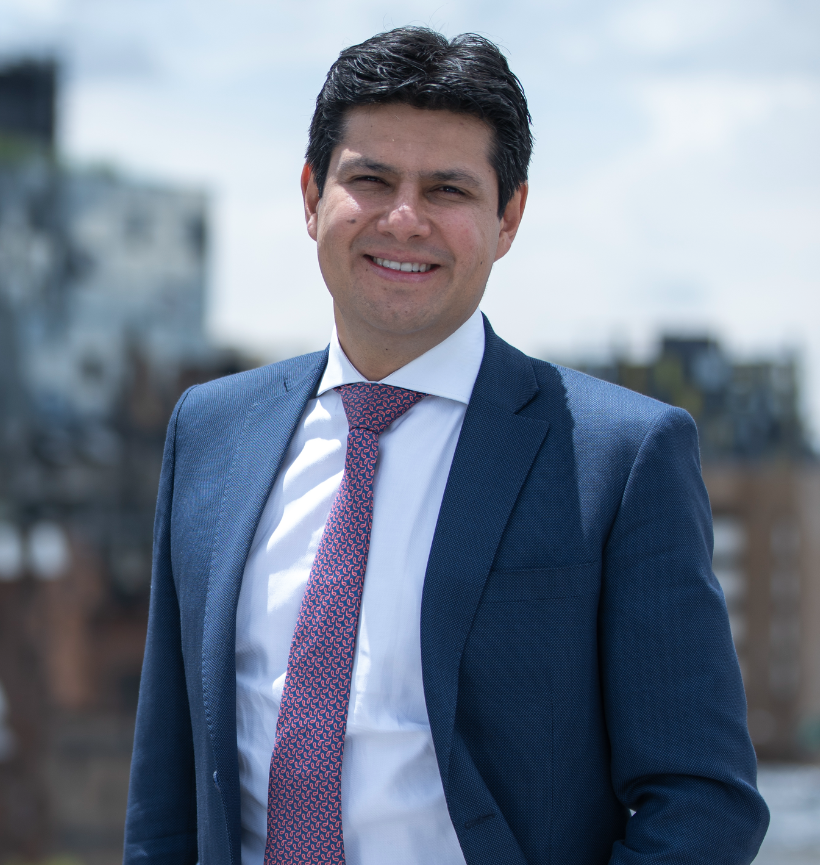

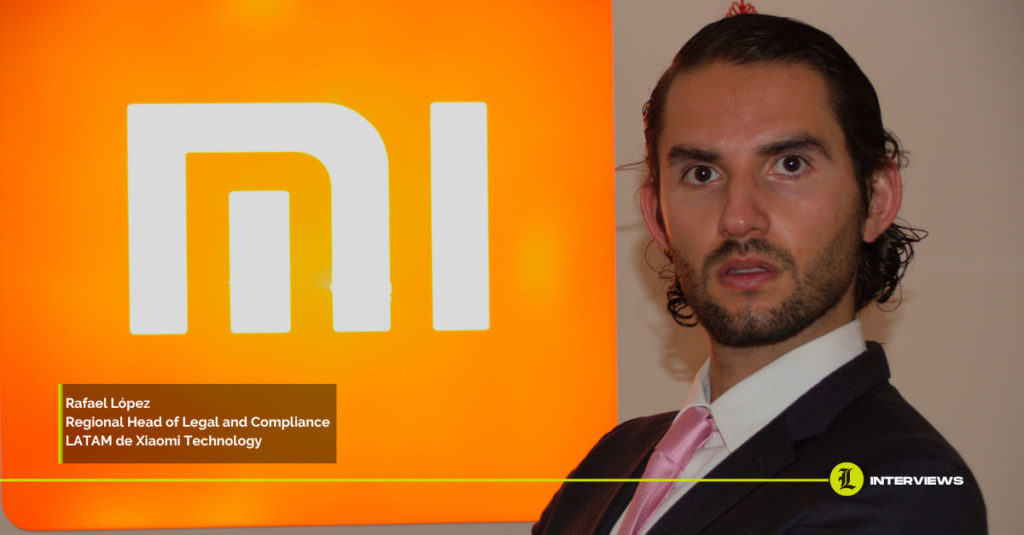
Rafael López, Regional Head of Legal and Compliance LATAM at Xiaomi Technology, argues that in Latin America, the legal function is currently exercised on a country-by-country basis: each jurisdiction requires its own interpretation before any trade policy can be scaled up to the region. The tariffs of up to 50% that Mexico has applied since January 2026 to Chinese goods without a free trade agreement, the reduction of exemptions for low-value packages in Brazil, and the accelerated tightening of data protection laws in Chile, Colombia, and Peru illustrate, according to López, the same logic: the speed and direction of regulatory change vary so much from one country to another that each adjustment must be negotiated locally.
This same caution regarding fragmentation explains why plans to bring the SU7 and YU7 electric vehicles to the region—currently only available in China—remain without a date or commitment. For López, the conclusion is inevitable: “In a highly regulated industry, it’s very difficult not to reinvent operations in each country.”
Brazil, meanwhile, reduced exemptions for low-value e-commerce packages. With this patchwork of different measures from country to country, how does Xiaomi design a legal and compliance strategy that works across the region without reinventing the approach in each jurisdiction?
In a highly regulated industry, and considering the volatility and diversity of laws in each country of the region, it’s very difficult not to reinvent operations in each country. While we do have certain commercial policies and principles that we strive to implement uniformly across the region, we always have to conduct thorough research and adapt our commercial efforts as required by the geopolitical circumstances. Maintaining strong relationships with local partners is always a great help.
In our 2024 conversation, you told us that Xiaomi’s electric vehicles would arrive in the region “in the not-too-distant future.” Today, the SU7 and YU7 models are already a reality in China. What stage is the plan to bring them to Latin America at now, considering the new tariff environment?
Currently, the cars are only sold in China. Given their overwhelming popularity, the entire production run is sold within the Asian country. However, the company is looking to expand its production line, and with that, they will soon be sold in other regions as well. There are no confirmed plans for Latin America yet.
In 2024, you told us that legaltech and AI were still far from being reliable tools, beyond management tasks. With the advancement of generative AI in these two years, has that assessment changed, or do you still see the same limitations regarding reliability and privacy that you mentioned then?
I believe that, although they have achieved a bit more accuracy, they are still tools with reliability issues and potential privacy risks. Nevertheless, they can be very useful for reducing the time spent on some daily tasks or for guiding you toward where to begin your search in specific legal cases where you may not be an expert.
We also discussed in 2024 the lag between Latin America and Europe in terms of personal data protection. Would you say that this gap has closed, remained the same, or widened in these two years, and how much has this demanded of your legal team?
This trend has undoubtedly been implemented and will continue. More and more countries are focusing their data protection legislation on strict regulations that promote and protect the personal data collected and processed. This is why we have seen new data protection requirements in countries like Chile, Colombia, and Peru. In response, legal teams must constantly update their practices and modify or strengthen internal policies to ensure compliance with applicable laws.
You built Xiaomi’s legal team in Latin America from scratch at the end of 2020. Five years later, and with this new environment of trade tension, how different is that team today in terms of size, structure, or the type of profile they hire, compared to the one you built during the pandemic?
The team has grown significantly. From just me, we now have more than 10 lawyers spread across the Americas. Our approach to human resources remains the same: legal professionals who are business experts with legal knowledge. For us, soft skills and interpersonal skills are paramount, as you have to meet the expectations of dozens of internal clients with diverse backgrounds and entirely different responsibilities, all aimed at strengthening the business. Fortunately, most of the lawyers who joined the team a few years ago continue to develop and grow alongside the firm. On the other hand, we have been fortunate to bring in new talent who have integrated fantastically, contributing their knowledge and strengths to the team.
You are participating this year in the Foro Gerencias Legales México 2026, which is being held today, September 3, in Mexico City, on the panel “Fintech and the Future of Financial Services in Latin America.” What do you hope to contribute to this conversation based on your experience in the industry?
It’s a very interesting panel, especially considering it’s one of the fastest-growing markets in recent years. From my experience, I hope to contribute by sharing how Xiaomi has engaged with the industry. I also hope to share some insights from my experience using these services in my hospitality business, taking a dynamic approach that highlights both the benefits and the challenges faced by users in this industry.
What topic in this year’s program—besides the one you are assigned—interests you most as an attendee, and why?
I believe the discussion on operating in high-risk environments and corporate resilience will be of great interest to most attendees. From my perspective, constant geopolitical shifts and changes in regulations sometimes create a state of alert where it’s crucial to be able to operate while weighing risks and without becoming a hindrance to the business.
If you had to summarize the biggest change in your work over the last year and a half, would it be more due to the company’s growth, the arrival of electric cars, tariff tensions, or something we haven’t mentioned?
I believe it’s a combination of company growth, introducing new products like large appliances, and expanding and growing in countries where we don’t have direct operations. Of course, geopolitical tensions are always something to monitor, but fortunately, for the moment, we’ve managed to continue our characteristic growth while fully complying with applicable laws.
The other narrative that runs through the conversation with Rafael López is organizational. In 2020, he was Xiaomi’s only lawyer in Latin America; today, he leads a team of more than ten professionals distributed across the continent, all hired under the same criteria: lawyers capable of operating as business partners, with sufficient soft skills to engage with sales teams of diverse profiles. This expansion is occurring in parallel with new product lines—large household appliances—and the company’s entry into markets where it doesn’t yet have a direct presence, while generative artificial intelligence is only just beginning to alleviate operational burdens without fully resolving its risks related to certainty and privacy. For López, geopolitical tension is yet another variable to monitor within a growth that, he affirms, the company has managed to sustain while remaining compliant with applicable laws in each market.