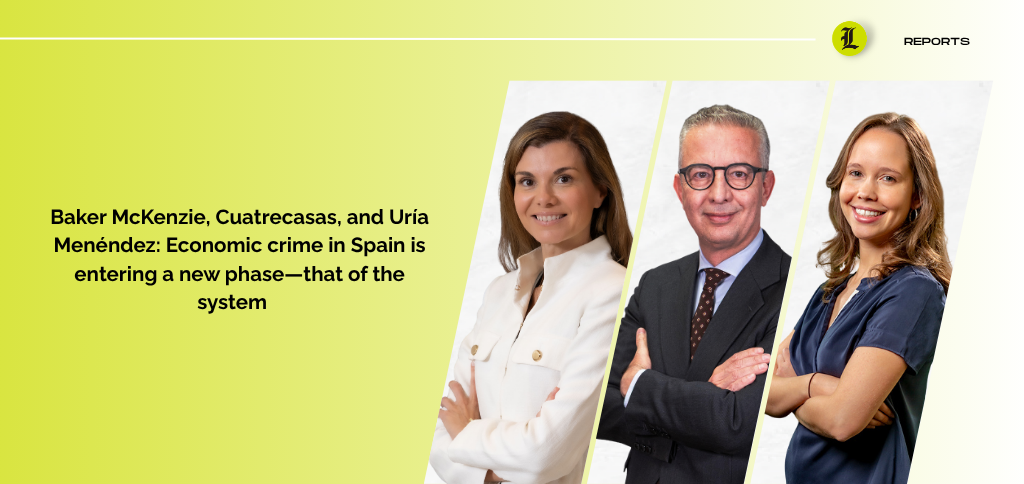

From the moment the COVID-19 pandemic was declared, and despite the current uncertainty, major law firms such as Baker McKenzie, Cuatrecasas, Garrigues, and Uría Menéndez have remained committed to Environmental, Social, and Governance (ESG) criteria. These firms have placed sustainability at the heart of their business strategy for the coming years, moving from ambition to action and aligning all their services with the Sustainable Development Goals (SDGs), considering them a roadmap for contributing to the economic and social development of the communities in which they operate.
Their priority from the outset of the health crisis has been to ensure the health and well-being of their teams and customers, and it is toward this goal that they have directed all their efforts. They state, in general terms, that they are in a privileged position to help drive change on some of the biggest problems facing the world.
These large firms have learned from the pandemic that the health of the planet, the well-being of people, and business development are interconnected realities that progress better not only if they are addressed together, but also if they allow for the reconstruction of a fairer, more equitable, and more resilient society.
What do you think is the role of the legal profession as an engine of social change?
Jaime Trujillo, Regional Chair for Latin America at Baker McKenzie: “Global law firms, like Baker McKenzie, are uniquely positioned to help drive change on some of the biggest issues facing the world. Not only do we advise some of the world’s largest companies, but we are a large global organization in our own right and, as such, we have a responsibility to use our position to effect change.”
The essence of what a law firm does on a daily basis is to promote and support the rule of law, so it’s a natural focus for us. We consider access to justice and the rule of law to be fundamental. We also believe that businesses cannot thrive where peaceful and inclusive societies are lacking. Therefore, we must play a vital role in fostering effective and accountable institutions that support them. Peace, justice, and strong institutions are essential foundations for economic growth and development.
The legal profession in general can help businesses understand the rules—voluntary or mandatory—that apply to them and how they should improve their own operations to drive social change. And the legal profession as a whole can and should set an example for businesses and society, demanding the highest standards of itself, raising the bar and getting everyone to rise with us, raising our sights to exemplary standards rather than merely acceptable ones.
Jorge Badía, CEO of Cuatrecasas: “We strive for gender equality and diversity as a reflection of the values of our environment applied to our firm. We are committed to ensuring that our teams have a healthy and fulfilling life by fostering a flexible and efficient work culture and providing health and wellness services that deliver the best client service and work-life balance for our employees.”
We are aware that our activity has an environmental impact and we implement measures to reduce it, with special emphasis on technology.
We support other initiatives that generate a social contribution from our work, especially pro bono legal advice. The activities of the Cuatrecasas Foundation are part of our corporate responsibility and are geared towards the realization of the rule of law and justice.”
Garrigues: “To contribute knowledge, experience and, above all, common sense to face the great challenges of our time. We are moving in a constantly evolving, disruptive and sometimes confusing scenario, in which a coordinated global response based on science and law is necessary.”
Ana Suárez Capel, Director of Sustainability at Uría Menéndez: “The 2030 Agenda and its 17 Sustainable Development Goals (SDGs) constitute the United Nations’ plan to combat the world’s major challenges, ranging from eradicating poverty to fighting climate change, as well as education, equality, quality work, the design of our cities, clean water, and environmental protection. And, as a unifying element for all these challenges, there is the value of justice. All the goals of the 2030 Agenda are interconnected and require integrated solutions to address them effectively, but it is undeniable that the Agenda cannot succeed without starting from societies with an impartial, effective, and non-discriminatory justice system, which—together with strong institutions based on the rule of law—guarantees access to justice for all, including the most vulnerable. This is where the legal profession, as Those involved in the public function of administering justice have a fundamental role to play in achieving social change.”
What are some of the good environmental, social, and governance practices that have been implemented in the last year and a half of the pandemic?
Ana Suárez Capel, Director of Sustainability at Uría Menéndez:
Environmental practices:
i. Publication of the manual of good environmental practices with guidelines and suggestions to optimize the use of resources in the office that can be followed individually in daily activity.
ii. Let’s plant the UM Forest! To optimize paper consumption and improve usage habits (for every 10 kg of paper saved, the office will plant a tree).
iii. Donation of 1400 holm oaks to the Madrid City Council to alleviate the damage caused by Filomena.
iv. Pilot test for the use of recycled paper in the Barcelona office.
v. Awareness measures for the correct recycling of waste associated with COVID-19 (masks, gloves, hydroalcoholic gel containers, etc.).
Social practices:
i. Flexible working hours.
ii. COVID-19 serological tests in June 2020 for all members of the office and weekly face-to-face tests since that date.
iii. Subsidies for the purchase of computer monitors and laptops.
iv. Free parking in the office’s parking lot.
v. Specific training for the management of psychological, emotional and family aspects related to COVID-19 and to teams working remotely.
vi. Promotion of ClubUM activities.
vii. Reinforcement of cleaning protocols, renewal of ventilation and air conditioning filters.
viii. Widespread availability of masks and hydroalcoholic gels.
ix. Initiatives aimed at improving the health and well-being of professionals, such as online training sessions and the “Pills for Escape” project with proposals, information and audiovisual materials on art, culture, family, gastronomy, history, literature, etc.
Good governance practices:
i. Strengthening of all internal communication channels.
Jaime Trujillo, Regional Chair for Latin America at Baker McKenzie: “For us, there has been a real push to address the evolving needs of our people, especially regarding health and well-being. The boundaries between home and work have become blurred, and we have a responsibility to our people to help them establish and enforce boundaries to protect their well-being.
Even before the pandemic, our firm prioritized efforts to integrate mental and physical well-being into the concept of success in the legal profession. The firm’s wellness initiatives are based on the understanding that individuals have different needs and support requirements. We have adopted a holistic approach to well-being, incorporating a range of events, newsletters, and support resources, along with regularly scheduled meetings between our junior and senior staff.
Garrigues: “From the moment the pandemic was declared, and despite the uncertainty, Garrigues made a global commitment not to adopt any extraordinary measures to reduce or freeze salaries or layoffs.
We have continued to invest in talent, bringing on board young professionals from universities around the world and promoting from within. The firm’s strength is also reflected in our 2020 revenue of €386.9 million (a 1.4% increase), which once again positions us as the largest law firm by revenue in the European Union.
On the environmental front, it has been an intense and very positive year. We reached a significant milestone: 100% of our offices in the EU now use renewable energy, and 87.5% globally. Furthermore, we launched the Becoming Net Zero initiative: for more responsible consumption, more sustainable spaces, and a smaller carbon footprint, which was selected as one of the 101 business examples of #ForTheClimate. We have also been included by the Financial Times and Statista among the leading companies against climate change for our track record in reducing greenhouse gas emissions.
Garrigues’ social work has also been extensive in terms of social action initiatives and pro bono consulting with 127 beneficiary organizations. We would like to highlight the first global solidarity campaign we launched in support of the Federation and food banks in the 13 countries where we operate, with a donation equivalent to more than 300,000 kilos of food.
We also increased our outreach efforts to our stakeholders. Our lawyers have made a significant effort not only to analyze the regulations and communicate them in a timely manner, but also to provide added value by truly understanding the needs of businesses during such a complex year. We launched multidisciplinary and multi-country teams that have produced nearly 700 publications related to the impact of COVID-19.
Cuatrecasas: “From a business perspective, the fact that our team grew in 2020 is a clear sign that we are on the right track. We opened two new offices in Bogotá (Colombia) and Santiago (Chile), completing our geographic presence in Latin America. We closed 2020 with more than 100 lawyers in the region. We were able to maintain our global sales.”
2020 was a year for prioritizing environmental, social, and governance (ESG) issues. We believe in the transformative role of the rule of law and are taking an active and responsible role in advising companies on their new responsibilities in the global marketplace. We have done so by incorporating ESG criteria into our strategic plan.
In terms of results, we have taken small steps that point in the direction we want to progress: we have reduced the gender gap by two percentage points in the number of managers and in the committees that structure the firm; and both the 2020 and 2021 partner promotions in Spain met our parity requirements. We have made progress in the area of diversity, and we have done so tentatively, but steadily, hand in hand with REDI, the first Business Network for LGBTI Diversity and Inclusion in Spain.
Additionally, the firm has an Environmental Plan with measures to reduce its environmental impact. Measurements are taken in the Madrid and Barcelona buildings in accordance with the Regulation on Thermal Installations in Buildings (RITE) and regarding Legionella. Furthermore, all Cuatrecasas offices undergo regular indoor air quality measurements of CO2, relative humidity, and temperature. We have invested in technology, process adaptation, and new spaces to reduce commuting and, consequently, our carbon footprint. The firm also encourages the use of public transportation with benefits for employees, and larger offices offer…Free parking spaces for bicycles and similar vehicles. The number of these spaces was increased in 2020.
The Madrid and Barcelona offices hold LEED Gold certification, the Mexico City office LEED Platinum, and the Lima office LEED Silver. This internationally standardized certification guarantees that building systems and natural resources have been optimized to minimize the impact on the environment and the people who inhabit the buildings. It evaluates indicators such as site selection, choice of materials and construction techniques, energy consumption, indoor environment, and water and waste management.
Each year, the firm seeks to reduce its electricity consumption by implementing system improvements and replacing light fixtures with more durable and efficient ones. Every year, Cuatrecasas participates in Earth Hour as a way to raise awareness and take action against climate change and thus prevent the loss of biodiversity.
How do you integrate sustainability into all your strategies, processes, and services?
Cuatrecasas: “We conduct our business with a commitment to contributing to the achievement of the Sustainable Development Goals (SDGs) adopted in September 2015 by the United Nations. We are aware that we must adopt ambitious environmental objectives, implement effective policies respecting human rights, inclusion, diversity and equality, and achieve higher standards of corporate governance and transparency. Furthermore, as a law firm, our purpose is to support our clients in their own commitments to the SDGs.”
Ana Suárez Capel, Director of Sustainability at Uría Menéndez: “We are a law firm that carries out our activity responsibly, trying to contribute to the economic, social and environmental progress of our environment, and with the desire to be a pillar of support for society as a participant in the public function of administering justice.
Our activity is regulated internally by policies, codes and principles that reflect our firm commitment to sustainability, and all people who are part of Uría Menéndez have the duty to know, understand and comply with them.
The pillars of our responsible activity are:
- Code of Conduct.
- Guiding Principles of the Customer Code of Conduct.
- Supplier Code of Ethics.
- Corporate Social Responsibility Policy.
- Human rights policy.
- Environmental policy.
- Pro bono work manual.
- Professor Uría Foundation”.
Jaime Trujillo, Regional Chair for Latin America at Baker McKenzie: “We have placed sustainability at the heart of our business strategy for the next decade, moving from ambition to action by significantly aligning our core services with our sustainability goals. For us, a responsible business means building a company for the future, one that can continue to support our clients’ success while preserving our commitments to our people, our communities, and our planet.”
In addition to maintaining our commitment to the 10 Principles, we have aligned our efforts with the Sustainable Development Goals (SDGs). We see the SDGs as a roadmap for achieving our vision for the company’s future and an opportunity to collaborate with like-minded organizations to reach our shared objectives.
To ensure our sustainability strategy was relevant and met our unique needs, we undertook a comprehensive materiality assessment in 2018. By conducting interviews and surveys with more than 1,400 internal and external stakeholders worldwide, we were able to identify and prioritize the issues that mattered most to our people, our customers, our communities, and society at large. It was no surprise that issues such as inclusion and diversity, well-being, business ethics and good governance, human rights, talent attraction and development, and climate were among the most important to our stakeholders. These material issues informed our sustainability strategy and the SDGs we have prioritized for the company.
In 2020, we appointed our first Chief Sustainability Officer, Alyssa Auberger, a move that reflects the importance we are placing on sustainability as a key strategic and business priority for our firm.”
Garrigues: “We do it from a dual approach:
- As a company , we integrate ESG commitment and conduct our business guided by the UN Global Compact (of which we have been members since 2002) and the Sustainable Development Goals (SDGs) of the United Nations’ 2030 Agenda. Within this framework, we work to ensure diversity and equal opportunities, and to protect the environment by minimizing our greenhouse gas emissions and promoting environmental awareness. For the past 15 years, we have published an annual integrated report that compiles all the sustainability actions we have undertaken.
- As a legal and tax firm , we guide our clients on the path to sustainable development, convinced that a company committed to sustainability emerges stronger from any challenge. This vision was already present in 2000 when we anticipated the market with the launch of G-advisory, our technical consulting subsidiary specializing in energy and ESG, which has been advising companies worldwide on their sustainability challenges for over two decades.”
How have you adapted your activities and strategies during this time of COVID to meet your commitments to the 2030 Agenda?
Garrigues: “Generally speaking, we haven’t had to make any major adjustments because we already had a long track record and a firm commitment to the 2030 Agenda, which has allowed us to face the pandemic effectively. From the beginning of the health crisis, we were clear that the priority was to guarantee the health and well-being of our team and our clients, and we directed all our efforts towards that.”We are proud of the result achieved.”
Ana Suárez Capel, Director of Sustainability at Uría Menéndez: “Our priority has always been people and their health and well-being, and this is even more true now in the complex situation we are experiencing as a result of COVID-19. We also try to be as environmentally responsible as possible and contribute to the economic and social development of the communities in which we work.”
Cuatrecasas: “100% of Cuatrecasas offices have undergone risk assessments. Offices and workstations have been adapted following the recommendations of the Ministry of Health and the firm’s established COVID-19 Protocol. We are aware that our activity has an environmental impact and we implement measures to reduce it, with a special emphasis on technology.
In response to the crisis generated by COVID-19, Cuatrecasas created the COVID-19 Pro Bono Task Force. This team developed the “Practical Guide on Legal Issues Arising from the State of Emergency” and its four updates throughout 2020 to adapt it to new regulations. The team specialized in advising non-profit organizations on matters related to the new regulations resulting from the pandemic and delivered specific seminars for the third sector.
Jaime Trujillo, Regional Chair for Latin America at Baker McKenzie: “What this pandemic has undoubtedly demonstrated is that major societal problems are not confined to national borders. When violence, corruption, and inequality occur in one place, they are likely to have a global impact. Global problems require a global approach. We must collectively address issues such as the rule of law and corruption, which underpin our ability to tackle broader global issues like climate change, violence, and inequality.”
To that end, we have increasingly focused on our commitments to key policy-making forums, such as the World Economic Forum and the United Nations Global Compact.”
What are the environmental, social, and governance goals for the coming years?
Jaime Trujillo, Regional Chair for Latin America at Baker McKenzie: “In 2018, we publicly announced that we would significantly reduce our global carbon emissions over the next decade. These carbon emission reduction targets drive our internal environmental efforts across the firm, are an integral element of our broader sustainability strategy, and support the UN SDGs.
Specifically, we have committed to:
- Reduce our emissions from energy consumption by 92% by 2030.
- Develop an air travel strategy for 2022.
- Publicly report on carbon emissions and targets for 2021.
We also set ambitious gender targets in 2019, committing to systemic changes to advance gender equality within our company. The “40:40:20” targets aim to establish representation figures of 40% women, 40% men, and 20% flexible individuals (women, men, or non-binary people) to be achieved by mid-2025, but the targets apply immediately to candidate pools for lateral hires of partners and senior professionals, and in other specifically defined cases.
Cuatrecasas: “Cuatrecasas’s priority in the social sphere is to work towards gender equality and diversity within its teams and to continue building a robust pro bono practice that contributes to the rule of law and access to justice. In the environmental sphere, Cuatrecasas is committed to sustainability in the mobility and travel of its professionals and the efficiency of its offices. Finally, professional ethics, conduct, and the prevention of corruption are the essential pillars of the firm’s good governance, along with transparency and the participation of its teams in the management of its activities.”
Ana Suárez Capel, Director of Sustainability at Uría Menéndez: “In environmental matters, the main objective will be reducing our carbon footprint. In social matters, issues of equity, diversity and inclusion, and health and well-being will shape our agenda for the coming years.”
Garrigues: “We have defined three levels of contribution to the SDGs based on your business, your corporate policies, and your pro bono and social action program. The firm focuses its efforts on promoting the rule of law (Goal 16), sustained economic growth (Goal 8), and fostering partnerships (Goal 17).
Furthermore, through its corporate policies, it promotes the SDGs of health and well-being (Goal 3), learning opportunities (Goal 4), contributes to achieving gender equality (Goal 5) and economic growth (Goal 8), fosters innovation (Goal 9), ensures equal opportunities (Goal 10), adopts sustainability practices (Goal 12) and urgent measures to combat climate change and its effects (Goal 13).
Finally, with our pro bono program and social action initiatives, in addition to those already mentioned, we contribute primarily to SDGs 1 and 2: ending poverty and achieving zero hunger.”
Is the application of ESG criteria a strategic and commercial priority in the firm?
Fernando Vives, Executive Chairman of Garrigues: “Sustainability planning is key, as it aligns us with the objectives and interests of our clients and with those of society; for this reason, for many years it has been part of our strategy and business model, to the point that today it is one of our three strategic pillars along with the internationalization and digitalization of the firm.”
Jaime Trujillo, Regional Chair for Latin America at Baker McKenzie: “Absolutely. We have the opportunity to offer our clients leading ESG advice, but to do so credibly, we have to do things right. Our clients want to work with companies that share their values and can help them achieve their sustainability goals.”
Cuatrecasas: “Cuatrecasas recently launched a new Environmental, Social and Governance (ESG) unit to research, discuss, and support all of the firm’s practice groups on environmental, social, and corporate governance matters. With its launch, we are opening a space for the creation of legal knowledge aimed at providing better advice to the firm’s clients in these areas.”
Ana Suárez Capel, Sustainability Director at Uría Menéndez: “Yes, indeed, sustainability is a strategic priority for the firm and, consequently, the focus on ESG criteria, information about which is increasingly demanded by our stakeholders.”