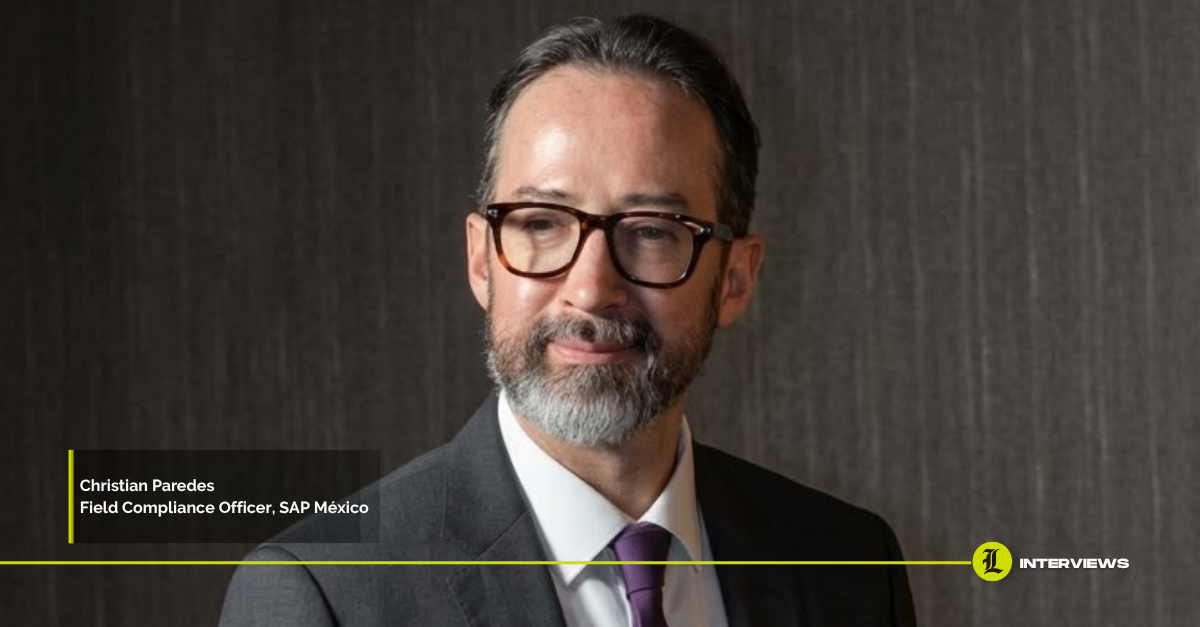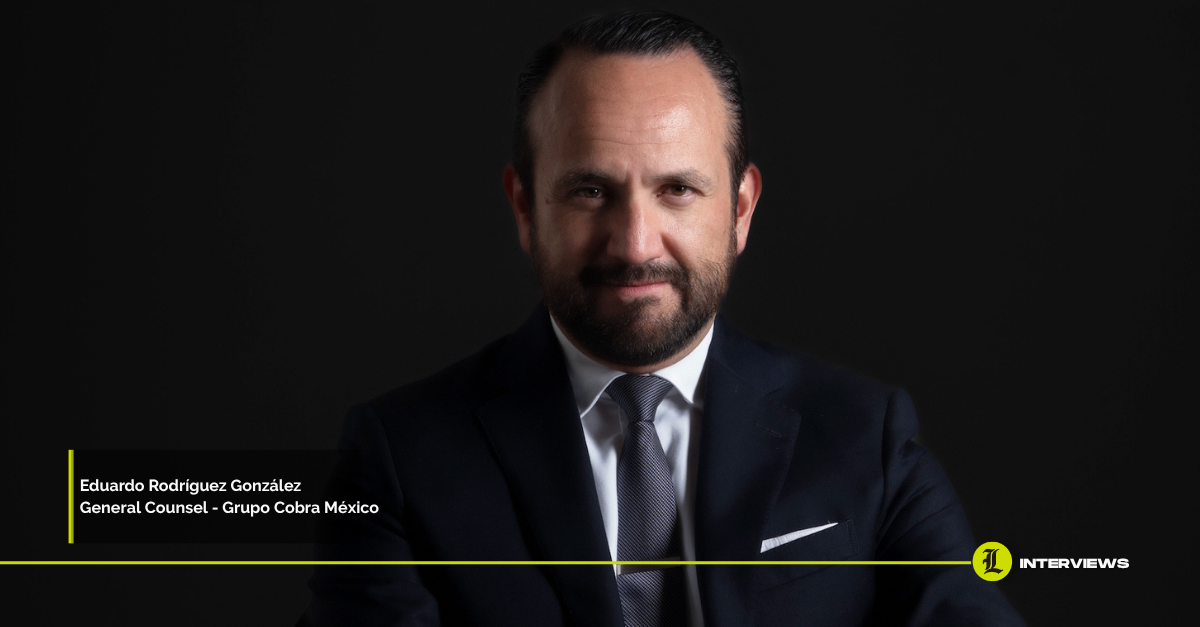



Felipe Hasson, general counsel at GMX Group, places the legal role in a different light than usual: not as an area that validates decisions, but as a function that participates in their design. In a context where organizations are growing in complexity—especially at the international level—his vision redefines when the legal area truly begins to have an impact, what structural errors keep recurring, and why the greater value of legal judgment often goes unnoticed.
“The legal area ceases to be a final filter and begins to participate in defining the very structure of the decision.”
Felipe Hasson doesn’t frame the role of the general counsel in terms of visibility or hierarchy, but rather in terms of the timing of intervention. In his experience, the difference lies not in being present, but in when one enters the conversation. “You support a decision when you’re asked to validate something that’s already been decided.” That, for him, is the classic model. The problem is that, at that point, the structure is already defined and the actual margin of influence is limited.
The change happens earlier. When the legal department gets involved in how the decision is made: the model, the risk allocation, the execution, and even the selection of opportunities. “That’s when the general counsel stops being a reviewer and becomes an architect of the transaction.” It’s not a nuance. It’s a change of role.

The place where legal criteria really make an impact
This shift also redefines where value is generated. In complex organizations, especially in business groups with an international presence, relevant decisions are not resolved in binary terms. “It’s not just ‘it can be done or it can’t be done,’” explains Hasson. The real question is different: how to do it intelligently, efficiently, and defensibly.
That is where legal criteria cease to be a layer of protection and become a tool for construction.
“It not only reduces risk; it also creates competitive advantage, accelerates negotiations, protects value, and prevents costly mistakes before they happen.”
The impact, however, is not always obvious. In fact, it rarely is. For the lawyer, “the most valuable legal work is rarely the most visible.” And he explains it precisely: it appears in what doesn’t happen. A contingency that doesn’t materialize. A clause that allows for a timely exit. A structure that avoids tax or regulatory friction. A negotiation that preserves control or liquidity.
It’s a type of silent, yet structural value. The kind that allows growth without dragging problems into the future.
Governance: the problem that seems operational but isn’t
Within that invisible terrain, Hasson focuses on a particularly sensitive point: internal governance.
In business groups, many tensions arise not from major strategic decisions, but from poorly defined structures: diffuse authority, unclear approval processes, misaligned incentives, or unevenly distributed responsibilities.
From the outside, they may seem like operational issues. In practice, they erode efficiency and create friction between departments.
“A poor definition of powers, approvals, incentives, or responsibilities can generate friction between departments and a real loss of value.”
That is where the legal criterion, when properly applied, ceases to be technical and becomes structural.
When legal arrives late: from designing to containing
If there is one idea that runs through the entire conversation, it is the cost of intervening late.
“When legal arrives late, it is usually no longer designing, but containing damage.”
The difference isn’t semantic. It’s economic. When the legal department gets involved last, the organization has already made commitments, generated expectations, and, in many cases, invested resources in a direction that’s difficult to reverse.
The first impact occurs in the negotiation. The margin for adjusting key variables—price, liability, exclusivity, or deadlines—is drastically reduced.
Then, the problems pile up: tax inefficiencies, compliance risks, incomplete documentation, governance gaps, or avoidable disputes.
“What seemed to buy time at first often ends up costing much more time and much more money later.”
The paradox is obvious: avoiding legality at the beginning to go faster is usually the slowest – and most expensive – way to do things.
The profile that changes the weight of the role
In this context, the value of the general counsel no longer depends solely on their technical knowledge. Hasson places business acumen at the forefront. Understanding how the company makes money, where its margins lie, and what risks it can take.
But the real difference is built on other layers.
Communication is one of them. “It’s not enough to be legally sound; you have to know how to translate complexity into clear decisions.” And here he introduces a relevant nuance: “The language of the CEO and the CFO is different.” Failing to adapt can generate friction, gridlock, or even unnecessary alarm.
The ability to navigate ambiguity also emerges. Important decisions rarely come with complete information. They demand judgment, internal analysis, and the capacity to decide without absolute certainty.
And finally, credibility. “It is built when the business perceives that the legal department is not there to block things by reflex, but to make them viable with sound judgment.”
It is this balance – between protection and construction – that redefines the weight of the role within the organization.
The conversation that is not yet happening
Ahead of the Foro Gerencias Legales y Arbitraje en Miami, Hasson identifies a clear gap in the current debate.
“There needs to be a more honest conversation about the general counsel as a business designer and not just a risk manager.”
It’s not just about participating in decisions, but about intervening in how the company scales, internationalizes, and distributes responsibilities without becoming disorganized.
This reveals a tension that many organizations still haven’t resolved: speed versus governance. “Many companies want to grow faster without redesigning their internal architecture,” he states.
The result is usually predictable: structures that do not keep up with growth and problems that appear later on.
In environments like that of Latin American companies operating in the United States, this complexity intensifies. It’s not just a legal issue, but also a matter of friction between systems, cultures, and ways of operating.
“The most value-adding GC is the one that understands not only the law, but also the friction between systems.”
What Felipe Hasson proposes is not an evolution of the legal role. It is a relocation. The general counsel is no longer in the final stage of the process—correcting, adjusting, limiting—but is instead positioned at the point where the business is actually defined.
Not as a function that reacts, but as one that anticipates. Because, in environments where decisions are increasingly complex and the margin for error more costly, the true value of the legal department lies not in avoiding problems when they arise. It lies in preventing the business from being built on them.