
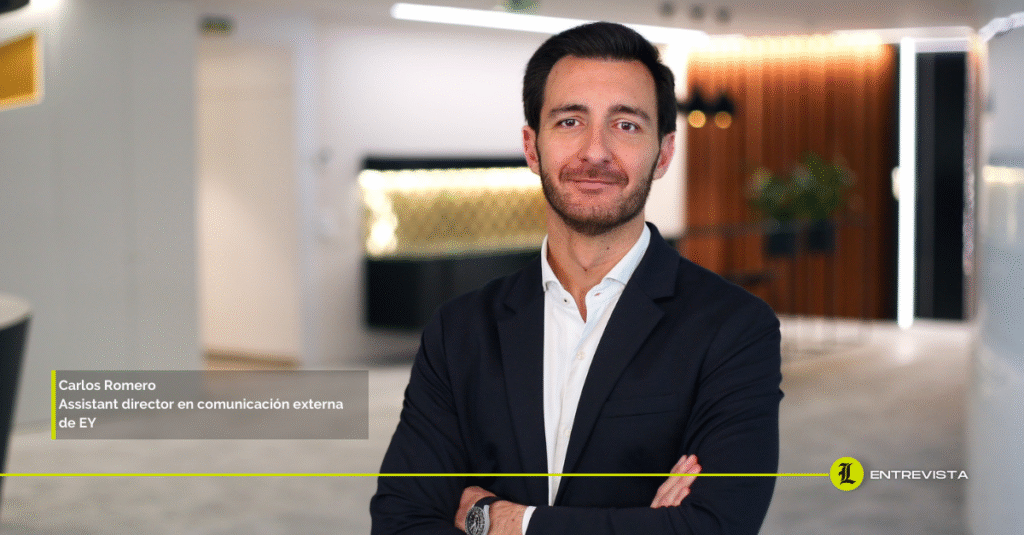
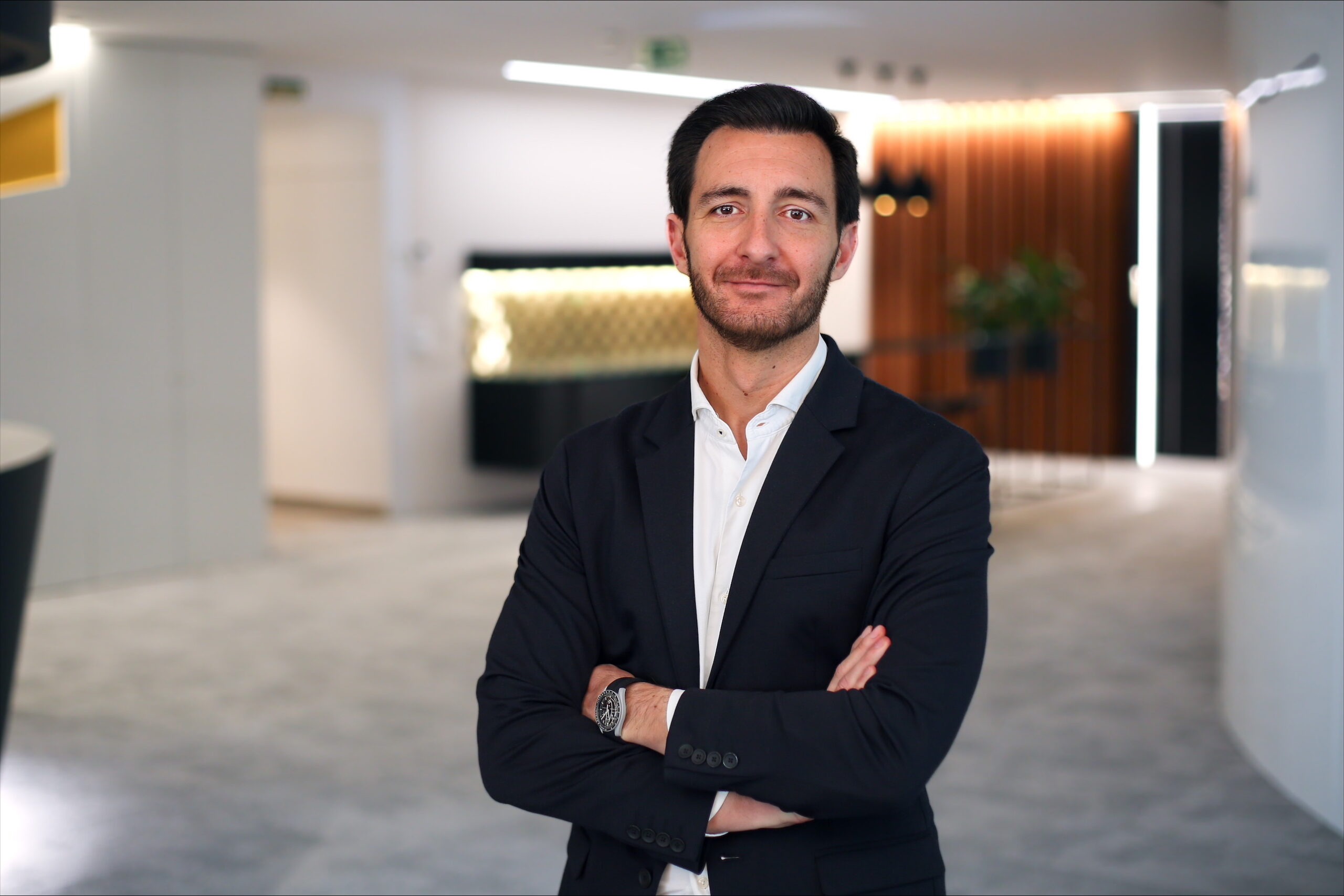
In “Voices of Development, Communication and Legal Marketing” On this occasion, I spoke with Carlos Romero, assistant director of external communications at EY.
During our conversation, Carlos highlighted one of the most positive aspects of working at EY as the fact that it “allows you to show who you really are.” In his case, he confesses that “closeness and naturalness are part of my way of working.”
“In communication, it is essential to build strong relationships both within the organization and with journalists, and I have always felt comfortable in that area,” he said.
He says he prefers to think twice before acting, especially in a legal environment, “where decisions sometimes have to be made very quickly.” He says that his “professional development has been a continuous learning process: every situation, every moment of tension, successes, and mistakes have given me tools that I carry with me. Let’s say I have a backpack full of experiences and lessons learned that help me navigate the legal sector with greater confidence.”
Given that Carlos has worked in communications at other law firms, I asked him about the lessons he learned there, which are now fundamental to his current role.Carlos Romero is clear on this: The balance between prudence and approachability is key.
“The most important thing is to build trust, both inside and outside the office. To communicate well, you need to know what is happening internally, have a good relationship with the teams, and understand the sensitivities of each area.
And in your relationship with journalists, closeness and transparency, as far as the sector allows, are essential. They understand perfectly well that there are limits, but they greatly appreciate sincerity, clarity, and availability. That balance between prudence and closeness is key.
In addition, EY has an environment where collaboration is the norm. “There are experts in virtually every conceivable area, and there is always someone willing to help and contribute. That makes working with the media much easier. When you find colleagues who are eager to collaborate and understand the value of corporate communication, everything flows much more quickly.
Furthermore, working in a firm with such a high profile forces you to keep up to date with what is happening not only in Spain but also internationally. Having that global vision and deciding which issues we should take a stand on, and which we should not, is demanding but also very enriching.”
“Prudence is an obligation, not an option”
For Carlos, the challenge is “knowing how to distinguish between what can be said and what is better left unsaid. Prudence is an obligation, not an option.”
He adds that it is “essential to choose the right spokesperson for each issue and to assess when it is better not to take a position. In the legal sector, communication is not always the best strategy: sometimes, the best communication is discretion.”
As for the strategic objectives and priority challenges for 2026, Carlos says they will seek to “further boost the profile of EY Abogados, generate more quality content, and increase our media presence. There is a wealth of knowledge within the firm, and our goal is to leverage it, making it accessible wherever we believe it makes sense for us to be present as a law firm.”
In such a dynamic context, Carlos Romero highlights proactivity and understanding when it is necessary to communicate as the main opportunity.
“I believe that one of the main opportunities lies in being increasingly proactive with the media, not waiting for the phone to ring, but anticipating their needs and making ourselves available to them before the news breaks. It is also important to be very aware of when something is really newsworthy and when it does not add informational value; this avoids bombarding journalists with content they do not need and allows press releases to have more impact when they truly deserve it. In addition, we see room for innovation in formats that are more useful and adapted to the current pace of journalism, facilitating their work and providing real value.
AI as an ally, not as a leader
I work with AI quite a lot, and it’s true that it makes the job much easier, especially when you have to deal with very long reports or quickly identify whether there is data with informative potential. Even so, it always requires very careful review. You have to use your judgment, organize the information well, and give it a coherent narrative.
AI is a very useful tool, and it will become even more so, but we cannot delegate the work of communication to it. It lacks the sensitivity and context that a human team provides. Ultimately, a tool can generate answers, but professional skills, judgment, ethics, experience, and decision-making abilities still lie with people. AI accompanies, but it does not lead. And I think that’s how it should be. Technology evolves, but what gives direction and meaning to work remains human.
3 steps to differentiate yourself in a competitive market
The first step is to define a feasible and realistic strategy, taking it step by step but with your sights set on the long term, i.e., with a clear vision of where the firm wants to go.
Second, generate truly relevant content that demonstrates the firm’s strengths and unique knowledge.
Finally, be consistent. Reputation is built like a building, brick by brick; “prefabricated” solutions or gimmicks may provide temporary visibility, but they are the first to collapse when the hurricane hits.
In short
What piece of advice or wise phrase have you received that you still apply in your work today? I like the phrase ‘walk a mile in someone’s shoes.’ In communication, it’s very helpful when you’re trying to understand what the other person really needs. If they’re in a hurry, keep that in mind and quickly tell them whether you can help or not. Or, if they ask you for a sentence, don’t give them 400 words. That kind of thing helps a lot. Who has been the person who has most influenced your career and why? A Google executive—I’d rather not say her name—once told me: “You’re probably already what you wanted to be a few years ago, and in thirty years you’ll want to be that again.” That phrase stuck with me because it teaches you to value what you’ve achieved and, at the same time, to enjoy the moment you’re in. Define your work style or personality in one word and tell us something that inspires or motivates you outside of work. Approachable. Outside of work, what inspires me most are the stories my three children tell me when they get home from school. They help you put things in perspective, see them with more insight, and remember what’s truly important. What word defines you? Loyal. A sport? Soccer. A song? “Grita” by Jarabe de Palo. Are you good at cooking? What’s your signature dish? My seafood fideuà is pretty decent. A childhood memory? Spending all day outside with my friends from Cádiz. [En pocas palabras0]A key to success?[/En pocas palabras0] Enjoying what you do. [En pocas palabras1]What inspires you?[/En pocas palabras1] I’m inspired by people who contribute without making a fuss. [En pocas palabras2]A book?[/En pocas palabras2] The Director, by David Jiménez.