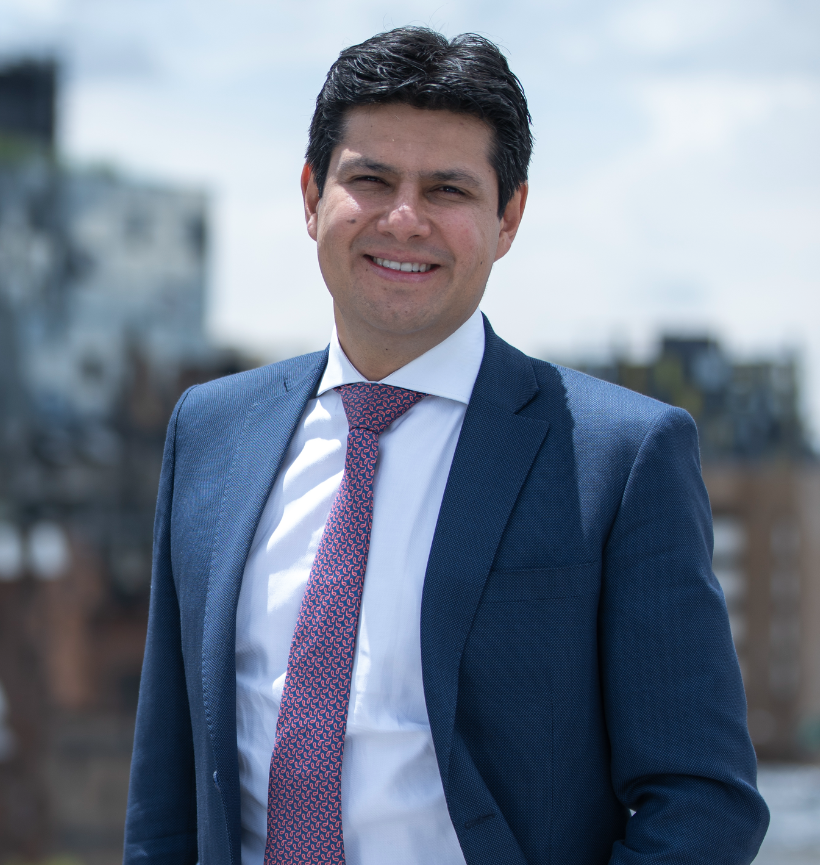

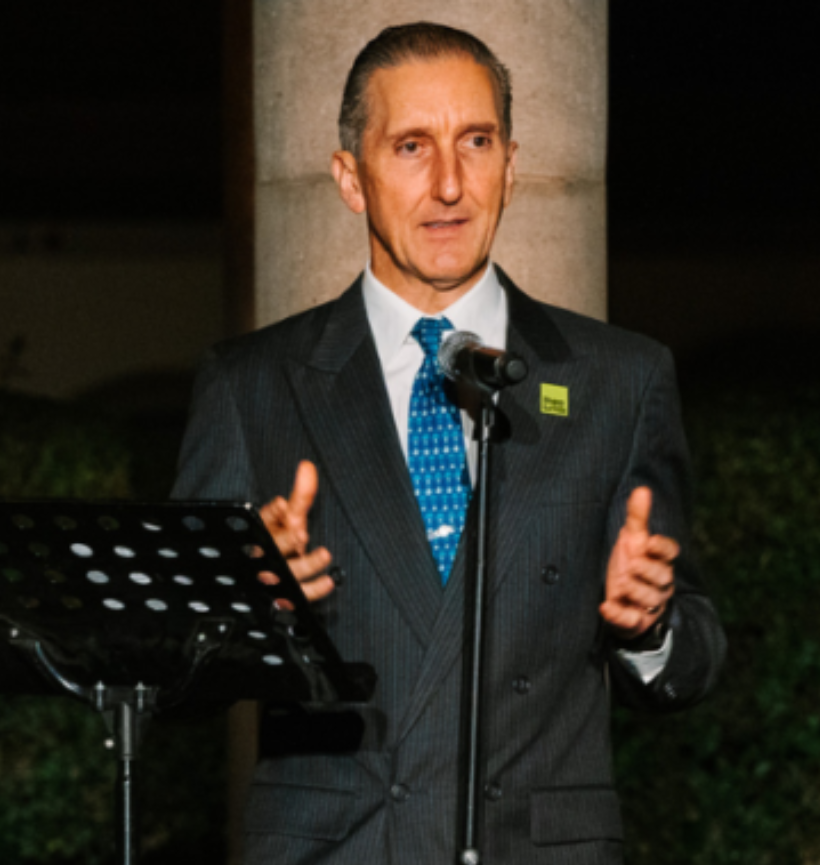
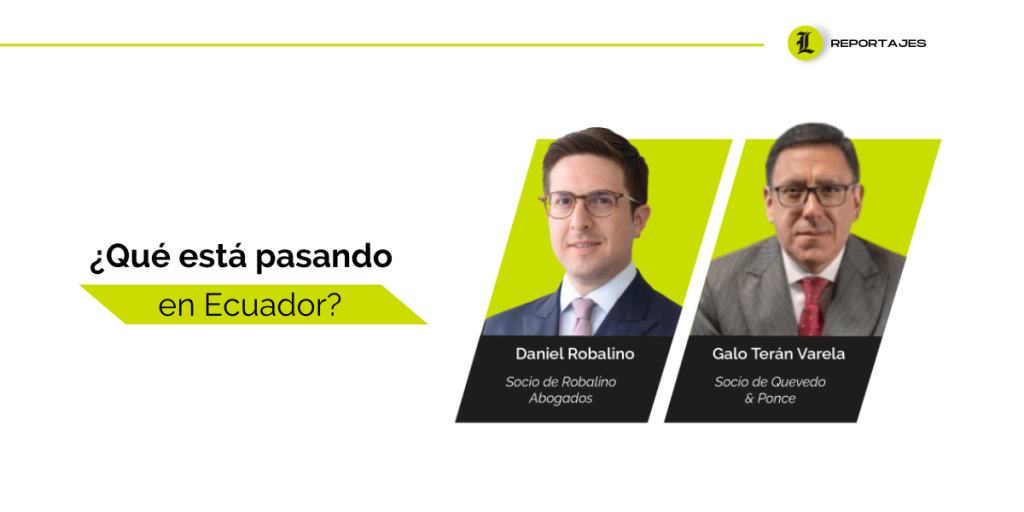
After a tumultuous week in Ecuador, in which various acts of violence led the government of President Daniel Noboa to declare first a state of emergency and then an internal armed conflict, following the incursion of a group of armed men into a television station during a live broadcast, we consulted the opinions of Galo Terán Varela, partner at the firm Quevedo & Ponce, and Daniel Robalino-Orellana, partner at the firm Robalino Abogados, on the impact of the recent measures decreed by the Ecuadorian president.
22 criminal gangs were declared as terrorists
In the opinion of Daniel Robalino-Orellana and Galo Terán Varela, the state of emergency declared by Executive Decree 110 (and extended by Executive Decree 111) implies a call for the intervention (and now mobilization) of the National Police and the Armed Forces throughout the national territory. Furthermore, it entails the suspension and/or restriction (as the case may be) of certain rights such as freedom of movement and freedom of assembly, among others, always subject to the cause that motivates this declaration.
According to lawyers, this means the Armed Forces will now be performing complementary internal security tasks. The grounds for declaring a state of emergency, as permitted by the Constitution, are aggression, international or internal armed conflict, serious internal unrest, public calamity, or natural disaster.
To the above, Daniel Robalino added that “this declaration marks an unprecedented step in the history of Ecuador. Through Executive Decree 111, the Government declared 22 criminal groups—gangs that had been operating and have become a threat to the integrity of the State—as terrorist organizations.”
A state of civil war
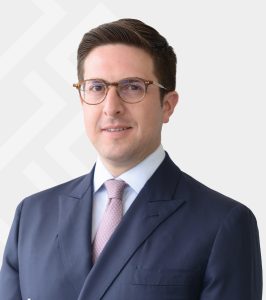
Daniel Robalino explained that the “internal armed conflict” decree has at least two important implications. “The first is the change in status attributed to internal tensions, while the second is the approach taken to treat irregular armed groups.”
The provisions of the Additional Protocol to the Geneva Convention, relating to the Protection of Victims of Non-International Armed Conflicts (Protocol II), ratified by Ecuador, can help us distinguish the type of conflict. Article 1, paragraph 2, distinguishes between circumstances of “internal tensions and disturbances, such as riots, sporadic and isolated acts of violence and other similar acts”¹ and so-called armed conflicts, whose hostility is greater and therefore requires more forceful measures.
For this reason, the second decree issued (Decree 111) categorizes specific groups listed in the regulation as “terrorist organizations and belligerent non-state actors,” ordering them to be “neutralized” by the Armed Forces (under international humanitarian law and respecting human rights). These are provisions that are not always present in a state of emergency.”
Galo Terán Varela added that, “initially, President Noboa decreed a state of emergency due to serious internal unrest (Executive Decree No. 110) on January 8, 2024, but in response to a wave of attacks nationwide, the following day he decided to update the declaration, justifying it as an internal armed conflict (Executive Decree No. 111). This makes organized crime groups (GDOs) military targets, groups which, under Decree No. 111, have been categorized as terrorists and belligerent non-state actors. In other words, the government has activated a state of civil war by declaring an internal armed conflict, and has designated the members of these GDOs as combatants, thus allowing for the use of lethal force.”
[¹]Additional Protocol to the Geneva Convention of 12 August 1949, relating to the Protection of Victims of Non-International Armed Conflicts (Protocol II) adopted in the city of Geneva, on 8 June 1977 and signed by the National Government of Ecuador on 12 December 1977.
Government acknowledges deficiencies in personnel, artillery and equipment
Daniel Robalino said that private and public proposals and initiatives have been seen to provide support from each of the actors in society, each contributing from their respective positions. He argued that “it will be important for everything to always be directed under the coordination and following the instructions of the competent authorities and obtaining information from official sources. Internationally, President Daniel Noboa received messages of military support and counterterrorism assistance from more than 38 countries. This Friday, in a radio interview, he acknowledged that the country needs assistance in personnel, artillery, and equipment. At the moment, it has not been specified which countries will provide this support or what form it will take.”
Lawyer Galo Terán Varela reaffirmed that President Noboa “has stated that he has received offers of assistance from several countries and international organizations to address this scourge; and likewise, that he has requested it from the Government of the United States of America; in fact, its ambassador was invited to a session of the Public and State Security Council.”
All actions must be framed within International Humanitarian Law, also known as the Law of War
Daniel Robalino clarified that “Executive Decree 111 explicitly states that the actions undertaken by the Armed Forces must be framed within international humanitarian law and respect human rights. The National Government, in the Decree, cites reports from the Armed Forces and the National Police regarding a situation similar to war, in which international humanitarian law must be applied.”
For his part, Galo Terán Varela added that “for this reason, International Humanitarian Law (IHL), colloquially known as the Law of War, would apply. IHL applies to the parties in an armed conflict, seeking two things: 1) to minimize the suffering of non-combatants and those who are no longer combatants, and 2) to limit the means, mechanisms, and strategies of warfare to prevent excessive actions.
The constitutional review by the Constitutional Court of Ecuador on the decree declaring a state of emergency must be awaited, as there is an expectation as to whether the condition of internal armed conflict will be maintained, in accordance with definitions from international human rights law and international humanitarian law.
Ecuadorian lawyers must become watchdogs of the actions of justice operators
Daniel Robalino pointed out that given the prevailing impunity that has failed to address organized crime in Ecuador, “lawyers must always be the first to comply with all provisions of local law. Furthermore, legal professionals must advise and answer inquiries with the awareness of the responsibility that the profession demands, especially in circumstances such as the current ones.”
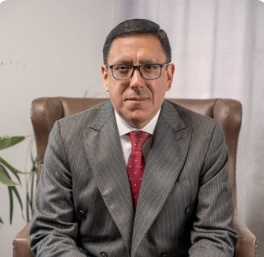
For his part, Galo Terán Varela added that “lawyers have a very important role to play, on the one hand, both at the levelBoth individually and collectively, we offer the government the necessary and highly specialized legal support to ensure that its actions and those of the security forces are timely, effective, and framed within national and international law. Furthermore, we act as watchdogs of the actions of justice system operators, denouncing the misconduct of certain prosecutors, judges, and lawyers. It should be noted that all persons suspected of having committed a crime have the right to a lawyer of their choice. However, if lawyers are part of criminal organizations and provide legal counsel for their operation, these lawyers must be sanctioned by the bar associations (if they are affiliated with them—since membership in professional associations ceased to be mandatory in Ecuador in 2008) or by the Council of the Judiciary, based on the provisions of the Organic Code of the Judicial Function.
Lawyers are cautious in assessing the effectiveness of legal and security measures
At the time of our interview, Daniel Robalino informed us that “the legal and security measures adopted remain in effect, so it is necessary to constantly monitor the information provided by the authorities through their official channels. There is coordination among all branches of government to achieve this objective.”
Ecuador is on alert, but, at this time, it seems to me that too little time has passed to seriously evaluate the effectiveness of the state of emergency and the operations of the Public Force.”
To the above, Galo Terán Varela added that, according to the Joint Command of the Armed Forces, more than 300 alleged members of organized crime groups have been arrested, five have been killed, 28 people who escaped from various prisons have been recaptured, and a large quantity of weapons and ammunition has been seized. Several bomb attacks have also been reported in different cities across Ecuador. In-person classes at all educational institutions are suspended and have been ordered to be conducted remotely. A large number of public entities and private companies have opted for teleworking to ensure the safety of their employees.
However, despite what has been said, we can say that the tension has decreased, although we must not neglect precautionary measures.”
Organic Law Project to Confront the Internal Armed Conflict, an initiative that seeks to reform the Internal Tax Regime Law
Finally, Daniel Robalino, partner at Robalino Abogados, hopes “that the measures taken by the authorities in each of the relevant areas will be the best and will result in solutions for every sector of the country. The private sector should promote initiatives that foster stability and economic development.”
Given the evident internal crisis, the president announced he will take some economic measures, and on Thursday he sent the draft Organic Law to Confront the Internal Armed Conflict, the Social and Economic Crisis to the National Assembly, designating it as an urgent economic measure. This initiative includes a reform to the Internal Tax Regime Law to raise the Value Added Tax (VAT) from 12% to 15%.
In conclusion, Galo Terán Varela, a partner at the firm Quevedo & Ponce, states without hesitation that this wave of violence will impact the country’s economy. “Upon learning of the events, the first reaction of small, medium, and large businesses was to close their doors and limit their operations for fear of becoming targets of attacks by terrorists and common criminals who take advantage of these situations. Furthermore, the uncertainty affects financial markets, country risk increases, payments begin to be delayed, and ultimately, the entire economic cycle is affected.”
It should be noted that we are at a breaking point where law-abiding citizens, who are the overwhelming majority, remain firm and united, reaffirming their faith in the country and its potential, and supporting the actions of their authorities to minimize the threats generated by organized crime groups, seeking to restore peace and security.”