

The legal sector is undergoing a profound transformation. Regulatory complexity, the evolution of business organisations and new models for delivering legal services are redefining not only how law is practised, but also how leadership is built within the profession.
To mark International Women’s Day, we have gathered conversations with women who are actively shaping the transformation of the legal sector. The aim is not only to discuss innovation or firm strategy, but also to understand how those redefining the profession from within think and lead.
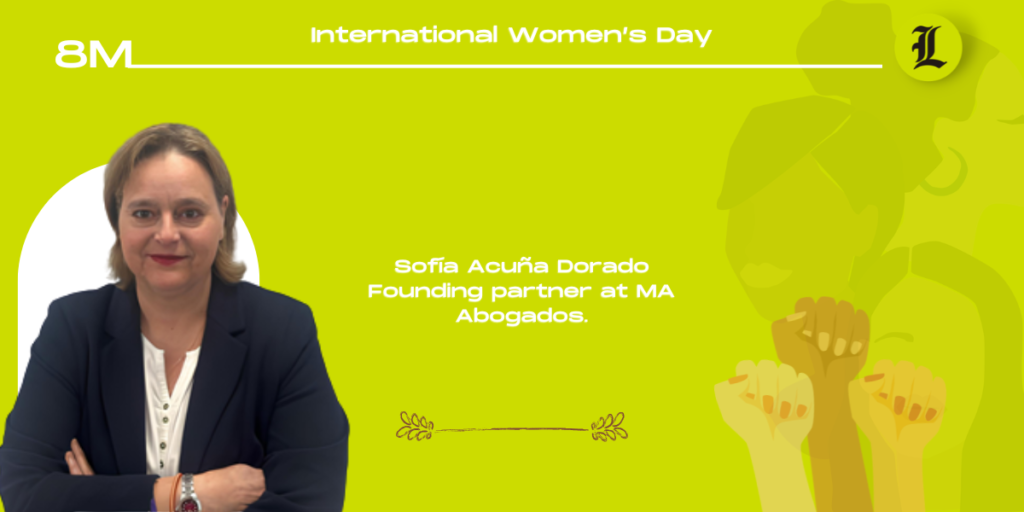
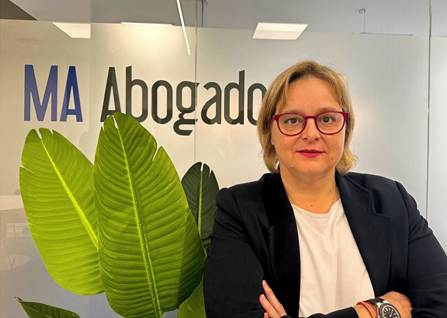
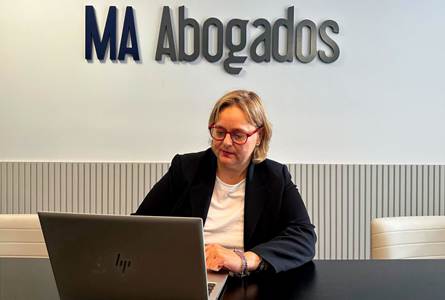
Following the interviews with Sara Molina and Natalia Martos, we continue this special feature with Sofía Acuña Dorado, founding partner of MA Abogados and named among the 100 Leading Women in the Legal Sector in 2025. Her career combines solid experience at large firms, such as Ernst & Young, with a decision that would ultimately define her professional path: leaving that structure to build her own legal project.
Specialising in public law, public procurement and litigation, Acuña has developed her leadership in some of the most demanding areas of business law. Beyond her technical expertise, however, her career reflects a very particular way of understanding the legal profession: a model in which the lawyer does not simply interpret regulations, but becomes a strategic ally capable of understanding the client’s business and guiding them through complex decisions. This vision defines the MA Abogados project today and has established Acuña as one of the most recognised voices in her field.
Lead your own legal project
The decision to leave a well-established firm like Ernst & Young to embark on her own project was, for Sofía Acuña, one of the most defining moments of her career. It meant leaving the security of a structure where she felt professionally valued to take on the challenge of building a firm from scratch.
The step generated a natural sense of vertigo, but also enormous enthusiasm for developing a legal advice model that better responded to the real needs of companies.
From the early years of his career he had observed that many clients – especially in the middle market – needed highly specialized advice that, at the same time, integrated different areas of law into a global view of the business.
The traditional office model, organized into departments that were very separate from each other, did not always allow for that perspective.
“The traditional model did not allow for a comprehensive view, and many firms remain too anchored in that scheme.”
Acuña believes that the true value of a lawyer lies in understanding the client’s business and supporting them in strategic decisions. This vision was the driving force behind the creation of Altius Abogados and later MA Abogados, a project focused on offering highly specialized legal advice while remaining connected to the realities of its clients’ businesses.
“The goal is for the lawyer to be practically an extension of the client’s in-house legal team.”
Technical excellence as the basis of leadership
Sofia Acuña’s career has developed in particularly demanding legal fields, such as public law, administrative contracting, and litigation.
For her, technical excellence is not a one-off achievement, but a process that is built over time.
“Technical excellence is cultivated through constant dedication and daily work on particularly complex issues.”
After beginning her career in corporate and commercial law, her path evolved towards litigation and later towards public law. Today she leads a multidisciplinary team that advises on complex projects in sectors such as infrastructure, energy, real estate, sports, and telecommunications.
The recognition by Chambers & Partners for eight consecutive years as a leading public law lawyer reflects, in her opinion, the sustained effort of the team and the trust of the clients.
Female Leadership in the Legal Profession
According to Acuña, female leadership is acquiring an increasingly relevant presence within the legal sector.
For decades, management positions within law firms were predominantly held by men. However, in recent years a significant shift has been taking place, broadening the diversity of profiles in firm leadership.
“Talent has no gender in law firm management.”
Although she acknowledges that challenges remain, she believes it is becoming increasingly common to find women in leadership positions within the legal sector. This change, she explains, is especially important for new generations of professionals.
Many of the female lawyers who hold positions of responsibility today have had to overcome significant barriers throughout their careers. Therefore, she is confident that new generations will find a more open path than those who began their professional careers decades ago.
Team culture and diversity
As a founding partner of MA Abogados and head of various departments within the firm, Acuña has promoted an organizational model based on collaboration and the diversity of profiles.
The firm has opted to build multidisciplinary teams of senior profile, in which women also have a majority presence.
This model, he asserts, is only possible if a work culture is fostered that allows for a balance between high professional demands and family life.
For her, 21st-century law firms must invest in diverse teams, where different perspectives and professional experiences are integrated to offer more comprehensive advice. Only a motivated and committed team, she maintains, can maintain the level of excellence that complex matters demand.
Visibility and role models for new generations
Sofía Acuña’s inclusion among the 100 Leading Women in the Legal Sector in 2025 has meant an important recognition for her, but also a responsibility.
New generations of lawyers closely observe the career paths of those who have managed to consolidate their leadership within the sector.
“New generations look to the example set by those of us who have been in the profession for many years.”
That’s why she believes it’s essential that women’s work in the legal field receives the visibility it deserves. For a long time, many women’s careers were relegated to the background within the legal sector.
Awards like this help to correct that situation and offer role models to young female lawyers starting their professional careers.
Leadership in the future of law
For young female lawyers who want to make a difference in complex areas of public or corporate law, Sofía Acuña offers clear advice: don’t look for the easy way out. In her opinion, it is precisely in the most demanding areas of law where true professional value is built.
Specializing in complex subjects requires dedication, vocation, and an enormous capacity for work, but it also offers the opportunity to develop one’s own judgment and take on challenges that many prefer to avoid.
“Let them stand up for themselves, let them not be intimidated, and let them defend their positions firmly.”
For Acuña, leadership does not come from an appointment or a title, but from knowledge, the ability to make sound decisions, and the determination to face difficult issues with professional responsibility.
That’s why he encourages new generations to dare to develop their careers in complex areas of law. It is there that the paths that truly make a difference are built.
In a rapidly evolving sector, leadership models are also changing. More and more women are taking on senior management positions within law firms, broadening the perspectives from which decisions are made and enriching the way legal organizations are led.
Because, as Acuña summarizes, the true progress of the sector will come when talent is the sole criterion for determining who leads firms. And in that process, female leadership will continue to play a decisive role in the evolution of the legal profession.