
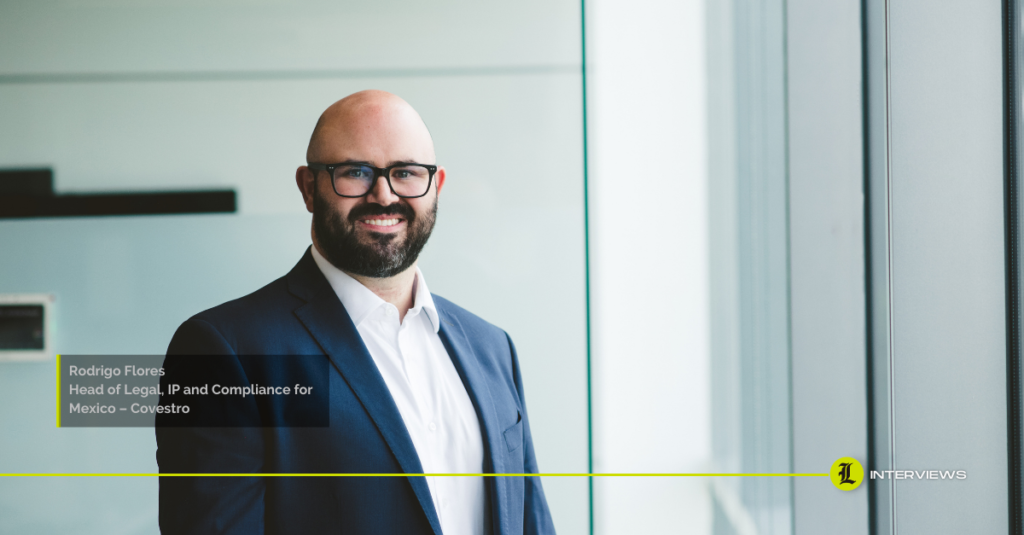
At the core of the chemical industry -where every decision affects global supply chains, intellectual property and sustainability- the legal function cannot be confined to interpreting regulations. Rodrigo Flores, speaking to Voices of Law: Dialogue with Partners and General Counsel for Latin America, has built his professional expertise on a thorough understanding of the plant, the product life cycle and the financial implications of each regulatory requirement.
From his position at Covestro Mexico, he leads a cross-functional team that integrates legal, intellectual property and compliance under a logic that is still uncommon in the corporate sphere: thinking like a business owner and operating with the discipline of a process engineer.
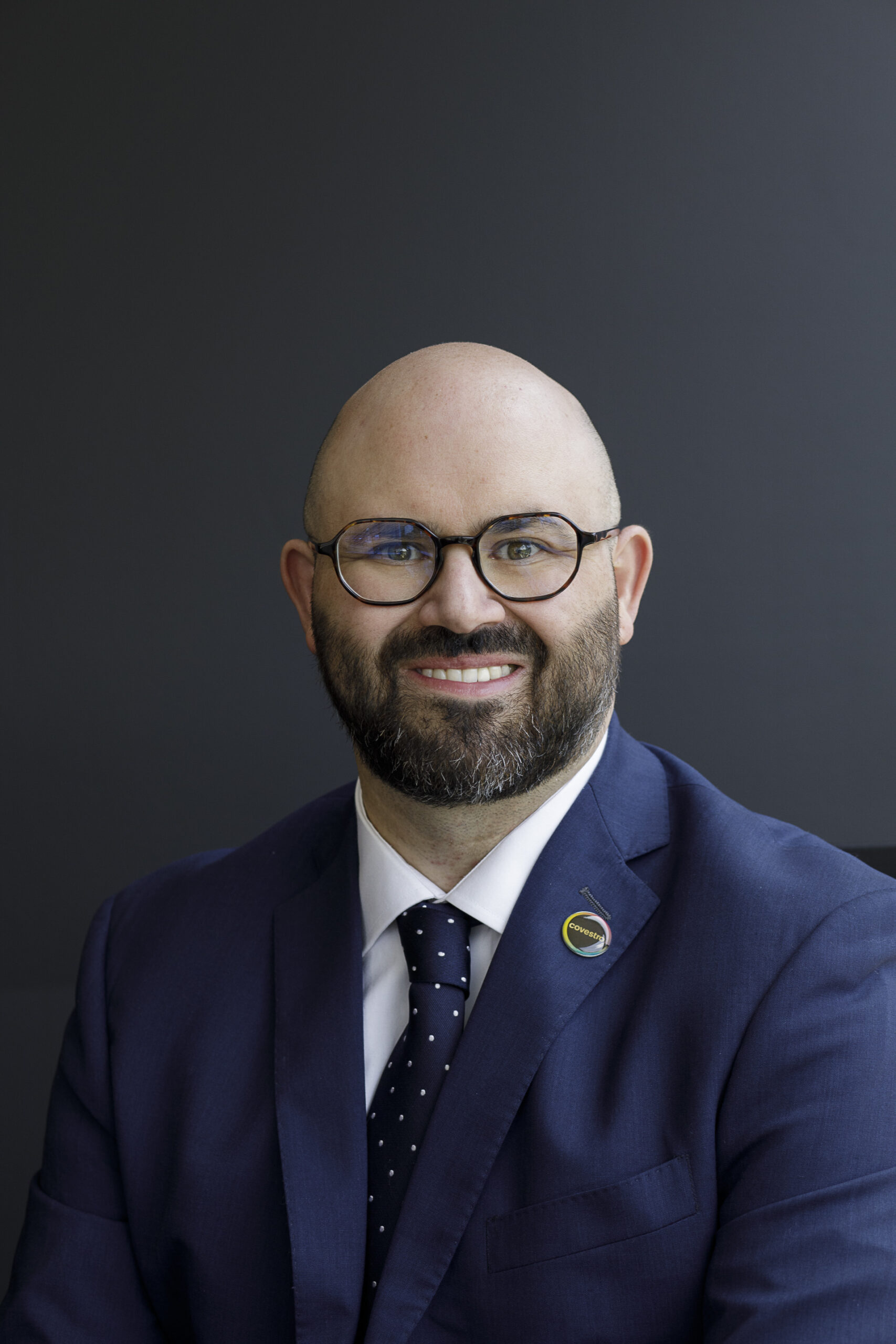
From the desk to the plant: expanding the circle of competence
When Rodrigo Flores reflects on his career, he does not define it by the positions he has held, but by a structural decision: to move beyond the isolated interpretation of rules in order to understand the full operating model.
“In a technical industry, professional judgement is not built at a desk, but by understanding the plant, the supply chain and the product life cycle.”
This shift enabled him to expand what he describes as his “circle of competence” into the realm of systemic risk management. It is not merely about knowing the law, but about understanding how it interacts with industrial operations, technological innovation and financial flows.
That perspective explains why he now leads the legal, intellectual property and compliance functions in Mexico in an integrated manner — not as parallel disciplines, but as interconnected levers within the same risk and value framework.
When the question ceased to be legal
There is a defining moment in the evolution of any in-house lawyer. In Flores’s case, it occurred when he stopped answering the question “What does the law say?” and began addressing a different one altogether.
“The role ceases to be legal when the priority is the opportunity cost.”
From that point onwards, the nature of his function changed. He was no longer simply reviewing contracts, but assessing risks with a direct impact on the P&L and on the five-year viability of the business model. The strategic dimension, he explains, emerges when legal analysis is translated into financial scenarios and investment decisions.
At that juncture, the lawyer ceases to be a support function and becomes an architect of decisions.
Innovating in compliance to gain market share
Covestro operates at the core of chemical and materials innovation — a sector in which regulation and technology evolve in parallel. Rather than viewing regulation as an obstacle, Flores frames it as a potential source of competitive advantage.
“Regulation should not be a hindrance, but a competitive advantage. If you innovate faster in your compliance processes than your competitors, you gain market share.”
The principle is straightforward: design internal processes that exceed regulatory standards before they become mandatory. In other words, anticipate the regulator — not out of excessive caution, but as a deliberate strategic move.
Institutional uncertainty and operational culture
In Mexico, the regulatory environment can be volatile. For a chemical company, such institutional uncertainty requires immediate adaptive capacity.
In intellectual property, the challenge lies in executing effectively within an ecosystem where procedural timelines do not always keep pace with the speed of innovation. In compliance, however, the challenge is deeper: building a culture capable of withstanding the friction generated by regulatory volatility.
“Compliance today is not a code of conduct. It’s an operational culture.”
That culture must remain resilient even when rules change or external pressures intensify.
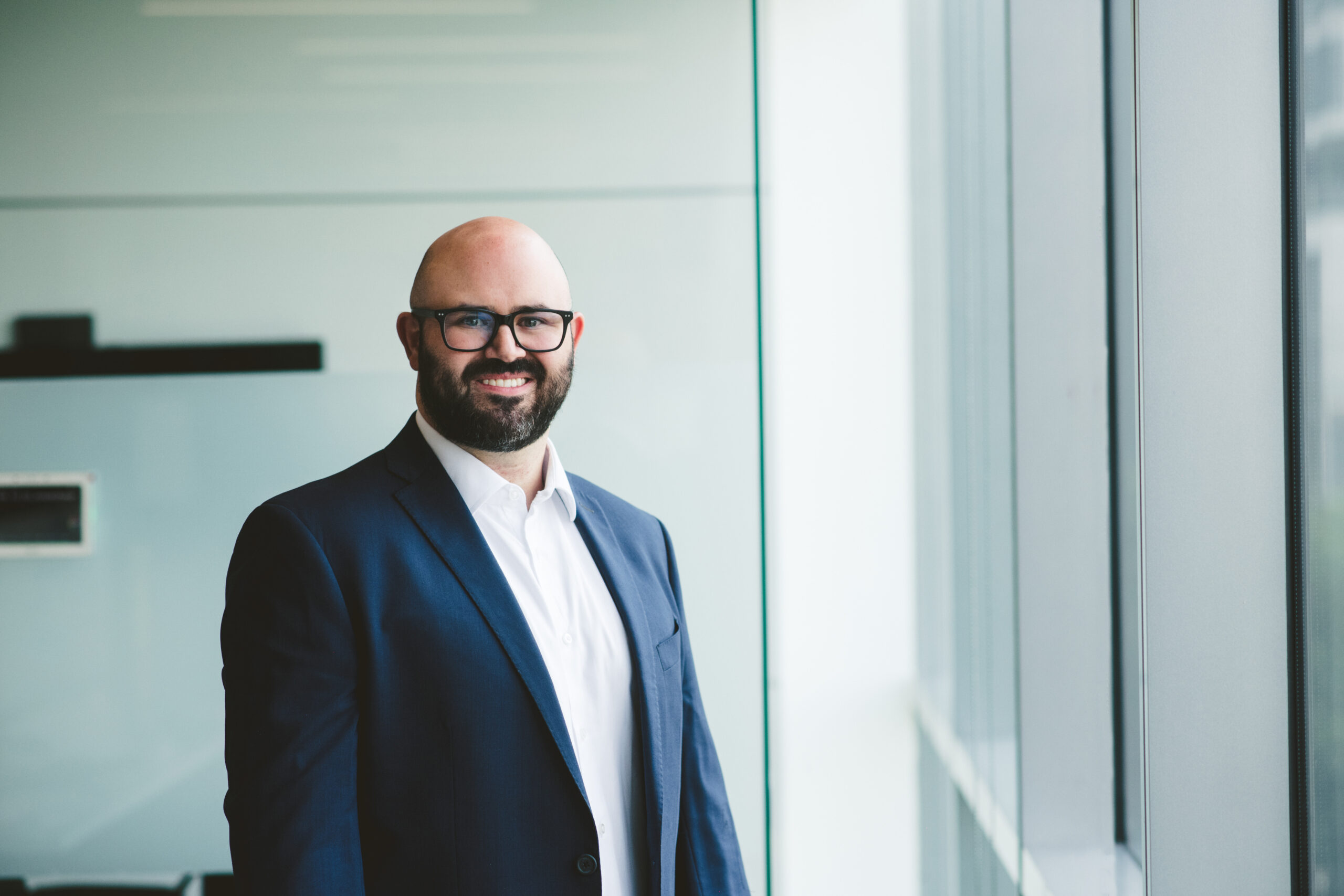
The brakes of the racing car
How does one balance the protection of innovation with executional agility in a highly regulated environment?
Flores resorts to an industrial metaphor:
“It’s the principle behind the brakes in a racing car: they exist so that you can go faster safely, not to stop you.”
Robust legal protection enables bold execution. Balance does not stem from excessive caution, but from the engineering of legal processes and the automation of transactions. By eliminating bottlenecks, the team can concentrate on where real value is created.
In daily operations, it applies the Pareto principle: 20 per cent of issues generate 80 per cent of systemic value or risk. That is where attention is focused. Sustainability, for example, is no longer reputational rhetoric, but a prerequisite for access to capital and markets. Intellectual property and contract management are treated as strategic assets aligned with financial objectives.
Certainty, not legal lectures
What does the business expect from a Head of Legal, IP and Compliance?
“Businesses expect solutions and certainty, not legal lectures.”
Trust with technical teams is built by speaking their language: metrics, deadlines and results. In technical organisations, opinions unsupported by data carry little weight. Leadership, therefore, rests on analytical rigour and first-principles thinking — questioning underlying assumptions before reaching conclusions.
Credibility is earned when the legal function closes complex transactions by identifying innovative legal solutions that others overlook; when it ceases to be perceived as a cost centre and is recognised instead as an engine of acceleration.
The lawyer of the future: a process engineer
Flores is unequivocal when describing the professional profile the industry will require in the coming years.
“We need lawyers who think like process engineers and execute like business strategists.”
He values the ability to synthesise information, a problem-solving mindset and cognitive agility. The purely academic lawyer, he cautions, becomes increasingly marginal if they do not master technological tools or understand data architectures. Automation and process redesign are not optional; they are essential to maintaining competitiveness.
In the same vein, he distinguishes between reactive external firms and strategic ones. The latter align incentives, operate as an extension of the in-house team and anticipate risks before they materialise. They do not merely accumulate billable hours; they share responsibility for outcomes.
Sustainability and reputational risk
In an industrial environment where the circular economy and sustainability set the agenda, the legal function acquires an additional layer of responsibility.
“The legal role must ensure that the sustainability narrative is supported by a solid contractual structure and certifications.”
The transition to circular models must be legally robust and commercially viable. Otherwise, the risk of greenwashing can become systemic.
Provoking the evolution of the in-house role
His participation in the Monterrey Legal Forum 2026, organised by Gericó Associates, reflects a structural concern: the efficiency of legal departments.
“We cannot continue operating under traditional models in an environment of hyper-regulation and stagnant budgets.”
He seeks to prompt an uncomfortable but necessary debate: abandoning low-value administrative tasks and reclaiming the role of strategic adviser through technology and critical thinking.
Rodrigo Flores does not conceive of leadership as a title, but as a technical and strategic function. If required to condense it into a single idea, he does so with industrial precision:
“Legal leadership is the engineering of certainty in highly uncertain environments.”
In a context where regulatory volatility, reputational pressure and technological innovation converge, his vision offers a demanding definition of the contemporary lawyer: less an interpreter of rules and more an architect of competitive advantage.
In short
What’s the smartest thing anyone has ever said to you (and who said it)?
Not long ago my mentor told me that I should always focus on what is within my control, which is usually much more than we think, and forget about what I cannot control.
A book?
Meditations of Marcus Aurelius.
A sport?
American football.
A song?
Starman – David Bowie.
If you weren’t a lawyer, what would you be?
Philosopher.
Your favorite food?
Homemade hamburgers.
What puts you in a bad mood?
People who take advantage of others.
A key to success?
Define what success means to you and build a meaningful personal and professional life.