
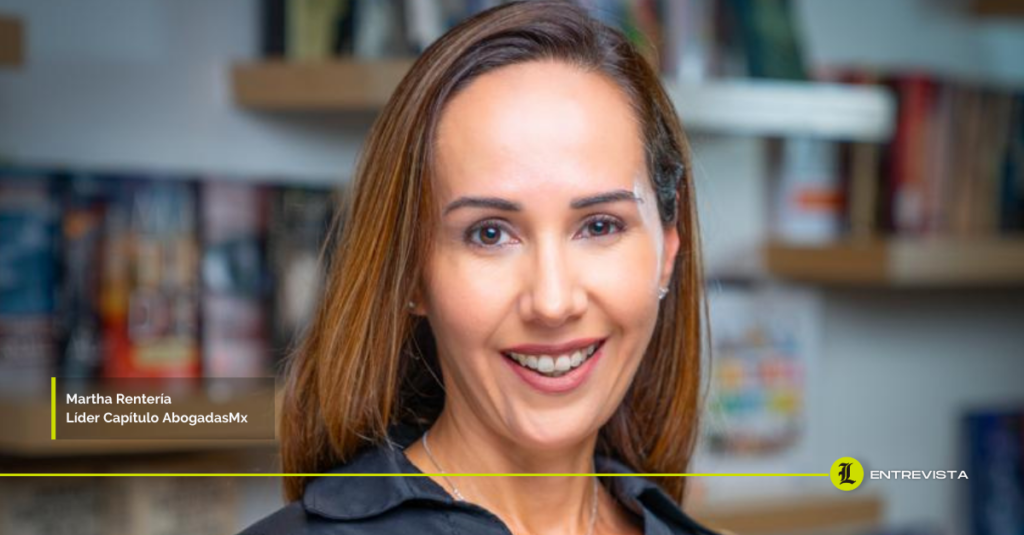
Martha Rentería didn’t build her leadership from a position, but from a personal crisis that forced her to question who she was without the title. Today, at the helm of the AbogadasMx Chapter in Nuevo León, Mexico, her commitment is neither symbolic nor rhetorical: it’s structural. In a sector where more and more women are studying law, but few reach decision-making positions, Rentería poses an uncomfortable—and necessary—question: What are we doing wrong in the design of the system?
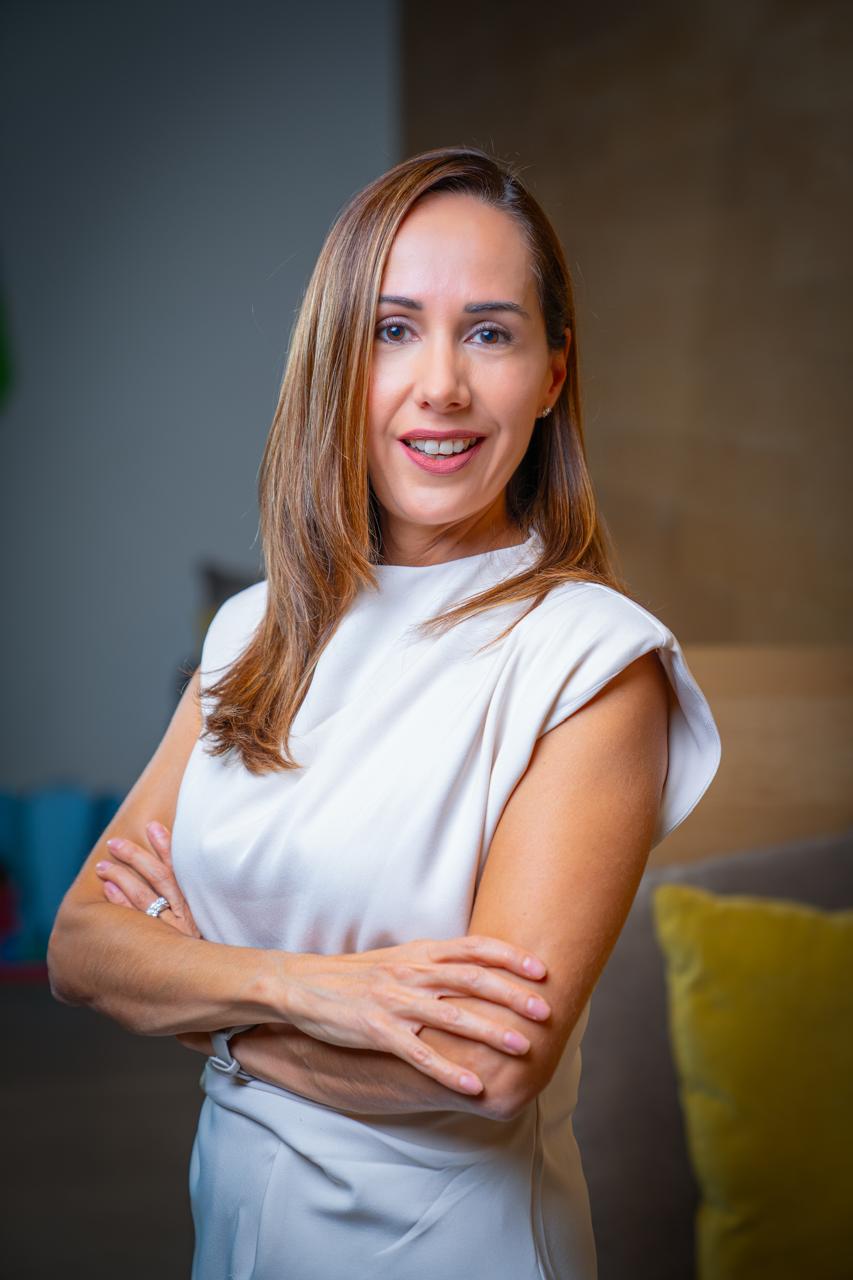
Leading without a title
Looking back on her career, Martha Rentería doesn’t start by talking about achievements, positions, or hierarchies. “I’m simply a woman like so many others, juggling roles and trying to perform each one consciously and in accordance with my values and principles.”
There was a moment that redefined his understanding of leadership: he decided to pause his career and leave Monterrey for family reasons. He left behind professional recognition, institutional support, and the identity associated with the position.
“It made me question who I was without the title of ‘Legal Director’ or the backing of a multinational corporation or firm. I realized that the position one holds is irrelevant to demonstrating true leadership in the legal sector and that it can be exercised from anywhere and in different ways.”
That experience taught him that leadership isn’t a position, it’s a practice. It doesn’t depend on the organizational chart, but on judgment, example, and the ability to create opportunities.
Along the way, she also observed what doesn’t work. She encountered leaders who closed doors. But she also had clear role models. Cecilia Rodríguez Valdés and Claudia Jañez shaped her understanding of power.
“Whenever he could, he invited me to have a seat at the table. Those actions made me understand that great leaders lead by example and achieve their goals together, not alone.”
There he learned that leading is about inclusion.
From discourse to structure
Her decision to get involved with AbogadasMx did not stem from an ideological slogan, but from an obvious contradiction.
“In organizations, meetings, and workshops, the issue was discussed endlessly, but nothing was ever done. I saw very capable women not get positions for which they were fully qualified, while men close to the bosses were appointed. I saw colleagues resign after becoming mothers because they were denied alternatives to balance responsibilities.”
The problem wasn’t the conversation. It was the lack of follow-through.
“I felt that if I wasn’t actively involved, I had no right to complain.”
When asked where the main obstacles lie today – whether in culture, promotion models, or the lack of metrics – he answers bluntly:
“I think the main obstacles are a combination of the three factors. However, the cultural factor in our country continues to have a very significant impact on women’s progress in the legal profession.”
Culture has weight. It weighs on those who promote it, those who recommend it, those who make decisions. And it also weighs on silent sacrifices.
That’s why she insists that celebrating isolated advances isn’t enough. Measurement is essential. After years of work, AbogadasMx designed LIDERA, a self-diagnostic tool that will allow for data-driven evaluation of what is happening within the legal sector and why.
“There can be no representation without a career development plan. It’s not just about counting how many make it, but how they get there, what they achieve, and how many fall by the wayside.”
His leadership, then, is not focused on visibility, but on redesign.
Community, not confrontation
Rentería deliberately distances herself from the polarized narrative. For her, transformation cannot be built on exclusion. “I believe that to truly transform, it is necessary to create a strong community of women, but also of allied men committed to long-term change. This is not about women against men, or about being an exclusively female space.”
It’s not about replacing one power with another. It’s about revising the rules that uphold it.
“If we genuinely succeed in getting more men to join the cause, we will be generating a very enriching conversation where both points of view result in real support and a change in the culture.”
Within AbogadasMx, this vision translates into structure. The roles of Chapter Leader and Ambassadors are clearly institutionalized. It’s not scattered volunteerism; it’s organized work. “We work voluntarily, convinced that if we join forces within our profession, we will achieve a much more competitive and just society in Nuevo León.”
Here, volunteering isn’t optional. It’s a matter of conviction. It’s dedicating professional time to building something that doesn’t generate fees, but does have a systemic impact.
“Sowing this seed under the wing of AbogadasMX, an organization that has consistently demonstrated a positive impact on the legal sector, will help us to strengthen and accelerate change in our state.”
What he’s proposing isn’t networking. It’s cultural architecture.
The uncomfortable question that Nuevo León must ask itself
At the Legal Management Forum Monterrey 2026,organized by Gericó Associates, , Rentería wants to provoke more than just applause.
He wants questions.
“What is happening in a state like Nuevo León, where there are more women than men studying law at university, compared to the number of female partners in law firms and legal directors? What needs to be done to see them reach and successfully maintain those positions?”
The contradiction is clear: the talent exists. The training does too. What’s lacking is the transition to power.
And therein lies its most powerful message: equity is not an entry statistic, it is a structural decision for permanence.
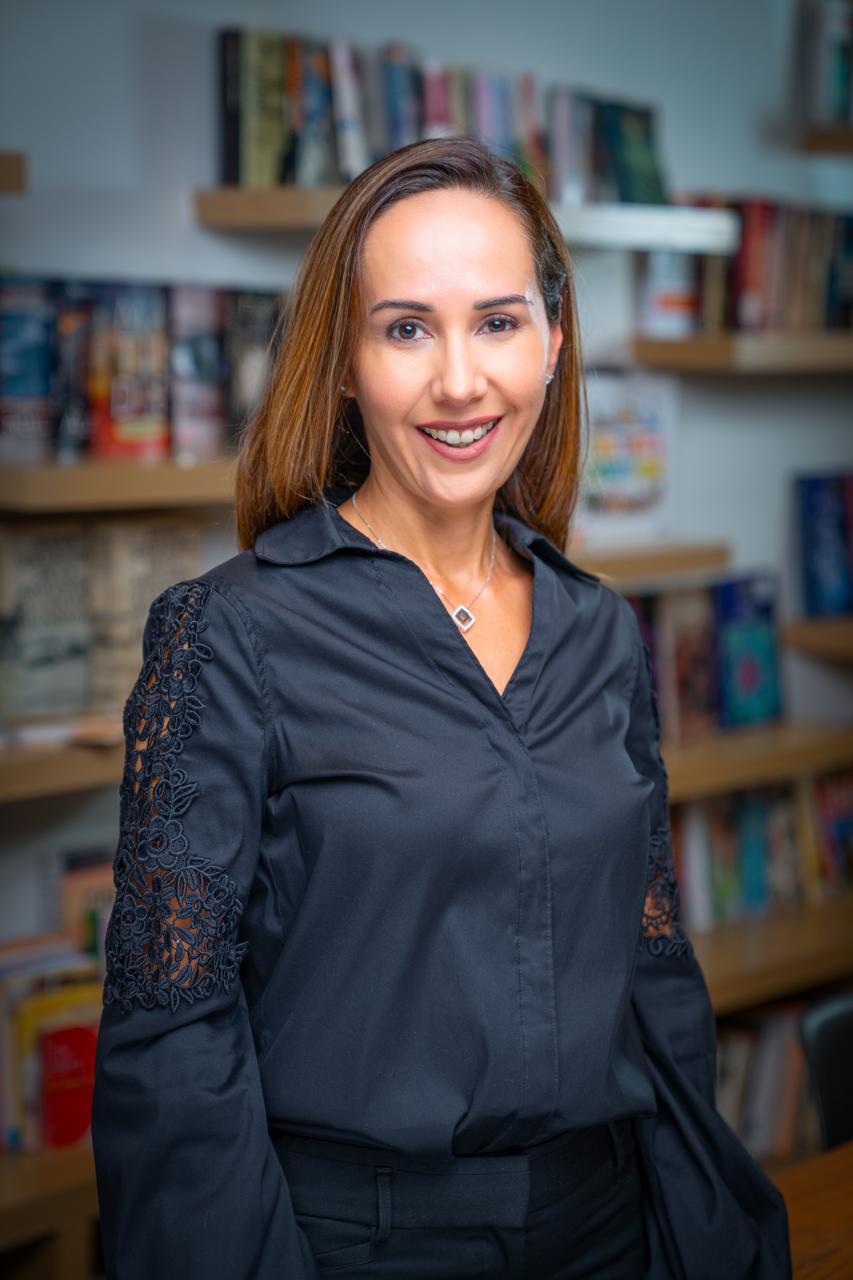
Martha Rentería doesn’t talk about equality as a slogan or leadership as a label. She talks about institutional design, organizational culture, and shared responsibility.
Her thesis is clear: the legal sector doesn’t need more talk about diversity, it needs systems that support career paths. It needs metrics, career development plans, and leaders willing to review how they make decisions.
For her, leadership isn’t exercised through position, but through consistency. And equality isn’t achieved by simply counting women, but by redesigning power so that it depends not on personal connections, but on merit, structure, and a long-term vision.
In a market that prides itself on technical sophistication, her message is simple and profound: if we don’t transform the culture from within, we will continue to produce female talent only to be lost by the system.
And that, more than a gap, is a collective resignation.
In short
What’s the smartest thing anyone has ever said to you (and who said it)?
I don’t know if it’s the most intelligent thing to say, but it’s certainly what has resonated with me the most. “Life is like a marathon; there are stages where you have to sprint and others where you have to slow down to reach the finish line.” A very dear friend told me this.
A book?
I can’t choose just one!! The Cathedral of the Sea by Ildefonso Falcones and The Nightingale by Kristin Hannah.
A sport?
What do I practice? Functional exercises. What do I enjoy watching? Figure skating.
A song?
Lady Marmalade puts me in a good mood.
If you weren’t a lawyer, what would you be?
Psychologist/writer.
Your favorite food?
Italian.
What puts you in a bad mood?
Be hungry.
A key to success?
Discipline.