

This interview forms part of the report “Which law firm model will prevail in Portugal? Managing partners’ predictions for 2026”, an analysis that brings together the views of several leaders in the sector on the transformations reshaping the Portuguese legal market.
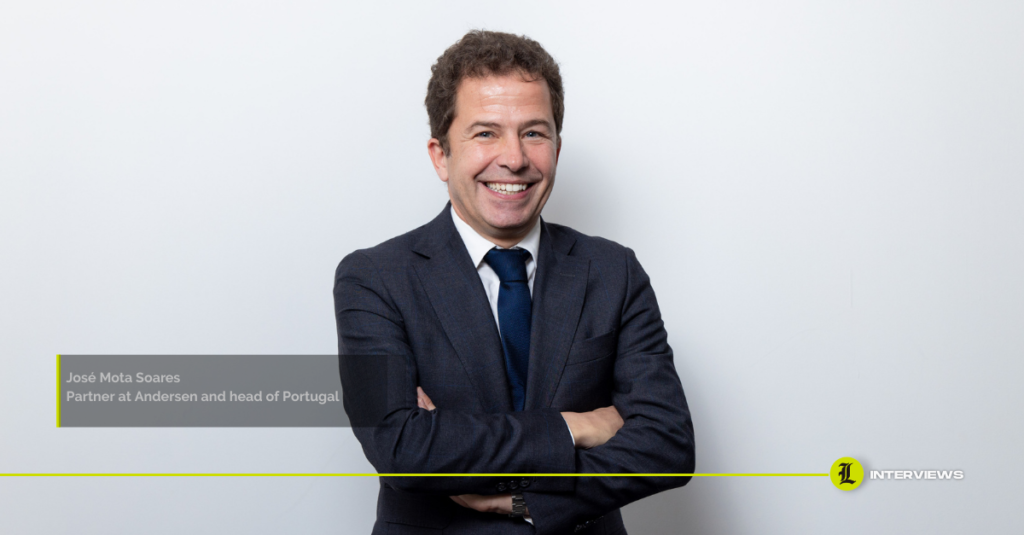
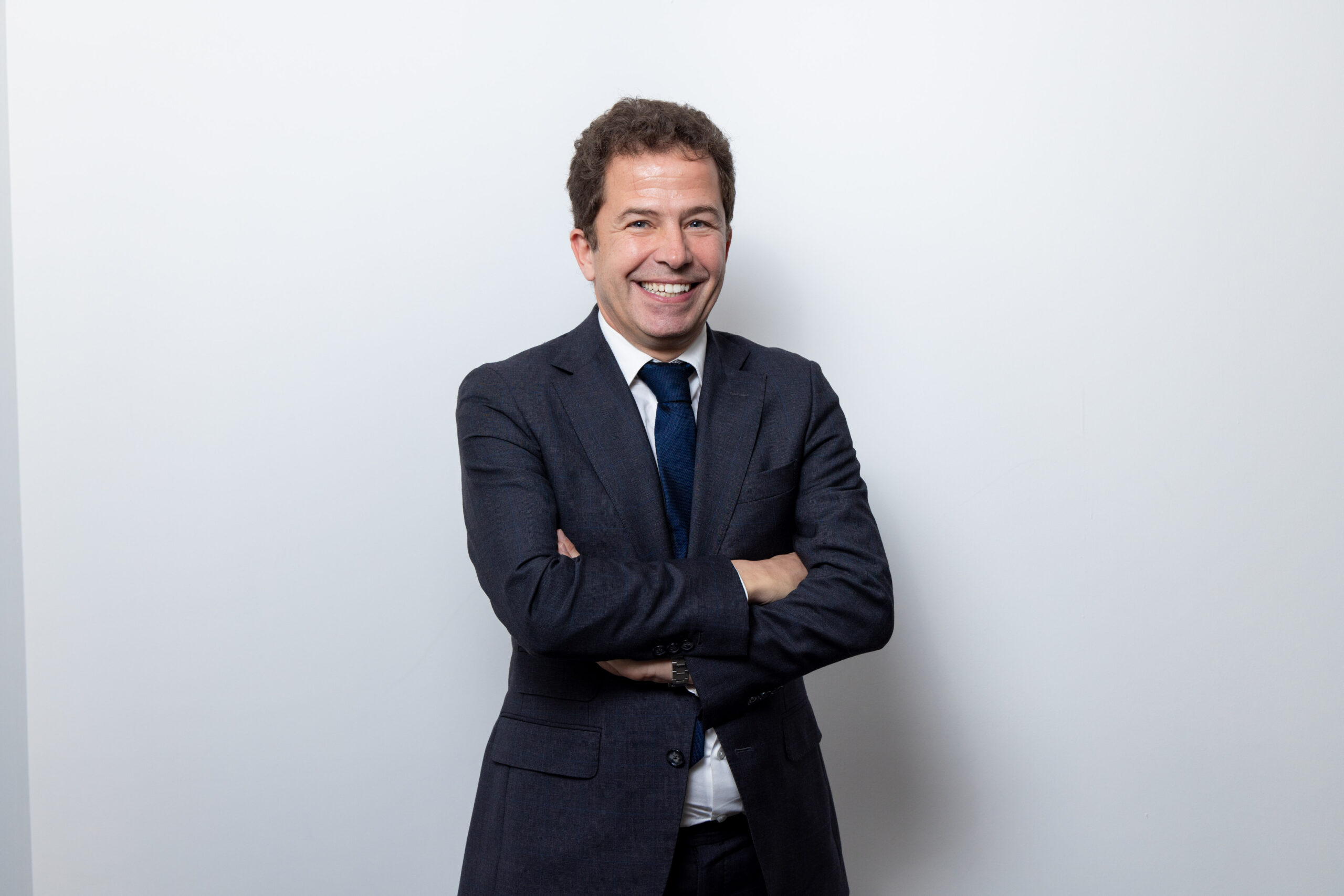
Building on this collective assessment, we explore the perspectives of some of its key players. One of them is José Mota Soares, partner at Andersen and head of the firm in Portugal, whose analysis of the market points to a clear evolution in the law firm model.
For Soares, the future of the sector will not depend solely on growth or on the adoption of new technologies. What is changing is how law firms define their positioning in relation to increasingly sophisticated clients and rapidly evolving economic sectors.
In this context, he argues that firms seeking to differentiate themselves must combine two strategic drivers that will shape the market in the coming years: deep specialisation across practice areas and industries, together with the genuine integration of technology into legal practice.
“Our fundamental strategy is based on specialisation by practice areas and industries, combined with digital transformation.”
The competitiveness of law firms is no longer measured solely by size, but by sectoral depth
For decades, the positioning of large law firms relied on their ability to offer comprehensive legal advice across multiple areas of law. However, that logic is evolving.
According to Mota Soares, corporate clients are no longer solely seeking legal expertise. They expect advisors who understand the economic, regulatory, and technological dynamics of their sector. This evolution is driving a gradual shift from generalist models to more industry-specific structures.
“Sector specialization is what allows us to provide real added value to the client. Without that in-depth knowledge of the industry, it is very difficult to compete today.”
At Andersen, this strategy translates into strengthening various practice areas and building teams with a combination of legal and technological profiles. Part of this commitment is the development of legaltech, a multidisciplinary department that advises on areas such as information technology, data protection, cybersecurity, and artificial intelligence.
This approach also reflects a broader transformation of the Portuguese market. In recent years, the country has attracted increasing foreign investment, particularly in sectors such as energy, tourism, technology, and digital infrastructure. This evolution is generating new demands for specialized legal advice.
Artificial intelligence is redefining how law firms generate value
Technology is the second major driver of transformation in the sector.
For Mota Soares, artificial intelligence has ceased to be a future promise and has become a tool that is already altering the way legal work is organized. Document analysis systems, automated contract review, and AI-assisted legal research allow traditionally time-intensive tasks to be performed with significantly greater efficiency.
But the impact, he explains, goes beyond productivity.
“Artificial intelligence is not just improving work management. It is redefining the value proposition we offer to customers.”
By reducing the time spent on mechanical tasks, lawyers can concentrate more on strategic analysis, regulatory interpretation, and understanding the client’s business.
In that process, Andersen has established alliances with companies specializing in artificial intelligence solutions and is progressively integrating technological tools into different areas of the firm.
For Soares, the issue is not simply incorporating technology, but understanding how it modifies the organization of legal work and the way in which value is delivered to the client.
The corporate client has changed: more sophistication and less tolerance for opacity
One of the factors most transforming the legal market is the evolving client profile. In-house legal departments are becoming increasingly professionalized and playing a more active role in their organizations’ strategic decisions. This evolution raises the bar for external law firms.
“Customers rigorously evaluate the technical depth and sector knowledge we demonstrate.”
But the transformation isn’t limited to technical knowledge. It’s also reflected in a growing demand for transparency and predictability. Clients are increasingly requesting more precise estimates of timelines, costs, and probabilities of success. They are also driving the adoption of fee models that are alternatives to the traditional hourly billing system.
In many transactions, Soares explains, law firms must submit proposals with fixed fees or hybrid schemes that combine fixed components with incentives linked to the outcome.
This evolution forces firms to rethink their operational structures and how they manage legal projects.
Rainmakers remain key, but leadership becomes more complex
In an increasingly competitive market, partners with the ability to develop business continue to play a central role in the expansion of law firms.
For Mota Soares, these profiles – traditionally known as rainmakers – act as catalysts for the firm’s growth.
“Rainmakers transcend the traditional function of providing excellent legal services. They are key players in expanding the client portfolio and consolidating lasting institutional relationships.”
However, leadership in law firms is evolving towards increasingly complex profiles.
In addition to legal knowledge, industry leaders will need to develop a broader understanding of international regulatory frameworks, a strategic vision of the client’s business, and the ability to inspire and develop teams.
The relational dimension of leadership, he explains, will become increasingly relevant in an environment where customer loyalty depends as much on technical knowledge as on the quality of professional relationships.
Energy, digitalization and data centers: sectors that are redefining the market
In terms of economic activity, Mota Soares anticipates that the mergers and acquisitions market will continue to show dynamism in Portugal. The country remains an attractive destination for international investors, driving corporate transactions across various sectors.
Among the areas with the greatest potential, it identifies real estate, tourism and, increasingly, industries linked to the energy transition and digitalization.
In particular, the development of data centers stands out as one of the most relevant emerging phenomena.
“Portugal is emerging as a strategic country for the development of data centers, thanks to its geographical location and competitive costs.”
The growth of these infrastructures responds to the expansion of the digital economy and the role of the Iberian Peninsula as a connection node between Europe, Africa and America.
Talent development remains the true driving force of the firm
Despite technological and economic transformations, Mota Soares insists that the decisive factor for the growth of law firms will continue to be talent.
Sector specialization and the adoption of new technologies are only possible if firms manage to attract and develop high-potential young lawyers. At Andersen, this commitment is reflected in ongoing training programs, structured career paths, and early exposure for lawyers to working with clients.
At the same time, the firm promotes equality, diversity and inclusion policies through its Equality, Diversity and Inclusion Committee, with the aim of strengthening a more open and balanced corporate culture.
Beyond technology or the evolution of certain economic sectors, José Mota Soares believes that the real challenge for law firms will be to build organizations capable of adapting to an increasingly complex environment.
In a market where clients demand greater specialization, speed of response and a deeper understanding of their businesses, law firms must combine legal knowledge, technological capacity and talent development.
In that combination, he concludes, the positioning of the firms that will lead the Portuguese legal market in the coming years will be defined.