

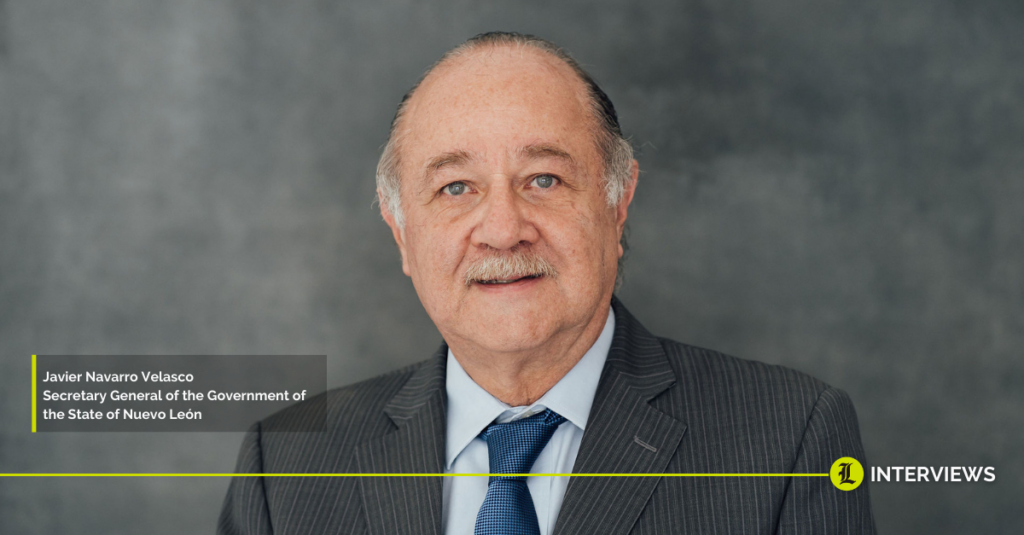
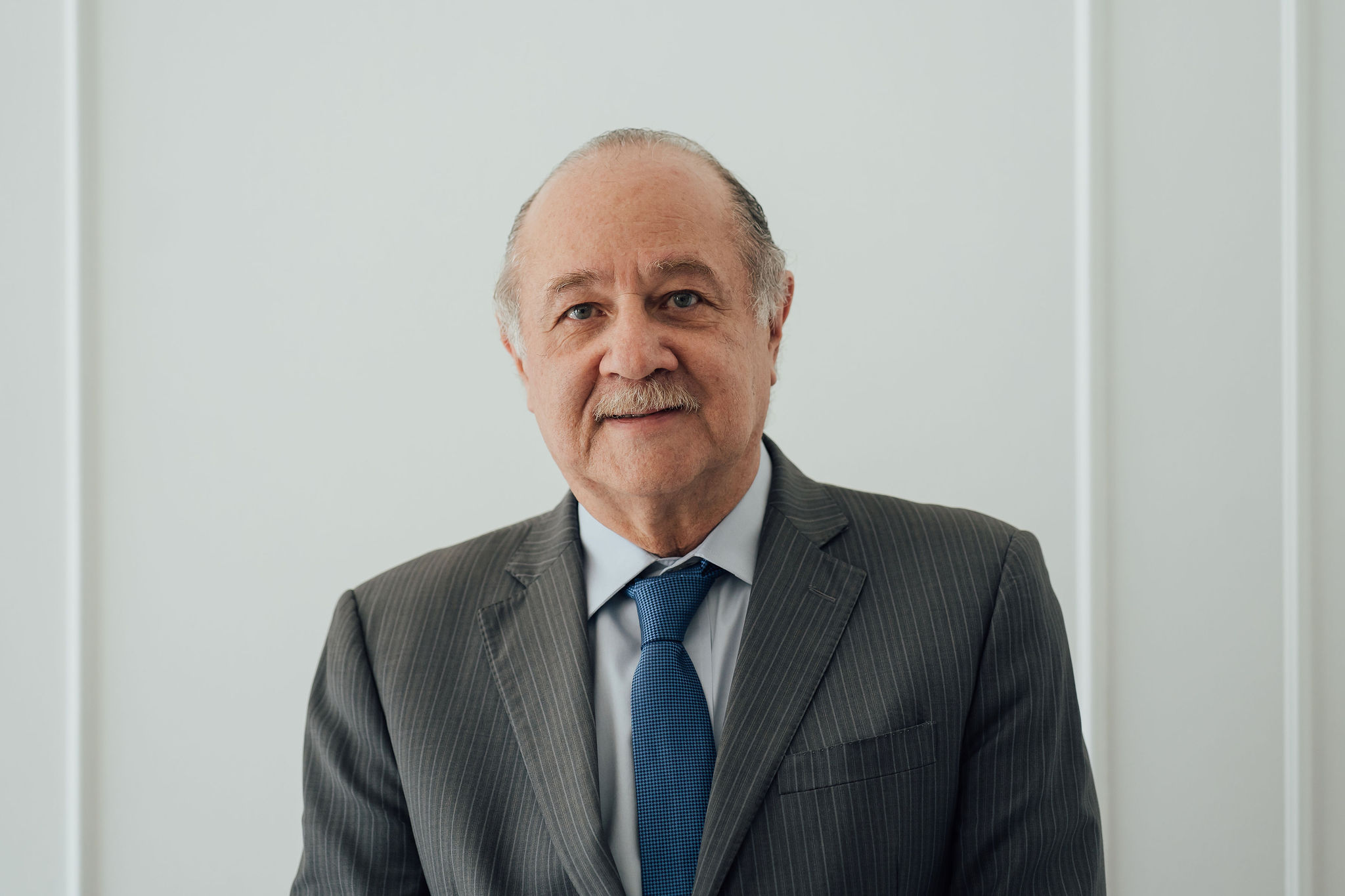
He has been at the forefront of international arbitration at a global law firm and now serves as Secretary General of the Government of the State of Nuevo León. Javier Navarro Velasco operates at the intersection of legal sophistication and institutional architecture. At a time of structural reform in Mexico and intense global competition for industrial capital, his experience offers a rare perspective: that of someone who understands how trust is built through contracts and sustained by the State.

From international arbitration to institutional design
For him, the transition from global arbitration to the Secretariat of the Cabinet of Good Governance is not a change of logic, but of scale.
“To build a capable criterion that balances the sophistication of arbitration with public responsibility, issues beyond technical knowledge must be prioritized. An ethical, intellectual, and institutional framework is required to link two distinct, but not incompatible, logics: private autonomy and the public interest.”
International arbitration, he explains, is one of the most sophisticated areas of law and a useful tool for resolving disputes between private parties, between a state and an investor, and even between states. Having been involved in it allows him to understand how a jurisdiction is evaluated from the outside.
Amid reforms to the Mexican judicial system, he introduces a strategic reflection: “Arbitration and mediation are good tools for building trust in the State and in Mexico.”
It does not present it as a replacement for the judicial system, but as part of an institutional ecosystem that must offer certainty in a competitive environment.
Rule of law: the line separating trust and structural litigation
From his experience in complex investment disputes and now from the Secretariat of the Cabinet of Good Governance, he clearly identifies the difference between jurisdictions that generate sustained trust and those that live trapped in recurring litigation.
“The difference lies in respect for the rule of law, having qualified courts that are aligned with arbitration. These concepts are essential for choosing a good venue.”
Long-term trust depends not only on economic incentives. It depends on judicial predictability, institutional culture, and regulatory consistency. When these elements erode, conflict ceases to be exceptional and becomes the norm.
Nearshoring and governance: an opportunity that demands standards
Nuevo León is currently competing for global capital at a crucial moment of industrial relocation. From his position, Navarro Velasco avoids superficial enthusiasm.
“Nearshoring has placed Nuevo León in a very important international position. It’s not by chance.”
Attracting investment requires a sustained public strategy. List priorities with technical precision:
- Strengthen the rule of law.
- Professionalize economic institutions.
- Invest in infrastructure.
- Develop qualified human capital.
- Maintain public-private collaboration.
- Protecting the institutional reputation.
Reputation—it implicitly emphasizes—is also an economic asset. And it is built on institutional consistency.
Governing before conflict
Anyone who has witnessed the financial and reputational impact of international arbitration understands that the conflict is not only legal; it is economic and political.
“What triggers arbitration is a breach of contract by one of the parties or an act of the State that violates an international investment agreement.”
From the Secretariat of the Cabinet for Good Governance, prevention becomes central. Clear public policies, technically sound administrative decisions, and a solid contractual framework reduce exposure to disputes.
He defends arbitration based on two strategic attributes:
“Confidentiality prevents the airing of disputes that could be damaging to the institutional image of a company or the State. And although it is said to be more expensive, time has value. In most cases, it is faster, and the resolution is handled by an expert in the field.”
The analysis is pragmatic: time, specialization, and reputation also matter.
Governance and balance of power
As Secretary General of the Government of the State of Nuevo León, he identifies two essential pillars to raise the institutional standard.
“The legal framework resulting from responsible action by Congress contributes to the standard of governance. And a good relationship, respect, and institutional collaboration between the Executive, Legislative, and Judicial branches is essential.”
It’s not a political slogan. It’s institutional architecture. Without a real balance of power, legal certainty loses its depth.
Public sector and legal management: a strategic conversation about trust
Their participation in the Legal Management Forum Monterrey 2026, of Gericó Associates responds to that same logic of institutional construction.
“I hope to be able to clearly explain the benefits that the use of commercial arbitration and mediation brings to the national and international business community in the business world.”
But the underlying issue is broader: promoting a culture of conflict prevention. If the public sector understands business logic and legal departments grasp the institutional framework, friction decreases. And that decrease is significant: it translates into regional competitiveness.
Mexico in transformation: the historical responsibility
The last reflection takes on a more structural tone.
“Mexico is undergoing a transformation that sometimes seems directionless, and profound and structural changes are being made.”
In that context, the responsibility of states like Nuevo León is historic. They cannot limit themselves to managing immediate situations; they must consolidate standards.
Nuevo León, true to its industrial vocation and today a benchmark for nearshoring, has to offer:
- Public safety that guarantees peace and business operations.
- Legal certainty with clear rules and a trained, autonomous and independent judicial system.
- Infrastructure that allows for agile, efficient, and safe mobility.
- Universities aligned with strategic sectors such as electromobility, technology and advanced services.
It’s not just about attracting investment. It’s about institutionalizing it, he asserts.
The Secretary General of the Government of the State of Nuevo León, Javier Navarro Velasco, clearly defines the challenge: to make Nuevo León a standard of trust within a Mexico in transformation.
Because, in the end, the difference – as he himself maintains – is made by respect for the rule of law.