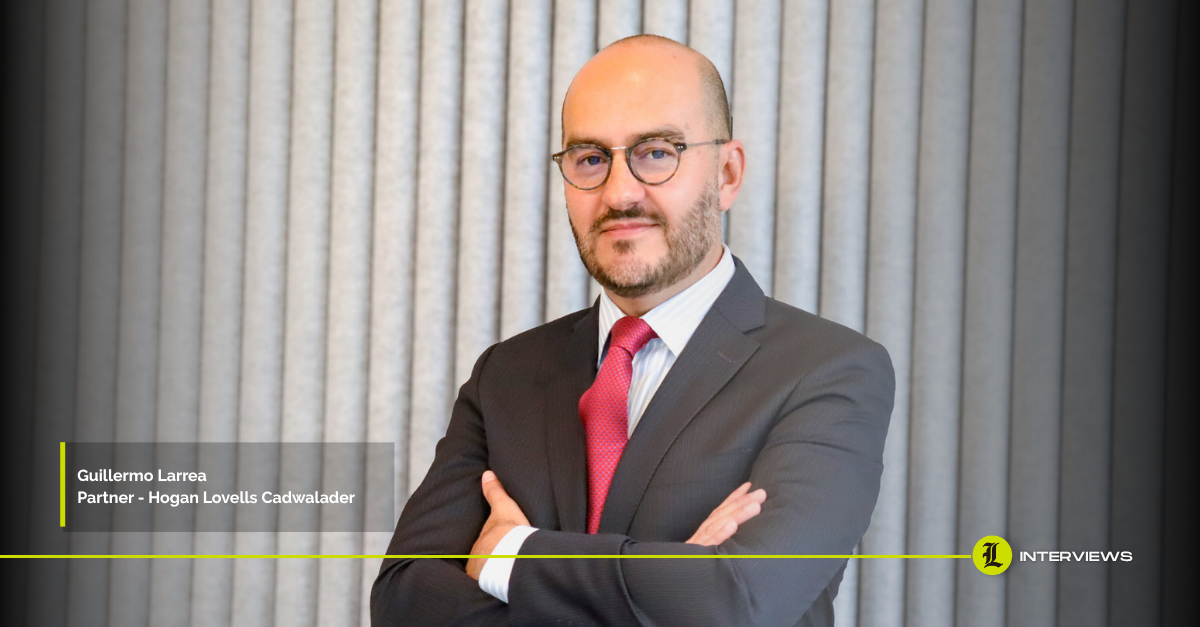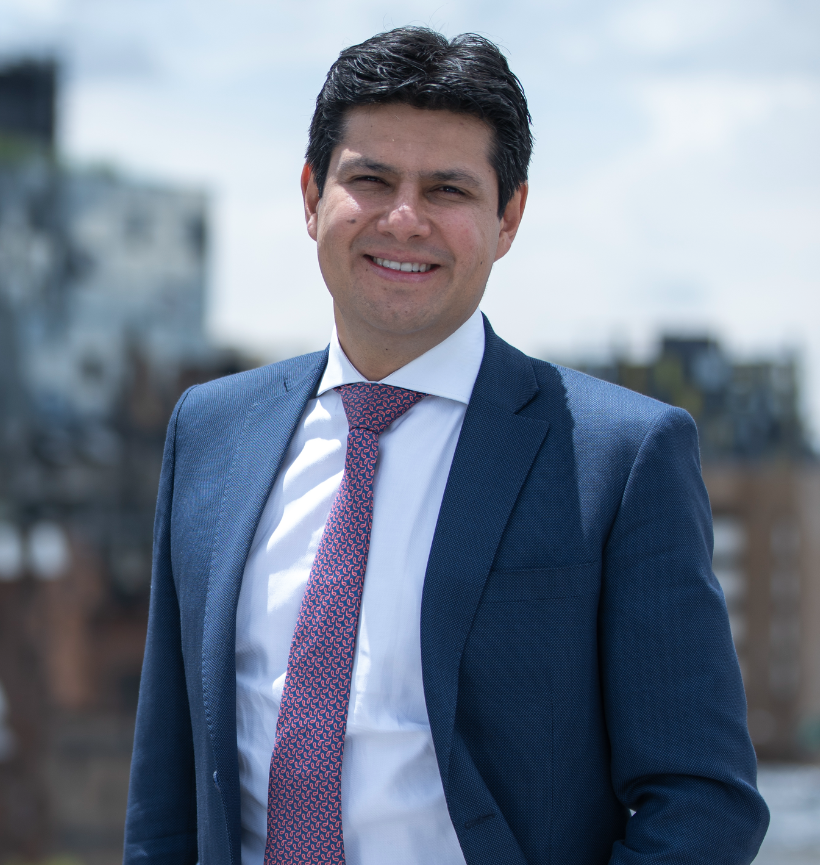



The creation of Hitchings & González comes at a decisive moment for private enforcement in Spain, a market that has grown strongly and where complex commercial litigation has become established thanks to increasingly solid and specialized case law. This boutique law firm has emerged to fill a strategic niche that no other firm had occupied until now: a compact firm, led by two experts with extensive litigation experience, accustomed to working with litigation funds and with a deep understanding of the international market.
In this interview, Paul Hitchings and Blas González, founding partners of Hitchings & González and leaders in competition law, discuss the evolution of private enforcement in Spain, from milestones such as the truck cartel to the impact that the upcoming class action law will have. They tell us how their more than a decade of experience at Cuatrecasas has prepared them to successfully face current and future challenges, and how they are committed to a boutique structure to offer agility, specialization, and avoid conflicts of interest in complex proceedings.
In addition, they analyze the growing demands of litigation funds, Spain’s competitive position vis-à-vis other European countries, and the Spanish judiciary’s readiness to take on the burden and technical sophistication that this litigation requires. They also share their five-year vision, in which Hitchings & González aspires to be recognized as the leading private enforcement firm in Europe, thanks to a solid team and an unbeatable reputation.

The creation of Hitchings & González comes at a very particular moment for private enforcement. What specific market gap did you identify that no other firm was able to fill?
The growth and consolidation of private enforcement of competition law in Spain has been, in fact, very intense and rapid. Spanish jurisdiction in this sector is undoubtedly very attractive today for this type of complex commercial litigation. Hitchings & González fills exactly the gap that was needed to address this situation: a firm born from the union of two of the best-known experts in launching plaintiff projects, perfectly capable of also defending defendants, accustomed for years to always working with litigation funds, with extensive procedural experience in Spain and, above all, with an insight into and knowledge of the international market that is difficult to surpass.
When they recall their meeting at Cuatrecasas 14 years ago, they say that what they are building together today was unimaginable. What elements of the market or of their own career paths have aligned?
We believe that very important factors have come together, not only stemming from personal harmony and consensus on the type of commercial law practice we want to pursue, and the values we want to convey, but also a favorable moment in the market, with antitrust on the rise and class action law in a future that we hope will be near, the right size of our respective boutiques, the homogeneity of our clients and the absence of conflicts, and the complementarity of our respective positions in the same legal market.
Many speak of a “golden age” for private enforcement in Spain. Where do you place the turning point? Was it the truck case, the damages directive, the litigation funds… or a combination of factors that has created a unique ecosystem?
The position of Spain and its courts in the world of private enforcement stems, of course, from the fact that legislation evolved as it should under Directive 2004/104 and that Spanish commercial judges, courts, and the Supreme Court have for years, since the 2004 jurisdictional specialization, had a particular sensitivity to this type of issue. However, perhaps the turning point was the truck cartel, which has been the source of thousands of judgments, the first consolidated case law, and multiple preliminary rulings to the CJEU from Spain.
The imminent Spanish law on collective actions is going to reshape the rules of the game. What specific aspects of this law will revolutionize, for better or for worse, civil competition litigation?
Although class actions do not necessarily have to arise from antitrust violations, it is true that the influence—both practical and in the proposed legal model itself—of actions on the private enforcement of competition law is well known. Class actions will change the landscape of civil proceedings and will have an impact beyond their strict scope of application (consumer protection). There will be very relevant aspects of antitrust litigation that will be affected: the representativeness of organizations with standing to sue, transparency and control of possible conflicts of interest arising from the financing of litigation by a third party, successive rulings, the enforcement of judgments, and the distribution phase of compensation payments.
They say litigation funds “need muscle.” What does a sophisticated fund require today that it didn’t require five years ago, and why do you think many Spanish firms aren’t prepared for it?
Litigation funds, now as in the past, need professionals who can guarantee their investment. This is entirely logical and legitimate in the context of any responsible investment. In this scenario, no single lawyer, however expert and brilliant they may be, can shoulder alone the enormous amount of work required to set up, develop, and complete litigation of this nature. That is why, with large law firms conflicted and focused on defense, plural professional structures are used, subject to clearly identified leadership. Hitchings & González offers funds more solidity and structure than individual firms, while ensuring that the other teams that make up the plaintiff team are controlled and directed.
Large firms boast about their capabilities and resources, but you’re talking about a conflict-free boutique that can litigate on equal terms. In what specific cases does having a small structure become an impossible competitive advantage for a large firm?
Assuming that the same level of technical excellence and procedural experience is provided, which is certainly not always the case, boutique firms allow clients to completely avoid conflicts of interest and enjoy a much more agile and effective relationship with their lawyers, without lower-level intermediaries.
You have led or participated in some of the most complex damages litigation in Europe: Trucks, Cars, Milk, pay-for-delay settlements… What has been the most technically challenging case and what lessons are you now bringing to H&G’s architecture?
All of these matters and others in which H&G has been and continues to be involved are technically very challenging. Today, truck litigation does not pose as many problems to solve, but these were undoubtedly very complex cases years ago and have provided us with an excellent opportunity to learn and advance practice and jurisprudence in this field. Among the latest challenges we have faced as a firm, we can perhaps highlight two: pay-for-delay agreements in the pharmaceutical sector, a case with the characteristics of a pioneering matter and in favor of the public administration, and the ongoing antitrust infringement in the Spanish hydrocarbon market.
In Spain, the UK, and France, you have led class action lawsuits on behalf of large corporations. What features differentiate Spanish procedural culture from jurisdictions with a more mature approach to mass litigation?
The experience of litigating in different forums is very enriching. They all provide you with ideas and lessons that enable you to face the challenges of this type of litigation with creativity and problem-solving skills. Interestingly, although with a very different level of sophistication and cost, Spain shares certain features with the United Kingdom: expert witnesses and a relatively fast process. In this respect, it differs positively from other slower forums that tend to use court-appointed experts, such as the Netherlands, Germany, Italy, and France. Of course, in Spain we are still constrained by aspects of our system (mainly the disproportionate volume of cases that commercial judges have to hear and a certain rigidity in the Civil Procedure Act, designed to provide swift and accessible justice), but we no longer have anything to envy the rest of Europe when it comes to cases of the magnitude of the Super League.
They say they don’t want to “wait for the call,” but rather lead matters of European dimension from Spain. What needs to change in international perception for a Spanish boutique firm to become the go-to firm in pan-European cases?
Well, I think a little, although obviously not everyone can do it, nor alone. Humbly, we believe that we already play this role in some way, in the sense that we are well-known names in European circles among the main players and are accustomed to collaborating on large cross-border projects. We have experience in leading the legal part of the study on “pass-on” prepared for the European Commission in 2016 and in participating in important litigation in the United Kingdom, France, and Italy. And Spain has an attractive regulatory regime. We look forward to continuing to participate in the best projects at the European level alongside the best.
Paul, you were a pioneer in private enforcement in 2005 and are the only Spaniard recommended by Who’s Who Legal at the European level. Has the perception of Spain on the European antitrust map changed, or do we still suffer from an inferiority complex compared to more mature markets?
Yes, of course. There is now a level of confidence and boldness among the group of lawyers and law firms that specialize in this area that did not exist before. Of course, we continue to look to other jurisdictions to learn from them, but now we do so because the learning is, in a way, reciprocal.
Blas, your experience as a commercial judge is a unique asset in a private firm. At what points in litigation is it crucial to have been “on the other side of the table,” and what procedural errors do you repeatedly observe among the parties?
After 18 years as a judge and 12 as a commercial lawyer, perhaps this profile will help me to “read the game,” something that is certainly intangible but often useful for managing procedural timelines and venturing, with a high degree of accuracy, where a case is headed and what it needs. As for the mistakes made by the parties, both mine and those of others, I will remain discreet!
The rise of class action lawsuits is testing the capacity of judges. Is the Spanish judiciary prepared for the volume and technical sophistication to come?
The Spanish justice system is undoubtedly well prepared. It has endured periods of enormous workloads and continues to provide an adequate service. Specifically, the commercial courts have been able to modernize case law to a level that is perfectly comparable to that of their European counterparts. In fact, with equivalent sophistication, it is significantly faster. Class actions will bring about change, but there is no doubt that procedural innovations and appropriate, unbiased dialogue with litigation funds are well within its reach. The problem, of course, does not lie with the judges, but with the administration of justice, its modernization, and its resources.
Looking five years ahead, what would be the unmistakable sign that Hitchings & González has fulfilled its founding mission?
We want people in our sector to say, without hesitation: they are the best! That statement is subjective, of course, and we compete with other firms that are also very well prepared. But I believe that none of them can offer the depth of expertise and reputation that we offer, at least currently, and if a majority say so in five years’ time, we will be satisfied. To get there, one of our main tasks will be to continue building on the fantastic team we already have and ensure that they continue to work with enthusiasm and a desire to learn. Because without them, this will not be possible.