

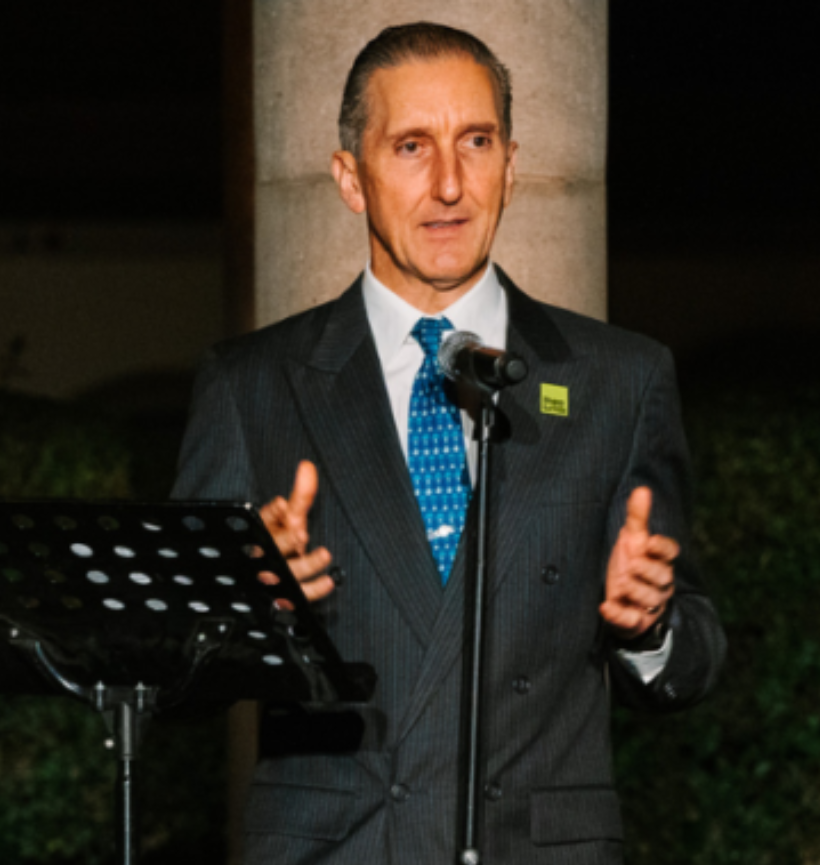
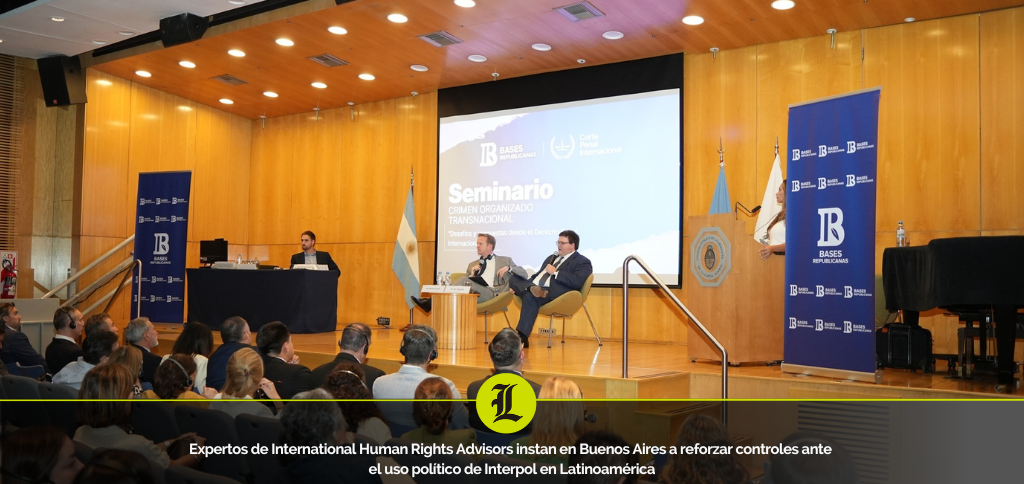
As part of the Seminar “Transnational Organized Crime: Challenges and Responses from International Criminal Law”, Held on December 1 and 2 at the Colegio Público de la Abogacía de la Capital Federal (Federal Capital Bar Association) and organized in conjunction with Bases Republicanas with the support of the International Criminal Court, British lawyers Ben Keith and Rhys Davies, founders of International Human Rights Advisors, as well as Cristian González Ruiz, an associate of the firm, led a keynote presentation dedicated to Interpol’s role in the fight against organized crime and, at the same time, to the risks facing the region in the face of abuses of the system.
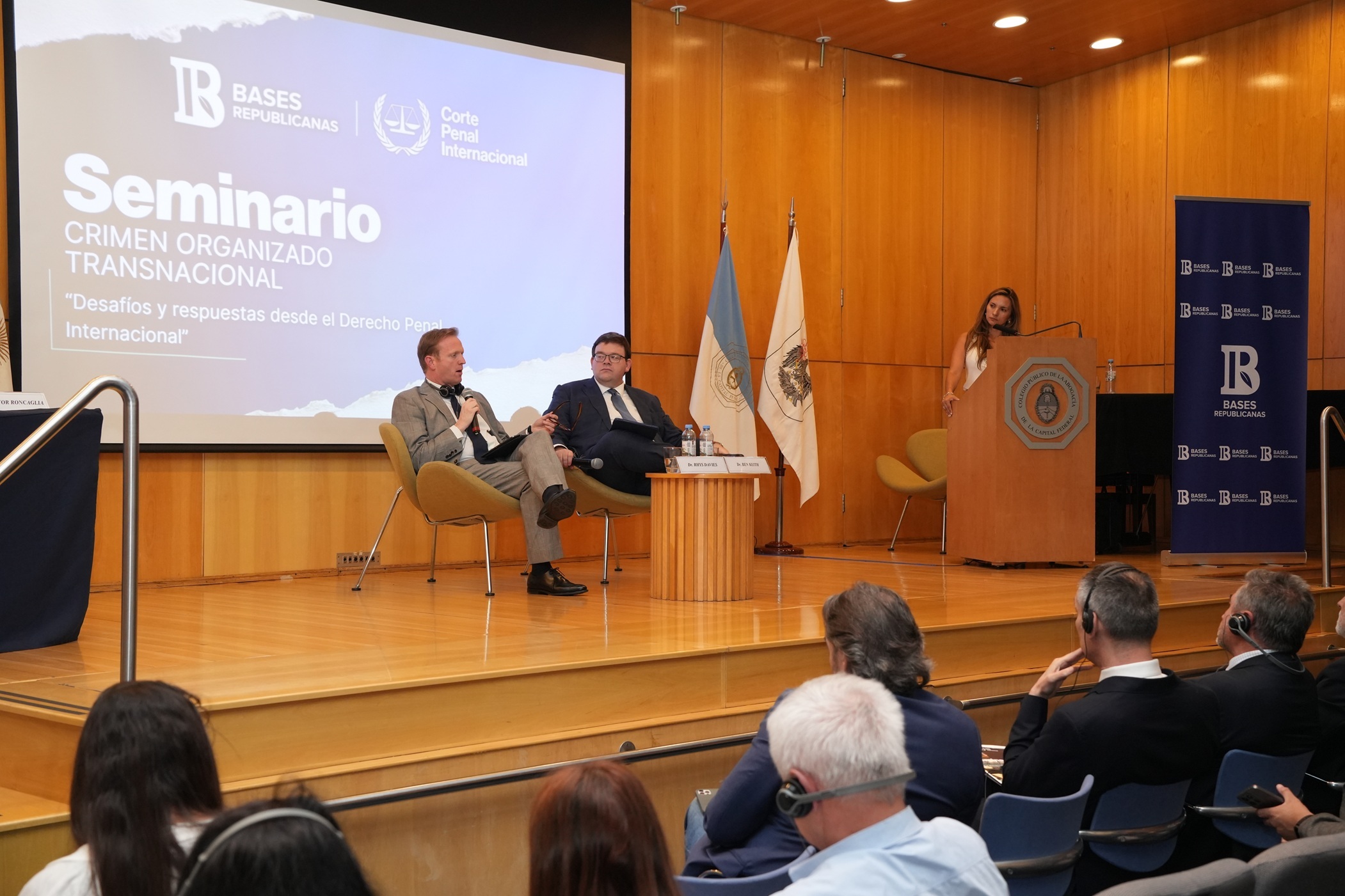
His presentation, entitled “INTERPOL, its fight against international crime and the misuse of its channels by authoritarian regimes,” highlighted that although INTERPOL is an indispensable pillar of global criminal cooperation, it remains highly vulnerable to manipulation for political, economic, and geopolitical purposes. In Davies’ words: “Interpol is not a global police force or a court. It is an information-sharing network. When it is used to persecute opponents or influence commercial or arbitration disputes, the damage is immediate and profound.”
In Buenos Aires, Keith, Davies, and González expanded on the arguments they have been developing in their recent publications on the instrumental use of Interpol in Latin America. They explained how some states have used economic criminal investigations, arrest warrants, asset freezes, and red notices to intervene in multi-billion-dollar investment disputes, affecting the integrity of processes associated with scandals such as Lava Jato and disputes related to infrastructure projects in Peru, Colombia, Panama, and Ecuador. The result, they said, is a legal ecosystem in which the line between international cooperation and state pressure is dangerously blurred.
For Keith, “when a state combines unfounded charges, disproportionate precautionary measures, and red notice requests during international arbitration, we are no longer talking about justice, but rather a power strategy.” Cases such as those linked to Odebrecht, the dispute over the Ruta del Sol highway, and the arbitration between Omega Engineering and Panama illustrate how the use of Interpol channels can tip the balance in disputes that should be resolved exclusively through legal and technical means.
At the conference, the experts also analyzed the case of Venezuela, which they described as an extreme example of transnational repression. Referring back to their articles, they explained how the government of Nicolás Maduro has used red notices and arrest warrants to harass opposition leaders—including Leopoldo López, Edmundo González, and Juan Guaidó—and even foreign political figures such as Argentine President Javier Milei. These practices, they stressed, directly violate Article 3 of the Interpol Constitution, which prohibits any politically motivated intervention.
Davies warned that “when a regime uses Interpol to persecute its opponents beyond its borders, the victim is not only the person targeted: it is the international system itself.” The consequence is twofold: on the one hand, opponents forced into exile live under constant risk of arrest; on the other, confidence in criminal cooperation mechanisms that depend on technical neutrality is eroded.
The founders of IHRA insisted that Latin America must lead the debate on the proper use and limits of Interpol. The region faces a considerable increase in the issuance of red notices and diffusions, while simultaneously dealing with complex cases of corruption, cross-border economic crimes, and criminal networks operating beyond national jurisdictions. The combination of vulnerable institutions, internal political tensions, and high-profile trade disputes makes the region particularly susceptible to abuse.
They explained that having a thorough understanding of how red notices work, how to challenge them before Interpol’s Commission for the Control of Files (CCF), and what due process standards must be respected is no longer an esoteric specialty, but an immediate professional necessity. A proper understanding of the system can prevent arbitrary arrests, undue restrictions on freedom of movement, and safeguard the integrity of international criminal and corporate proceedings.
For Davies, “international criminal law is not abstract; it operates in airports, at borders, and in police stations every day. Latin America has the accumulated knowledge and historical urgency to lead this conversation.”
During the panel and subsequent discussions, Keith and Davies emphasized the need to strengthen control and oversight mechanisms for red notice requests; improve the transparency of processes; ensure higher evidentiary thresholds for issuing notifications; and promote a regional legal culture geared toward challenging abusive notices effectively and with technical expertise. Without these safeguards, they warned, systems designed to combat organized crime can become tools of political persecution or corporate pressure.