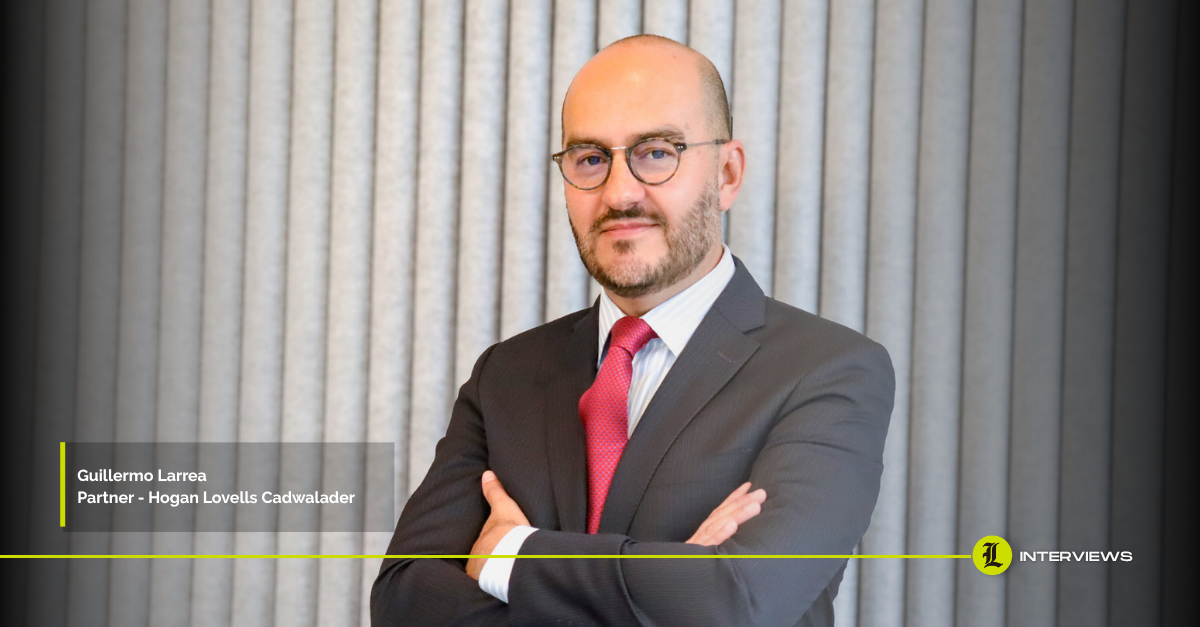



This conversation stems from the report “Which law firm model is prevailing in Portugal: the bets of managing partners in 2026 ”, an analysis that gathers the vision of several industry leaders on the transformations that are redefining the Portuguese legal market.
Among them is Domingos Cruz, managing partner of CCA Law, whose reading of the moment that the Portuguese legal profession is going through focuses on an issue that he considers decisive: the need for law firms to clarify precisely what value they bring to their clients.
In an increasingly competitive environment – marked by the arrival of new operators, technological pressure and the evolution of the corporate client – Cruz argues that growth alone is no longer enough to differentiate oneself.
“Not all expansion necessarily adds value.”
For the managing partner of CCA, the real strategic challenge is to build a firm model capable of providing consistent answers to specific problems, avoiding dispersing resources on growth that does not reinforce the value proposition.

In an increasingly competitive market, differentiation requires strategic clarity
The Portuguese legal market has experienced a significant increase in competition in recent years. The presence of international firms, the emergence of new models for providing legal services, and the sophistication of corporate clients have raised the bar for law firms.
In this context, Domingos Cruz believes that positioning messages or declarations of principles are no longer enough to differentiate oneself.
“The key is no longer in the discourse, but in the ability to provide a consistent service geared towards concrete needs.”
That consistency, he explains, requires internal organization, sustained investment, and strategic reflection on the firm’s growth model.
At CCA, this reflection has led to a selective approach to expansion. “Not all expansion necessarily adds value. In many cases, solutions based on alliances or referral systems allow us to effectively support our clients without dispersing resources.”
This approach reflects an increasingly visible trend in the European market: the shift from size-based growth models to strategies focused on specialization, flexible international collaboration, and organizational efficiency.
Technology changes the starting point of the customer relationship
Technological transformation is also altering the context in which legal advice is developed.
For Cruz, one of the most visible changes is the way clients approach conversations with law firms today.
“The client arrives better informed, with prior analysis. The logic seems simple – although it isn’t necessarily so -: first the technology, then the lawyer.”
This new scenario does not eliminate the role of the legal professional, but it does modify their function within the advisory process. The lawyer’s value shifts towards areas such as information validation, critical judgment, and the ability to make informed decisions in complex contexts.
“Technology allows for the reduction of repetitive and bureaucratic work, but it only generates value if there is a clear strategy for its adoption.”
In other words, technological adoption requires more than just tools: it demands investment, organizational structure, and rigorous integration of new systems into legal practice. Adaptability, in this sense, has become an indispensable condition for practicing law.
The corporate client forces a rethinking of the firm’s economic model
Another structural change that Cruz identifies is the evolution of the corporate client profile. Today, companies have more sophisticated in-house legal departments with a greater capacity to assess the true value of the legal services they contract.
“Corporate clients are more demanding, better informed, and require greater flexibility in the provision of legal services.”
This evolution is also reflected in the growing questioning of the traditional hourly billing model. According to Cruz, proposals incorporating fixed pricing structures or work models based on defined processes are gaining increasing traction. “Organizing work around processes allows us to scale and better understand the value of what we produce.”
This change forces law firms to manage their activity with greater business rigor.
The practice of law – he explains – requires today structures for control, monitoring and performance evaluation that were not traditionally part of the sector’s culture.
The firm’s leadership begins within the organization
In a market where competition is increasingly fierce, partners with the ability to generate business remain key figures for the growth of law firms.
But, for Cruz, the leadership of the future cannot be limited to acquiring customers.
“It’s not enough to bring in business. The focus must be on the ability to build lasting relationships supported by well-prepared teams.”
Legal leadership today demands a complex combination of skills: technical knowledge, strategic vision, commercial orientation, and an understanding of the technological dynamics that affect the sector.
However, the biggest challenge remains within the organizations themselves. “As long as internal barriers hinder organic change, any strategy will remain incomplete.”
The responsibility for overcoming these resistances lies with those who lead the firms, creating the necessary conditions for the transformation to be naturally embraced by the teams.
New players, more regulation and pressure on the judicial system
From a market perspective, Cruz anticipates that transactional activity will continue to grow in Portugal over the next few years. Deals involving SMEs, startups, and scaleups will continue to generate significant opportunities, driven by investment structures such as growth funds, corporate venture capital, and search funds.
At the same time, increased regulation and enforcement activity will strengthen the demand for specialized legal advice. However, the market also faces risks. One of these is the growing saturation of the Portuguese legal market and the emergence of new players, including non-traditional legal service delivery models.
In this context, internationalization is emerging as a necessary path for many firms, although not necessarily through the opening of offices abroad.
“Flexible, partnership-based models can be more effective than physical expansion.”
Another emerging phenomenon is the increase in class actions, which could generate relevant opportunities for the sector, but also additional tensions in a judicial system that already faces structural limitations.
Talent and well-being: a new equation for retaining professionals
Retaining talent has become one of the main challenges for law firms. According to Cruz, the new generations of lawyers value factors that go far beyond remuneration.
“Talent retention depends on how work is organized, access to the right tools, and the conditions that allow performance to be sustained over time.”
In this context, CCA has developed initiatives focused on the well-being and personal development of its professionals. These include collaborations with startups specializing in mental health support and psychological training, which allow lawyers confidential access to support programs.
At the same time, training remains a central element for talent development. Although technology reduces repetitive tasks, legal judgment—Cruz reminds us—is only acquired through experience.
“There are no good evaluators without good performers.”
For Domingos Cruz, the real challenge for the legal sector in the coming years will not only be adapting to technology or regulatory changes. The fundamental question will be how to build organizations capable of sustaining growth without losing strategic clarity.
In a market where competition is increasing and customers are becoming more demanding, the firms that manage to differentiate themselves will not necessarily be the largest, but those that accurately understand their value proposition and how to deliver it consistently.
Because, ultimately, he concludes, the future of the legal profession will not depend solely on technological innovation or market growth, but on the ability of law firms to make strategic decisions that reinforce what truly makes them relevant to their clients.