


Christiane Reis is responsible for the International LL.M. Programs at the University of Miami an institution that bridges the gap between U.S. common law and Latin American legal traditions. Originally from Brazil and educated in São Paulo and Miami, she guides hundreds of Ibero-American lawyers each year in their transition to the international legal market. In this interview with Líder Legal, she discusses the skills organizations demand that academia has yet to provide, the role of artificial intelligence in legal education, and why Miami has become the center of gravity for corporate law in Latin America.
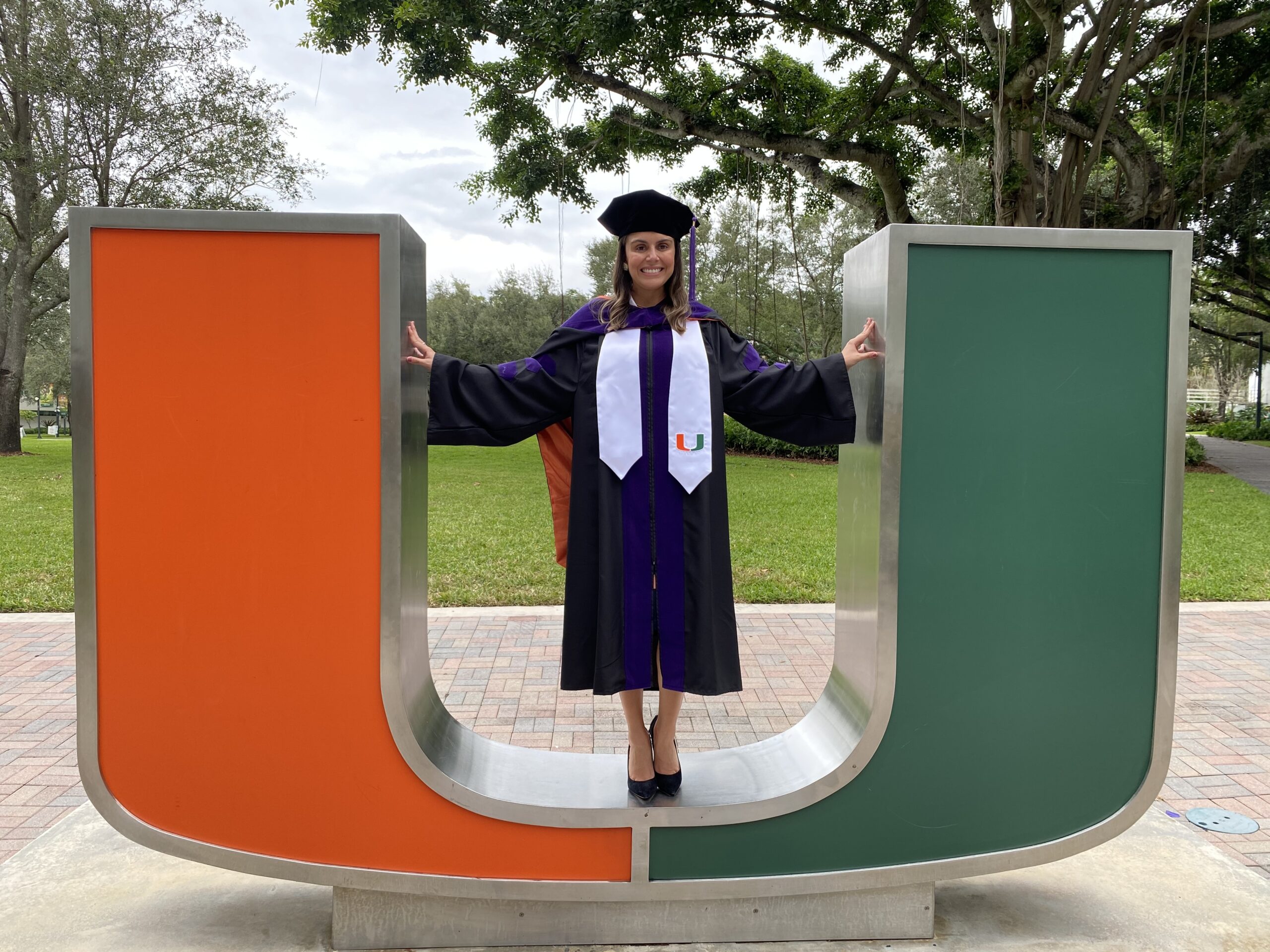
Her career path took her from Brazil to one of the most prestigious international law programs in the United States. What prompted her to cross that academic and professional boundary?
I usually say that I never followed a “traditional” legal career path. In fact, I didn’t even want to be a lawyer originally: I wanted to be a diplomat, study international relations, and work with international law. The LL.M. in International Arbitration and then the JD here in the United States were opportunities that arose almost by chance, but I ended up falling so in love with this field that today I feel it was all meant to be. Someone once described my profile as “non-orthodox,” and I liked that description so much that I’ve adopted it as part of my story ever since.
A career path that includes almost a decade away from professional practice to dedicate herself to her family. How did she rebuild an internationally renowned career from there?
When I finished high school in Brazil, I knew I wanted to study and work in an international field, although I always thought I could do many things in life; I even considered studying medicine. During law school, I realized I didn’t want to practice law in the traditional way, and I began to focus on subjects more related to International Law and Economic Law, especially in my final years. A curious fact about my career path is that I finished my degree, passed the OAB exam, but never picked up my professional license, which is still waiting for me at the OAB/SP to this day. After that, I dedicated almost ten years to my family and raising my son as a stay-at-home mom, something I’ve never regretted. Later, I moved from São Paulo to Miami for personal reasons and ended up starting my LL.M., somewhat persuaded by my then-husband, because I’ve always loved studying and dreamed of pursuing a graduate degree in the United States. What I never imagined was that here I would finally find my purpose and true calling in international arbitration, an area that, in a way, reconnected me with that initial dream of building a truly international career.
“Someone once described my profile as ‘non-orthodox,’ and I liked that description so much that I’ve adopted it as part of my story ever since.”
Miami School of Law acts as a bridge between common law and Latin American legal traditions. How do these two systems coexist in the classroom, and what does this transition demand of students arriving from the region?
The vast majority of our international students (myself included) come from civil law systems. And something that is often difficult to grasp before experiencing it firsthand is how two such distinct ways of understanding law—civil law and common law—can coexist. They are not necessarily mutually exclusive, but rather different ways of thinking about, interpreting, and practicing law. I believe that any professional who wants to develop a truly international career needs to have absorbed the wisdom of both systems. At the end of the day, those of us who work internationally end up becoming, in a way, “legal diplomats,” and we must be able to navigate between different legal cultures, interpret different legal logics, and communicate with clients, colleagues, or institutions that operate from entirely different perspectives.
Has the profile of the Latin American professional arriving in Miami Law today changed compared to a decade ago?
Our international programs are designed not only to teach legal content but also to help students adapt to another legal culture: from the Socratic method in the classroom to the way of writing, arguing, and communicating orally, which differs significantly between the two systems. In my own work, I see this every day. Part of my role is precisely to support students from diverse cultures and backgrounds to help them navigate this academic and professional transition. And Miami, as a city, greatly facilitates this integration. Its multicultural character, especially for Latin Americans, makes it a very natural place to begin or strengthen an international career. The profile of the Latin American student has also evolved in recent years. Before, perhaps the idea of coming to obtain a U.S. degree was more prevalent. Today, we see much more global, strategic professionals who are aware that they need to understand multiple legal systems, develop intercultural skills, and build international networks to compete in an increasingly transnational legal market.
“Those of us who work internationally end up becoming, in a way, ‘diplomats of law’: we must navigate between different legal cultures and interpret different legal logics.”
You train the professionals who will occupy legal management positions in multinational companies and top-tier law firms tomorrow. What specific gap do you see between what the market demands and what academia provides?
I believe that standing out in the international legal market today has become much more difficult and competitive. Traditional credentials—good grades, language skills, academic degrees, and international experience—remain important, but they are no longer sufficient on their own. In certain highly competitive spaces, such as large international firms, even an LL.M. no longer necessarily differentiates a candidate; in many cases, a JD in the United States is also becoming a significant or even indispensable advantage. However, what is most interesting is that organizations are no longer solely seeking technical excellence. There are human and strategic skills that have become absolutely essential and that, in my opinion, traditional legal education still does not develop in sufficient depth.
What are the skills that you are most concerned about not being taught in sufficient depth by academia?
One of these is adaptability. We live in an extremely dynamic world, where work models, markets, and even areas of law change very rapidly. The professionals who manage to stand out are those who are flexible, resilient, and have the ability to constantly reinvent themselves. I also see the issue of emotional and mental health as increasingly important. The international legal market can be very demanding and competitive, and universities often prepare students to perform academically, but not necessarily to handle pressure, uncertainty, or constant change. Another fundamental skill is intellectual curiosity. The best professionals are those who never stop learning, who keep an open mind, and who understand that an international career doesn’t always follow a linear path. Many opportunities arise precisely in spaces or areas that one never initially imagined.
Networking is increasingly appearing in that conversation. Has its nature changed, or is it still the same old mechanism with a different name?
And, of course, networking has become an essential tool. But not just as a mechanism for “finding a job.” Real networking involves building genuine relationships, learning from other industries, exposing yourself to different perspectives, and understanding that many opportunities arise precisely from unexpected conversations and connections. That’s why I always recommend that students participate in events not only in their specific field but also in other sectors, because you never know where a new opportunity or even a new professional passion might emerge. In the end, I believe that the most valuable professional today isn’t necessarily the one with the perfect resume, but rather the one who manages to combine technical excellence with emotional intelligence, curiosity, adaptability, and a truly global vision.
“Universities prepare students to perform academically, but not necessarily to handle pressure, uncertainty, or constant change.”
Artificial intelligence performs tasks in seconds that previously required years of practice. What position has Miami Law taken on this debate, and where does it draw the line between tool and substitute?
I believe this is undoubtedly one of the most urgent and important issues facing law schools today. Personally, I’ve always been rather “old school” regarding new technologies and digital changes, but I also understand that there’s an unavoidable need to adapt and learn to use these tools to our advantage—of course, in an ethical and responsible manner. I’ve seen that some universities in the United States have chosen to restrict or even prohibit the use of artificial intelligence due to concerns related to plagiarism and academic integrity. However, I honestly don’t think that’s the right solution. Artificial intelligence is already part of professional and academic reality; ignoring it or trying to eliminate it from the educational process won’t make it disappear. Perhaps the real challenge is teaching students how to use it correctly. Even something as seemingly simple as learning to create good prompts is becoming an important skill.
What specific risks does a law student face when delegating tasks that form legal judgment to AI?
At Miami Law, we already offer courses related to artificial intelligence, technology, and law, and I believe that the conversation will increasingly shift from whether or not to use AI to how to use it intelligently, ethically, and strategically. However, from an educational perspective, there is also a very valid concern. Many of the tasks that AI can now perform quickly—summaries, preliminary research, basic drafting—are precisely part of the process by which students develop a fundamental skill: legal judgment. And that ability cannot be completely delegated to a technological tool. Because ultimately, studying law is not just about finding quick answers: it’s about learning to analyze, interpret, argue, manage pressure, and develop critical thinking. And that requires time, effort, and often, intellectual discomfort. That’s why I believe there’s a delicate balance. AI can be an extraordinary support tool, but it shouldn’t replace the deep learning process. In fact, some empirical studies show that artificial intelligence greatly helps in the rapid execution of tasks, but it doesn’t necessarily promote deep understanding or motivation to learn. And if we want to produce truly intelligent lawyers, students still need to go through the difficult process of learning to think legally, manage their time, and tackle complex problems on their own. Because once they enter the professional market, the demands, pressure, and complexity only increase. In my opinion, law schools today must teach how to coexist with technology without losing the critical thinking, human judgment, and analytical skills that remain the true core of the legal profession.
“The conversation will shift from whether or not to use AI, to focusing on how to use it intelligently, ethically, and strategically.”
The Foro Gerencias Legales Miami 2026, organized by Gericó Associates, brings together the most influential legal executives in Latin America and the Iberian Peninsula. What do these kinds of forums represent for the regional legal ecosystem, and what would you like the legal executives to take back to their organizations?
I believe that events like the Foro Gerencias Legales Miami 2026 have enormous value for the Ibero-American legal ecosystem today because they reflect a very clear reality: Miami is no longer just a “gateway” to Latin America, but a true center where business, investments, and strategic decisions are taking place. In recent years, the city has consolidated its position as an international hub for sectors such as technology, finance, arbitration, energy, and cross-border investments. International firms, multinationals, and investment funds have significantly expanded their presence here, which has also profoundly transformed the legal market. Therefore, the Forum represents much more than a legal gathering. It is a space for connection among leaders who are defining the future of organizations and the regional legal market. And in this context, networking acquires enormous value. Often, the most important opportunities, alliances, and ideas arise precisely from these conversations and human connections. From academia, I would like general counsels and legal directors to understand that today’s international lawyer needs much more than technical excellence. They must understand business, technology, different cultures, and have the ability to adapt to an increasingly dynamic and global world. And I believe Miami perfectly embodies this transformation: a multicultural, international, and strategic city, especially for Latin America, where diverse legal cultures and ways of doing business coexist every day.
“Miami is no longer just a ‘gateway’ to Latin America, but a true center where business, investment and strategic decisions are happening.”
A Brazilian woman in Miami, she trains lawyers who will work in dozens of jurisdictions. Her career has crossed borders, languages, and very different stages of life. What sustains her in this role, and what does she find outside the classroom that recharges her?
I believe what sustains me most in this role is precisely the human and multicultural aspect of the profession. Having lived in different countries, languages, and legal systems has taught me that international law goes far beyond laws and contracts: it’s about building bridges between cultures, ways of thinking, and different ways of understanding the world. My own career path has never been linear or traditional, and perhaps that’s why I connect so deeply with international students who are also going through processes of adaptation, change, and even uncertainty. Part of my job is precisely to help them navigate not only a new legal system but also a new academic and professional culture.
Outside the classroom, I’m incredibly inspired by continuing to learn and meeting people from all over the world. And honestly, a large part of my inspiration also comes from the students themselves and seeing how an international experience transforms their confidence, their worldview, and often even their career goals.
What would you say to a Latin American student who is currently unsure whether it’s worth investing everything in an international education?
To a Latin American student who is currently unsure whether an international education is worthwhile, I would say that the best opportunities often arise precisely outside our comfort zone. An international experience not only opens professional doors; it also profoundly transforms how we understand ourselves and the world.