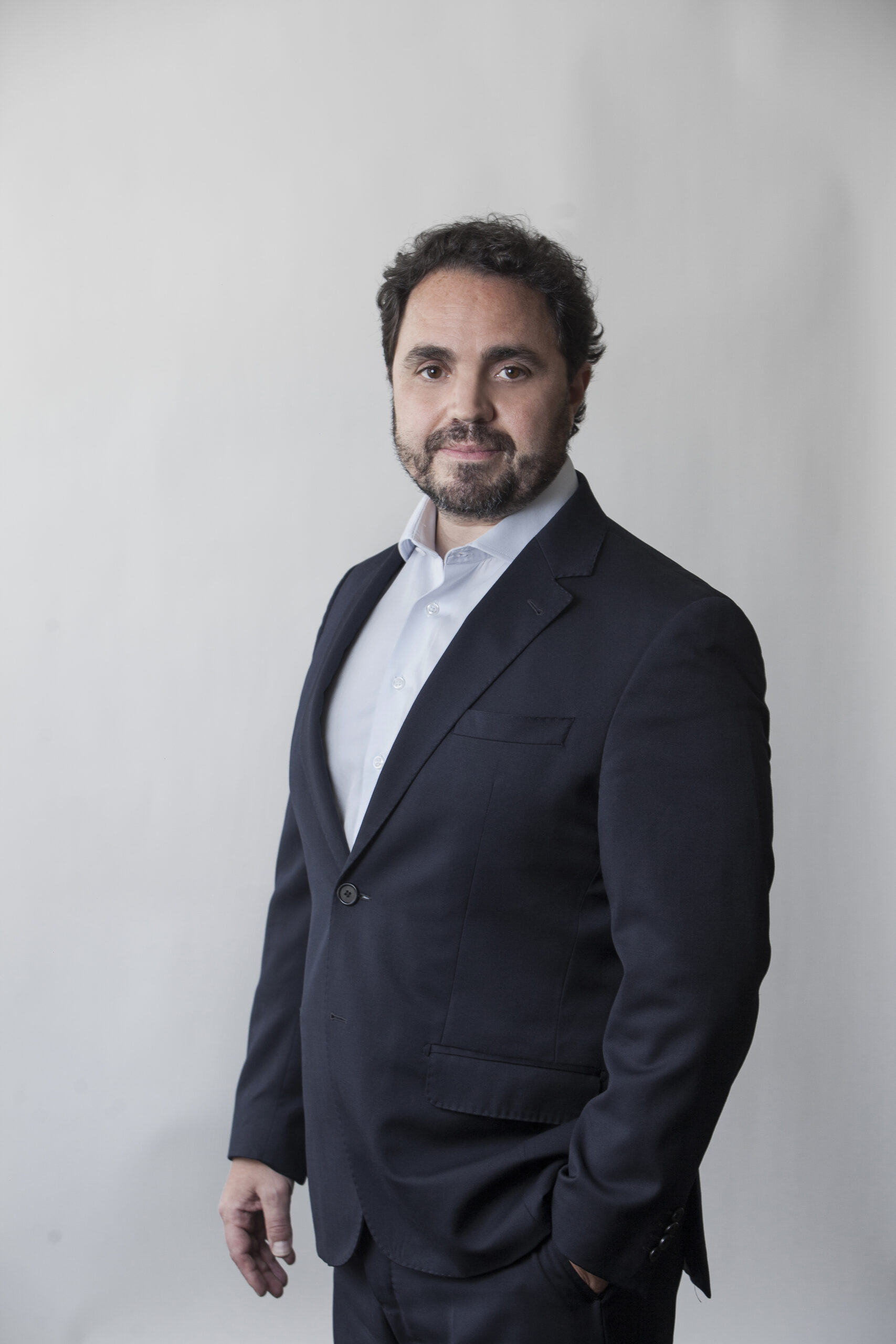
Juan Francisco Torres Landa, from Hogan Lovells Cadwalader: “What distinguishes a good advisor is the ability to give calm, well-founded and strategic advice”
Brazil in 2026 and the New Market Logic: Big Law’s Perspective
Drawing on the perspectives of Cescon Barrieu, FAS Advogados in cooperation with CMS, Machado Meyer, Pinheiro Neto, TozziniFreire, Trench Rossi Watanabe, and Veirano Advogados, this report offers a consolidated reading of the Brazil taking shape in 2026: macroeconomic caution, greater corporate sophistication, and a legal market compelled to operate with heightened strategic precision
By Heidi Maldonado
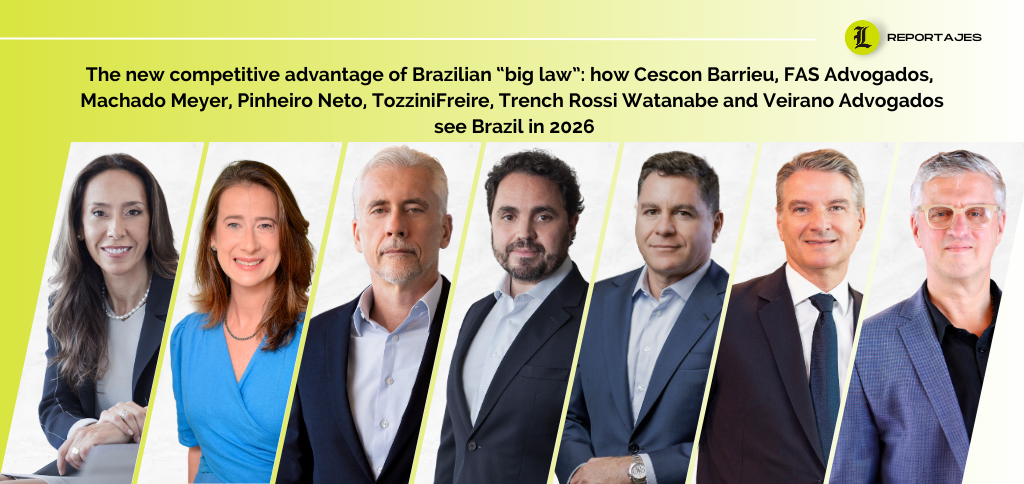
Brazil in 2026 cannot be understood solely through macroeconomic indicators or the short-term noise of politics. The most revealing reading comes from those who operate daily at the intersection of regulation, investment, and corporate decision-making: the major law firms. This report brings together the perspectives of Alexandre Gossn Barreto, managing partner of Cescon Barrieu; Paulo Focaccia, managing partner of FAS Advogados in cooperation with CMS; Tito Amaral de Andrade, managing partner of Machado Meyer;Fernando Meira, managing partner of Pinheiro Neto; Fernando Serec, managing partner of TozziniFreire; Simone Dias Musa, managing partner of Trench Rossi Watanabe; and Paula Surerus, managing partner of Veirano Advogados, and offers a joint interpretation of the moment the country is experiencing.
The common thread is twofold and closely intertwined. At the macro level, the firms describe a Brazil marked by contained growth, a demanding cost of capital, and investor caution. At the micro level, they portray a business landscape that has not come to a halt but is making different choices: better informed, more selective, and with a growing demand for predictability, efficiency, and risk control.
When the Macroeconomy Fails to Provide a Tailwind: Growing with the Brakes On
Alexandre Gossn Barreto, managing partner of Cescon Barrieu
The starting point is set by Alexandre Gossn Barreto, managing partner of Cescon Barrieu, who acknowledges that projecting Brazil’s outlook is “always a challenge,” particularly in an election year. His framework, however, is not one of collapse, but of constrained stability.
“Brazil shows signs of stability, but it is operating without a clear growth impulse. In an environment of high interest rates, access to credit becomes more restrictive, and investment decisions require a much higher degree of caution”.
In his assessment, the country avoids deterioration but fails to gain momentum. The high-rate environment “makes access to credit more difficult”, “delays investments,” and puts pressure on contracts and financial structures. The result is not an economy at a standstill, but one forced to prioritize, renegotiate, and, in many cases, restructure.
Paulo Focaccia, managing partner of FAS Advogados en cooperación con CMS
That structural caution is reinforced by FAS Advogados in cooperation with CMS. For Paulo Focaccia, managing partner, 2026 will be “particularly challenging” due to the combination of economic conditions, politics, and accelerating technological change. His point is clear: the market responds not only to macroeconomic fundamentals, but also to institutional uncertainty.
“The economic and political landscape, combined with technological acceleration, calls for more cautious decision-making. In this context, regulatory, litigation, and tax practices tend to gain greater prominence”.
Tito Amaral de Andrade, managing partner of Machado Meyer
Tito Amaral de Andrade, managing partner of Machado Meyer, adds a further layer that completes the picture: companies are paying closer attention to the “macroeconomic, regulatory, and geopolitical” environment, which is driving “more cautious” decision-making and a preference for advice focused on “security and predictability”.
“The corporate client is far more attentive to the macroeconomic, regulatory, and geopolitical context. This translates into more cautious decisions and into the search for advisers who can provide security and predictability in complex scenarios”.
A More Sophisticated Microeconomy: Deciding with Less Room for Error
If the macroeconomic backdrop forces caution, the microeconomic reality is raising the level of sophistication. The most visible shift can be seen in the profile of the corporate client.
“Today’s corporate client is extremely sophisticated, focused on costs and effective results, and far more integrated into business decision-making”, states Alexandre Gossn Barreto.
In his account, the in-house legal department moves away from a purely executional role and becomes a strategic player, raising the bar for law firms: predictability, efficiency, and close, sector-driven advice.
From FAS, Paulo Focaccia reinforces that knowing the client has “ceased to be a differentiator” and has become a minimum requirement. He adds a decisive factor: the growing importance of legal and institutional certainty, measured in technical consistency, governance, and risk management.
Fernando Meira, managing partner of Pinheiro Neto
Fernando Meira, managing partner of Pinheiro Neto, brings in the economic dimension of this shift. His clients are focused on “value, predictability, and efficiency”, forcing firms to rethink not only how services are delivered, but also fee structures and internal organization.
“Pressure for value and predictability requires us to deliver agility and practical solutions, with fee models aligned to the real complexity of each project”.
Tax Reform and Regulatory Density: When the Framework Redefines Investment
On the 2026 landscape, tax reform emerges as a cross-cutting factor that goes well beyond technical compliance.
“The implementation of tax reform not only increases demand for tax advice, but also forces a reassessment of structures, investments, and operating models”, says Paulo Focaccia.
Paula Surerus, managing partner of Veirano Advogados
From Veirano Advogados, Paula Surerus, managing partner, likewise identifies tax as a central vector of opportunity, directly linked to the structural changes in Brazil’s tax system and their impact on corporate decision-making.
“The changes resulting from tax reform have a direct impact on how companies structure their operations and make investment decisions. Tax becomes a strategic practice in this new context”.
The macro–micro consequence is immediate: when the tax framework shifts, companies revisit value chains, corporate structures, and pricing policies. Regulatory density becomes a permanent cost-one that rewards preparation and penalizes improvisation.
Technology as a Competitive Filter: Efficiency with Governance
Fernando Serec, managing partner of TozziniFreire
Artificial intelligence emerges in these accounts as a promise already fulfilled: it has moved beyond the pilot phase to become infrastructure.
“Artificial intelligence is already part of our day-to-day work. It has streamlined processes such as contract review and due diligence, allowing lawyers to focus on higher value-added activities”, emphasizes Fernando Serec, managing partner of TozziniFreire Advogados.
From Pinheiro Neto, Fernando Meira adds an organizational dimension: AI boosts productivity, but also strengthens legal operations and forces a reassessment of traditional working models and fee structures.
For her part, Paula Surerus of Veirano Advogados underscores the elements of control and accountability, with AI-based solutions always validated by a lawyer, in a co-pilot model.
Read through a macroeconomic lens, this introduces a paradox: in a country with moderate growth, technology does not function as a shortcut, but rather as a competitive filter.
Sectors with Momentum and Areas of Risk: Selective Investment and Restructuring
The firms do not portray a homogeneous market. Instead, they identify areas of structural momentum alongside clear pockets of risk.
“We continue to see significant opportunities in infrastructure, energy, natural resources, and the digital economy, but high interest rates tend to restrain credit and investment and to put pressure on financial structures”, notes Alexandre Gossn Barreto.
Barreto warns that this environment is fueling litigation demand linked to restructuring and financial stress.
Simone Dias Musa, managing partner of Trench Rossi Watanabe
From Trench Rossi Watanabe, Simone Dias Musa, managing partner, broadens the map, pointing to opportunities across both transactional work and reorganizations, as well as international trade, ESG, and carbon credits.
“The market combines strategic transactions with reorganizations and restructurings, within a context of greater regulatory and financial complexity”.
The resulting picture is one of growth by islands: sectors that maintain momentum alongside others that generate legal work as a result of structural pressure.
Taken together, the perspectives of Barreto (Cescon Barrieu), Focaccia (FAS), Amaral de Andrade (Machado Meyer), Meira (Pinheiro Neto), Serec (TozziniFreire), Dias Musa (Trench Rossi Watanabe), and Surerus (Veirano Advogados) depict a Brazil in a phase of demanding maturation. The macroeconomy restrains momentum: growth is possible, but costly and executed with the brakes on. In response, the microeconomy becomes more sophisticated: corporate clients make decisions with more information, less tolerance for friction, and greater pressure for predictability and value.
In this environment, Big Law operates as an early-warning sensor for the market: it does not merely interpret the law, but organizes risk, converts uncertainty into structures, and translates macroeconomic constraints into executable micro-level decisions. Understanding Brazil in 2026 therefore also requires understanding this new logic: when the context does not provide a tailwind, competitiveness depends on the ability to operate with precision.