
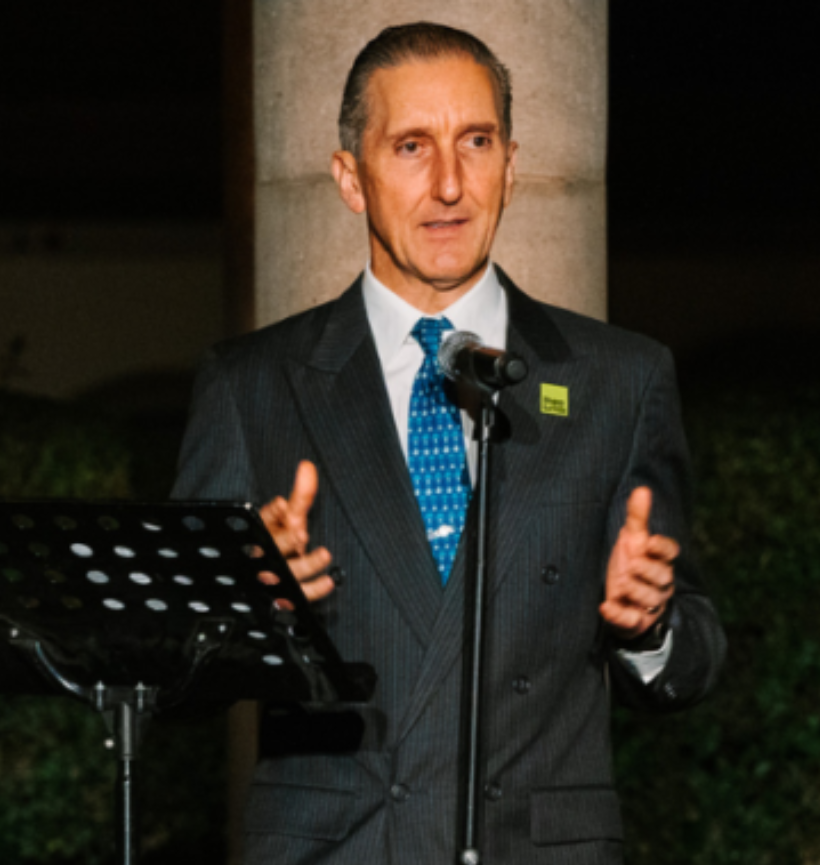
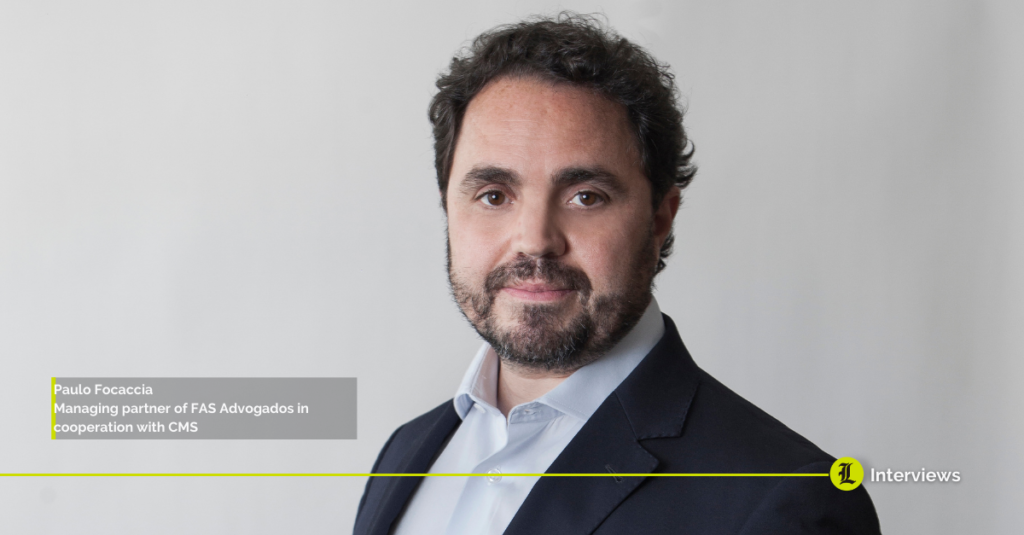
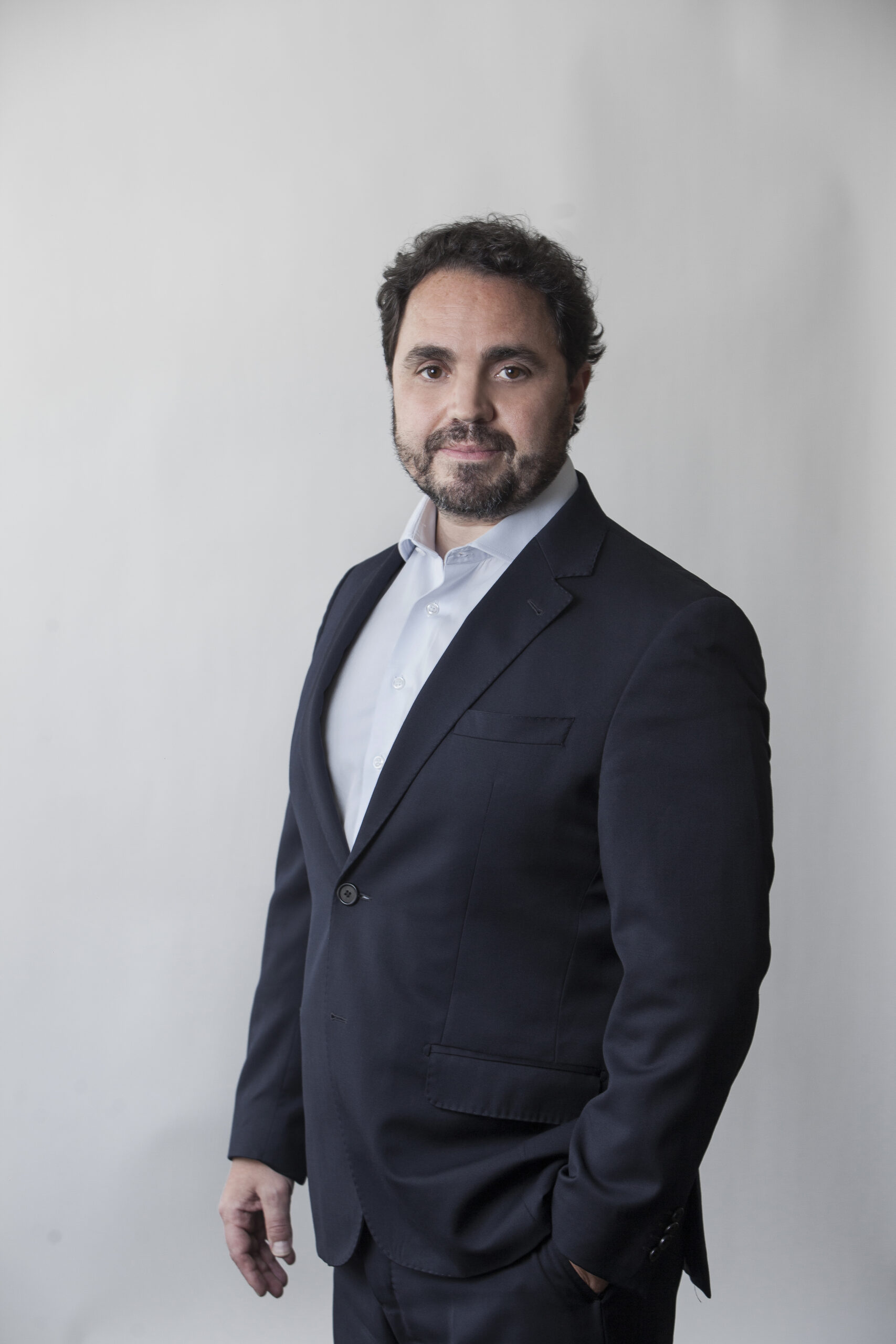
We spoke with Paulo Focaccia, managing partner of FAS Advogados in cooperation with CMS, to explore his view of the forces reshaping the Brazilian legal market in 2026 and the role large firms must assume in this new landscape.
This interview forms part of a series of individual conversations stemming from the collective analysis “Brazil in 2026 and the new market logic: the ‘Big Law’ perspective”. Rather than reiterating diagnoses, the aim is to understand how these changes are interpreted from within firms — and what concrete decisions today’s leaders are making in response.
Throughout the conversation, Focaccia advances a clear and consistent idea: technology only makes a difference when it is supported by culture, values and coherent leadership. In a market that is increasingly demanding and far less tolerant of improvisation, technology must function as a lever, never as a shortcut.
Technology as a lever, not a shortcut
FAS Advogados’ strategic plan for 2026 is not built around a single tool or technological promise. For Paulo Focaccia, genuine differentiation lies in striking a balance between sustained investment in technology — particularly artificial intelligence — and the deliberate preservation of the firm’s core values.
“Sustainable differentiation does not come solely from operational efficiency,” he explains, “but from placing people at the heart of the strategy, even in contexts of intense competitive pressure”.
This positioning, he adds, has enabled the firm to occupy a clearly defined place in the Brazilian market, even when competing with other large law firms. Not through scale or aggressive sales tactics, but through a consistent and coherent way of operating.
“We are loyal, fair and transparent. That attracts clients who are not merely seeking sophisticated legal solutions, but institutional partners aligned with a long-term vision”.
Artificial intelligence: optimism, with clear limits
Focaccia is openly optimistic about the impact of artificial intelligence on legal practice. AI is already delivering tangible gains in efficiency, productivity and accuracy, although he acknowledges that the sector remains at a relatively early stage of maturity.
He nevertheless introduces a caution that is seldom present in mainstream technological discourse: the risk of undermining foundational legal training.
“In a firm with more than 200 professionals, we cannot allow the use of AI to compromise training, which is cyclical and essential to the sustainability of the model”.
Technology, he insists, must enhance human talent rather than replace it. Otherwise, short-term efficiency gains risk turning into structural weaknesses over the medium term.
A client who demands more than efficiency
The changing profile of the corporate client runs through the entire conversation. According to Paulo Focaccia, the client of 2026 is more sophisticated, more selective and far less tolerant of generic propositions.
“Genuinely knowing the client has ceased to be a differentiator and has become a basic requirement.”
Today’s clients expect genuine specialisation, a deep understanding of their business and a strong sense of legal and institutional security. A solid track record, technical consistency and robust governance, cybersecurity and risk-management frameworks are now just as important as individual technical excellence.
Against this backdrop, the integration of FAS Advogados into an international platform such as CMS reinforces a value proposition centred on predictability, structure and trust, three attributes that are increasingly decisive in client decision-making.
Rainmakers in 2026: individual initiative, collective support
While the role of the rainmaker remains central, its underlying logic is evolving. Focaccia notes that opportunity creation may begin with the individual, but its consolidation depends on a much broader framework.
“Business conversion and sustainability only materialise when there is solid institutional support and well-structured collective work”.
By 2026, rainmakers will need to go well beyond personal charisma or sales ability. Strategic vision, relational intelligence, the capacity to work in integrated teams and a deep understanding of the forces shaping clients’ decisions will be indispensable.
The real challenge for firms, he stresses, lies in creating environments that encourage individual initiative while simultaneously transforming it into collective, sustainable results.
Sectors, risks and a year full of nuance
Focaccia describes 2026 as a particularly complex year for Brazil, economically, politically and technologically. In this context, areas such as artificial intelligence, regulatory work and M&A are expected to gain prominence, alongside litigation and tax advisory services driven by tax reform.
He adds that a potential reduction in interest rates combined with a weaker dollar could revive the mergers and acquisitions market, particularly in infrastructure and capital markets, with greater momentum likely from 2027 onwards.
Talent, development and diversity
Talent development sits at the core of the firm’s strategy. Global academies, local training programmes and close interaction between partners and associates underpin a model designed to accelerate learning without sacrificing depth.
“We offer real opportunities and autonomy. We encourage our professionals to know themselves better, identify their strengths and actively work on areas for improvement”.
In terms of diversity, FAS Advogados has advanced through concrete initiatives led by its Women’s Committee for the Development of Female Leadership, including programmes such as Women in Focus and major institutional events. Today, the firm has a higher proportion of women than men, a reflection of a sustained and deliberate commitment to pluralistic leadership.
Culture, well-being and leadership: sustaining performance without burnout
For Focaccia, leadership is the decisive factor in keeping an organisation healthy in a highly demanding environment. Not as an abstract concept, but as a daily practice rooted in clear, structured and cross-functional initiatives that foster ongoing dialogue around values, purpose and vision. This process, he emphasises, only works when there are genuine opportunities for participation that enable authentic collective development.
Building on this cultural foundation, leadership carries a second responsibility: translating vision into concrete medium- and long-term projects that provide direction and drive innovation. Whether in service delivery, solution design, internal processes or client relationships, success depends on engaging teams around clear priorities, rigorous execution, constant monitoring and regular reassessment of strategic pillars.
In this context, the balance between high performance and well-being ceases to be aspirational and becomes a strategic imperative. Sustainable results, Focaccia argues, depend on healthy and engaged people. This requires psychologically safe environments, clear boundaries, routines that preserve focus and energy, and genuine collaboration across teams. Leadership, he adds, must offer effective support without compromising standards or quality.
High performance, when well managed, should lead not to burnout but to consistency, development and technical excellence. That excellence, however, is only sustainable when values are not merely articulated but consistently practised. The gap between words and actions, Focaccia warns, remains one of Big Law’s central challenges in 2026.
Growing with intelligence, not just technology
In closing, Paulo Focaccia offers a reflection that deliberately departs from conventional growth narratives.
“The real challenge is not to grow faster, but to grow without losing what makes a firm sustainable”.
In the Big Law environment of 2026, technology, talent and business only generate lasting advantage when aligned through strong culture and consistent leadership. Everything else, he cautions, is short-term noise.