

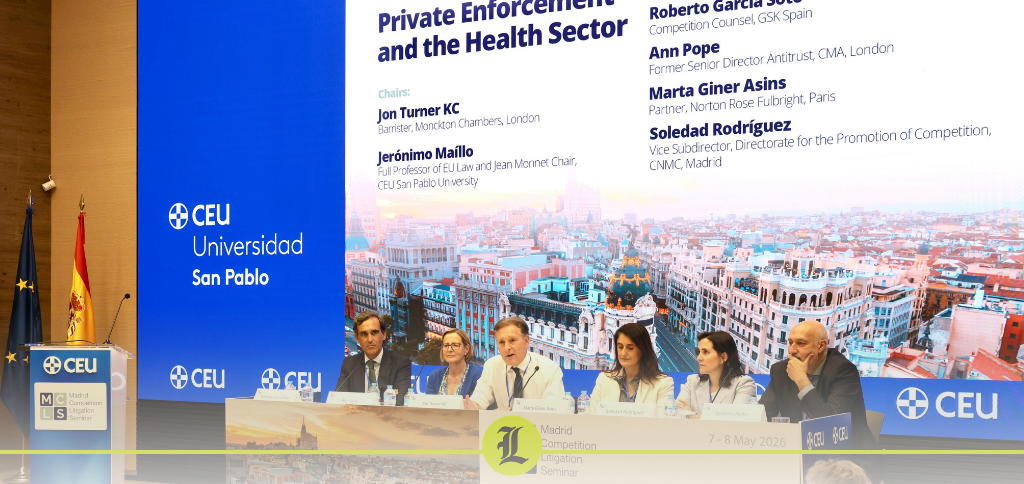
The sixth edition of the Madrid Competition Litigation Seminar (MCLS) brought together more than 120 specialized professionals from across Europe – judges, academics, regulators and lawyers – at the San Pablo CEU University in Madrid to discuss the main challenges of private enforcement of Competition Law.
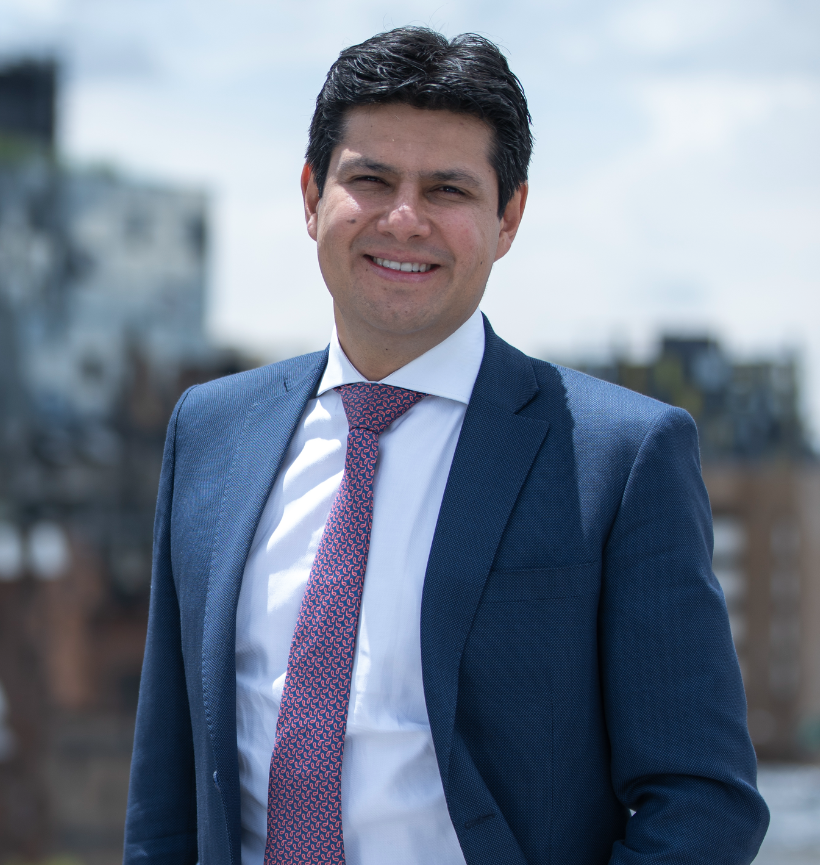
Paul Hitchings, PhD, director of the Madrid Competition Litigation Seminar and founding partner of Hitchings & González, emphasized the scope of the topics addressed in this edition: “Private enforcement has begun to overtake public enforcement of EU competition law in some European jurisdictions, especially in the digital sphere and in markets with effective collective protection mechanisms. In the United Kingdom, the number of damages claims before the Competition Authority (CAT) already far exceeds the number of equivalent proceedings initiated by the Competition Authority (CMA). This new reality, and the very principles of European law that frame it, require that national procedural systems evolve, that national courts have the necessary resources and capabilities to resolve highly complex disputes, and that a collaborative environment be fostered among judges, parties, and their advisors. In this context, the Seminar continues to offer a forum for discussion and dialogue that contributes to this path and to achieving more effective and equitable justice.”
Private enforcement of competition law is gaining prominence in Europe, to the point of surpassing public enforcement in some jurisdictions. Among the main conclusions of MCLS26, this paradigm shift stands out, with litigation funds beginning to assume an increasingly important role in case selection, operating according to criteria of probability of success and value of the claim. This, in turn, reinforces the need for coordination between national courts and competition authorities to ensure the consistent application of antitrust rules in Europe.
Closely linked to this phenomenon, another major theme addressed at MCLS26 was the need for effective collective redress mechanisms. The debate highlighted that compensation for damages in mass litigation requires appropriate procedural mechanisms. The availability of collective actions is not a secondary option, but rather an implicit condition of the compensatory principle enshrined in the EU Damages Directive; without it, the system loses coherence in practice.
Another key topic addressed was the inherent difficulty in quantifying damages, particularly pressing in digital and pharmaceutical markets, where determining what would have happened in the absence of the infringement requires constructing highly complex hypothetical scenarios. Participants agreed that courts must accept an unavoidable degree of uncertainty in this analysis, relying on sound economic evidence consistent with EU law standards.
The event also focused on active case management as a decisive factor in complex litigation. The court’s involvement in directing the proceedings, in collaboration with the parties and their experts, fosters the mutual trust necessary for efficient progress. This is a lesson confirmed by comparative experience: where judges lead the process, the outcomes improve.
All these reflections have ultimately led to a conclusion shared by the participants: the legal, economic, and documentary magnitude of mass competition litigation overwhelms the capacity of ordinary courts. Europe needs specialized, centralized courts, equipped with the necessary resources and training to handle these cases.
Laila Medina, Advocate General of the Court of Justice of the European Union, highlighted after delivering the opening speech that this event has succeeded in bringing together “those interested in private enforcement at the same table”.
Ann Pope, former director of the CMA, said the event is “truly unique; it is the only seminar I have attended where the majority of the audience are judges, so you really hear from the people who make the tough decisions every day.”
Gérard Terneyre, president of the Commercial Court of Paris, added: “We approach the situation very differently from country to country, but I think we have exactly the same problems, the same issues and questions.”
Sobre el Madrid Competition Litigation Seminar
The Madrid Competition Litigation Seminar is a unique international forum in Europe dedicated to the private enforcement of competition law. Its objective is to analyze in depth the main challenges to fair and effective compensatory remedies and to propose practical and operational solutions.
In its six editions, the MCLS has brought together more than 1,000 participants from over 15 nationalities, including more than 150 judges and over 200 speakers. The event, directed by Paul Hitchings, is governed by Chatham House Rules and attendance is by invitation only. The 2026 edition was supported by the boutique law firm Hitchings & González and sponsored by Oxera Economic Consulting and Burford Capital.