

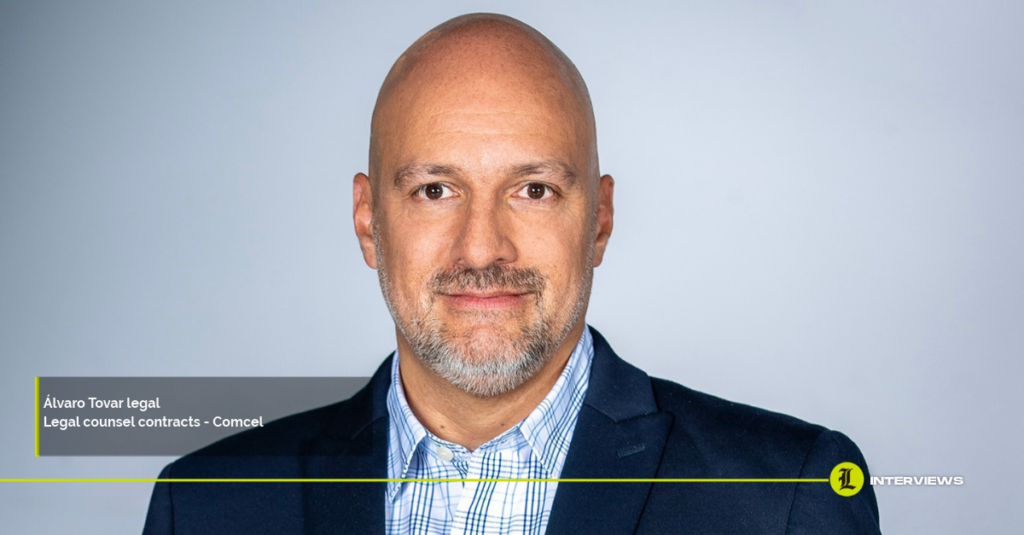
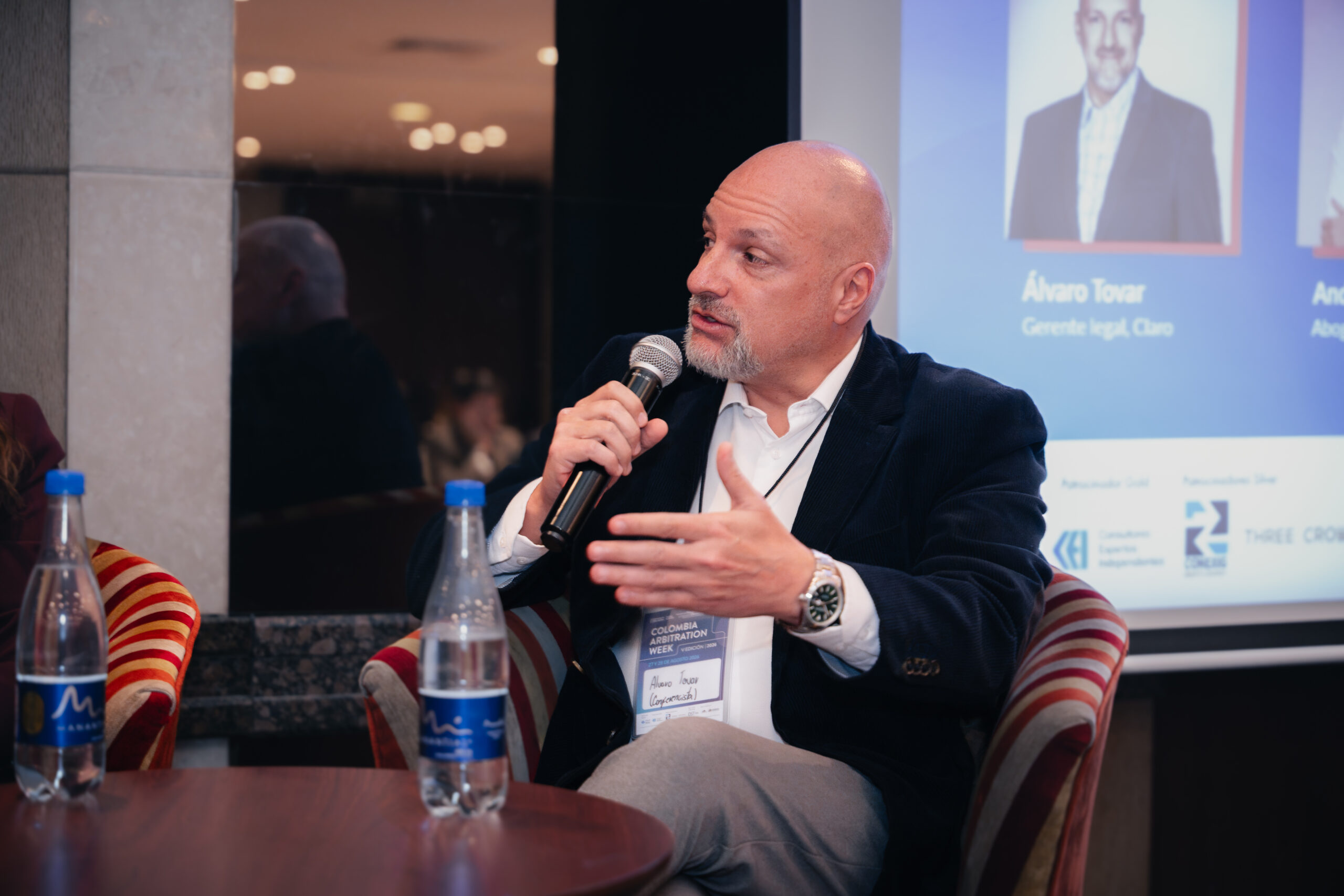
Álvaro Tovar, legal counsel for contracts at Comcel, the company that operates in Colombia under the Claro brand, understands contracts as the instrument that makes business possible. This conviction guides his leadership style through specialized consulting, based on the trust that lawyers generate within business areas, and explains his perspective on the sector: in telecommunications, contracts underpin critical infrastructure, and the rollout of 5G requires transforming good faith into a practical tool for collaboration between the parties. The same logic guides his view of artificial intelligence, which he considers a support for legal judgment. Looking ahead to his participation in the Foro Gerencias Legales Lima 2026, Tovar believes that Colombian experience in contract standardization and process automation can enrich the conversation with Peruvian legal managers. For Tovar, “leadership does not depend on the position or a hierarchy, but on the trust that one is able to generate.”
What led you to specialize in recruitment within your career as a corporate lawyer?
I understood very early on that behind every contract there is an investment, a project, or a need that someone wants to bring to fruition. This led me to see contracting not only as a tool for managing risks, but also as a way to make business possible in a safe and sustainable way.
Furthermore, I firmly believe that contracts are only effective when they accurately reflect reality. Problems often arise when a contract deviates from how a business truly operates. Therefore, I believe the lawyer’s role is to craft clear, balanced agreements that align with the interests of all parties involved.
On the other hand, in an era where many see themselves as risk detectors and build their careers by pointing out errors, there’s an idea that has guided my career: saying “no” is easy; anyone can do it. What’s truly valuable is finding the responsible way to say “yes.” A lawyer adds value when they transform obstacles into solutions and help projects move forward with legal certainty.
What have you learned about exercising leadership from a specialized advisory position within a legal department?
I’ve learned that leadership doesn’t depend on position or hierarchy, but on the trust one is able to generate. Business units don’t just expect a legal opinion; they expect support to make better decisions.
Leadership often involves removing unnecessary barriers and transforming complex issues into simple, actionable solutions. To do this, a lawyer must understand the business, speak the language of different departments, and help build consensus.
Ultimately, the best in-house lawyer isn’t the one who identifies the most risks, but rather the one who helps the team move safely toward a common goal. And if they succeed, they not only improve contract management, but also generate cultural transformation.
What distinguishes contract management in a telecommunications company from that of other industries?
Telecommunications has a unique characteristic: contracts not only support commercial relationships, but also critical infrastructure for the economy and society. When we negotiate connectivity, fiber optics, data centers, or digital services, we are supporting services upon which businesses, public entities, and millions of people depend.
This requires a much broader perspective. The lawyer must understand regulatory, technological, financial, and operational aspects simultaneously. Furthermore, they must design contracts capable of adapting to technologies that evolve faster than the contractual cycles themselves.
Therefore, contract management in telecommunications is less about managing risks and more about building collaborative relationships that drive connectivity, innovation, and digital transformation. In an information technology and telecommunications company, it is essential to simplify processes to achieve results more quickly.
What contractual challenges does the deployment of 5G networks in Colombia pose?
The main challenge is understanding that 5G is not just a technological evolution. It is a legal, regulatory, operational, and financial challenge that requires new models of collaboration among multiple stakeholders.
5G networks require infrastructure sharing, cooperative schemes, and large-scale investments. From a contractual perspective, the challenge is to accelerate these investments without sacrificing legal certainty.
In this context, good faith ceases to be a theoretical concept and becomes a practical tool. The most successful projects are those where the parties understand that their success depends on collaboration and not solely on the enforceability of the clauses.
Therefore, when good faith is considered an essential element of the contract, discretionary positions and penalties are reconsidered. Instead, remediation mechanisms are encouraged, and balance is established as the foundation between the parties.
Looking ahead to 2027, how will artificial intelligence change the way contracts are negotiated and managed?
Artificial intelligence will be one of the most significant transformations the legal profession has undergone in decades. However, I don’t see it as a replacement for lawyers, but rather as a tool that amplifies their capabilities.
AI can analyze information, compare documents, identify inconsistencies, and accelerate processes that previously required many hours of work. This will allow lawyers to dedicate more time to strategic analysis and decision-making.
But AI doesn’t build relationships, negotiate interests, or assume business responsibilities. That’s why I believe the future belongs to those who can combine technology with legal expertise, experience, and business acumen. In this sense, the mastery of the lawyer and AI complement each other.
The real competitive advantage will not be having access to AI, but knowing how to use it to formulate better questions and generate better decisions.
You are participating in Foro Gerencias Legales Lima 2026. What can the experience of the Colombian market contribute to the conversation with Peruvian legal managers?
I believe that Colombia and Peru share much more than a common legal tradition. Both countries understand the importance of good faith, freedom of contract, and the need for contracts to be instruments that generate trust and facilitate business.
From Colombia we can share valuable experiences in contract standardization, process automation, risk management and incorporation of artificial intelligence in legal functions.
But perhaps the most important lesson is that legal transformation is not just about digitizing documents. It’s about redefining how legal departments generate value for organizations.
The most successful legal departments will be those that reduce friction, accelerate decisions, and use technology to focus legal talent where it truly makes a difference. Because, ultimately, contracts shouldn’t be tools for confrontation, but rather mechanisms for collaboration to achieve shared goals.