
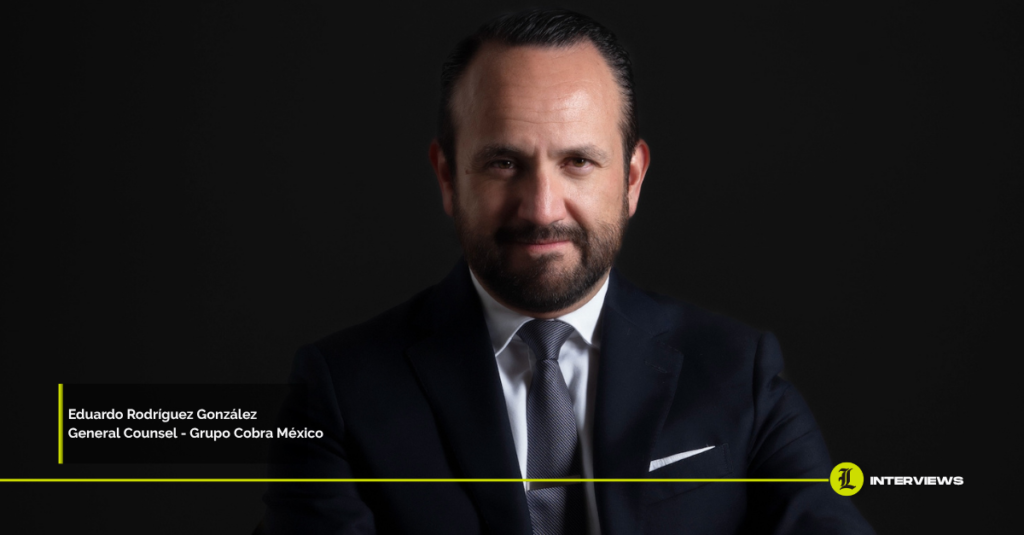
The energy reform of March 2025 forced developers and investors to rethink how they structure their projects with CFE, but for Eduardo Rodríguez González, general counsel of Grupo Cobra México, the fundamental change occurs on another level: legal departments can no longer limit themselves to managing contracts and today must anticipate how the interests of regulators, financiers, communities and state counterparties evolve at different paces.
In this interview, Rodríguez González recounts his journey through banking, retail, and energy infrastructure to explain why the legal advantage today lies in the capacity for strategic observation rather than in contract drafting, points out which sustainability practices are left out of conventional ESG reports, anticipates where environmental and social litigation in Mexico is headed, and explains what, in his opinion, is the structural risk that the sector’s legal departments still do not see coming.
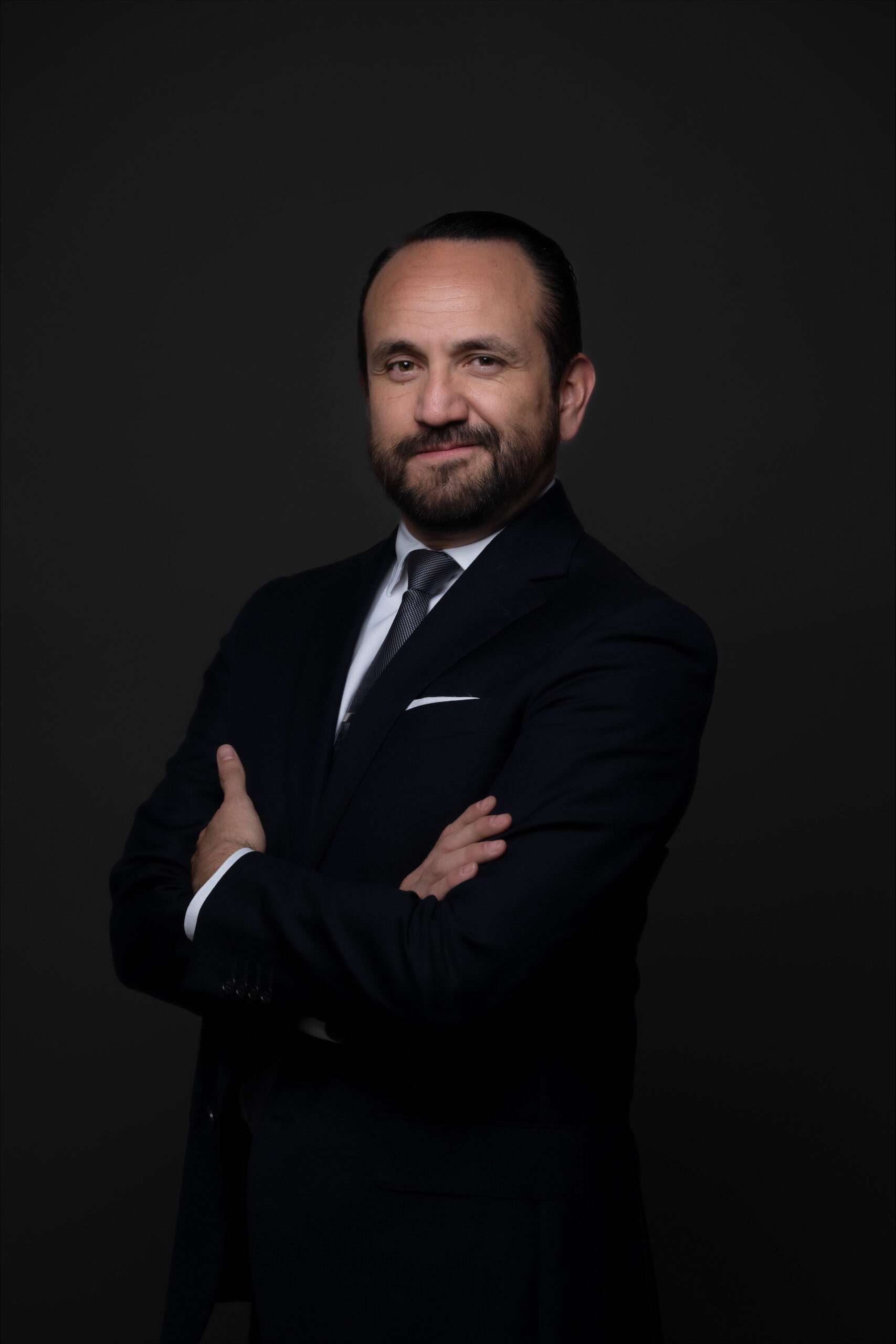
Your career has taken you through banking, retail, and now energy infrastructure, where you are general counsel for Grupo Cobra in Mexico. What does this transition between such different sectors demand of you, and what lessons from the first two do you bring to your current role?
It’s worth noting that my experience in banking and retail has been primarily within the context of my work at law firms, managing diversified portfolios. But getting to the point, if you ask me how to navigate such different sectors, the key lies in learning to observe, orient yourself, and “translate” risks. To use the sectors mentioned in the question as an example, what in banking is regulatory and compliance risk, in retail becomes contractual and supply chain risk; and when you move into energy infrastructure, all of that transforms into regulatory and sovereign counterparty risk, which can even evolve into political risk.
The banking sector offers valuable insights into corporate governance discipline, the nuanced interpretation of financial clauses, and a vision of “shielding” against systemic stress scenarios. Meanwhile, the retail sector develops and tests agility in negotiating with multiple counterparties, sensitivity to reputational risk, and the ability to structure standardized yet scalable transactions.
In energy infrastructure, the lessons learned find an extraordinarily challenging application scenario in designing contracts that can withstand, whether through flexibility or foresight, regulatory changes, state fiscal pressures, and long-term litigation, without depending on a single type of risk.
In the energy infrastructure sector, it’s common for a company to be heavily dependent on a single large government client. From your experience, what is the biggest structural challenge for a legal department when the business is so concentrated, beyond the size of the team?
Beyond the size of the team, the biggest structural challenge for a legal department in a company highly concentrated on a single state client would be managing the strategic dependence without losing the ability to anticipate or room for maneuver.
When a significant proportion of revenue depends on a single public entity, the primary risk ceases to be strictly contractual and becomes a systemic risk. Business stability can be affected by regulatory decisions, changes in public policy, budget reallocations, government priorities, political cycles, or modifications in contracting and oversight criteria.
In this context, the legal function can no longer be limited to contract administration or dispute resolution. It must act as a strategic intelligence platform capable of identifying early signs of change, evaluating plausible scenarios, and translating them into timely corporate decisions. Few areas within organizations are as well-positioned as the legal department to interpret regulatory trends, institutional signals, and the likely direction of regulatory changes.
In energy infrastructure projects, there isn’t always room to negotiate a balance in economic matters, dispute resolution, guarantees, and risk allocation schemes that provide long-term certainty, among other aspects. Therefore, the true competitive advantage of the legal department lies not solely in the quality of the contracts themselves, but in the quality of their preparation. An adverse scenario may be unavoidable; what is truly costly is reaching it without having modeled it beforehand. The difference between a resilient and a vulnerable organization often lies in the ability to anticipate scenarios, assign responsibility, define courses of action, and keep contingency plans updated before the risk materializes.
Likewise, even if the client is unique, the organization must avoid concentrating all its economic, financial, and operational exposure on a single point of failure. Strategic diversification can be built through project structure, financing sources, insurance schemes, supply chains, and guarantee mechanisms, so that an adverse event on one specific front does not compromise the overall continuity of the business. Here, the support, anticipation, and backing of the legal department are vital, making it a challenge for them to become involved on all these fronts and achieve strategic alignment.
In short, the structural challenge is not managing the relationship with a large government client; it is preventing economic dependence from becoming strategic dependence. When that happens, the legal department ceases to be a risk manager and becomes a key player in preserving the company’s autonomy, strategic flexibility, and long-term sustainability.
The energy reform of March 2025 mandates that CFE generate at least 54% of the electricity dispatched to the grid and limits dispatch priority for private renewable energy producers. Based on your experience advising in the sector, how much has this changed the way engineering firms structure and negotiate their generation projects in Mexico?
The March 2025 reform significantly altered the balance between state and private participation in the electricity sector, forcing engineering firms, developers, and investors to rethink how they structure and evaluate their projects. The ability to determine whether a project can be sustainably integrated into the new planning, dispatch, and state participation framework is now essential; that is, it’s no longer enough to simply answer whether the project is feasible or whether the technology is efficient.
The variables that should always have been part of companies’ analyses, but which were often underestimated, are linked to the State’s energy planning, the CFE’s participation mechanisms, and the new regulatory conditions for capacity expansion. These variables should have been considered alongside competitive costs, economic priority in the market, and reasonable prospects for energy placement, but today, both seem indispensable to me; especially since financial models are no longer based solely on technical and market variables, but now also on regulatory and energy policy scenarios.
From a strategic intelligence perspective, the sector has evolved from an efficiency-driven approach to one focused on institutional adaptability. The developers who are adapting best are not necessarily those with the most advanced technology, but rather those with the greatest capacity to anticipate regulatory changes, model long-term scenarios, and maintain contractual flexibility in the face of potential regulatory or institutional adjustments.
The reform also introduced two new schemes for private participation—Long-Term Producer and Mixed Investment—with 25-year contracts and CFE as the counterparty. What new legal risks does a contract of this duration with the State as a partner introduce, in general, compared to the model of independent contracts that existed before?
Regardless of the specific timeframe adopted by each project, when we talk about contractual horizons of two or three decades, the main or most visible risk is the institutional continuity risk, since the framework may change, governments may rotate, and government priorities may be reoriented.
Compared to the model of independent contracts (PPAs, permits, etc.), it is worth noting that there is now a more direct exposure to CFE as a contractual counterparty and, in the case of certain mixed investment schemes, also as a project participant.
Herein lies one of the greatest challenges: ensuring that incentives, obligations, and dispute resolution mechanisms effectively survive political cycles. I’m referring to the clear risk of contract renegotiation through administrative or legislative means. These mechanisms can impact reimbursements, debt amortization schedules, tariff changes, or dispatch rules, affecting the project’s economics without necessarily constituting a formal breach of contract by the state client.
The complexity of dispute resolution also increases: even with arbitration, the perception of “public interest” and the possibility of extraordinary state intervention add layers of legal and reputational uncertainty. This wasn’t entirely new, but it has been amplified by the reform and its legislative intent.
From a strategic and forward-looking perspective, projects are no longer evaluated solely under a baseline scenario but are now modeled under multiple long-term scenarios: regulatory changes, technological evolution, energy transition, electricity demand, transmission infrastructure availability, and shifts in national energy priorities. The complexity no longer lies exclusively in the contractual text, but rather in the structure’s ability to remain functional under various plausible scenarios, beginning with the identification of stakeholders and factors through strategic and competitive intelligence.
In short, the most significant legal risk is that the project’s economic stability will become dependent on an institutional relationship that will necessarily be subject to different political, regulatory, and budgetary contexts. Therefore, the real challenge is not documenting a 25-year alliance, but rather building and maintaining a contractual structure robust enough to remain functional even when the environment in which it was created has completely changed.
In the energy infrastructure sector, it’s common to work with state-owned enterprises facing fiscal pressures, new reimbursement schemes, and federal government debt amortization packages. Without discussing specific contracts, how different is it today, in general, to negotiate and provide legal oversight for a project with a state-owned counterpart under this type of financial stress, compared to five years ago?
We can start from one assertion: it is increasingly common and necessary to carry out permanent monitoring of institutional, regulatory and financial indicators, identify possible pressure points, evaluate alternative scenarios and prepare courses of action before controversies or operational disruptions appear.
From a forward-looking perspective, the major shift is that projects are no longer managed under a single continuity assumption. Today, the most sophisticated operators must construct several simultaneous scenarios: a baseline scenario, a budget constraint scenario, an investment rescheduling scenario, a regulatory change scenario, and a scenario for accelerating or expanding strategic projects. The goal is not to predict the future, but to reduce the impact of uncertainty when it arrives.
There is undoubtedly more complexity than five years ago, not only because of money, but also because of the multiplication of layers of risk such as actors, regulation, politics and reputation.
Although this was already becoming apparent five years ago and even starting to be practiced, today the focus is no longer solely on protecting the contract, but rather on expanding the mission to safeguard the project’s viability within a much more dynamic institutional, regulatory, and financial environment. The difference is subtle but profound: “the lawyer ceases to be merely an administrator of obligations and becomes a manager of strategic resilience.”
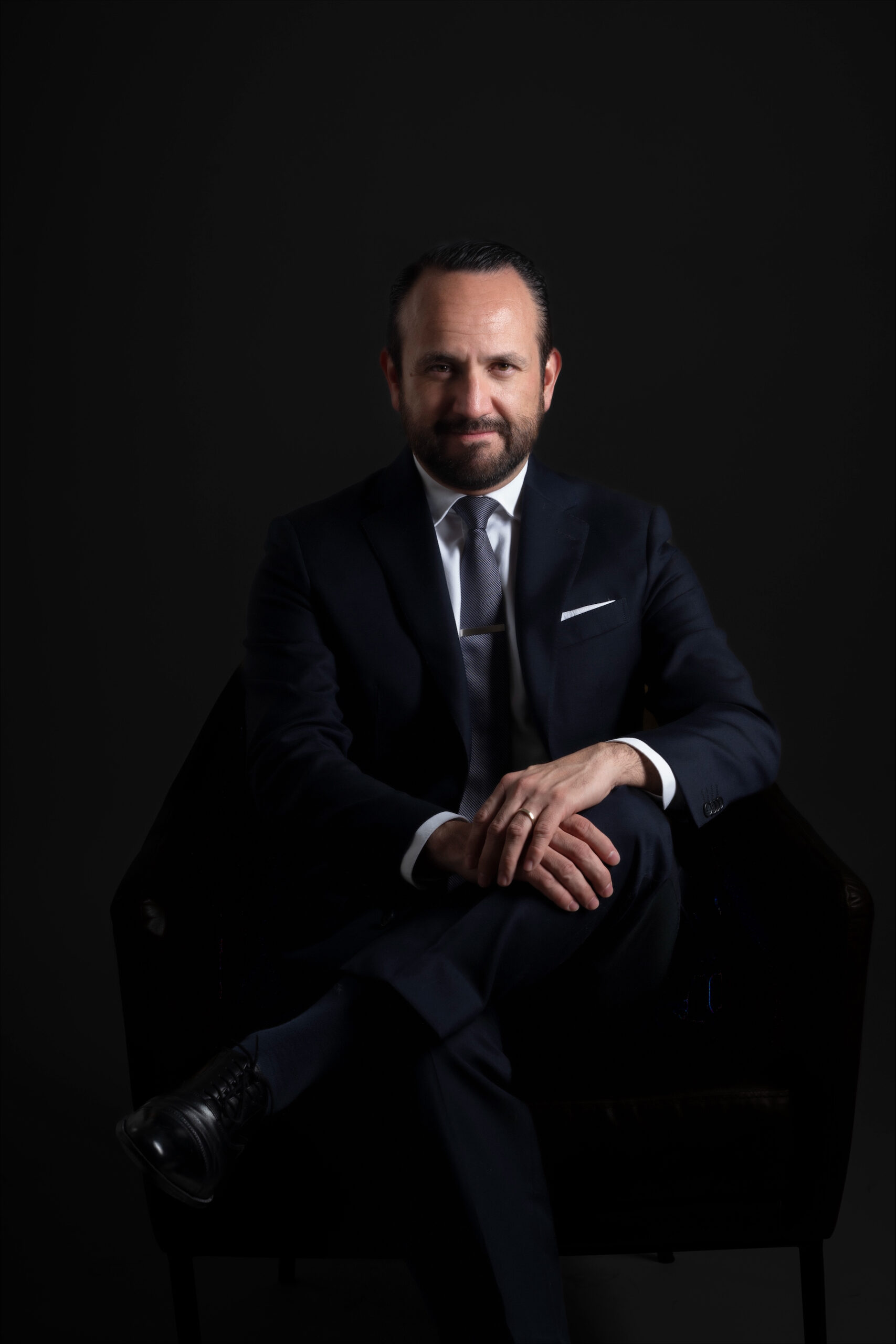
You have pointed out that discussions about corporate sustainability focus too much on quantifiable factors—carbon footprint, energy efficiency—and neglect other aspects. From your experience in the sector, what kind of relevant sustainability practices are typically left out of standard ESG reports?
Beyond carbon footprint and energy efficiency, a relevant sustainability practice often overlooked in ESG reports is the strategic management of social and community conflict, and the cultivation of institutional relationships (with authorities, regulators, suppliers, and strategic partners) as a long-term asset. I don’t diminish the importance of indicators that can be used as metrics, but I do advocate for the integration of these factors that significantly influence a project’s true sustainability.
It’s not just about making inquiries or delivering social programs, but about building relationships of trust that allow us to operate in environments of high social and institutional tension without relying exclusively on law enforcement or litigation. It’s easy to recall cases in sectors like infrastructure and energy, where technically flawless projects have faced delays, cost overruns, or even cancellations not due to engineering or financing failures, but rather to a lack of social legitimacy, poor communication, or inadequate management of expectations.
Organizations often measure how much energy they consume, how much carbon they emit, or how many resources they recycle. However, few evaluate with the same rigor the quality, depth, and durability of their relationships with communities, authorities, investors, employees, and strategic partners. In long-term projects, these relationships function as invisible infrastructure: they don’t appear on financial statements or in traditional ESG reports, but they sustain operations when economic, regulatory, or political conditions change.
Every company boasts about its physical infrastructure; few know how to measure their relational infrastructure. And yet, it is the latter that usually determines whether an investment survives regulatory, political, or social changes.
Another often overlooked practice is building institutional resilience. I’m referring to a company’s ability to maintain ethical standards, regulatory compliance, and operational continuity even when public administrations, regulatory priorities, or economic conditions change. This capacity to absorb change rarely appears in traditional ESG metrics, but it is often crucial for the survival of long-term projects.
I also believe that contractual sustainability is underestimated. A company can present excellent environmental indicators and, at the same time, disproportionately transfer financial, labor, or compliance risks to its contractors and suppliers. From a holistic sustainability perspective, the relevant question is not only how an organization generates value, but how it distributes risks and benefits throughout its entire value chain.
You are participating this year in the Foro Gerencias Legales México 2026, which opens with a panel on “Constitutional Reforms and the New Business Landscape: Key Regulatory Changes and Their Impact on the Legal Security of Investments.” Given the energy reform we just discussed, what general recommendation would you give to other general counsels in the sector on how to legally protect an infrastructure investment within the new framework?
My recommendation would be to stop thinking of legal protection as an exercise in document safeguarding and start conceiving of it as a permanent exercise in strategic anticipation.
In a constantly evolving regulatory and public policy environment, no contractual clause can completely eliminate uncertainty. The true strength of an investment lies not in avoiding change, but in maintaining its viability when that change occurs.
There is a strategic maxim by Moltke, often paraphrased, that no plan survives its first encounter with reality intact. Something similar occurs in energy infrastructure. A project that is approved, financed, and contracted rarely operates for twenty or thirty years under exactly the same regulatory, economic, technological, or institutional assumptions with which it was conceived. Moreover, in many cases, the environment changes as soon as the project begins.
Therefore, rather than building rigid legal structures, we must build resilient ones. In my opinion, a modern general counsel should incorporate a logic similar to the OODA cycle developed by John Boyd: Observe, Orient, Decide, Act, for example. This means observing regulatory, institutional, budgetary, or political changes early on; guiding them through legal and strategic analysis; making timely decisions; and acting before uncertainty becomes a contingency.
Additionally, I also recommend developing a dynamic map of stakeholders and influences. Often, the relevant risk lies not in the text of a law or a contractual clause, but in the interaction between regulators, public companies, sectoral authorities, communities, funders, suppliers, network operators, and decision-makers who can alter the project environment.
Experience shows that the most solid investments are not those that try to predict every scenario, but those that identify in advance who can change the rules, what their incentives are, and how to react when the context evolves; always from an ethical and legal standpoint.
In short, the best protection for infrastructure investment isn’t a contractual wall; it’s a superior capacity for observation, interpretation, and adaptation. Because legal certainty today depends less on the illusion of absolute stability and more on the institutional capacity to navigate change ahead of others. That, ultimately, is the true strategic advantage.
The forum also includes a panel on “ESG Litigation: From Theory to the Court.” Based on your experience in a sector as exposed to environmental and social litigation as energy infrastructure, what type of case do you think will set a trend in Mexico in the coming years?
I believe the most relevant trend will not be a specific type of environmental or social litigation, but a new generation of cases where environmental, social, and governance issues will no longer be discussed separately and will begin to be litigated as a single problem of the legitimacy of business decisions.
These will not only be injunctions against permits, but also civil liability lawsuits, collective actions, amparo trials and other means of protecting rights that link infrastructure projects with concrete impacts on human rights, water, land or health; lawsuits that simultaneously question the decision-making process, the management of social impacts, the transparency of information, the traceability of corporate commitments and the way in which the risks of the project were assessed.
In my opinion, the landmark cases will be those in which plaintiffs highlight the consistency or inconsistency between ESG rhetoric and corporate conduct. I believe a key factor will be that courts may begin to assess not only the quality of the original plan, but also the organization’s ability and willingness to adapt responsibly when circumstances changed.
Therefore, if I had to predict a trend, I would say that the most influential litigation will not revolve, for example, around the non-compliance with an isolated environmental regulation, but around the quality of governance behind a decision.
With the energy reform, the fiscal strain on state counterparties, and the opening to new mixed investment schemes happening almost simultaneously, what would you say is the legal risk that the legal departments of the infrastructure sector in Mexico are least anticipating?
The least anticipated risk is that of a strategic alignment fracture; because the combination of state fiscal pressure, new mixed investment schemes, and energy reform creates a “perfect storm,” as each relevant actor operates on a different timescale.
Investors think in terms of time horizons longer than fifteen years. Funders evaluate repayment cycles. Construction companies work on execution schedules. Communities perceive immediate impacts. Public agencies respond to budget cycles. And government priorities can evolve in periods much shorter than the useful life of the infrastructure. The problem arises when all these time horizons converge in the same project, but were structured under the implicit premise that they will evolve at the same pace.
Specifically, a strategic misalignment occurs when all actors continue to formally fulfill their obligations but cease to pursue the same economic, operational, or institutional outcome. Therefore, it is vital to recognize that the incentives of the various participants will not necessarily evolve in the same direction or at the same pace as the environment; otherwise, the ultimate indicator of this strategic disconnect will be legal conflict.
And that’s precisely why I believe this is the least visible risk in the sector. Because it doesn’t appear in an audit, it’s not immediately reflected in a financial indicator, and it’s not usually identified in a traditional risk matrix. In fact, while it’s being developed, the project may appear perfectly healthy.
The warning sign comes too late: when the parties discover that they still share the same contract, but no longer share the same destiny. At that point, the legal conflict ceases to be a potential risk and becomes the inevitable manifestation of a strategic divergence that was not detected in time.
The thread connecting Eduardo Rodríguez González’s responses is a shared conviction: legal certainty in energy infrastructure is no longer built on the strength of a clause, but rather on an organization’s ability to observe, anticipate, and adjust before the environment does. This logic—inherited from the OODA cycle he cites as a reference and applied both to the relationship with CFE and to the management of communities and suppliers—explains why, for this general counsel, the sector’s greatest risk doesn’t appear in a conventional risk matrix: it manifests itself when the stakeholders in a single project silently discover that they are no longer moving toward the same destination.