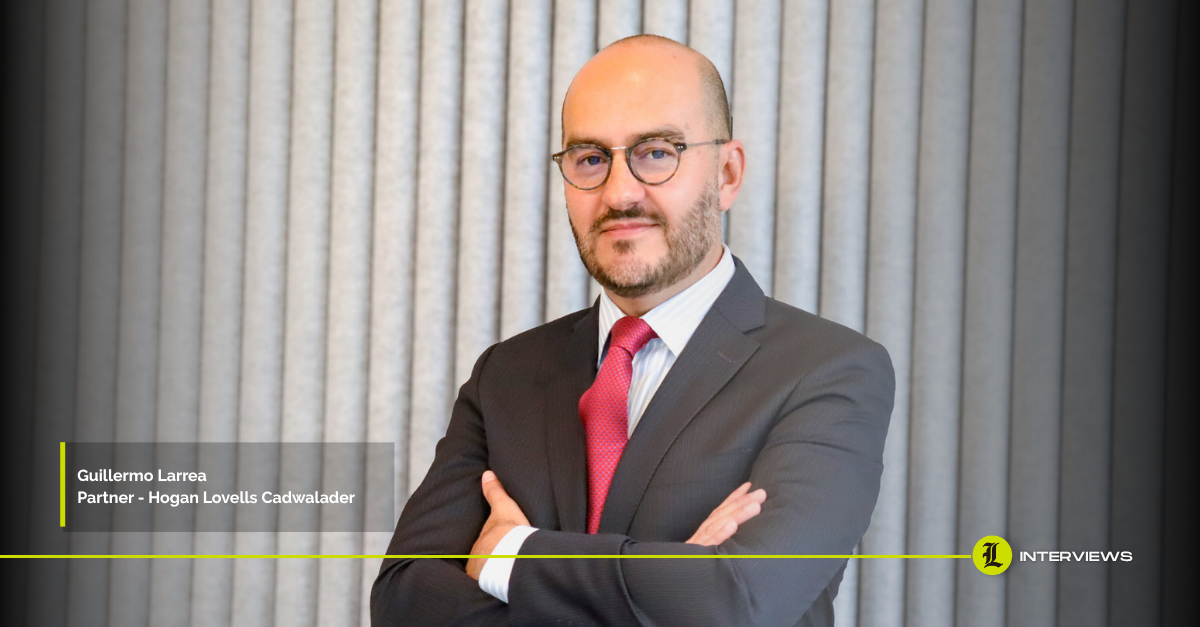



This interview is taken from the report “Which law firm model will prevail in Portugal? Managing partners’ predictions for 2026”, an analysis that brings together the views of several leaders in the sector on the transformations shaping the evolution of the Portuguese legal market.
In this context, Martim Krupenski, managing partner of Morais Leitão, offers a particularly nuanced reflection on the role that technology plays in the evolution of the legal sector.
In contrast to narratives that predict a radical disruption of the legal profession, Krupenski argues for a more balanced interpretation: technology is transforming the way law firms organise their knowledge and deliver their services, but the core of legal value continues to lie in the lawyer’s professional judgement.
“For us, technology is a tool in the service of the legal profession.”
Based on this premise, the managing partner analyses how the law firm model is being redefined in Portugal, the real impact of artificial intelligence on legal practice, the evolution of the corporate client, and the role that internationalisation and talent will play in the future competitiveness of firms.

Technology at the service of the legal profession
In an increasingly competitive legal market, law firms are looking for new ways to differentiate themselves. Krupenski explains that Morais Leitão’s strategy involves integrating three key dimensions: legal excellence, technology, and internationalization.
According to him, the goal is to consolidate a model that allows for more efficient legal advice tailored to the specific needs of clients.
“Morais Leitão’s main strategic goal for 2026 is to consolidate a truly integrated model of legal excellence, technology, and internationalization.”
The managing partner emphasizes that, in an increasingly sophisticated environment open to international competition, technical quality alone is no longer enough to differentiate a firm. “In a sophisticated and highly competitive market, with a great openness to international firms and global consultancies, differentiation is no longer based solely on technical quality—which we consider a basic requirement—but on the ability to structure that knowledge more efficiently, predictably, and in a way that is geared toward solving clients’ specific problems.”
In this context, technology plays an important role, although Krupenski insists that it should be understood as a tool and not as an end in itself.
“For us, technology is a tool at the service of the legal profession. The goal is to improve the way we provide legal services, make delivery more efficient, and create solutions with greater added value.”
Artificial intelligence: efficiency without replacing the lawyer
The impact of artificial intelligence on the legal sector is one of the most debated issues in recent years. Krupenski acknowledges that this technology is already producing changes in legal practice, although he clarifies that its real impact is different from what is sometimes described in the public debate. “Artificial intelligence is already impacting the legal sector, although in a less disruptive way than some narratives suggest, and more transformatively in what really matters.”
In practice, he explains, technology is having a particularly visible impact on the internal efficiency of law firms and on how legal knowledge is organized. He states that digital tools allow for faster processes, reduced redundancies, and improved consistency in service delivery.
However, Krupenski insists that the essential value of advocacy still lies in the lawyer’s professional judgment.
“Artificial intelligence is an efficiency accelerator, but it does not replace human judgment, responsibility, or creativity, which remain at the core of the legal profession.”
The external lawyer as part of the business strategy
The profile of the corporate client has also evolved significantly in recent years. Large companies now have highly qualified in-house legal departments and a strong focus on cost control and efficiency.
“The corporate client has become significantly more sophisticated and demanding.”
Krupenski explains that this evolution has transformed the relationship between the firm and the client, which is now more strategic and less purely technical.
“Large companies today have highly qualified legal departments, which in many cases incorporate professionals from the law firms themselves.”
In this new context, he asserts, the external lawyer is increasingly involved in the business strategy.
“The external lawyer is increasingly involved in business strategy, being called upon to contribute to risk analysis, business structuring and regulatory anticipation, ceasing to be merely a technical executor.”
Rainmakers and leadership in complex organizations
Market evolution is also transforming the role of business development partners within firms. Krupenski explains that, although many hiring decisions are now made through competitions or beauty parades, these partners continue to play a key role in client relationships.
“These partners can play a distinct role in client relationships, building institutional trust based on a comprehensive understanding of the client’s business and providing value that goes far beyond traditional law and legal advice.”
According to him, new leaders must combine technical excellence with interpersonal skills and strategic vision. The managing partner also emphasizes that leadership in a law firm has unique characteristics.
“In a law firm—where partners are simultaneously owners and practitioners—leadership is less hierarchical and more persuasive.”
Sectors with the greatest growth potential
Regarding the areas that will concentrate the main growth opportunities in the coming years, Krupenski identifies several sectors with strong dynamism.
“I see clear opportunities in areas related to technology, artificial intelligence, fintech, regulatory software, and compliance with an increasingly preventative approach.”
It also anticipates sustained activity in private equity, business consolidation and complex litigation, as well as in sectors such as life sciences and data processing.
At the same time, internationalization will continue to be a key factor for the growth of Portuguese firms.
“The Portuguese market is of limited size and future growth will depend largely on our ability to consolidate a strong international presence.”
Talent and leadership in a people business
Despite technological advances, Krupenski points out that the legal profession remains, at its core, a people business. “Talent is the true strategic asset of a law firm,” he asserts.
The managing partner explains that Morais Leitão’s strategy is based on maintaining high levels of technical rigor and offering legally challenging work, combined with a professional environment that fosters talent development. Developing new leaders also requires a deliberate effort.
According to him, it cannot be left to chance and requires structured training and support programs.

Leadership based on mobilizing people
Krupenski reflects on the role of leadership in law firms. The challenge, he explains, lies in balancing high levels of professional rigor with preserving the human dimension of the organization.
“The role of the managing partner is to create the conditions for evolution to be embraced as a collective project.”
In his opinion, leadership in law firms will evolve towards less hierarchical models and more based on the ability to mobilize professionals.
“I believe that leadership in the coming years will be less dependent on formal authority and more based on the ability to mobilize people; less control-oriented and more focused on meaning-making.”
In an increasingly competitive and sophisticated legal market, Martin Krupenski advocates a law firm model that combines innovation with a clear understanding of the essence of the profession.
Technology will continue to transform how lawyers work and improve the efficiency of legal services. However, the core value will remain in the lawyer’s professional judgment, creativity, and responsibility.
Because, as Krupenski himself summarizes: “For us, technology is an instrument at the service of the legal profession.”