

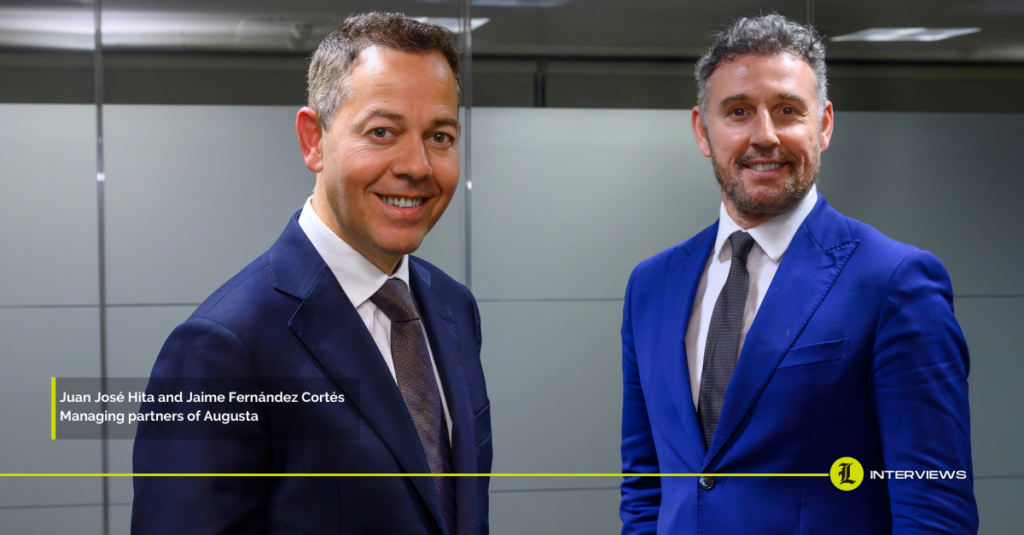
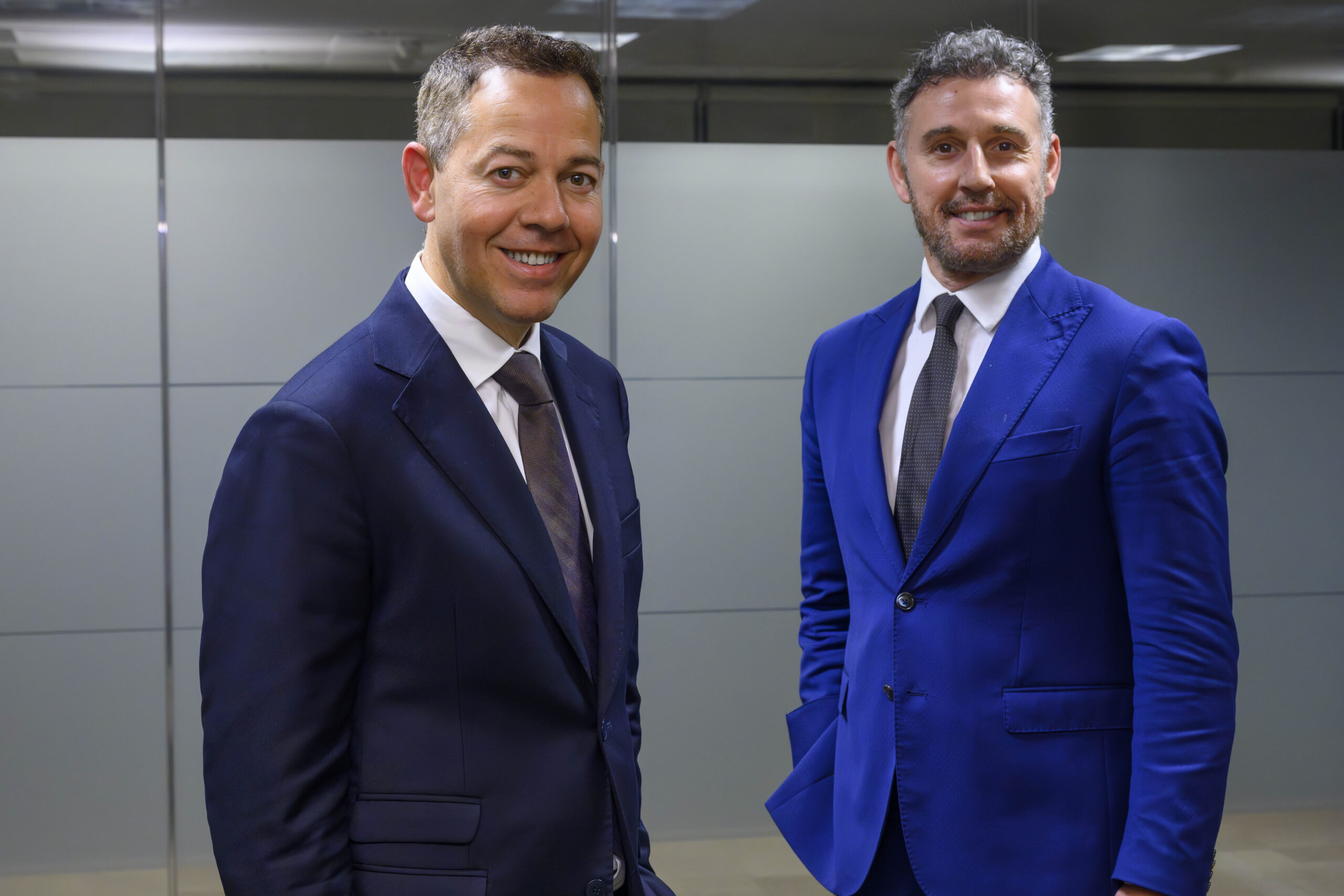
In the special feature Leaders 2026: Vision and Challenges for Spanish Law Firms, Juan José Hita and Jaime Fernández Cortés move beyond economic forecasts and technological headlines. As co-managing partners of Augusta Abogados, they argue that the real challenge for Spanish firms is not merely to adopt artificial intelligence or strengthen emerging practice areas, but to do so without compromising the core identity that underpins the firm.
While the sector debates scale, expansion and technological integration, they focus on a more demanding equilibrium: how to innovate without eroding culture, how to grow without diluting partnership, and how to translate efficiency into genuine strategic value. Their approach to 2026 is neither reactive nor expansionist. It is deliberate and coherent.
Compete by model, not by size
The Spanish legal market is undergoing consolidation, marked by increasingly sophisticated clients and intensifying competitive pressure. In this context, Augusta argues for the value of well-managed, mid-sized firms.
The so-called Augusta Formula combines independence, strong sector specialisation, a robust partnership structure and long-term client relationships. Yet its distinguishing feature is not structural but cultural.
“The added value of our formula lies in our commitment to the well-being of the people who work in the organisation.”
In a firm of this size, they explain, partners’ morale has a direct impact on internal collaboration, the capacity to generate joint initiatives and the firm’s overall health. Culture is not a decorative abstraction; it is a strategic asset.
Augusta Mind: Integrating AI Responsibly
Technological transformation is a defined strategic priority for 2026, but the firm’s approach eschews superficial enthusiasm.
“We have launched a highly ambitious process to integrate artificial intelligence into our services and deliver greater value.”
Augusta Mind is not confined to automating repetitive tasks. It is structured around several clearly defined lines of development:
-
Advanced digital management of legal and case-law databases.
-
Tools that incorporate judicial trends and criteria to anticipate procedural scenarios.
-
Automation and optimisation of due diligence processes in corporate transactions.
-
Solutions designed to embed intelligence in clients’ operational decision-making.
The goal is not only to gain efficiency, but to improve the delivered product.
“We want to be at the forefront, but responsibly.”
In multidisciplinary practice—where tax, commercial, regulatory and insolvency matters intersect—the balance between efficiency and quality control is critical. Technology enhances analytical capacity, but judgement ultimately remains human.
A demanding but favourable 2026 scenario
They foresee a year of relative stabilisation in the financial markets, with Spain maintaining solid growth within the eurozone. While they acknowledge sectoral tensions linked to the deployment of artificial intelligence, their overall outlook remains cautiously optimistic.
As for geographic expansion, they do not anticipate establishing their own offices in Latin America in the short term. Their model instead prioritises close collaboration with leading local firms.
“Collaboration allows us to maintain flexibility and ensure in-depth knowledge of each jurisdiction.”
In their view, internationalisation is not a matter of symbolic presence, but of technical capability and strategic alignment.
The areas expected to drive growth in 2026
In 2026, significant growth is expected in practice areas linked to technological transformation and to corporate restructuring processes reshaping key sectors of the economy.
In particular, TMT, commercial litigation, tax, space law, transport, digital platforms and insolvency—driven largely by ongoing sectoral restructurings—are likely to account for much of the increase in workload.
This is not merely a question of volume, but of complexity. These practices are being shaped by regulatory change, competitive pressure and evolving business models, all of which require a strategic understanding of the broader environment.
To anticipate this shift, the firm is strengthening specialised capabilities, investing in continuous training in emerging regulatory frameworks and enhancing cross-practice coordination, with the aim of delivering agile, integrated and strategically informed advice to clients.
Young talent and more horizontal structures
The transformation is not only technological, but organisational. As they explain: “The role of junior lawyers will be redefined towards more collaborative ways of working, within increasingly horizontal team structures.”
The integration of artificial intelligence requires professionals capable of engaging with technology while contributing substantive expertise from the outset. Augusta is already working with academic institutions to support the profession’s transition towards a more cross-disciplinary model.
Training in artificial intelligence and sustainability forms part of the firm’s internal development strategy. The objective is for young lawyers to move beyond executing tasks and to become genuine generators of value.
ESG and conscious capitalism
“We understand ESG as a strategic driver of competitiveness, not merely a matter of compliance.”
Their ESG approach spans tax, commercial law, compliance, restructuring and sector-specific regulation. It is not treated as a standalone practice, but as a cross-cutting dimension of advisory work.
The firm concentrates on areas associated with what is known as conscious capitalism, aligning sustainability, professional ethics and long-term business vision. Its distinctiveness lies not only in the technological tools it deploys, but in the strategic perspective that informs their use.
For Hita and Fernández Cortés, the lawyer who will make a difference must combine technical rigour, foresight and empathy.
“Proactivity, agility and the ability to anticipate are essential.”
Their definition of leadership is pragmatic: to provide direction and clarity to teams, to foster an ecosystem of trust and to subject the organisational model to constant review.
In a mid-sized firm, leadership is visible and measurable. Internal cohesion is not optional; it is a structural condition for stability.
Coherence as a competitive advantage
By 2026, the Spanish legal sector will not compete solely on technology or specialisation. It will compete on coherence.
Artificial intelligence will redefine processes. Regulation will expand obligations. Clients will become more analytical and increasingly focused on measurable outcomes. Yet, in the view of Juan José Hita and Jaime Fernández Cortés, the real challenge lies not in adopting new tools, but in integrating them without eroding the firm’s identity.
Their approach is neither conservative nor expansionist. It is deliberately strategic.
For them, technology is a means. Specialisation is a market requirement. Anticipation is a professional duty. Culture, however, is the condition that enables all of the above to function.
In an environment of accelerated transformation, the real difficulty is not change itself, but changing without losing recognisability.