

This interview is part of the special report “ Which law firm model is becoming dominant in Portugal: the bets of managing partners in 2026 ”, an analysis that gathers the views of the main leaders in the sector on the evolution of the Portuguese legal market.
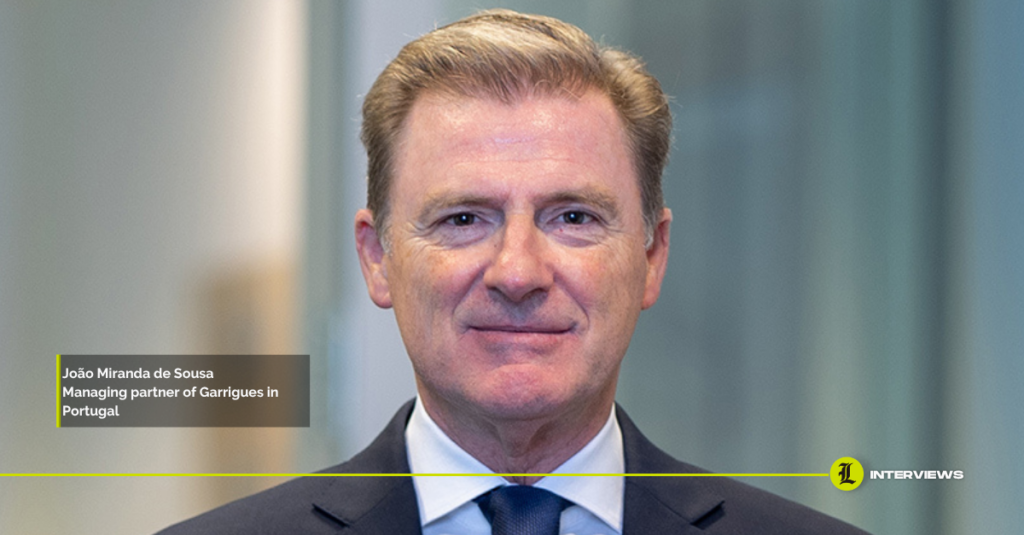
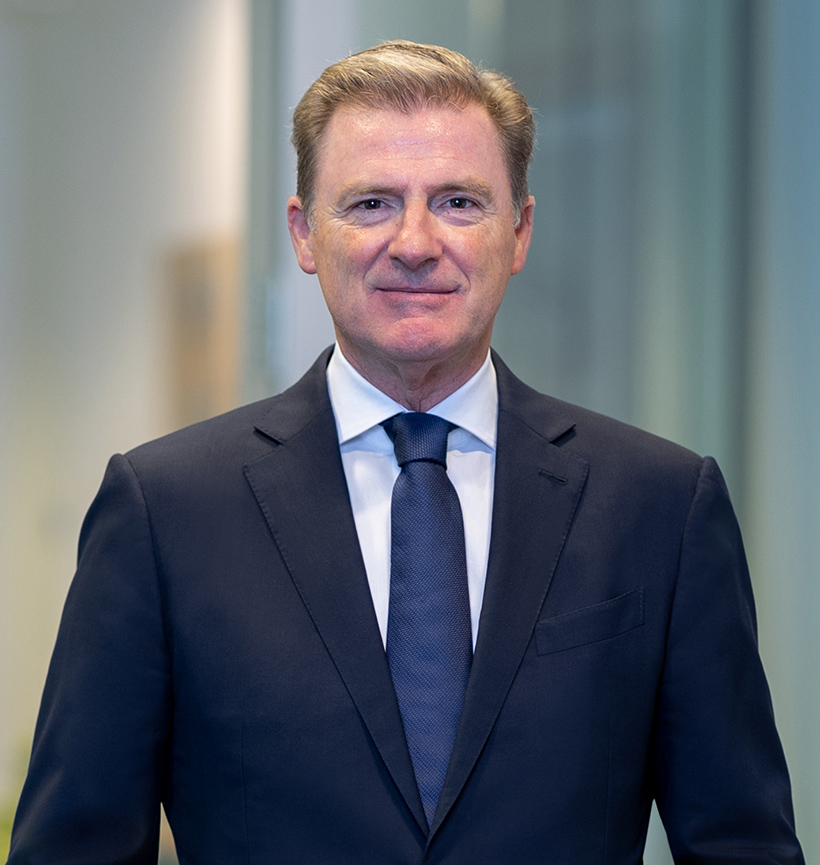
In this context, João Miranda de Sousa, partner in charge of Garrigues in Portugal, raises one of the most profound—and least obvious—transformations in the sector: the change is no longer just in the law firms, it’s in the lawyer.
In a market where the customer is more sophisticated, businesses are more complex, and technology is more prevalent, legal knowledge is no longer the only differentiating factor.
“Today, it is no longer enough to master specific legal subjects.”
From there, Miranda de Sousa introduces a key idea to understand the evolution of the market: the lawyer of the future is not only more technical, but more complete, capable of integrating legal knowledge, strategic vision and a real understanding of the client’s business.

Lawyers no longer compete solely on legal knowledge
For years, technical excellence has been the main differentiating factor in the legal sector. Today it remains essential, but it is no longer enough.
Miranda puts it clearly: the market has raised the bar and shifted the focus towards a broader professional profile.
“Today, it is no longer enough to master specific legal subjects.”
This change forces the lawyer to expand his analytical capacity and his way of approaching problems.
“Lawyers are expected to have a multidisciplinary view of the realities they face and to combine technical rigor with the ability to broadly understand—from all legal perspectives—the challenges, opportunities, and risks of their clients’ activities, projects, and initiatives.”
The lawyer thus ceases to be a specialist focused on one subject and becomes a professional capable of interpreting complex contexts and providing impactful solutions.
Technology: efficiency that raises the bar
Technology, and artificial intelligence in particular, is helping to accelerate this change. Miranda de Sousa explains that its impact is clear in the reduction of repetitive and low-value-added tasks, which allows for a reorganization of legal work.
“The adoption of artificial intelligence tools will significantly reduce repetitive or low value-added tasks,” he notes.
But the most significant effect is not only operational. “It progressively frees up lawyers for activities that add greater value and whose proper execution requires specialized technical knowledge, as well as a high capacity for analysis and critical judgment.”
In other words, technology doesn’t reduce the demands placed on lawyers. It increases them.
By eliminating mechanical tasks, it shifts value towards those capabilities that cannot be automated: analysis, judgment, and decision-making.
Multidisciplinarity and business vision: the new standard
The evolution of the corporate client is the main driver of this change. Globalization and digitalization have raised the level of sophistication of companies, which now demand more comprehensive advice.
In this context, the market no longer rewards only legal knowledge.
“The market rewards professionals who combine solid legal knowledge with sector-specific skills, strategic vision, and technological literacy, capable of offering integrated, efficient, and results-oriented solutions.”
This means that the lawyer must be able to understand the client’s business, its sector and its economic context, in addition to the legal framework.
Law ceases to be an end in itself and becomes a tool within a broader vision.
Rainmakers “hands on”: value is built from work
In this scenario, the concept of business development within firms is also evolving. João introduces a clear and coherent vision consistent with the rest of his speech:
“At Garrigues, the only rainmakers are the ‘hands-on’ lawyers.”
That is, those professionals whose ability to generate business is based on their work, their track record, and the trust they build with clients.
“These are the professionals who, through their track record of professional success, their talent, their technical skills, their constant closeness to clients, and the image of trust they generate thanks to their daily work, play an irreplaceable role in attracting and expanding business.”
Business development is not separate from legal practice. It is a direct consequence of the quality of the work.
Growing sectors in a transforming economy
From a market perspective, Garrigues faces 2026 with confidence, supported by its international presence and diversification.
Miranda de Sousa identifies clear opportunities in key sectors for the Portuguese economy: renewable energy and green hydrogen, digital technologies, strategic infrastructure, industrial modernization, tourism and real estate.
These areas reflect the country’s major structural transformations: energy transition, digitalization, and attracting investment. However, this positive scenario coexists with certain uncertainties, such as the evolution of international trade or the potential decrease in European funds, which could affect the growth rate.
Continuing education: a requirement, not an option
In a context where the profile of the lawyer is being redefined, continuing education takes on a central role.
Miranda puts it directly and without nuance:
“A lawyer who does not invest in continuing education loses competitiveness, reduces the value they bring to their clients, and limits their growth within the organization.”
At a firm like Garrigues, this idea is not just a recommendation, but a fundamental principle enshrined in its Code of Ethics. Legal knowledge evolves, but so do the skills required to practice law.
Leading by example in a demanding environment
Finally, Miranda de Sousa addresses the role of leadership in law firms. For him, organizational culture is not an abstract concept, but a direct reflection of those who lead it.
“Leadership—which must be exercised with humility and through example—must ensure that the commitment to technology, continuous improvement, and a permanent focus on results is combined with a culture based on customer proximity, internal collaboration, and the well-being of people.”
The challenge lies in balancing high standards, innovation, and sustainability. This balance is especially relevant in a sector where pressure is constant and where the ability to attract and retain talent has become a key factor.
The reflection of João Miranda de Sousa, partner in charge of Garrigues in Portugal, introduces a shift in perspective within the debate on the future of the legal sector in Portugal. For years, the conversation has revolved around the law firm model, technology, and competition. But the market is shifting the focus elsewhere.
Towards the profile of the lawyer.
Because in an environment where everyone has access to technology, where efficiency is equalized, and where technical knowledge is a prerequisite for entry, the real difference is built on another layer: in the ability to interpret, connect, and decide.
The future of the sector will not depend solely on what the law firms do, but on who their lawyers are and whether they are prepared to respond to a demand that is no longer just legal, but strategic.
“Today, it is no longer enough to master specific legal subjects.”
A phrase that, more than describing the present, defines the standard of the future.