

Is the Spanish legal sector ready for a 2026 marked by the explosion of generative AI, intense European regulatory pressures, and a surge in litigation due to geopolitical uncertainty? In a landscape where 70% of law firms anticipate growth driven by legaltech and ESG—according to recent market reports—Líder Legal presents “Leaders 2026: Vision and challenges of Spanish law firms,” an exclusive special featuring the senior managing partners of Spain’s most important firms.
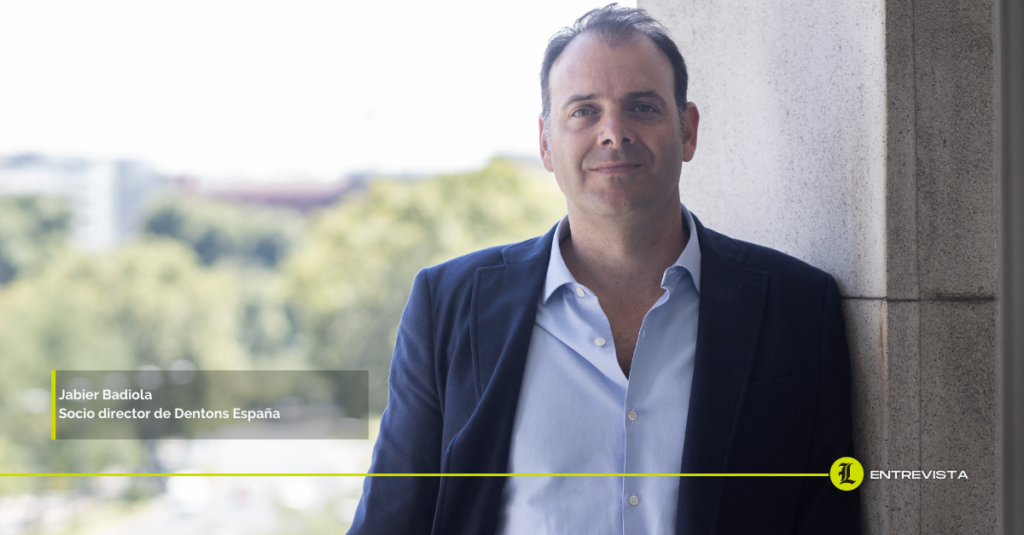
They reveal their strategies for navigating challenges such as technological integration, expansion in Latin America, and retaining young talent. We open this series with Javier Badiola , Managing partner of Dentons Spain. During the interview, Badiola explains how Dentons balances efficiency with quality control, commits to cross-border models, and prepares teams for emerging areas such as cybersecurity and restructuring.
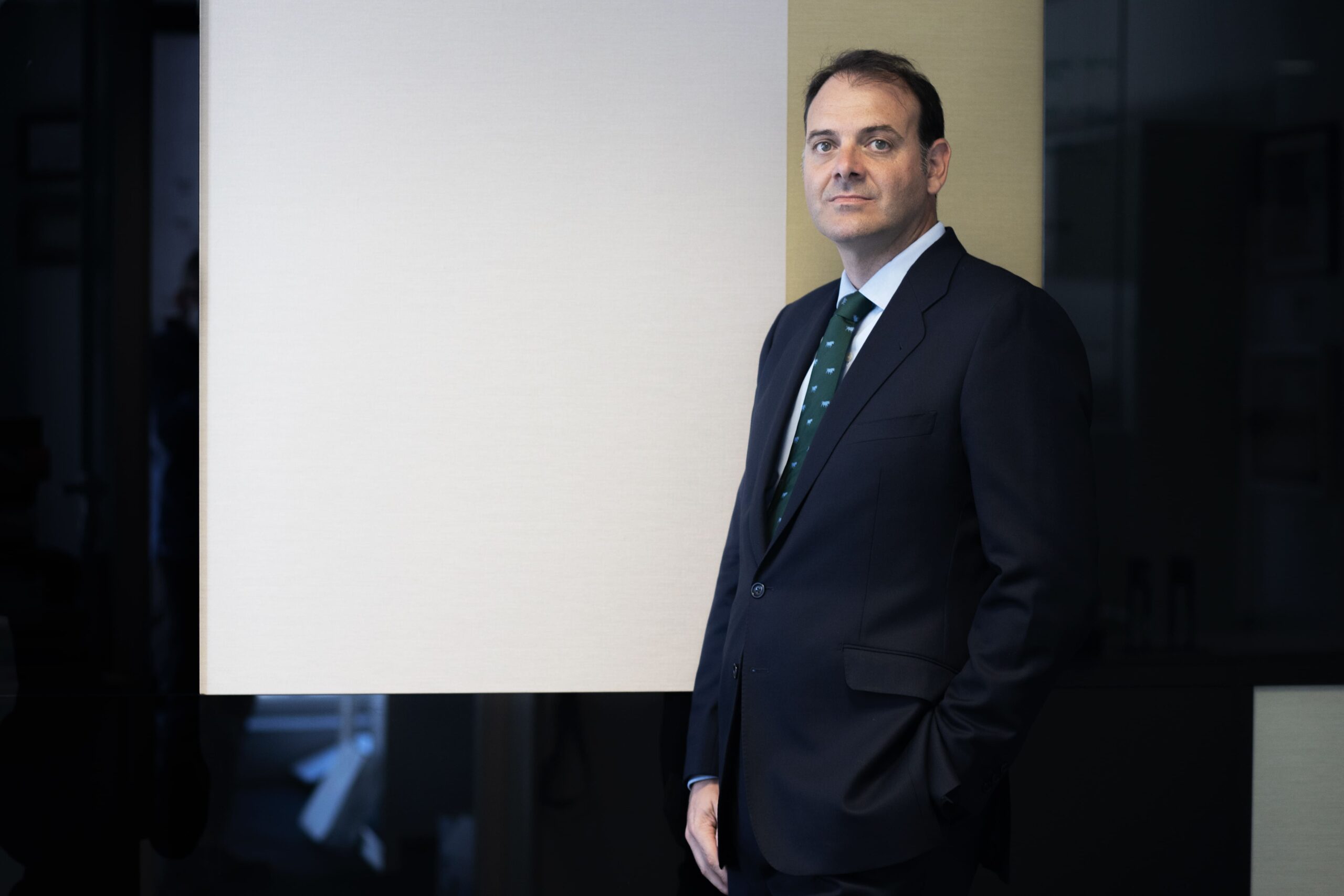
“The challenge is the balance between efficiency and control”
I asked Javier Badiola how he plans to tackle the challenge of integrating AI into the firm’s processes by 2026, balancing efficiency and quality control in multidisciplinary services. He replied that innovation and flexible models “in the provision of our services are a cornerstone of Dentons’ philosophy globally and, of course, at Dentons Spain. For years, the firm has been deeply committed to technology and innovation, and we are one of the pioneering and most involved law firms in these areas.”
He said that they have already integrated AI solutions into high-volume processes—document review, due diligence, knowledge management, and predictive analytics—always under clear governance models, with human validation and consistent quality standards across all areas. “Specifically, a year ago, the firm launched a global AI-powered contract automation bot. The prototype began testing in continental Europe by a group of Dentons lawyers, including Spanish office partner Luis Belart, along with associates Mar Sánchez-Contador and Icíar Pérez-Puente. At the same time, more than ten years ago, the firm launched NextLaw Labs, an international innovation platform focused on the development, implementation, and investment in new technologies and technological processes to transform legal practice around the world.”
He confessed that in 2026 they will continue along this path, “remaining at the forefront of generative AI use, advancing toward even greater implementation of generative AI tools under the same standards of quality, rigor, and oversight. In a multidisciplinary firm like ours, the challenge is precisely that balance between efficiency and control, which we address with common protocols, continuous training, and a culture of responsible use of technology.”
The firm’s big bet to position itself as a major competitor in 2026
Our main goal is to consolidate a truly integrated model, supported by technology and our global network. We seek to be a strategic partner for our clients, capable of anticipating risks and offering cross-cutting solutions, not just isolated technical responses.
Dentons Spain stands out not only for its international reach, working in coordination with teams in Europe, the United Kingdom, and the United States, but also for being a natural bridge between Europe and Latin America thanks to its cultural and linguistic ties. Our global network includes more than 10,000 professionals in over 200 offices in more than 80 countries around the world, providing services in virtually all sectors. Therefore, among our differentiating factors are our unique geographic presence; our cross-border capability, which allows us to advise on a wide range of multi-jurisdictional transactions and projects, thanks to our coverage as the world’s largest global law firm, collaborating with the firm’s offices worldwide; and our comprehensive and cross-functional service delivery.
Geopolitical and regulatory uncertainty: the bet on flexibility and high added value to grow in 2026
Dentons forecasts “an environment that will continue to be marked by significant economic and geopolitical uncertainty, considerable national and European regulatory pressure, and constant regulatory changes (some of which will be far-reaching). This scenario is likely to lead to an increase in litigation, as well as preventive advice. All of this requires highly capable law firms with highly qualified teams. Our adaptation involves organizational flexibility, sector specialization—especially in critical industries with high business projections—and a clear focus on high value-added services that will allow us to maintain sustained growth.”
Strategic expansion in Latin America: ‘cherry-picking’ and local teams instead of opening offices
Over the next 12 to 18 months, Badiola said, they will continue to “strengthen our presence in those regions that are key for our clients. Rather than opening offices indiscriminately, we are committed, as we have been until now, to integrating with top-level local teams and deepening coordination between Spain, Europe, and Latin America. In Spain, we will focus our efforts on consolidating and integrating the new professionals who have recently joined the company into our culture, and we will continue to opt for a cherry-picking strategy based on the needs that arise in different areas and professional profiles.”

Retaining young talent: Dentons’ formula for loyalty in the age of AI
During our conversation, Javier Badiola referred to how, through his leadership, he has promoted the retention of young talent in Spain, integrating training in AI and sustainability to align with the firm’s objectives. “Retaining young talent involves offering attractive projects, real training, and a clear career path with prospects, in addition to, of course, a competitive salary.
Our firm has a highly developed and interesting training program. Young lawyers have the opportunity to rotate through different areas so they can train in different subjects and choose the one they like best. We also maintain a policy of being very close to our professionals and closely monitoring their progress so that young lawyers feel integrated into the firm and understand that they are part of the project. In addition, we place great emphasis on work-life balance.
At Dentons, we know that our professionals are our greatest asset. This is the starting point for our global ‘NextTalent’ program, through which we use innovation to address the needs and career goals of our lawyers and professionals, with the aim of enabling all members of our team to develop their full potential in the digital age. We also have the ‘NextMind’ program, an innovative project that helps the firm’s lawyers and professionals reduce
At Dentons, we know that our professionals are our greatest asset. This is the starting point for our global NextTalent program, through which we use innovation to address the needs and career goals of our lawyers and professionals, with the aim of enabling all members of our team to reach their full potential in the digital age. We also have the NextMind program, an innovative project that helps the firm’s lawyers and professionals reduce stress, improve well-being, and develop emotional intelligence through mindfulness techniques.
Spain gains influence within Dentons’ European and global network
Spain is gaining increasing importance within Dentons’ European and global network, and “one of our main differentiating factors is precisely our ability to leverage the synergies offered by a truly global platform, with a presence in almost every country. This strength allows us to support clients in complex transactional operations and, at the same time, offer comprehensive, consistent, and coordinated advice across multiple jurisdictions.”
In this context, Jabier said that his “differentiation strategy is based on cross-cutting pillars such as Legaltech and ESG, which we do not conceive as ancillary areas, but as structural axes of our service model. Technology is key to gaining efficiency, consistency, and quality control in increasingly sophisticated projects, while sustainability advice has become a central element in business decision-making, both from a regulatory and strategic point of view. This combination allows us to grow steadily and provide real differential value to our clients.
“Our strategy is specialization and innovation”
The managing partner of Dentons commented that they are developing highly flexible service delivery models “supported by technology and specialized teams, which allow us to absorb large volumes without sacrificing quality or customer proximity. Our strategy continues to be one of high specialization and, as we said, support for innovation. In relation to the latter, for example, we have the ‘Market Disruption Readiness’ tool, which we launched a year ago together with Dentons Global Advisors, aimed at helping companies mitigate the effects of geopolitical risks on their international business operations.
Innovating for our clients is at the heart of our firm, so we are constantly working to find new formulas, focusing on solutions and new technologies, with the aim of providing a more effective and efficient legal service. To this end, we work with our lawyers, providing them with a comprehensive understanding of legal innovation.
In 2026, Cybersecurity, ESG and M&A will lead the regulatory transformation
In 2026, Badiola forecasts “significant growth in areas directly linked to regulatory and economic transformation, such as digital regulation, data protection, cybersecurity, and ESG consulting, driven both by new regulatory requirements and by the reputational and strategic impact these issues have on companies. Likewise, complex litigation and restructuring will continue to rise in a context of greater economic and financial uncertainty.”
In addition, he predicts “sustained and highly relevant activity in banking and finance, as well as in M&A and private equity, where the sophistication of transactions and their growing cross-border dimension require highly specialized teams. To respond to this scenario, we are strengthening our capabilities through continuous training programs, selective expansion of teams, and a clear commitment to sector knowledge, which allows us to anticipate client needs and offer increasingly specialized and high value-added advice.”
“The current context demands professionals capable of anticipating, interpreting and supporting the client in changing environments”
Today, you need a lawyer who is technically sound, but also has business acumen and technological skills, and who is focused on transactional business and not just advisory services, says Jabier. Critical thinking and analytical skills are particularly relevant in a context where generative AI has such a significant impact on the daily work of law firms, so that AI reinforces our work, never replaces it. Adaptability will also be key in 2026. The current context requires professionals who are able to anticipate, interpret, and accompany clients in changing environments.”
Jabier Badiola, managing partner of Dentons in Spain, also referred to these essential traits for being a good leader in a law firm: “A good leader must combine strategic vision, approachability, and consistency. Throughout my career, I have tried to foster diverse teams, empower people, and build a culture of collaboration, because the success of a global firm depends, above all, on the people who make it up.”