

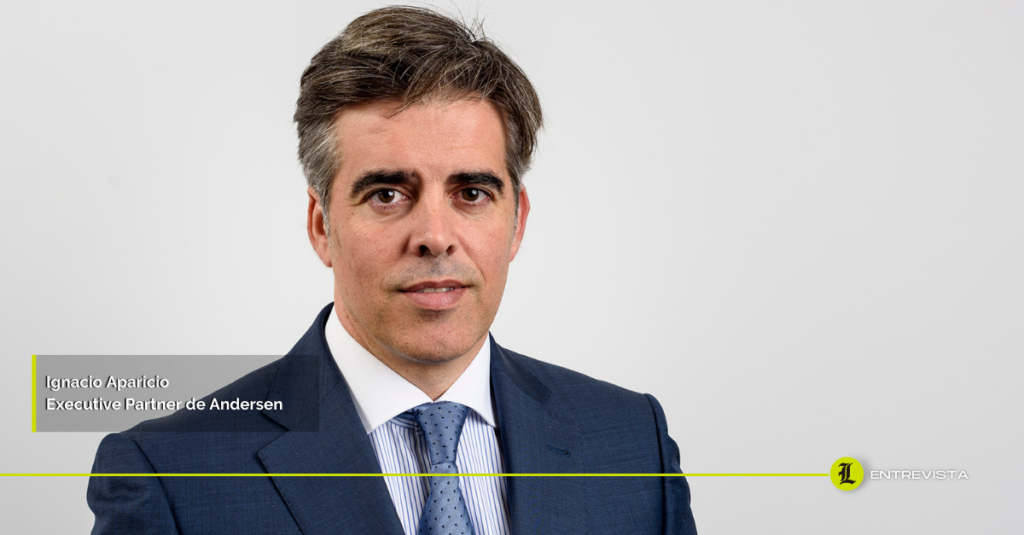
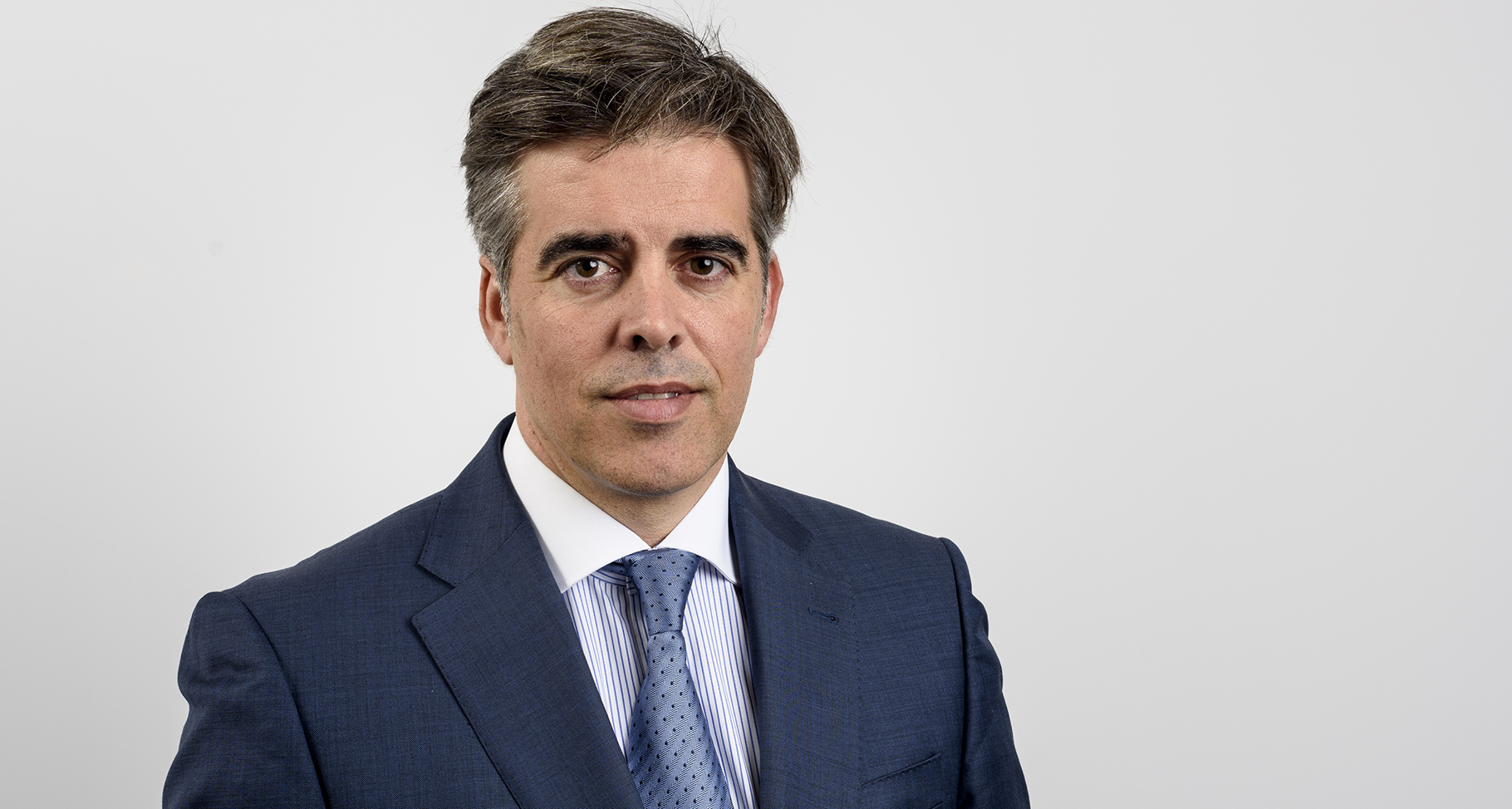
Speaking with Ignacio Aparicio for the special feature “Leaders 2026: Vision and Challenges of Spanish Law Firms” is to speak of transition. Not an abstract or futuristic transition, but a very concrete one: the one the legal profession is experiencing today as technology ceases to be an accessory and begins to shape the very way law is practiced. From his position as Executive Partner at Andersen, his discourse avoids empty enthusiasm and is based on a clear idea: innovation only makes sense when it improves judgment and decision-making capacity.
“Artificial intelligence has gone from being a buzzword to a standard practice integrated into our daily operations.” This statement sets the tone. At Andersen, AI is not seen as a replacement for lawyers, but as a tool that reorders priorities and frees up time for what truly adds value.
“The impact is twofold: greater operational efficiency and a real improvement in service quality, because it allows lawyers to focus on high-value strategic work.”
Since 2025, the firm has been working with legal generative AI platforms, and in 2026, the goal is to expand capabilities and harmonize solutions. It’s not just about automating processes, but about integrating predictive analytics, digital diagnostics, and internal optimization. “Lawyers who use AI to enhance their work have a significant competitive advantage,” summarizes Aparicio, with an implicit warning: those who don’t adapt will be left behind by the new professional standard.
Anticipate before the rule becomes mandatory
This pragmatic vision is particularly evident in the regulatory sphere. According to Aparicio, one of Andersen’s most significant areas of focus is advising on artificial intelligence, especially now that the European Union’s AI Act is beginning its phased implementation.
“We are anticipating the compliance needs that will arise in 2026, strengthening strategic alliances and developing products together with top-level operators.”
The key, he insists, is not to react when the rule is already on the table, but to accompany organizations in making prior decisions, when there is still room to design good governance, control and accountability models.
This approach also explains the firm commitment to cross-industry consulting. Sectors such as data centers now face legal, tax, regulatory, and strategic challenges that cannot be addressed in isolation.
“Spain and Portugal are emerging as digital gateways between Europe, Africa and the Americas, and there the lawyer must position himself as a strategic business partner, not as a mere interpreter of the law.”
An environment that demands fine reading
Aparicio’s macroeconomic outlook for 2026 is moderately optimistic, but not complacent. He anticipates a stabilization scenario, with more moderate growth and improved financing conditions, which will boost transactional activity, especially in technology and renewable energy.
“We expect M&A volumes in Iberia to grow between 10% and 15% by 2025,” he notes, although he warns that this context will require more sophisticated risk and cost management. This is compounded by an increasingly demanding regulatory environment focused on sustainability, data protection, and cybersecurity.
“The key will be to consolidate specialization, invest in technology, and form truly multidisciplinary teams.”
In this scenario, compliance ceases to be merely formal and becomes structural. Regulations such as CSRD, NIS2, and DORA require companies to integrate legal risk into their daily operations, and this is where legal advice regains strategic importance.
Talent, culture and shared project
When talking about talent, Aparicio avoids clichés. Retaining and attracting the best isn’t just about offering good financial conditions, but about building a meaningful project.
“Top-level legal talent is attracted by offering them certainty about their future, a sense of belonging, and real support to launch their own initiatives.”
Technology is once again emerging as a key element, but always subordinate to professional experience. “We eliminate tedious tasks and allow teams to focus on intellectually stimulating work.” However, the real differentiator lies in the culture. “Whoever joins us always makes us better than we are,” he affirms, emphasizing the importance of a collaborative and supportive environment as the foundation for sustainable growth.
The lawyer who is coming
Looking ahead to 2026, Aparicio envisions a lawyer profile very different from the traditional one: capable of analyzing data, with genuine technological adaptability and geopolitical awareness.
“AI will no longer be optional, and lawyers who don’t use it to augment their work will be replaced by those who do.”
But alongside technique, another factor stands out: the client experience. “Legal knowledge is rebalanced by the quality of the interaction between lawyer and client.”
Leadership, in parallel, is expanding. It demands a regional vision, the ability to manage cultural change, and a clear focus on generating measurable value.
“Legal departments are shifting from being advocates for the business to becoming drivers of business results.”
The future of the legal sector, according to Ignacio Aparicio, will not be determined solely by the speed of technological adoption or regulatory sophistication, but rather by firms’ ability to build meaningful projects. Artificial intelligence can transform processes and improve efficiency, but it cannot replace what truly sustains an organization over time. “Technology improves processes, but what sustains a firm is its culture. You can have the best tools on the market, but without a sense of belonging, shared accountability, and trust, no project will last.”
In a context of accelerated change, leadership, talent and culture cease to be intangible concepts and become the true competitive advantage of the Law of the future.