

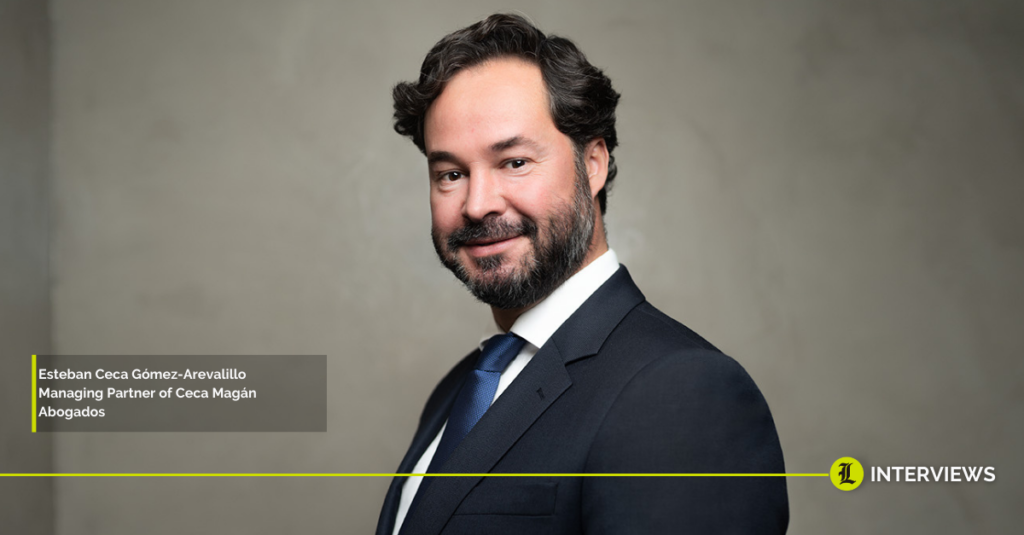
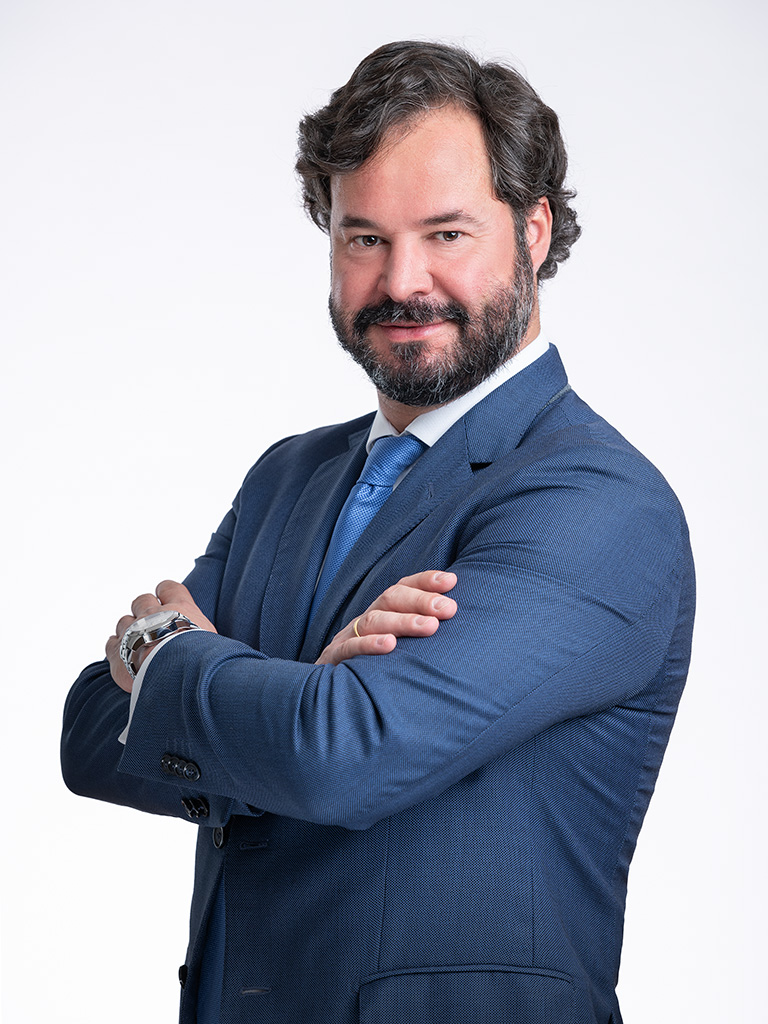
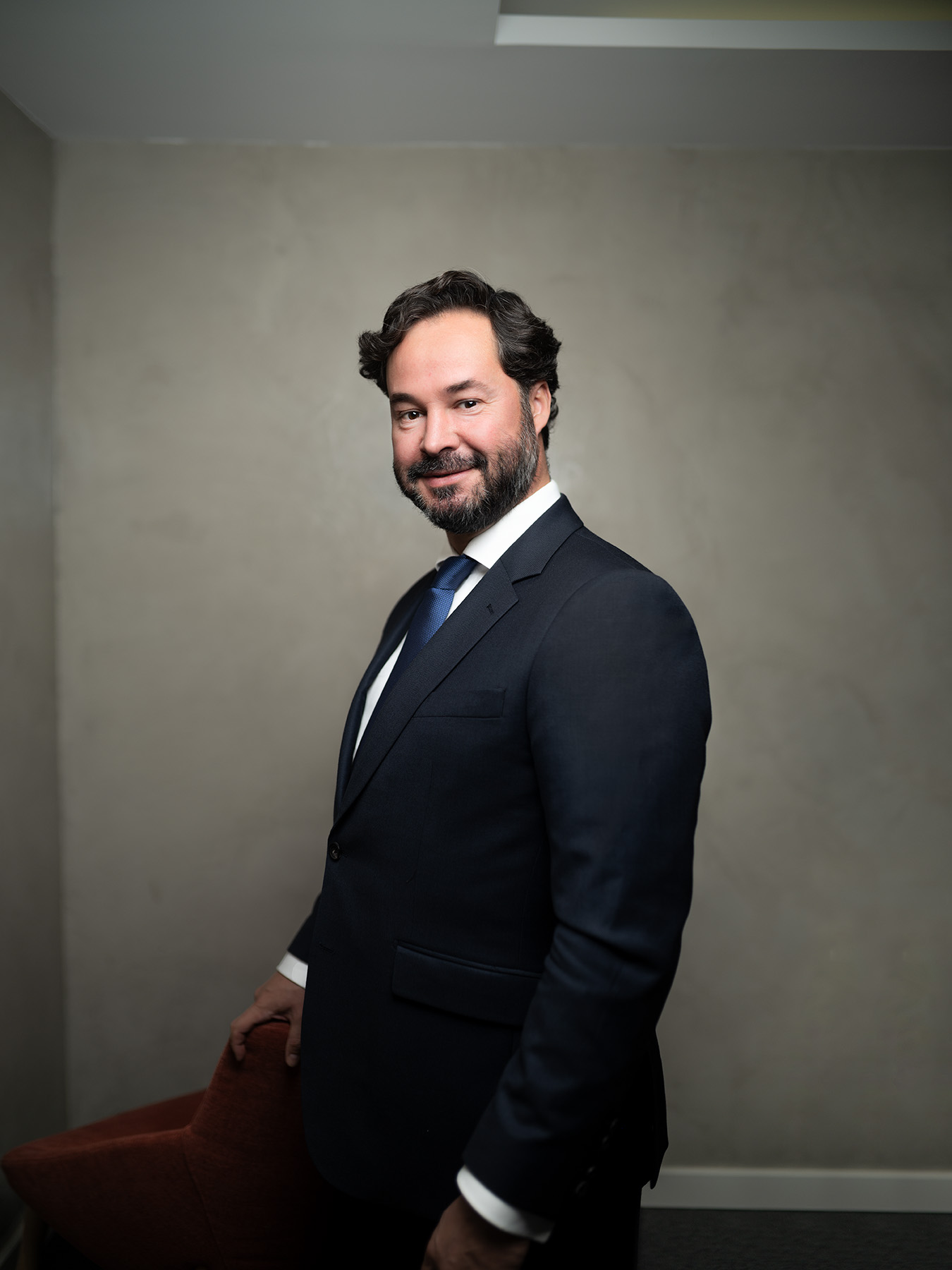
There are times when the market forces law firms to define themselves. Not by what they say, but by how they make decisions when the context becomes more demanding. Esteban Ceca Gómez-Arevalillo, partner and director of Ceca Magán Abogados, sees 2026 as one of those turning points: more regulation, more technology, more pressure on margins and talent, and increasing complexity that demands more than just speed.
This conversation is part of the special report Leaders 2026: Vision and Challenges of Spanish Law Firms , a series that seeks to understand how those who currently lead law firms in Spain think. The focus is not on the position, but on the guiding principles. In Ceca’s case, these principles are built on a clear idea: innovation only makes sense if it strengthens the quality of advice and the solidity of the project.
Artificial intelligence: supporting judgment, not replacing it
The integration of artificial intelligence at Ceca Magán is based on an explicit premise: “The integration of artificial intelligence at Ceca Magán is intended as a tool to support legal judgment, not as a substitute for it.” Looking ahead to 2026, the firm will continue implementing AI solutions in processes such as document analysis, due diligence, contract review, and knowledge management.
Technological advancement, however, is not without limits. “Always under strict protocols of subsequent human oversight,” Ceca emphasizes, making it clear that control, traceability, and confidentiality remain fundamental principles. In a multidisciplinary environment, the challenge is not only to gain efficiency but also to guarantee consistent quality standards.
The true contribution of technology, he explains, lies in freeing up intellectual capacity. “The key will be combining operational efficiency with technical excellence: AI will allow us to free up our teams’ time to dedicate to what truly adds value for the customer: strategic analysis, complex decision-making, and risk anticipation.”
A legal-strategic model for the mid market
When asked about Ceca Magán’s big bet for 2026, Ceca doesn’t talk about a specific tool, but rather about positioning. “Our big bet is to consolidate Ceca Magán as a strategic legal firm for the national mid-market, deeply integrated into our clients’ businesses.”
This approach involves moving beyond reactive legal advice and reinforcing a model based on technical quality, modernity, anticipation, sector-specific vision, and cross-functional collaboration. By 2026, this strategy will translate into the development of integrated solutions for medium-sized and large companies, particularly in corporate transactions, restructurings, strategic labor law, white-collar crime, and digital law.
“Innovation is not just about technology, but about how we organize talent, how we connect disciplines, how we manage the firm operationally, and how we support companies in critical long-term decisions.”
A phrase that perfectly encapsulates his signature vision.
Uncertainty, regulation and sustained growth
The scenario he anticipates for 2026 is not simple. Ceca paints a picture marked by “regulatory pressure, digital transformation, a tightening of the compliance framework, political instability, and an economic environment that remains challenging for many companies.” But far from seeing it as a threat, he interprets it as confirmation of the value of specialized legal advice.
“This scenario, far from being a threat, reinforces the need for specialized and strategic advice.”
In response, Ceca Magán will strengthen key areas related to growth and risk, such as corporate and M&A, restructurings and refinancings, arbitration, labor, tax, compliance and economic and digital criminal law.
Growth, he explains, will continue to rely on a balance between organic development and selective inorganic growth. “Sustained growth will come, as in previous years, from a good mix of organic growth through these actions, as well as from continuing with our policy of selective inorganic growth.”
Consolidate Spain and strengthen alliances in Latin America
Geographically, the priority is the domestic market. “Over the next 12–18 months, Ceca Magán will continue to strengthen its position in Spain as a leading firm for medium and large companies.” The focus is on attracting and retaining talent and building a project with a national purpose.
At the same time, the firm will continue to energize its network of alliances and best friends in strategic countries, several of them in Latin America, as a way to support clients in their expansion without losing identity or control over the quality of service.
Talent, training and long-term project
The message becomes especially clear when it talks about people. “We work to build a firm model where professional growth is linked to continuous training, technical excellence, real support, and a culture of responsibility and camaraderie.”
Training in artificial intelligence applied to legal practice is part of this model, but always connected to understanding the client’s business and the impacts of sustainability. “We are committed to training our professionals to understand how technology and sustainability impact our clients’ businesses and legal practice.”
“This approach, combined with a demanding yet supportive environment, allows young talent to perceive Ceca Magán as a long-term project and not as a transitional phase.”
Legaltech, ESG and differentiation with consistency
The firm’s differentiation lies in applying innovation with legal sound judgment and a business-oriented vision. “Our differentiation strategy is based on applying innovation with legal sound judgment and a business-oriented vision.” In legaltech, the firm integrates tools that improve efficiency, knowledge management, and service quality, always under the ultimate control of the lawyer and with a strong focus on security and confidentiality.
In parallel, Ceca Magán is firmly committed to ESG principles as an essential part of its corporate strategy. The firm seeks to integrate sustainability, ethics, and social responsibility into all its areas of operation, promoting a growth model that respects people, the environment, and good governance.
High demand, same requirements
High-volume areas today demand more than just operational capacity. “High-volume areas today demand more than just operational capacity: they require sound judgment, processes, technical expertise, technology, and foresight.” The firm’s response combines intelligent process standardization, selective use of technology, qualified personnel, and enhanced industry knowledge.
“We have developed working models that allow us to absorb peak activity without sacrificing quality or customer proximity.”
The goal, he explains, is not to produce more, but to respond better even in high-pressure environments and tight deadlines.
The lawyer and the leadership that 2026 demands
In 2026, Ceca identifies a broader and more demanding professional profile. “Today’s lawyer can no longer limit themselves to mastering legal technique.” This foundation is complemented by an understanding of business, strategic thinking, communication skills, and technological adaptability, all underpinned by a solid professional ethic.
Regarding leadership, his vision is equally clear. “Good leadership in a law firm is built on example, fairness and consistency, approachability, efficient and dynamic strategy management, and a long-term vision.” Leading, he concludes, involves building trust, demanding with sound judgment, and creating environments where talent can develop ambitiously, even in uncertain times.
The closing statement leaves one clear idea: in a market shaped by technology and regulation, the competitive advantage will continue to lie in how decisions are made, how culture is nurtured, and how leadership is exercised. This is where Esteban Ceca sees Ceca Magán’s growth in 2026.