
A&O Shearman closed the fiscal year ending April 30, 2026, with revenues of $3.7 billion (€3.219 billion), virtually unchanged from the previous year. During the same period, pre-tax profit grew 14% to $1.6 billion (€1.392 billion), and profit per equity partner increased 12% to $2.9 million (€2.52 million) in average compensation. Revenue per partner rose 11.3%.
The gap between stable revenue and double-digit profit indicates that the growth did not come from increased business volume, but rather from a change in its composition. The firm confirms this in its own statement: it attributes the improved profitability to a deliberate reconfiguration of its business towards complex, cross-border operations—large-scale corporate and finance transactions, strategic litigation, emerging regulatory issues, and AI-powered services—at the expense of lower-margin mandates.
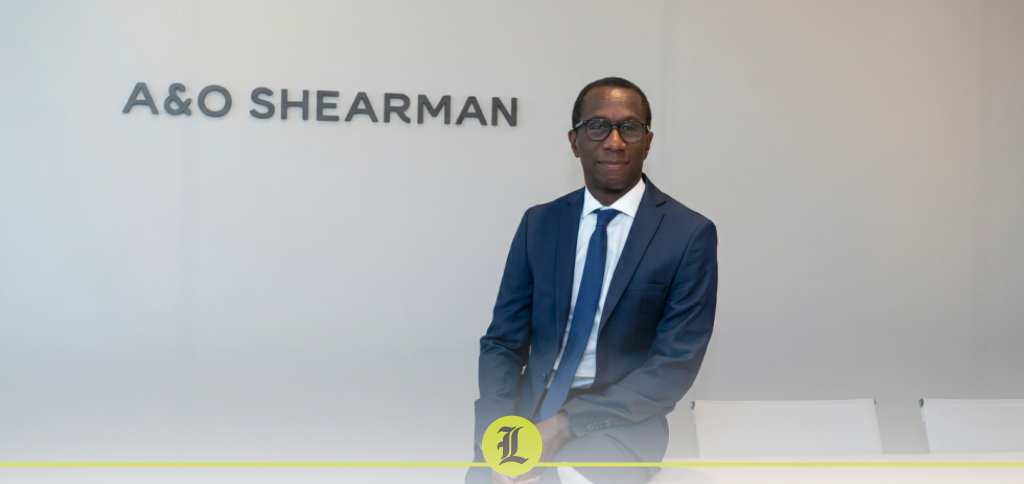
“We set out to build a firm that would win thanks to the strength of its global platform and a culture of excellence. These results demonstrate that our strategy is paying off,” said Hervé Ekué, Global Managing Partner of A&O Shearman. “Clients are entrusting us with a greater number of their most important and complex matters. This, along with the optimization of our operations, has led to significant growth in our profitability.”
In parallel with this reconfiguration, A&O Shearmanel promoted 33 new partners during the year and added 24 lateral hires in sectors and markets it considers priorities.
Among the mandates that illustrate this shift toward more complex matters, the firm advised Genmab on its $8 billion acquisition of Merus and its subsequent $6 billion refinancing; Boston Scientific on its proposed $15 billion acquisition of Penumbra; Texas Instruments on its $7.5 billion acquisition of Silicon Labs; and JDE Peet’s on its recommended public offering of Keurig Dr Pepper for €15.7 billion. In the energy sector, it advised the UK’s Sizewell C nuclear project on its procurement strategy for a £38 billion investment. In litigation, it reached a settlement for UBS that ended a 14-year lawsuit in France.
The firm attributes part of this margin improvement to the integration of artificial intelligence into its lawyers’ work, with the stated goal of gaining efficiency without replacing professional judgment in legal advice. “We see great opportunities ahead, in sectors and markets where the demand for our services is highest, thanks to continuous investment in our staff and technology,” Ekué added.