
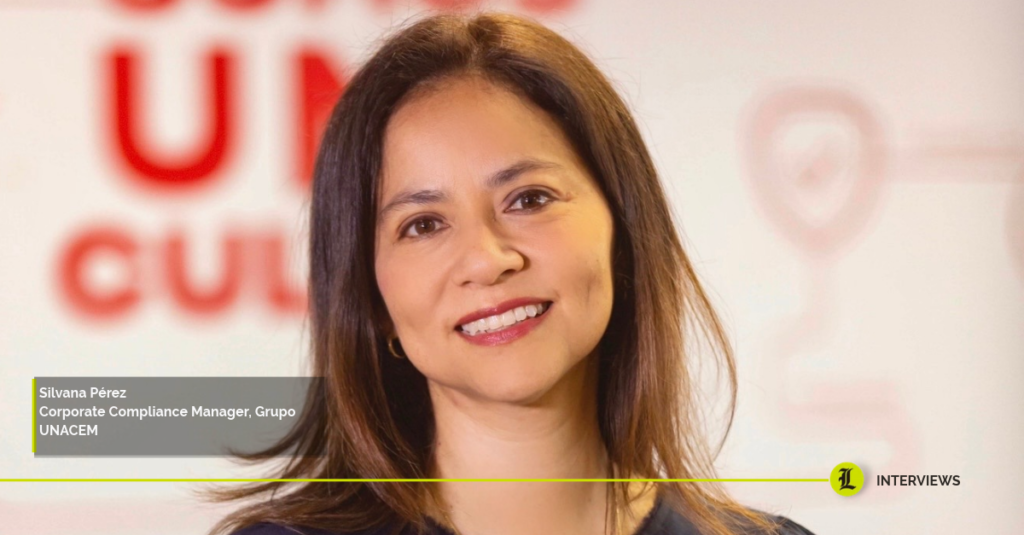
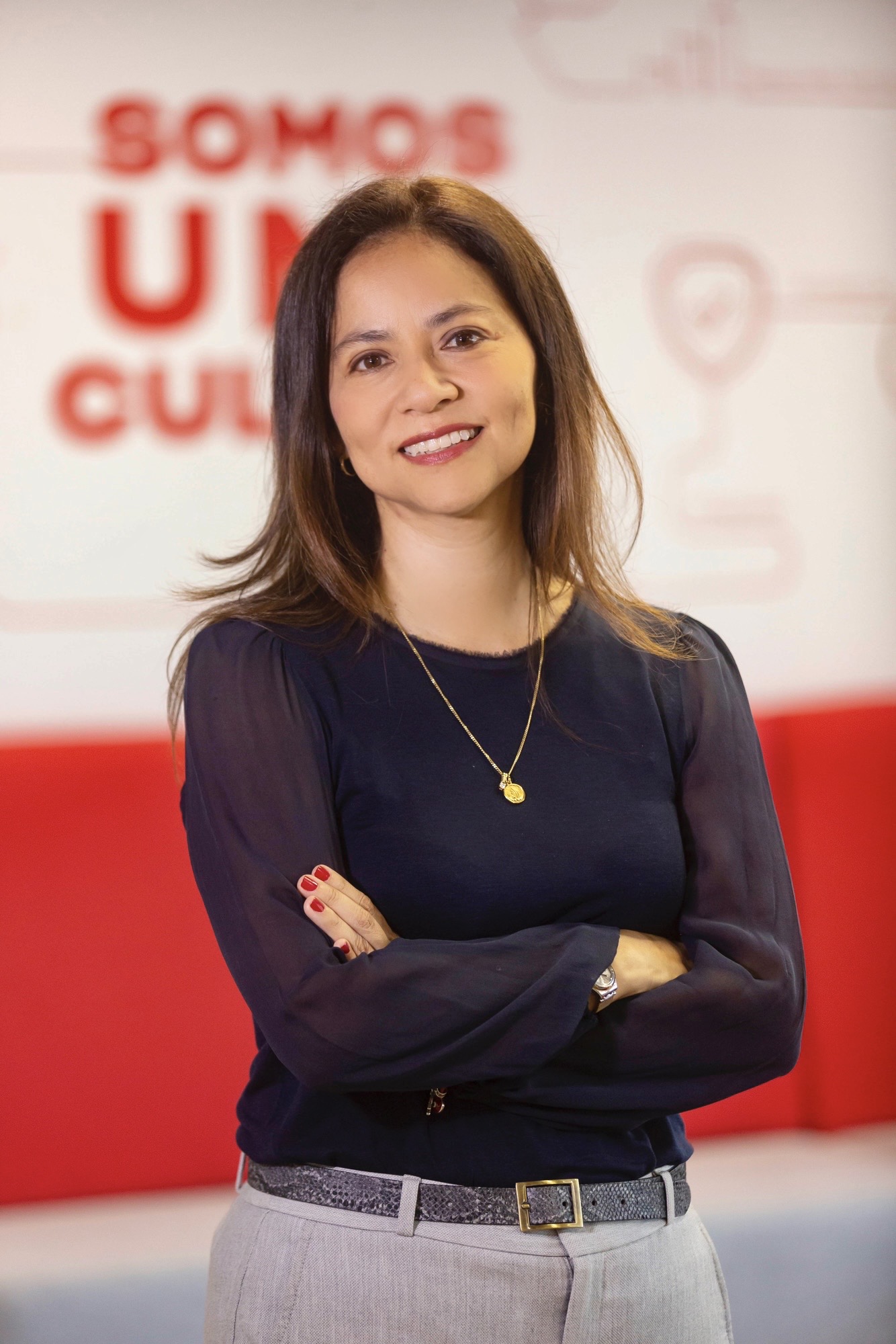
Silvana Pérez, Corporate Compliance Manager of the UNACEM Group, attributes a fundamental role to senior management in ensuring that compliance policies translate into concrete practices. She has witnessed this firsthand within the group, where, she explains, the support of the Board of Directors and the General Management enabled the strengthening of the corporate risk and compliance structure and the ethics committees of the business units in 2025.
In addition to this commitment, the group is training its teams, aiming to ensure that these guidelines reach every country in which it operates: “The goal is that, regardless of the country in which we operate, our decisions adhere to the same principles of integrity and responsibility”.
What stage of your career do you consider decisive in reaching a position of leadership in compliance for a corporate group?
More than a specific stage, I consider one of the most important milestones in my career to be contributing to the evolution of the compliance function toward an increasingly strategic role within organizations. My experience in compliance has allowed me to understand that, while regulatory knowledge is essential, this function also requires understanding how the organization operates, what risks it faces, and how decisions can influence its long-term sustainability.
From that perspective, leading compliance within a business group means having a holistic view that allows you to anticipate risks, support different departments in decision-making, and foster a culture of integrity at all levels of the organization. I believe that has been one of the most important lessons of my career and also reflects how our profession has evolved. Today, our role goes beyond simply verifying compliance with regulations. We also seek to strengthen trust, contribute to strategic decisions, and help create sustainable value.
What have you learned about how to bring compliance issues to senior management?
One of the main lessons is that compliance issues must be addressed in the language of business strategy and risk. It is not enough to explain what a regulation requires; it is necessary to show how a given decision can impact business continuity, reputation, stakeholder trust, and long-term value creation.
At UNACEM Group, compliance is an integral part of our corporate governance structure. We have oversight bodies, such as the Board’s Ethics and Corporate Governance Committee, which ensure these issues remain on senior management’s agenda. Furthermore, in 2025 we strengthened our corporate risk and compliance structure and the ethics committees within our business units. These advancements have been made possible thanks to the support of the Board of Directors, which plays a key role and has exercised active oversight through its committees. This is complemented by the leadership of the General Management, which has facilitated coordination between the Corporate Risk and Compliance Department and the various business units.
I believe the key lies in building a relationship of trust with leaders, based on clear information, technical criteria, and a proactive approach. Our experience has shown us that senior management commitment is fundamental for policies and compliance mechanisms to translate into concrete practices throughout the organization. When compliance is incorporated into strategic discussions from a timely perspective, it ceases to be perceived as an intervention at the end of a process and becomes an ally in making better decisions.
The UNACEM Group operates in several countries. How do you lead a compliance program that must respond to different regulatory frameworks?
The main challenge is maintaining common integrity standards while considering the specific regulatory and operational requirements of each country. At the UNACEM Group, we address this challenge through an Integrated Compliance System, structured around 10 pillars aligned with the Foreign Corrupt Practices Act (FCPA) and other international standards, and incorporating a local management structure across our various business units.
This model combines corporate oversight with the operational capacity of local teams, enabling the consistent identification, assessment, and mitigation of risks. We utilize tools such as our Code of Ethics and Conduct (CODEC), corporate policies, risk matrices, and reporting mechanisms to establish shared criteria across the entire organization.
A key aspect is ensuring these guidelines don’t remain merely on paper. That’s why we focus on training, communication, and awareness-raising for our teams. In 2025, for example, we conducted 81 compliance training activities across our various business units. The goal is that, regardless of the country in which we operate, our decisions adhere to the same principles of integrity and accountability.
The results support the strength of our approach. Our inclusion in the Dow Jones Sustainability Index (DJSI) reflects the UNACEM Group’s commitment to high standards of governance, risk management, and compliance.
In a resource-intensive industry like cement, what place do environmental and sustainability issues occupy within the compliance function?
Environmental and sustainability issues are playing an increasingly important role in compliance management, especially in an industry like ours. Today, simply verifying compliance with environmental obligations is no longer enough. It is also necessary to anticipate the risks associated with climate change, new regulatory requirements, and the sustainability commitments we have made as an organization.
At UNACEM Group, we have made progress in integrating these dimensions into our corporate risk management. During 2025, we formally incorporated sustainability risks into our Risk Management Manual, establishing common criteria for identifying, assessing, and prioritizing environmental, social, and governance (ESG) factors across our various business units.
This perspective is also linked to our Roadmap to Carbon Neutrality by 2050, whose commitments are part of the Group’s strategic planning and risk management. From a compliance perspective, the challenge is to help ensure that these commitments translate into clear responsibilities, monitoring mechanisms, and consistent decisions. Sustainability should not be seen as a parallel agenda, but rather as an integral part of how we responsibly manage our business.
What challenges will the compliance departments of Peruvian business groups with a regional presence face in 2027?
I believe that one of the main challenges will be managing increasingly interconnected risks in an environment where regulatory, technological, and sustainability requirements continue to evolve. For business groups with a regional presence, this means maintaining consistent corporate standards while also having the capacity to respond to the specific needs of each market.
Strengthening the capacity for anticipation will also be crucial. Risks related to corruption, free competition, cybersecurity, data protection, and environmental, social, and governance factors require a comprehensive approach and increasingly close coordination among the organization’s various departments.
In this context, I believe the greatest challenge will be to consolidate a compliance function that not only reacts to potential breaches but also actively participates in their prevention and strategic decision-making. This requires investing in training, strengthening control mechanisms, and, above all, promoting leadership committed to integrity. Organizations that successfully incorporate these principles into their daily operations will be better prepared to build trust and maintain their competitiveness.
You are participating in the Foro Gerencias Legales Lima 2026. What topic do you consider essential on the agenda for this edition?
I believe it’s crucial to open a conversation about how to evolve towards compliance that generates value for organizations and isn’t limited to simply meeting regulatory requirements. In an increasingly complex business environment, we need to reflect on the role that legal and compliance departments play in building more ethical, resilient, and sustainable organizations.
In particular, I believe it is important to address the concept of purpose-driven compliance: a way of understanding compliance in which the corporate purpose guides decisions, transparency becomes an active practice, and leadership demonstrates, through its actions, that integrity is as important as business results. At the UNACEM Group, our purpose, “Together we grow to build a sustainable world,” reminds us that acting with integrity is a fundamental condition for generating value responsibly and sustainably.
This approach raises a relevant question for those of us who lead these functions: How do we ensure that policies, controls, and prevention mechanisms translate into concrete behaviors within organizations? I believe this is a conversation that should involve not only legal and compliance specialists, but also senior management, because ethical culture is built from the top down and demonstrated in everyday decisions.
Silvana Pérez accompanies her vision of leadership with a methodological requirement: compliance issues, she warns, must be addressed using the language of business strategy and risk management. In a resource-intensive industry, this perspective also extends to sustainability. She explains that in 2025 the group formally incorporated ESG risks into its Risk Management Manual and linked its Roadmap to Carbon Neutrality by 2050 to strategic planning, and Pérez believes that the role of compliance is to translate these commitments into clear responsibilities and monitoring mechanisms.
His 2027 forecast extends this reasoning to Peruvian groups with a regional presence: corruption, free competition, cybersecurity, data protection, and ESG factors, he notes, constitute increasingly interconnected risks that demand anticipation and closer coordination between departments. He links this capacity to competitiveness, arguing that organizations that integrate these principles into their daily operations will be better prepared to build trust.