

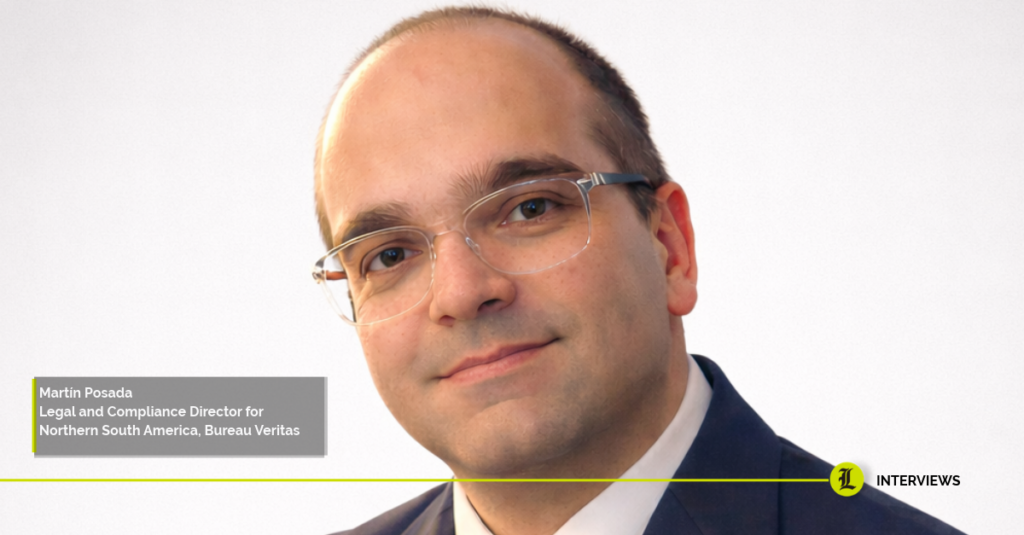
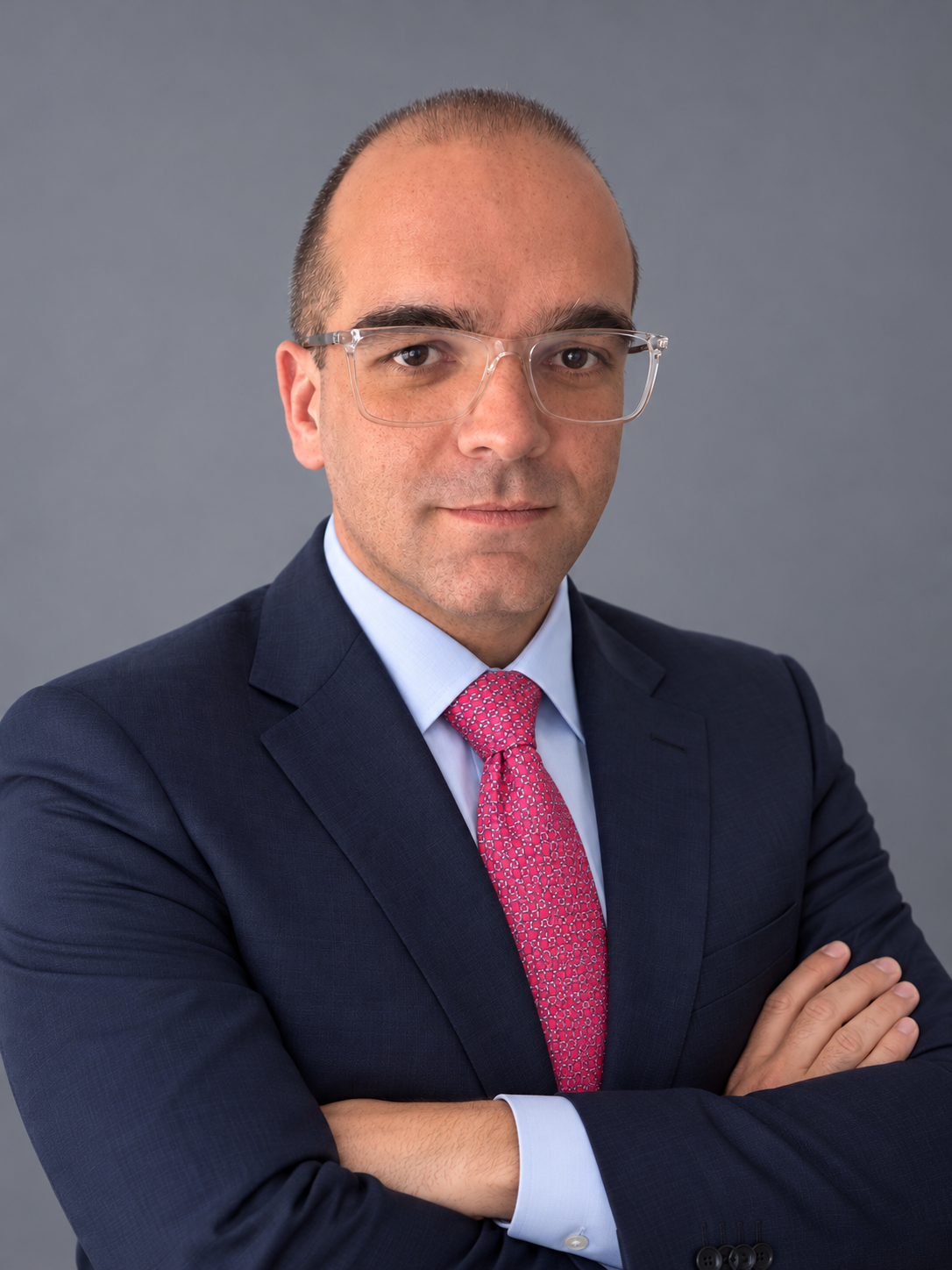
Martín Posada, legal and compliance director for Northern South America at Bureau Veritas, practices compliance from a unique position. He works for a company whose business consists of verifying, through inspections and certifications, what other organizations claim about their operations. From this perspective, Posada warns that the increasing demands for sustainability reporting are putting companies in the region to a maturity test. Their metrics and controls over non-financial information will have to achieve the consistency and traceability of financial processes, because every unsubstantiated claim increases their exposure to accusations of greenwashing. For those who verify, this requirement applies first and foremost to themselves: “Here, independence, impartiality, and integrity are not just corporate values; they are an essential part of the value proposition”.
In a company whose business is based on the trust generated by its inspections and certifications, what role does the compliance function play?
At Bureau Veritas, ethics is paramount and defined as such across all aspects of the company. This means that compliance is fundamental to protecting the credibility of our services and the trust placed in us by clients, regulators, and other stakeholders. Here, independence, impartiality, and integrity are not merely corporate values; they are an essential part of our value proposition. The compliance function helps ensure that our decisions are made objectively, that risks are properly managed, and that the highest ethical standards are maintained in all operations. In this sense, compliance not only protects the company but also strengthens one of its most valuable assets: trust.
With the increasing demands for sustainability reporting in the region, what legal challenges does verifying this information pose?
We are witnessing a natural evolution in how companies manage sustainability. The challenge lies in developing control systems, metrics, and internal processes mature enough to withstand increasingly demanding external reviews. Many organizations are still in a capacity-building phase, so the challenge will be to achieve levels of consistency, traceability, and reliability comparable to those found in traditional financial processes.
It’s also worth mentioning that one of the biggest legal challenges is preventing a gap between what organizations communicate and what they can actually prove. As regulatory demands and market expectations increase, so does the exposure to questions related to greenwashing or misleading statements. Therefore, companies must support their reports with solid information, consistent methodologies, and independent verification processes that substantiate every claim made.
Looking ahead to 2027, what challenges will compliance officers face in northern South America?
Compliance officers will have to navigate an increasingly complex, dynamic, and interconnected regulatory environment. We will see greater demands regarding corporate transparency, data protection, sustainability, corruption prevention, third-party due diligence, and supply chain risk management. Furthermore, the expansion of artificial intelligence tools will generate new challenges related to governance, ethics, and the responsible use of technology. The challenge will not only be complying with new regulations, but doing so efficiently and in alignment with business strategy. The most successful compliance programs will be those capable of combining technology, data analytics, and organizational culture to anticipate risks and generate value for the business.
What stage of your career was decisive in leading the legal and compliance areas at a regional scale?
I have always believed that those who shape us at different stages of life play a fundamental role in our identity. The same is true in the professional sphere, and that is why I am deeply grateful to my first boss, who taught me the virtues of being a good leader, an ally of the business, and not an obstacle. Thanks to that first stage of my professional life, I understood that the legal role generates much more value when it ceases to be a support area and becomes a true strategic partner of the business. Therefore, throughout my career, I have had the opportunity to assume increasingly broader responsibilities, participating not only in traditional legal matters but also in compliance, risk management, internal investigations, complex litigation, and business expansion in different countries. Working with multicultural teams and supporting corporate decisions with regional scope allowed me to develop a comprehensive business vision and understand that legal leadership consists of finding solutions that protect the organization without losing sight of its growth objectives. This combination of legal judgment, risk management, and strategic vision was crucial in assuming regional responsibilities.
What have you learned about leadership from leading legal teams in several countries in northern South America?
I’ve learned that listening, in most cases, is more important than giving direction. The various Latin American countries, and specifically those I lead today—Colombia, Peru, Ecuador, and Panama—share similar challenges, but they also have different regulations, business cultures, and ways of addressing problems. Effective leadership consists of building a shared vision from these differences while remaining sensitive to local particularities. I’ve also found that trust is a multiplier of results. When people understand the purpose of what they do and have the autonomy to make decisions, teams develop an extraordinary capacity to generate solutions. Leadership shouldn’t focus on having all the answers, but rather on developing teams capable of finding them, either individually or collectively.
You are participating in the Foro Gerencias Legales Lima 2026. What does the exchange with Peruvian legal managers contribute to your regional vision?
Peru boasts a highly sophisticated corporate legal community with a remarkable capacity to address complex challenges in strategic sectors such as mining, infrastructure, energy, and services. Participating in events like the Lima Legal Management Forum allows for the comparison of experiences, the identification of regulatory trends, and the sharing of best practices that are valuable for the entire region. Furthermore, these gatherings reinforce a conviction I consider essential: modern legal departments face very similar challenges, regardless of the country in which they operate. The exchange with Peruvian colleagues enriches the regional perspective, generates opportunities for mutual learning, and contributes to strengthening the role of legal departments as enablers of sustainable and responsible organizational growth.
Martín Posada’s career path explains much of his understanding of the legal function. The lesson from his first boss—to be “an ally of the business, not an obstacle”—reappears in his leadership style in Colombia, Peru, Ecuador, and Panama, where he prioritizes listening and autonomy over top-down instruction. This principle also guides his outlook for 2027. In an environment that will see increasing demands regarding transparency, personal data, anti-corruption, third parties, supply chains, and artificial intelligence, Posada believes the advantage will lie in programs that anticipate risks by combining technology, data, and organizational culture. His participation in the Lima forum completes this interpretation: the sophistication of the Peruvian corporate legal community in mining, infrastructure, and energy confirms that the region’s legal departments share common challenges and can assert themselves as enablers of their organizations’ growth.