

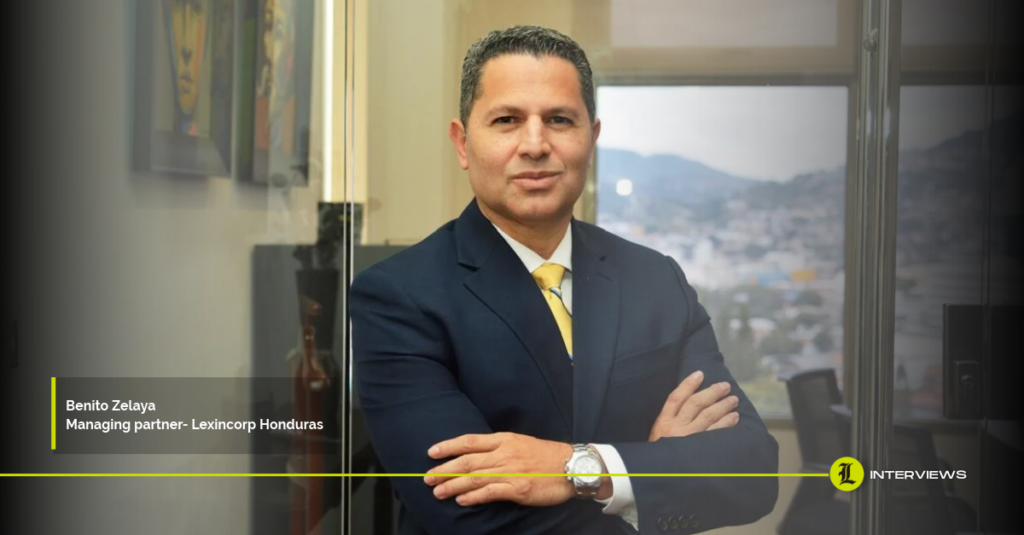
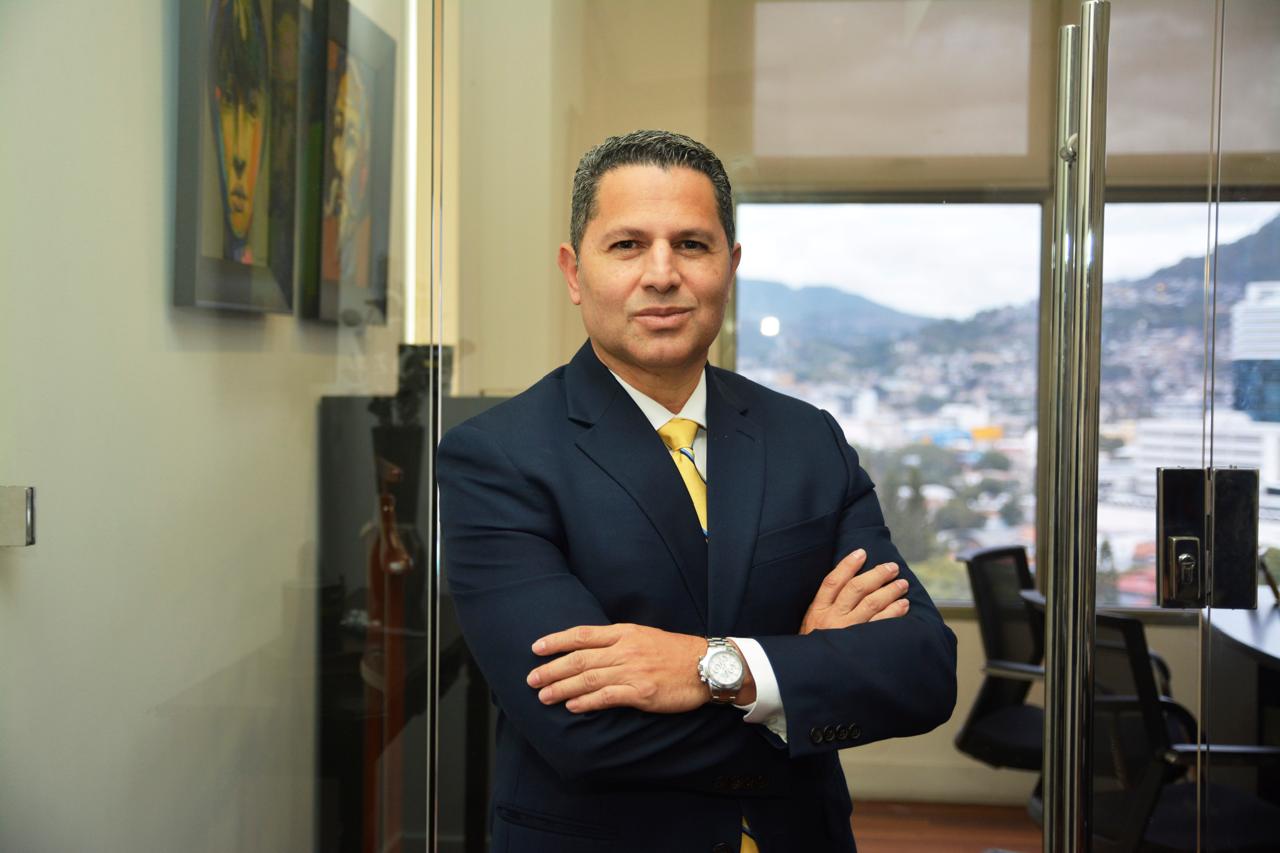
Benito Zelaya, managing partner – Lexincorp Honduras, examines the country’s new investment agenda at a time when the return to the ICSID has been finalized and the draft Investment Law and Securities Market Law are still under review. His analysis identifies what each text addresses well and what it still needs to function effectively in practice. Regarding the draft Investment Law, he values its establishment of a system for preparing and structuring projects before granting benefits, and notes the need for verifiable indicators to compare advertised employment with actual job creation. In a securities market seeking to channel a portion of remittances toward investment, he believes that suitability assessments should be extended to all products offered to retail investors. In public-private partnership contracts, where he has seen projects fail due to unfulfilled government commitments, he points out the need for clauses that specify what the government must deliver, by what date, and with what consequences. His observations share a common logic: shifting the trust from announcements to verifiable data. This, in his view, is also the criterion for evaluating the entire agenda: “Trust isn’t measured by the number of announcements. It’s measured by capital disbursed, projects underway, adherence to schedules, and verifiable formal employment.”

The return to ICSID and the continuity of investment policy
The starting point of the agenda is Honduras’s re-entry into the World Bank’s arbitration system.
Honduras withdrew from ICSID in August 2024 and rejoined in August 2026. Beyond the symbolic message to international capital, what changes in practical terms for an investor structuring a project in the country today?
The return to ICSID is an important signal within a broader agenda aimed at restoring investor confidence. In practical terms, it allows an investment to access a neutral international forum to resolve disputes with a state, provided there is consent in a treaty, law, or contract.
For a long-term project, this additional protection can reduce the perceived political and regulatory risk and improve its evaluation by banks, funds, multilateral organizations, and political risk insurers. It does not eliminate investment risks, but it can make the project more defensible and bankable.
It also requires structuring the investment more rigorously. From the outset, the investment vehicle, applicable treaties, guarantees, contractual risk allocation, and dispute resolution mechanisms must all be reviewed. Legal protection must be designed before a conflict arises.
The 2024 exit demonstrated that membership in the system can be reversed.
What must the State guarantee going forward so that this re-entry becomes a long-term policy and does not again depend on the political affiliation of the next government?
The State must guarantee coherence between the message it sends abroad and its internal actions: Creation of public policies that transcend governments, regulatory stability, respect for contracts, due process, independent institutions and compliance with awards and judgments.
The draft Investment Law contains elements that could promote this continuity. It proposes a Honduran Investment Agency of a technical nature, with authorities appointed for seven years, and incorporates principles of legal certainty, efficient risk allocation, value for money, transparency, and fiscal sustainability.
However, this signal must be harmonized with the Economic Reactivation Law, which is already in effect and allows for the review, modification, revocation, or termination of prior acts, permits, licenses, concessions, and contracts. This power must be applied exceptionally, with sufficient justification, respecting due process, acquired rights, and good faith. Otherwise, it could create the uncertainty that the return to ICSID seeks to reduce.
The 13 ICSID arbitrations, as well as those pending in other forums against Honduras, should also be used as a source of institutional learning. Cases with significant exposure should be litigated with strong defenses; those with substantial exposure can be evaluated for a negotiated settlement. But the essential point is to identify which decisions or failures gave rise to the disputes and prevent their recurrence.
Investment Law: feasibility, employment and permits
The centerpiece of the agenda arrives in a region with long experience in laws promoting investment.
Central America has a long history of incentive laws that promised jobs with mixed results. What element of the draft Investment Law, beyond the tax incentive, aims to correct that history instead of repeating it?
It’s important to clarify: the draft Investment Law is not primarily designed as a tax exemption law. Its main contribution is to create a system for identifying, preparing, structuring, contracting, and monitoring strategic projects.
The proposal requires technical, economic, social, environmental, and fiscal feasibility analyses; a public-private comparison; value for money; a binding risk matrix; competitive bidding processes; and contract monitoring. Private initiatives must also demonstrate financial capacity, a legitimate source of funds, the ultimate beneficiaries, and the seriousness of the proposal.
This approach can correct a historical weakness: granting benefits before verifying the viability of a project. The logic should be the opposite: first, viability and social benefit are demonstrated; then, the appropriate form of support is determined.
However, it is advisable to strengthen employment measurement. The law considers it both an objective and part of the socioeconomic analysis, but it should require verifiable indicators on formal employment, training, national suppliers, and territorial development. The employment figures announced must be comparable with the actual number of jobs created.
The national design of the law coexists with the powers of each municipality.
The law is being discussed with the congressional blocs and the Association of Municipalities of Honduras (AMHON), suggesting that much of its effectiveness will depend on municipal implementation. What coordination mechanism between the national and municipal levels would be needed to ensure that the law’s design is not diluted in local execution?
The draft bill recognizes the participation of municipalities in the design, evaluation and oversight of projects and assigns to the Agency the coordination of permits, licenses and opinions, without displacing the powers of the municipalities.
Furthermore, it establishes a twenty-business-day deadline for certain institutional pronouncements and contemplates presumed approval in the absence of a response. This tool can be positive, but it must be carefully regulated: it is necessary to define which procedures it applies to, when the deadline begins, and which environmental, social, or safety matters necessarily require an explicit decision.
Coordination should be implemented through a single digital portal, with shared records, published requirements, identified responsible parties, and traceability for each procedure. AMHON can contribute with model ordinances and common technical criteria, while respecting municipal autonomy.
The goal should not be to replace the municipality, but to prevent the investor from having to manage contradictory interpretations between national and local institutions.
It should be added that the draft law is still being socialized and reviewed with experts in the field who are finalizing the harmonization between the different actors.
You argue that Honduras should not limit itself to offering incentives, but rather build clear rules, simplified permits, and projects that are well-structured technically, legally, and financially. How do these two pieces connect in practice today: can a well-structured project move forward despite slow permitting processes, or does this slowness ultimately invalidate even the best-structured project?
A well-structured plan allows for anticipating permits, organizing the critical path, and contractually distributing risks. However, it cannot replace authorization that is the responsibility of the State or a municipality.
A project can have a solid financial model but lose its bankability if there is no certainty regarding the land, right-of-way, environmental permits, land use, or utility connections. Therefore, a project without a credible permitting process is not yet fully structured.
Critical permits must be incorporated as preconditions for financial closing or the commencement of certain obligations. The contract must also stipulate who assumes each risk and what happens when a delay is attributable to the State.
The presumed approval foreseen in the draft bill may help, but it does not replace institutional coordination. Professional structuring and administrative simplification are not alternatives; they are inseparable components of bankability.
We can currently see in the Municipal Mayor’s Office of the Central District, where a fast track has been implemented without compromising compliance with the obligations or requirements of the projects. This allows construction projects in the capital to be predictable in terms of time and for developers to be more efficient in their profitability and bankability.
Stock market: investor protection and project financing
The second front of the agenda is financial and aims to mobilize domestic savings.
The reform being promoted by the Central American Stock Exchange seeks to channel Honduran savings and a portion of remittances into investment. What legal safeguards are essential to ensure that this channeling does not become an ill-advised risk for those who have never invested in securities before?
The draft Securities Market Law is ambitious. It regulates investment funds, mutual funds, securitizations, trusts, derivatives, virtual assets, custody, and common investor representation. This diversity can democratize market access, but it also increases the need for protection.
A remittance is usually intended for immediate family use. Converting part of it into investment requires clearly explaining that there are credit, liquidity, and market risks, and that neither the capital nor the return is necessarily guaranteed.
The draft legislation already incorporates clear information, risk ratings, segregation of assets held in custody, regulations on conflicts of interest, and a prohibition on misleading advertising. However, it would be advisable to expressly extend a suitability assessment to all products offered to retail investors. The intermediary must determine whether the product is compatible with the client’s experience, financial capacity, and risk tolerance.
It should also be communicated that registration of an issue with the CNBS does not constitute a state guarantee of the issuer. Financial education is essential, but it cannot replace the intermediary’s responsibility to know the client and adequately explain the product.
The same text opens the door to financing projects through means other than bank credit.
For an infrastructure, energy, or housing project in Honduras, how realistic is it today to consider bonds or structured investment vehicles as an alternative to bank financing, and what is still lacking in market practice for that to happen?
It is a realistic, albeit still nascent, alternative. The draft proposal incorporates closed-end funds, mutual funds, trusts and securitization companies, independent estates, and asset-backed securities that generate cash flows.
This would allow a shift from solely financing the developer to securitizing cash flows—a vehicle that can finance both the project’s present and future income. In energy, cash flows from PPAs can be used; in infrastructure, tariffs or availability payments; and in housing, mortgage portfolios, leases, or structured sales. What will make it more realistic is having a clear guarantee of repayment.
The energy justice law, which is awaiting approval and publication, also allows future ENEE subsidiaries to issue bonds backed by their revenues, without compromising strategic assets such as power plants, networks, or substations.
The challenge lies in the practical side: mature projects, predictable cash flows, enforceable guarantees, rating agencies with experience in project finance, institutional investors, and standardized documentation are all needed. The challenge is to successfully place the first project bond or the first infrastructure securitization, depending on how the repayment is structured, and to ensure it can be self-sustaining.
Risks and controversies in public-private partnerships
Much of the planned investment in infrastructure, energy and logistics involves public-private partnership contracts.
Honduras talks about modern public-private partnerships for infrastructure, energy, and logistics. From your experience representing and arbitrating these types of contracts, what is currently the weakest point in the way the Honduran state distributes risks, and which clause would you review first?
The weakest point has been confusing risk transfer with efficient risk allocation. A risk should be borne by the party with the greatest capacity to prevent, manage, or absorb it at the lowest cost.
The draft bill correctly incorporates this principle and requires a binding risk allocation matrix, integrated into the economic and financial model and the value-for-money analysis. The challenge will be applying it to each contract, as this will depend on the specific project.
The general rule is that the government should not transfer to investors risks that depend primarily on public decisions, such as acquiring rights-of-way, granting land, issuing certain permits, or implementing regulatory changes. When it does, the private sector incorporates that risk into the price, or the project becomes unfinanceable.
However, in my experience, I have seen projects fail specifically because public institutions assume these risks, and their failure to meet them leads to variations that result in conflicts if not managed preventively. Therefore, I believe that a project with due diligence in managing and preventing contractual risks can reduce the margin of error and the likelihood of project failure.
The first clause I would review is the one concerning prior conditions and delays attributable to the Administration. It should specify what the State must deliver, by what date, and what the consequences of non-compliance are: extension of the deadline, recognition of costs, economic rebalancing, or termination with compensation.
Dispute prevention completes that contractual design.
Dispute Boards and arbitration are mentioned as preventative mechanisms for infrastructure projects. What is needed for this practice to move from being a standard clause on paper to a mechanism that is actually used during the execution of Honduran public contracts?
The draft bill requires dispute resolution mechanisms and includes clauses for conciliation or arbitration, but it does not explicitly address Dispute Boards. This presents a concrete opportunity for improvement; although the law regulates a special regime, it could be harmonized with the entire Honduran legal framework on alternative dispute resolution, which would reinforce the message of providing legal certainty with an international standard.
The law or its regulations should suggest dispute resolution mechanisms with a tiered sequence: Dispute Board, direct negotiation, conciliation, and arbitration. The Dispute Board should be established at the beginning of the contract, have a budget, conduct periodic site visits, and issue decisions while the work is underway.
It must also be defined whether these decisions are binding, the timeframe for compliance, and their relationship to subsequent arbitration. A party’s objection should not automatically suspend a provisionally binding decision.
The Dispute Board does not replace arbitration. Its value lies in preventing each disagreement from escalating into a claim that paralyzes the project or ends in more costly arbitration.
Priority sectors and outcome signals
The agenda identifies seven priority sectors, with very different starting points.
Of the priority sectors (infrastructure, energy, tourism, logistics, housing, agribusiness, and technology), which is currently in the best legal and technical position to attract investment in the short term, and which faces the most difficult structural gap to close?
Now that the electricity reform has been approved, if implemented correctly, the energy sector could be the most immediate opportunity. The proposal strengthens the Energy Regulatory Commission (CREE), creates a new System and Market Operator, regulates energy storage, reinstates long-term international tenders, and allows for bidding on transmission expansion projects.
It also maintains existing contracts until their expiration and allows for mutually agreed modifications when the regulatory transition affects their effectiveness. This provides a signal of contractual continuity.
However, bankability will depend on well-structured business models that guarantee the flow of payments, loss reduction, technically determined fees, and reliable contracts. Institutional reform does not automatically eliminate financial risk.
The most complex gap remains in large-scale public infrastructure. A road, port, or logistics project requires thorough studies, right-of-way, permits, fiscal space, municipal coordination, and proper risk allocation. The new law can create the system to prepare these projects, but developing a truly bankable portfolio will require considerable creativity to overcome the challenge.
The reforms under review will have their first test in the coming months.
If Honduras is building a new architecture for investment, the next step is to translate that into trust, projects, and jobs. What concrete, verifiable fact in the next twelve to eighteen months would allow you to confirm that this transformation has already occurred and is not just an announcement?
The most convincing sign wouldn’t be the passage of another law or the signing of a memorandum. It would be a significant project reaching financial close, obtaining its permits within verifiable timeframes, receiving the first disbursement, and beginning formal construction and contracting.
In energy, this could be an international tender culminating in a bankable contract, secured financing, and effective investment. In infrastructure, it could be a project prepared using the new methodology, with value for money, a risk matrix, fiscal sustainability, and municipal participation.
A second sign would be the successful placement of a project bond, closed fund or securitization backed by infrastructure, energy or housing flows under the new Securities Market Law.
Trust isn’t measured by the number of announcements. It’s measured by capital invested, projects underway, adherence to schedules, and verifiable formal employment. That should be the criterion for evaluating whether the new legal framework has produced results.
Honduras now has the pieces of a new investment phase in place: a return to the International Centre for Settlement of Investment Disputes (ICSID), an Investment Law with a technical agency and rules for selecting projects, a Securities Market Law that opens new sources of financing, and an electricity reform that reinstates long-term bidding processes. President Benito Zelaya values this framework and warns that its success will depend on implementation: permits issued on time, government commitments fulfilled, and stable rules that transcend individual administrations. For the coming years, the outlook is one of opportunity with conditions. Energy appears to be the sector with the greatest potential to attract investment in the short term, while large-scale public infrastructure will require more time and better-prepared projects. The first project to achieve financial closure under the new rules will demonstrate whether the agenda begins to yield results.