
“The question is no longer whether there is a concession, but whether the project is sustainable over time.”
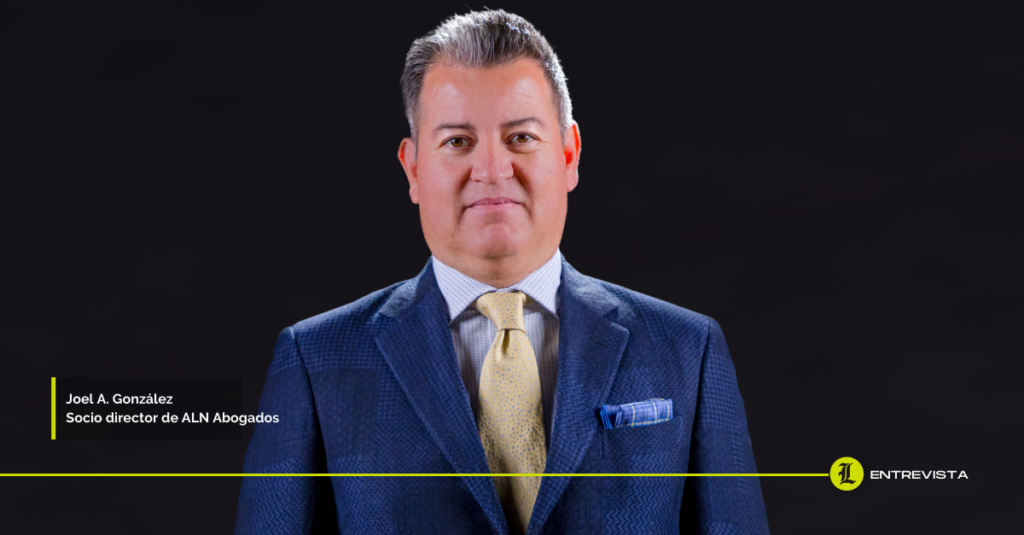
When asked whether the new regulatory pillars of the Mexico 2030 Plan affect the legal certainty of mining investments in the country, Joel A. González, managing partner of ALN Abogados, does not respond in alarmist terms. Nor is he complacent.
In his view, the impact is real, but not in the simplistic sense that “more regulation equals less certainty”.
“As we have noted throughout 2025, the authorities’ growing expectations have translated into new, stricter regulatory frameworks with higher compliance standards.”
The difference, he explains, lies in how that tightening is interpreted. “In practice, the effect should be an increase in predictability for those companies that are aligned with the new standards and, in particular, that properly document their compliance.”
That is the key distinction. Legal certainty is no longer a general presumption; it becomes a conditional outcome. Those who understand the new regulatory threshold and incorporate it into their operations will enjoy greater predictability than before. Those who underestimate it will face increased exposure.

A holistic vision versus cross-cutting regulation
González returns repeatedly to one central idea: mining can no longer be managed in silos.
“Today more than ever, mining must be understood from a holistic perspective.”
An environmental permit is not merely a technical procedure. It affects timelines, financing, reputation, community relations and, ultimately, the continuity of the concession. It cannot, therefore, be addressed by a single department in isolation.
In his view, legal, operational, environmental and community-relations considerations must all be represented when strategic decisions are taken. This is not ESG rhetoric; it is risk management.
In this framework, legal certainty is no longer defined solely by regulatory stability. It becomes the result of coherence across all these dimensions.
Water: the new epicentre of regulatory risk
If there is one area where the transformation is most evident, it is water management. González describes a clear shift in the regulatory model:
“We are seeing an evolution from a predominantly administrative system to a water-responsibility model, with very specific obligations relating to measurement, fee payments and even criminal liability in cases of non-compliance.”
Water used in mining operations has become particularly sensitive. What was historically regarded as inherent to the mining concession now requires specific mechanisms for measurement and fee payment, irrespective of its intended use.
In light of this scenario, González proposes three essential lines of action:
-
Detailed, operational water-regulatory mapping.
-
Strict document control with clearly designated responsibilities.
-
Preventive strategies to mitigate risks of expiry, suspension or cancellation.
In his assessment, water management will become one of the principal indicators of regulatory compliance in the years ahead.
Social resilience: beyond the licence to operate
In the ESG and community sphere, González introduces what he considers a key concept for understanding the sector’s present reality: social resilience.
“Social resilience is the capacity of a project to remain viable in the face of adverse or changing regulatory, social and geopolitical environments.”
Mining projects, he argues, can no longer rely solely on obtaining an initial social licence. They must sustain legitimacy over time, in contexts where communities demand shared prosperity and authorities impose increasingly stringent standards.
From ALN’s standpoint, mining law is conceived as a dynamic practice that accompanies the entire project cycle, exploration, development, operation and closure, in constant dialogue with both technical and strategic functions.
The lawyer’s role: from interpreter of rules to architect of continuity
For González, mining law is undergoing a period of substantive evolution. Lawyers can no longer confine themselves to analysing legislative reforms. They must understand the business model from its inception -including in publicly listed companies- and accompany it through exploration, development, operation and closure.
At ALN, he explains, the firm assumes that integrative role: serving as a bridge between the company, its internal departments, authorities at all three levels of government, and local communities.
This is not a marketing slogan but a redefinition of the professional function. In a more demanding regulatory environment, legal counsel becomes a mechanism of prevention and coordination.
Protocols, tools and culture
González acknowledges the value of technological tools for risk analysis and prevention, as well as the adoption of protocols such as TSM (Towards Sustainable Mining) by companies affiliated with CAMIMEX and CANCHAM.
Yet he returns to what he considers the essential point: no tool can replace internal integration.
“Beyond these tools, the best strategy for preventing conflicts of any kind is the integration of the different areas of the operating company under clearly defined strategies.”
In his view, risk is not managed through formal compliance alone. It is managed through organisational culture.
González does not present the Mexico 2030 Plan as either a threat or a guarantee. He sees it as a filter.
Legal certainty in Mexico’s mining sector is not disappearing; it is becoming more demanding. It depends less on the passive stability of the regulatory framework and more on each project’s active capacity to comply, document, anticipate risks and engage constructively with stakeholders.
In that context, the concession is necessary, but no longer sufficient. Operational continuity, sustained by full compliance and social resilience, becomes the true measure of certainty.