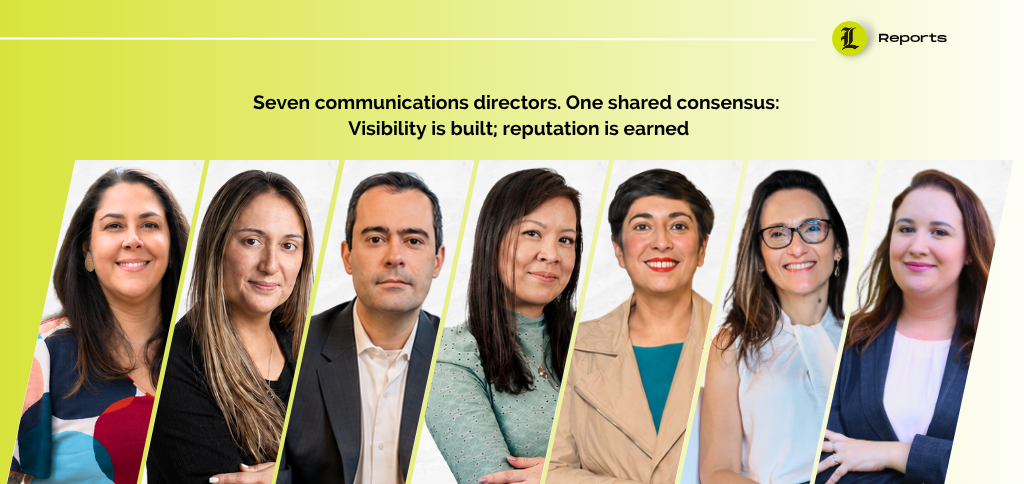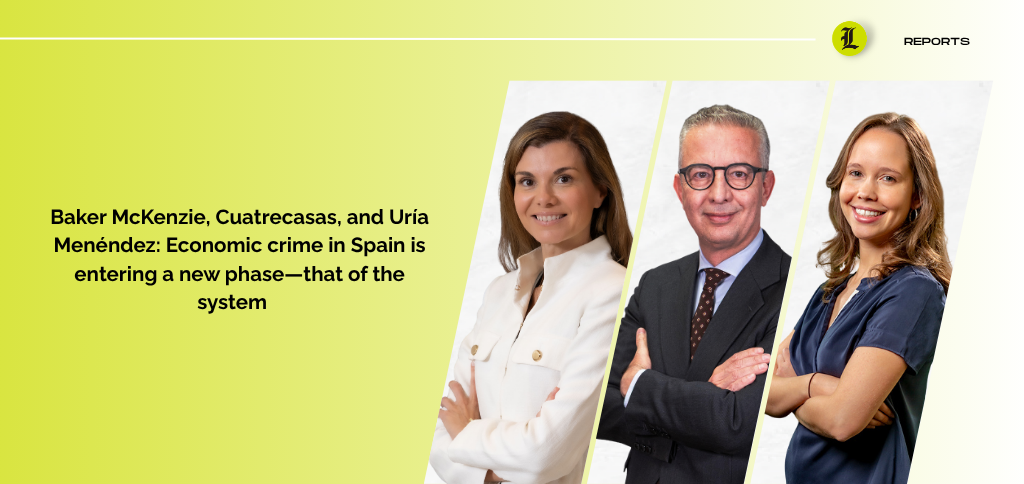



Today we spoke with five specialists in Family Law: Carmen Varela, managing partner of Carmen Varela Family Lawyers; Delia Rodríguez, CEO of Vestalia Family Lawyers; and Elisabet Hernández, managing partner of Hernández Costa. Isabel Winkels Arce, Vice Dean of the ICAM, family lawyer and secretary at Plataforma Familia & Derecho; and Paloma Zabalgo, Managing Partner of [Carmen Varela0]Paloma Zabalgo Family Law.[/Carmen Varela0]
They all agree on the necessity and essential nature of reforming Family Law and, in turn, creating courts with exclusive jurisdiction over family matters. They concur that family conflicts require a swift response from the justice system, as well as specialization and in-depth knowledge of the subject matter from all legal professionals involved.
They advocate for the introduction of arbitration as a solution to most Family Law problems, and, as experts in the field, they tell us that International Law is increasingly present in their advice and is nothing more than a consequence of globalization.
Carmen Varela is a family lawyer, mediator, and collaborative lawyer. She is the Vice President of the Family Law Section of the Barcelona Bar Association (ICAB), and teaches in the ICAB’s postgraduate programs in Family and Childhood and Mediation.
Delia Rodríguez, for her part, considers herself someone who lives her profession with such vocation and passion that “both facets of my life inevitably intertwine continuously.” She told us that her connection to law was a kind of sudden infatuation that came once she found the perfect fit between what she had studied and what she wanted to dedicate herself to. “As the daughter of divorced parents, I am very committed to the defense of children and adolescents, both within processes of change and/or family crisis, and in any other type of situation that compromises their well-being and their rights.”

Meanwhile, Isabel Winkels Arce revealed to us that she is a woman who experienced the political transition firsthand at home, “with a groundbreaking mother who ran in the first democratic elections in Spain, and was elected senator in the constituent legislature and deputy in the first legislature, with a father who unconditionally supported his wife, which shaped her concept of what an egalitarian society should be. Professionally, she is a lawyer who discovered her vocation at 18 when she began studying law almost by chance.”
Paloma Zabalgo is a lawyer specializing in Family Law and International Family Law, with experience in areas such as Civil Law, Criminal Law, and Administrative Litigation. This, combined with her 18 years of experience in family law, “has allowed me and my team to become a leading firm in the family law sector, always safeguarding the interests of families and especially those of children.”
Is reform of Family Law necessary, and in turn, the creation of courts with exclusive jurisdiction in family matters? Why?
Carmen Varela: “What is needed is the creation of a Family Court, since while there are specialized Family Courts in provincial capitals, there are none in the other judicial districts, creating a two-tiered system of family justice. Regarding the necessary reforms, it is undoubtedly necessary to modify the enforcement of Family Law and adapt the common Civil Code to reflect social realities.”
Delia Rodríguez: “Definitely, yes. And that is what many professionals throughout the country have been demanding, as well as various associations and institutions such as the Family and Law Platform, and the Spanish Association of Family Lawyers (AEAFA).
We can talk about two aspects of specialization that complement and need each other.On the one hand, specialization in terms of the creation of family courts that only deal with this matter, so that all judicial districts have at least one court.
This is not currently the case, which means that, depending on where you live, your family law case may be heard by a court that is not specialized in this area. This is not, of course, a criticism of the work of our judges and prosecutors (who, incidentally, are completely overwhelmed), but rather an attempt to highlight the importance of specialization.
Just as in medicine, you don’t have the same doctor operate on you depending on your ailment. The same should apply to law, at least in certain areas, such as labor or commercial law.
Secondly, we’re talking about the specialization of professionals. Family and children’s law is so unique and specific that it requires specialization from all legal professionals involved in this system. This includes not only lawyers, but also judges, prosecutors, and expert witnesses.
Finally, we can talk about the need to create a specific jurisdiction, a very ambitious challenge that we lawyers have also put on the table.”

Elisabet Hernández: “The need for specialized courts is an increasingly pressing demand. The volume of proceedings generated by our area of law is significant, so the specialization of the courts is organically justified. Family conflicts require a swift response from the justice system that is also sensitive to family issues. This response can only be provided if the court resolving these cases is specialized.”
For Isabel Winkels, reform is not only necessary; it is essential. Why? Because society is increasingly complex and needs answers to this social reality that is advancing much faster than the laws. It is essential that all legal professionals involved in family-related matters are specialized, that we know not only the laws, but also the jurisprudence and the specific circumstances of each family in order to offer appropriate responses to each family crisis, protecting above all the interests of the most vulnerable: children and adolescents.
Paloma Zabalgo agreed that “yes. The need for the creation of a specialization of family courts is more than evident, a matter that is also regulated in most countries, with Spain being one of the few countries that still does not have such specialization.
There are enormous differences between specialized and non-specialized courts, including vastly different resources, which affects individuals and especially children, resulting in very different outcomes depending on where they live. For example, Madrid city has specialized family courts, while other parts of the Community of Madrid do not, creating a serious disparity in such sensitive family law cases.
The harm to families, and especially to children, is evident. A court’s lack of understanding of the specifics of family law proceedings can lead to situations that fail to adequately protect children’s interests. While these rulings can be modified through appropriate appeals, the passage of time itself can cause detriment.
With the current wording of the Organizational Efficiency Bill, currently in parliamentary process, is the creation of specialized Family Courts guaranteed?
Carmen Varela: “On paper, yes, but we’re back to the same problem: if the laws aren’t allocated budgets, they become worthless and it won’t be possible to create them. Investment in Justice, at least in Catalonia where I work, has been zero euros for several years. It will be impossible to create them this way.”
To the above, Delia Rodríguez added that “while there seems to be some unanimity regarding the need for specialization of the courts, it is no less true that there are multiple doubts about the implementation when executing the Law of Organizational Efficiency, as reflected in the draft itself.
This is because, as the law is currently structured, it is not feasible to create a specialized section for family, childhood and capacity in each of the 431 existing judicial districts.
As was recently discussed at the Madrid Bar Association, specialization could be achieved in two ways: by regionalizing future courts of first instance and redistributing the workload, or by moving the specialized judicial body to the different courts to deal exclusively with issues related to childhood, family and capacity.
We have achieved the most important step. Now we need to put the law into practice so that specialization becomes a reality and we put an end to the discriminatory treatment that citizens receive based on the judicial district in which they reside.”
Elisabet Hernández continued, saying that “the project addresses the specialization of lower courts by section, and fortunately, family law will be one of them. However, it’s not entirely clear to us legal professionals what the criteria will be for judicial districts to have these specialized family law sections, as the wording is quite ambiguous. We’ll have to wait until the system is implemented and hope that specialization will be more prevalent than it is now.”

Isabel Winkels added that “with the current text, no. An important step has been taken, because it recognizes the need to create a section for Children, Family and Capacity in the Courts of First Instance, but the current wording is still far from recognizing its implementation in a generalized way, as is done with the commercial sections.
The Madrid Bar Association, the Barcelona Bar Association, and the Family and Law Platform have jointly submitted a series of important amendments to this bill. These amendments are currently under review, and we hope they will be incorporated into the final text. If they are incorporated, we can truly speak of equality before the law for all citizens, because everyone will have access to specialized family courts regardless of where they live.
Paloma Zabalgo added that “the bill provides for the modification of the Organic Law of the Judiciary and the creation, within the Courts of First Instance, of different sections, including the family section. Notwithstanding the above, given the current wording, it is established that these specialized sections “may” be integrated, so until the final text is published it is difficult to predict the effectiveness that the law will have in guaranteeing the creation of these courts, the current wording being insufficient to create true specialization.”
Besides the long-standing demand for specialized family courts, what other measures do you think are needed in our daily work in offices and courts?
Carmen Varela considered that “in the Courts, of course, more respect for the time of people and professionals with realistic planning of hearing dates with the necessary time between one and the other that avoids desperate waits for everyone; greater specialization of legal operators, greater collaboration between judges, prosecutors and lawyers and, in general, to make and implement a more “therapeutic” justice.
In family law firms, which continue to be quite individualistic, I believe there is a need for more teamwork, greater modernization and continuous training, in addition to the regular use of languages such as English.”
For her part, Delia Rodríguez said that “it is essential to discuss budgets allocated to the justice system in Spain. The precarious situation manifests itself in various ways: infrastructure in some judicial districts, human resources both in the courts and in the public bodies that actively collaborate with them… All of this translates into undue delays and a total collapse of the system, which goes hand in hand with the frustration and despair of individuals and legal professionals.”
The indefinite strike by the court clerks (LAJ) also reflects this precarious situation I am talking about, which brings with it even more delays in proceedings that per se had been waiting months to be tried.
Regarding law firms, I believe it is essential to address work-life balance, mental health, and the well-being of the legal profession.”
Elisabet Hernández pointed out that, “to achieve more accurate judicial decisions in this area, judges should have the unconditional support of technical teams, primarily composed of psychologists specializing in childhood and adolescence. Currently, these teams exist and function adequately, but they are overwhelmed by a lack of human resources, leading many judges to dismiss their involvement in their cases to avoid delays. Having access to these reports and evaluations for judges and lawyers would improve not only our work but, more importantly, the social impact we have on our professional development.”
According to Isabel Winkels, “a specific family code is essential. It is crucial that a text be drafted that regulates Family Law, including all measures inherent to family conflicts, such as the liquidation of economic regimes, which is a matter that increases the conflict in these processes.”
Paloma Zabalgo stated that “specialization requires a deep understanding of the subject matter by all the legal operators involved, from the judge or magistrate, to the lawyers, prosecutors, psychologists, social workers, etc., who intervene throughout the process.
Likewise, Family Law always requires that an agreement be reached or attempted, using all the tools at our disposal for this purpose, from mediation to conciliation and even other conflict resolution mechanisms such as arbitration for economic issues, which allow us to avoid contentious legal proceedings between the parties.”
We also consulted the experts about the main challenges facing family law today. According to Carmen Varela, “one of the main challenges is to continue fighting for a Family Court system that allows for specialized judicial solutions for citizens. Furthermore, it’s crucial to make it an attractive specialty for young lawyers, avoiding personalized or family-run firms that discourage careers in them. And, of course, there’s the need for specialization in International Family Law and the incorporation of language skills.”
Delia Rodríguez reflected, stating that “family law faces the greatest challenge of all on a daily basis: adapting the law to new family realities. Logically, this goal is much easier to achieve when we approach it from a specialized perspective within Family Law; in fact, I would say that today it is necessary to speak of a specialization within a specialization.”
Family Law is very broad and complex, since it covers everything from family crises to property and tax issues, as well as matters concerning capacity, inheritance, domestic violence, gender violence or International Law, among others.
Of course, one of our main objectives must be to achieve specialization in the courts and the creation of a family law jurisdiction, as exists in commercial, criminal, or administrative law. Ongoing training is also necessary to provide quality service to the public, not only for lawyers but also for all legal professionals and other practitioners involved in the judicial system.
For Elisabet Hernández, the main challenge “continues to be asserting every day in the courts that children and adolescents are subjects of rights. Rights that are independent of the will of their parents. It is very difficult for the child’s voice to be heard in legal proceedings and for them to be treated appropriately. The fact that the authorities do not prioritize the protection of children and adolescents is a scourge on our society.”
To the above, Isabel Winkels added the need to “know how to adapt to the requirements of each family, especially those of children and adolescents, who are subject to a multitude of risks and harmful influences, and to protect their development in a conflict-free environment. Many protective measures can be adopted through a specialized justice system; procedures can and should be adapted to their needs, truly revolving around their best interests. A figure can and should be introduced into the proceedings—their own lawyer—to speak on their behalf, free from the influence of their parents. These are figures and measures that exist in other legal systems and can perfectly well be incorporated into our own procedures.”

Paloma Zabalgo stated that “Family Law is not immune to societal transformations. New family models are a reality; the foreign, and therefore international, element is increasingly common in relationships; and the emergence of social media and its use by minors are issues we must address daily in our practice. Responding to these situations requires not only technical knowledge but also the necessary empathy for each family’s circumstances, so that we can provide an appropriate solution for each specific case. It is rare for the same solution to be applicable to two different cases, and each matter must be handled individually.”
Regarding the introduction of arbitration to resolve most family law issues, Carmen Varela believes that “in other European and Spanish-speaking countries, family arbitration is an alternative dispute resolution method that solves many conflicts, but here it is completely nonexistent. I firmly believe that what works in neighboring countries could be an option in Spain that, at the very least, should be explored.”
Delia Rodríguez clearly foresees that “arbitration will be very well received in Spain regarding Family Law in its financial aspect. This alternative form of dispute resolution, in this case within the family sphere, can be fully effective and much faster than court proceedings.”
In the case of contested inheritances or the division of marital property, we’re talking about an average duration of three or four years or more. The emotional and financial costs are enormous.
Arbitration can be presented as a way to find a satisfactory solution to conflicts of an economic nature, especially when we are talking about large fortunes, since we cannot ignore that the costs of this system are not affordable for every family economy.”
Elisabet Hernández believes that “the arbitration system could be useful in minor conflicts that may arise, especially regarding minor issues related to parental authority, and even as a tool for minor adjustments or disagreements regarding what in Catalonia is known as a parenting plan. However, I don’t think it’s a suitable tool for other matters, including child protection issues and property matters, which in some cases can be highly complex.”
Isabel Winkels stated without hesitation, “Absolutely. There are matters that are not arbitrable, such as issues concerning minors, but other matters can be perfectly resolved through arbitration. The clearest example is the division of marital property: in the most contentious cases, each of the two phases into which this procedure is divided can take more than four years to become final. This means that some divisions are not resolved until 10 years after they have begun, and in the meantime, the spouses’ assets are frozen. If the same procedure is submitted to arbitration, even with expert appraisals, it could be resolved within 6 to 8 months. The lower cost, both financial and emotional, for the parties is undeniable.”
Paloma Zabalgo stated that “arbitration in Family Law is being fully implemented in other countries, and although in Spain there is still no education or culture regarding its application in family proceedings, it is a very interesting mechanism for resolving economic disputes, given that any issues that may affect minors cannot be submitted to arbitration, as they are matters of public order and therefore must be brought to the attention of the judge. Currently in Spain, the importance of arbitration for its application in Family Law is beginning to be recognized, and efforts are underway to promote its understanding, study, and application to family proceedings in those matters that may be subject to arbitration.”
Regarding the most frequent inquiries received at their offices, the Family Law experts agreed that, since they also practice International Family Law, Carmen Varela, in particular, “receives many relocation and divorce cases involving mixed-nationality couples, as well as international child abduction cases. The reasons are clear: in a more globalized world of labor and personal migration, divorces or job transfers generate cross-border conflicts.” She added that, with respect to domestic Family Law, the most frequent cases continue to be divorces, custody disputes, property divisions following separations, modifications of court orders, and controversies regarding changes of residence and school. Why is this? Because short-term marriages or partnerships are becoming increasingly common, and when a breakup occurs, they often have young children, so the initial regulations must be adjusted to the different stages of the children’s and their parents’ lives.”

“At Vestalia Family Lawyers, our service is characterized by the defense of children in all its facets, specializing in custody and protection measures for children and adolescents, both nationally and internationally. From the firm’s inception (Vestalia comes from ‘Vestas,’ goddesses who protect the home), our guiding principle has been the well-being of children, ensuring that this message, which we proudly uphold, resonates when clients refer us to our work,” said Delia Rodríguez.
Elisabet Hernández pointed out that “the most frequent complaints are those related to child custody. The system of prioritizing one custody arrangement, in this case shared custody, is generating much debate because it is not always the most appropriate model. Furthermore, it creates conflict within families since our legal system prioritizes the custodial parent in the allocation of family use. With these factors, the debate is inevitable.”
Isabel Winkels added to the previous comments that “breakup situations are becoming increasingly complex, and globalization is partly responsible. Traveling is easy, and forming new relationships and starting new families among people of different nationalities and cultures sometimes leads to conflicts escalating.”
International law is increasingly present in legal proceedings because, when a foreign element is involved, or when Spanish citizens living abroad are involved, it is necessary to consult international regulations and conventions to determine the applicable law and the competent court to resolve each issue. And sometimes there are two potentially competent courts, which can lead to two separate proceedings being initiated in two different countries.
International successions, settlements with assets in different countries, surrogacy or international adoptions… these are many increasingly complex matters that are reaching law firms more and more frequently.”
Finally, Paloma Zabalgo agreed that “the most frequent consultations we receive at the firm are those related to separation, divorce, or child custody arrangements. Clients seek our advice to understand the new situation they face, given the transformation of society. The most common issues arise from the exercise of shared custody, with the majority of parents opting for this custody model or requesting it from the court. Furthermore, due to globalization, we see a clear increase in consultations involving foreign elements, which necessitates a thorough understanding of international family law and a mastery of the international conventions and regulations that allow us to address each situation.”