

Setting clear and achievable goals for 2025 is crucial for the success of a law firm. It has finally been recognized that we are living through the most competitive period in the history of the legal sector, and therefore, it is understood that communication must be valued as a strategic tool for differentiation and positioning among other firms and even in the eyes of clients.
There is little doubt that communication is a must for business law firms. Publicizing the firm’s strengths, its differentiating values, and the expertise of its professionals is a guarantee of generating business. Firms also agree that various communication and marketing channels can become one of their primary tools for acquiring new clients.
Over time, communication has evolved from being entirely offline to developing a digital strategy that is key at this time, and has professionalized communication within firms by recognizing its value as a strategic asset for lawyers.
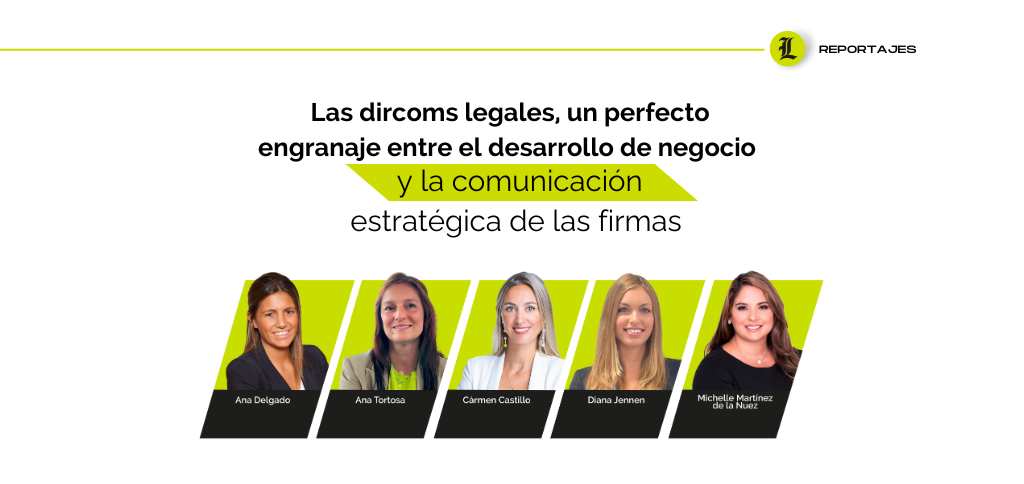
In this context, Carmen Castillo, Marketing and Communication Director of Ceca Magán; Michelle Martinez de la Nuez, senior director, Americas & Global Initiatives at DLA Piper; Ana Tortosa, business development, Marketing & Communications Manager at Freshfields; Diana Jennen, partner at Gericó Associates; and Ana Delgado, business development manager of Pinsent Masons, discussed legal marketing, the challenges that law firms will have to face and overcome to remain competitive and effective, and revealed what is the most difficult aspect of the communication function.
Aligning the communication strategy with the business

In terms of communication, Carmen Castillo, Marketing and Communications Director at Ceca Magán, highlighted the alignment of all the firm’s professionals as the main challenge. “Aligning the firm’s overall objectives with the objectives of each department, the partners’ personal objectives, and the communication, marketing, and business development objectives will be a major challenge. Ultimately, we all have more individual, short-term interests, but we must also understand that medium- and long-term objectives are team-based. There’s a saying: ‘To go fast, go alone; to go far, go together.’ We want to continue going far.”
Another major challenge for Carmen is maintaining the current media presence “and surpassing the 1,000 impressions achieved in 2024, which gives us brand positioning and visibility for the many expert stakeholders of our firm. We believe that everyone contributes and everyone can provide valuable content.”
To the above, he added, the importance of maintaining the challenge of “anticipating the needs of the media and offering them content that is of interest to their readers.”
Michelle Martinez: “Embracing legal technology, focusing on client service, building teams ready to work remotely, and prioritizing diversity, equity, and inclusion are key goals for law firms.”
For her part, Michelle Martinez de la Nuez, senior director, Americas & Global Initiatives at DLA Piper, said that disparate systems, spending pressures, lawyer integration, client-centric initiatives, and the integration of AI and technology are among the most important challenges in this new year.
According to the expert, many firms struggle with disparate systems that don’t communicate well with each other, which “can lead to inefficiencies and a lack of a cohesive marketing strategy.” Regarding spending pressures, she added that companies are under constant pressure to manage expenses and invest in effective marketing strategies, which “involves balancing the costs of digital marketing tools and traditional methods.”
A third challenge for Michelle is integrating new partners into the firm’s marketing strategy, especially in such a competitive market. “Ensuring that new partners align with the firm’s brand and marketing objectives, along with their adaptation to peak performance and profitability levels with minimal downtime, is crucial. Talent is an investment.”
To the above, she added customer-centric initiatives. According to the communications director of DLA Piper, maintaining a customer-centric approach while managing internal marketing objectives “can be difficult.” She states that “companies must ensure their marketing efforts are always aligned with customer needs and expectations.”
Finally, he addressed the integration of AI and technology. He believes that as AI and other technologies become more prevalent, “companies must effectively integrate these tools into their marketing strategies. This includes using AI for personalized communication and data analysis.”
Ana Tortosa: “ Building and maintaining relationships with different media outlets is always part of the strategy”

For Ana Tortosa, business development, marketing & communications manager at Freshfields, “aligning the communication strategy with the business” is among the challenges to overcome this year. “This involves a lot of internal communication with the firm’s management; without this premise, it’s impossible to get started effectively. It’s about building trust and conveying the benefits of communication for the business.”
In addition, she added managing and reconciling the desires of the different generations that coexist in the office, “and finding a point of equilibrium where everyone feels comfortable with the communication we do.”
For Ana, strengthening the relationship with the media is fundamental. “It’s about easing the apprehension, the misgivings, or let’s call it fear, of dealing with journalists—something the legal sector is so sensitive to. Confidentiality doesn’t have to be at odds with the possibility of addressing the issues raised by the media. It’s about bringing the lawyer and the journalist closer together.”
To the above, he added that one of the challenges is incorporating communication objectives as a priority for legal teams, “we don’t expect them to know everything, but rather that they want to learn and are open to advice.” He emphasized the importance of proactive and generous communication with the media, “offering content that isn’t self-promotional, but where we can add a unique perspective to the media.” Finally, he added that “the commitment, enthusiasm, and motivation of the managing partner in the firm’s communication play a key role, as does the trust in their Communications Director!”
Diana Jennen, a partner at Gericó Associates, continued, noting that it is crucial for firms to optimally implement the proposed actions. “That is the mission of Gericó Academy and its membership system and weekly mentoring sessions in different rooms, for large, mid-sized, and boutique firms.” She added that another major challenge is “continuing to implement artificial intelligence effectively, while maintaining privacy and prioritizing human judgment.”
“This year we plan to hold eight events, four in Spain and four internationally, to continue building bridges between law firms and decision-makers when it comes to hiring legal services.” He also stated that they will continue “expanding and growing in the areas of litigation PR, reputation management, and crisis communication.”
He emphasized that “after a year of close collaboration between the PR firms in our international network Mirovia, especially with the United Kingdom and France, we will continue to strengthen this joint work globally: we cover countries such as Italy, the Netherlands, Germany, India and Singapore.”
Strategic communication improves efficiency and internal cohesion
For Carmen Castillo, “the key is always to be clear about our channels, media, and messages to define our brand identity and reach the target audience at any given time. At Ceca Magán, we have evolved and grown as a company in recent years, and our communication strategy has evolved with it.”
Carmen Castillo: “At Ceca Magán we have evolved and grown as a firm in recent years and our communication strategy has grown with that”
However, the specialist told us that, although they are still setting communication objectives for 2025, based on the closings of the last two years, some of the objectives for this year that are already defined are “to maintain and try to increase our presence in leading media outlets in all channels and areas (national, economic and sectoral) to which we will add some specific sector, always with proactivity on the part of our lawyers.”
She also told us that they will maintain “our presence on social media, mainly LinkedIn and Instagram, each with its own strategy and objective.” She announced that they are “still considering a special podcast project, which I can’t reveal much about yet, but which, given its content and format, we think could be very #Estiloceca and make an impact amidst so much competition.”
Furthermore, as always, he said that they will align their communication with marketing actions where in-person events will have a greater presence this year 2025.
Meanwhile, Michelle Martinez de la Nuez, from DLA Piper, pointed out that in 2025, law firms should set several key communication goals to improve their visibility, reputation, and client engagement.
In this regard, he offered some ideas:
“Law firms are launching initiatives to listen to and better understand their clients. This involves developing a leading brand in priority sectors, positioning lawyers as industry-focused experts, and driving profitable growth. In addition, firms aim to increase their brand visibility and favorability in priority geographic markets through strategic sponsorships, events, and community or industry partnerships.”
Another goal for Michelle is to broaden the profiles of the firm’s media, communications, and public relations efforts, both at the macro (law firm) and micro (individual lawyer) levels. “This includes promoting lawyers’ individual successes, their thought leadership, client alerts, and highlighting distinctions and awards.”
According to the communications director at DLA Piper, law firms are leveraging technology to improve client communication, streamline processes, and offer a more personalized experience. For example, “a robust legal client relationship management (CRM) system can help track client interactions, preferences, and key milestones, allowing firms to tailor their communications and services accordingly. Furthermore, firms are focusing on setting strategic objectives to build on past successes, establish clear goals, and prepare their teams to meet new challenges in the coming year. Adopting legal technology, focusing on client service, building remote-ready teams, and prioritizing diversity, equity, and inclusion are key objectives for law firms.”
“Freshfields is characterized, especially in Spain, by being a low-profile firm in terms of communication, but even to maintain a low profile or not communicate, you have to have a strategy,” said Ana Tortosa of Freshfields.
Ana Tortosa: “Lawyers and journalists have aspects in common, and the main feature, from my point of view, is that it is a people business, and creating a circle of trust is essential for the relationship to flourish, and for both parties to shine”
“Belonging to a network, as is the case with Freshfields, means being aligned with a business and communication strategy, not only locally, but also regionally and globally. The network helps, fosters, and promotes local communication, undoubtedly, with content and resources, but it also establishes limitations that shouldn’t be overlooked; we can’t go it alone in this area.”
In our case, the goal is to collaborate with the media, and to do so increasingly, with valuable content, and pay-to-play, a priori, is not a strategy we are considering.”
Ana says that on one occasion “I heard talk of the “democratization of communication”, in the sense that there is room to collaborate with different media, whether legal, economic, sectoral, specialized or generalist, large or small, in one way or another, therefore, building and maintaining relationships with different media is always part of the strategy.”
For Freshfields’ business development, marketing & communications manager, identifying the areas, sectors, and corresponding spokespeople in each of the aforementioned fields is the starting point that is repeated every year. “This part, undoubtedly critical, must be approached with humility; we don’t know everything, nor would it be credible to claim otherwise.”
He added that “lawyers and journalists have aspects in common, and the main feature, from my point of view, is that it is a people business, and creating a circle of trust is essential for the relationship to flourish, and for both parties to shine.”
Diana Jennen, from Gericó Associates, also shared her perspective on the communication goals set for this year. “Gericó Academy is our firm’s newest project, launched in the second half of 2024. It is the first Spanish-speaking legal business school specializing in strategy, legal marketing, reputation management, and business development. The academy has two classrooms designed to transform the culture and business approach of law firms.”
The Rainmakers Room, inaugurated in July 2024, brings together a select group of medium and large firms with revenues close to €20 million, propelling them towards strategic and sustainable growth. And the Next Generation Room, focused on boutique firms, its most recent launch, “will offer weekly mentoring sessions every Monday throughout the year, with the aim of equipping these firms with practical tools and business leadership.”
For Jennen, Gericó Academy positions itself as a platform for cultural change in the legal sector, promoting the acquisition of business knowledge and the training of lawyers as leaders rainmakers. “Our mission is to build a community committed to growth, innovation and the shared development of best practices in the legal market.”
Finally, he revealed that they will continue “optimizing the definition of firms’ strategies at the business, marketing and communication levels, so that they continue to increase their market share” and will continue to promote the area of reputation management and litigation PR for law firms and their clients, both in Spain and internationally.
Ana Delgado, from Pinsent Masons, added that, in terms of internal communication, “our main objective is to ensure that it functions as effectively as possible. It is essential to maintain organized communication so that all team members are aware of the strategy, understand current issues, and thus foster collaborative work at all levels.”
For Ana, communication is essential to creating an environment where everyone feels valued and motivated to contribute by “rowing in the same direction.” This not only improves the “attitude of the team, who work motivated by knowing their route and destination, but also leads to better results for our clients.”
Ana Delgado: “Our main challenge here is to stay updated and informed about new technologies, working methods and changes in customer expectations”
Regarding external communication, “the objectives are aligned with those of our office.” In this respect, he noted that “now consolidated in the Spanish market, our main objective is to maintain our relevance in our core sectors and key markets.”
Our main challenge here is to stay updated and informed about new technologies, working methods, and changes in customer expectations, because only in this way can we adapt our communication strategies and remain relevant to them in a constantly evolving environment.”
Key trends that will shape the legal marketing landscape
Carmen, from Ceca Magán, asserts that in 2025, departments with sector specialists will continue to be “a trend because they know the client well and can speak their language, explaining very ad hoc solutions or trends they require. These are the key areas in business development that must always be aligned with marketing and communication to tailor everything from brochures, events to landing pages for specific services.”
In terms of communication, he states that “advertising in the legal sector is not common, but it is a good tool that I believe more firms will be encouraged to experiment with in 2025, using different messages, formats, and placements.” And, of course, “the use of AI provides many ideas that then need to be developed by the marketing, communications, and business development departments.”
Michelle Martinez de la Nuez of DLA Piper emphasized that by 2025, several key trends in business development and communication strategies are expected to shape the legal marketing landscape. She cited, for example, brand building: “High-growth law firms are prioritizing brand building over traditional advertising. Establishing a strong, recognizable brand that resonates with the target audience is critical. Firms are focused on communicating their values, expertise, and unique market positioning.”
To the above, he added digital marketing, “leveraging digital marketing strategies, particularly search engine optimization (SEO), is essential to boost customer acquisition and visibility. Companies are optimizing their websites for search engines and user experience, ensuring they are mobile-friendly, load quickly, and offer relevant content.”
Customer-focused initiatives also “help to boost demand and foster relationship building.”
Another strategy is the “data-driven” one; he believes that using data “to analyze customer behavior and adapt marketing campaigns accordingly is becoming increasingly important.”
Michelle asserts that “high-growth firms focus on improving the client experience by aligning digital transformation with strategic growth. This includes assessing the maturity of legal marketing technology and exploring leading platforms.” Finally, she referred to firms that invest in “thought leadership” initiatives such as webinars and podcasts to showcase their expertise and build trust with clients.
For Ana Tortosa of Freshfields, business development or the identification of opportunities should not fall solely on the partners, “from the moment they join the firm, the lawyer should incorporate it into their skillset; this will be a boost to their career that“You will be grateful in the future.”
He went on to point out that “business development and communication must focus on the client and also on the talent we want to attract.” He added that “business development and communication for the firm must fit together like a perfectly functioning machine; they are complementary areas that should have common objectives.”
According to the communications director of Freshfields, law firms are opening up, “showing their initiatives, not only those related to legal aspects, but also their commitment to society, translated into work-life balance, sustainability, CSR, and diversity and inclusion, in the broadest sense.”
He added that “we mustn’t forget that everyone within a company communicates, generating that subtle flow necessary to prepare the ground for a potential sale; therefore, it’s important to do so in a coordinated manner. A post on social media is communication, as is speaking with clients and target audiences, or expressing our values in a presentation or bid.”
Among the major communication topics for a predominantly transactional firm are transactions, followed by innovation and digital transformation, with special attention to AI, sustainability, diversity and inclusion in all its aspects, the latter being issues on which large firms have a responsibility to pave the way.”
Diana Jennen: “Lawyers are increasingly communicating and leaving behind their fear of exposure, but for now they are still the minority”
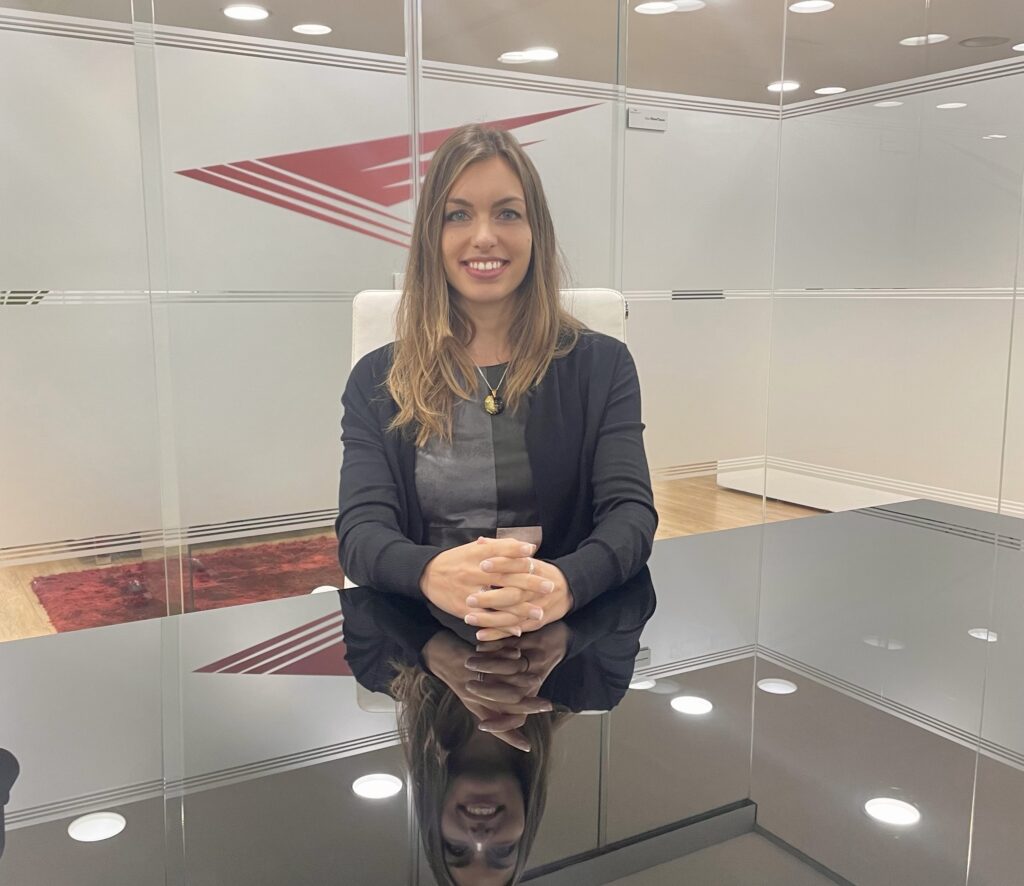
Diana Jennen, from Gericó Associates, pointed out that “partners are increasingly aware of the importance of these areas in the sector. The challenge here lies in investing in specialized and senior teams, whether internal or external, and, in the case of internal teams, in their continuous training.”
He also said that “it is crucial for firms to mobilize and raise awareness among their senior lawyers so that everyone aligns and is involved in communication and business development strategies. Lawyers are increasingly communicating and overcoming their fear of exposure,but for now, they are still the minority. In the coming years, this trend will undoubtedly continue to grow.”
Ana Delgado, from Pinsent Masons, concluded that in a sector as competitive as the legal field, “traditional marketing and communication strategies will no longer be sufficient to guarantee differentiation. New ways of connecting with clients, measuring results, and building a brand with attributes that make it relevant both internally and in the crowded legal market will be explored.”
Law firms will become even more client-centric and will leverage data analytics and insights to improve their business development and communication strategies. By analyzing client behavior, key performance indicators (KPIs), and return on investment data, firms will better tailor their messaging and focus their efforts more effectively.
The communications directors discussed those fundamental best practices for legal marketing that will ensure law firms remain competitive and effectively engage with their clients and potential clients this year.
Carmen asserted that everything that worked in 2024 will continue. “The podcast boom will continue; we’ll see more new website launches, with more firms working to make their websites more visual and user-friendly, as we saw this year with the redesign of some of them; and as we’ve seen in the last two years, firms with large budgets will continue to run paid campaigns on LinkedIn.”
For her part, Michelle presented us with some examples of good practices:
- Pay closer attention to business opportunities: continuous focus on developing existing businesses and customers, cross-selling, understanding the market, building brands, and leveraging industry knowledge, if necessary, to gain market share.
- Public relations: public relations are fundamental; presence is key and public relations act as a turbo booster.
- Everything related to social media: creating and maintaining a strong social media presence to connect with customers and showcase our expertise.
- Customer-centric initiatives: Focus on customer-centric initiatives, such as customer segmentation exercises and customer-facing projects, to drive demand and support relationship building.
- Awards and rankings: Invest in key awards and rankings to enhance your company’s reputation and visibility, and gain third-party validation and praise.
- [Prestar más atención a las oportunidades de negocio:0] AI-powered marketing tools: Use AI-driven marketing tools to automate and personalize communications, making marketing efforts more efficient, effective, and personalized.[/Prestar más atención a las oportunidades de negocio:0]
- [Prestar más atención a las oportunidades de negocio:2] Data-driven strategies: Use data-driven strategies to analyze customer behavior and tailor marketing campaigns accordingly.[/Prestar más atención a las oportunidades de negocio:2]
- [Prestar más atención a las oportunidades de negocio:4] Increased online visibility, SEO, and content marketing : Focus on search engine optimization (SEO) and content marketing to attract potential customers and build a strong online presence.[/Prestar más atención a las oportunidades de negocio:4]
- [Prestar más atención a las oportunidades de negocio:6] Multichannel marketing: Combine various marketing channels, including digital and traditional methods, to reach a wider audience and create a comprehensive marketing plan.[/Prestar más atención a las oportunidades de negocio:6]
- [Prestar más atención a las oportunidades de negocio:8] Tailored programming: the way we connect with others will change and become much more personalized and concierge-level oriented to achieve the best results.[/Prestar más atención a las oportunidades de negocio:8]
Meanwhile, Ana from Freshfields shared that among the best practices that will continue in 2025 are “sector-specific content (real estate, energy, etc.), we will talk about trends with a practical approach, mentioning the measures to be adopted by those affected; legaltech: more AI, trends in innovation and legal operations; content on the more social aspects of the company such as sustainability, diversity and inclusion, in its broadest sense, CSR, health in the workplace, corporate culture, talent acquisition and retention; intensification of communication on social networks, with LinkedIn as the main channel; and finally, and also crucial, internal communication as a key tool to retain talent.”
Diana also echoed her colleagues’ sentiments, referring to the customer-centric narrative: “continuing to build strategies that prioritize customers’ real problems and needs over self-promotion.” She added, “Interdisciplinary work between marketing, communication, and business development is essential to creating effective synergies.”
He specified that other good practices that will continue to be applied will be “the use of clear metrics and constant monitoring of results to adjust strategies in real time”, the value of “traditional networking, complemented with digital tools to strengthen long-term relationships” and, of course, the commitment “to continuous training in communication and marketing, ensuring that firms stay up to date in a constantly evolving sector”.
From mere “executors” to “advisors”, legal marketing became sophisticated and professionalized

Carmen Castillo, Marketing and Communications Director at Ceca Magán, says, “I always say that it still has a long way to go, and it still does. Marketing departments need to have the trust of the lawyers who hire them, so they can work with a budget and specific objectives. That’s when many firms will truly see the potential that marketing has to contribute to their direct business, which is mostly what partners are measured by.”
In law firms, in general, there are still partners who believe that a client will never search for them on a search engine like Google and still think that everything is word of mouth. But today’s executive clients are starting to be around 40 years old; they can no longer imagine not using the internet, they have different habits when looking for suppliers (they don’t initially resort to word of mouth or traditional directories like Chambers & Partners or Legal500), for them, if a supplier doesn’t have reviews on their website or they don’t like their social media profile, they don’t trust them.
Ana Tortosa: “Our role has transformed into a strategic one, with significant weight in designing the firm’s positioning and growth roadmap; we help identify objectives and coordinate actions.”
Michelle Martinez de la Nuez, senior director, Americas & Global Initiatives at DLA Piper, predicts that the future of legal marketing will be shaped by several key trends and developments, including digital transformation, content marketing, search engine optimization (SEO), social media engagement to connect with potential clients and share valuable content, data-driven marketing that “will allow law firms to better understand client behavior, preferences, and demographics,” video marketing, which, with the rise of platforms “like YouTube, law firms will increasingly use video to showcase their services,” and artificial intelligence that “will facilitate market research, generate insights, and optimize campaigns. Chatbots and virtual assistants will improve client engagement and the initial consultation process.”
Finally, he believes that focusing on the client experience “will be paramount, emphasizing the improvement of the client experience throughout the entire engagement process, from the first contact to resolution. Offering proactive communication and support can help firms stand out in a competitive market.”
Ana Tortosa, business development, marketing & communications manager at Freshfields, added to the discussion that legal marketing has changed considerably, becoming more sophisticated and professional. The main change is that we have gone from being mere “executors” to “advisors.”
In my early days, marketing executives were considered qualified professionals, but with little voice and, above all, reactive, waiting for requests. Our range of responsibilities was mainly limited to organizing working breakfasts, designing corporate brochures, preparing applications for legal directories, and providing support for proposals, in addition to managing communications. Today, our role has transformed into a strategic one, and we have significant influence in designing the firm’s positioning and growth roadmap. We help identify objectives and coordinate actions. We leverage information, manage internal communication, preventing silos, and, sometimes, we also have to say “no” when an action doesn’t align with the firm’s established strategy.
We must guide the members of the firm to row in the same direction, and most importantly, prioritize business development actions, from the partner to the junior associate; everyone must be alert to any opportunity. I never tire of saying that business generation should not fall solely on the partners.
On the other hand, it is interesting to observe how the profession has changed; initially, departments were focused on marketing and communication, nowadays, the objective is business development, for which my tools are marketing and communication.
The strategy involves using the baton, like an orchestra conductor, so that marketing, business development and communication actions sound in unison, have a meaning and seek a common goal, just like the musicians in an orchestra, all members of the firm must have the same score.
Undoubtedly, the most satisfying aspect of our role is the contribution to the business, the firm, the office; our contribution is not insignificant, and it is becoming increasingly tangible and evident. Perhaps the most complex aspect is balancing priorities; it’s not always easy. The business development, marketing, and communications team is very exposed; we deal with all areas and, consequently, we have many bosses.
Another complex aspect is communicating the ROI – return on investment – to partners and associates; that is, the cause-and-effect relationship. We don’t sell goods, we sell services, that is, intangibles, and it’s a sophisticated sale based on need and trust. Measuring the return is difficult, if not almost impossible.”
Diana Jennen: “ Legal marketing will continue to evolve towards a more digital, personalized and ethical approach ”
Diana Jennen, a partner at Gericó Associates, believes that “legal marketing will continue to evolve towards a more digital, personalized and ethical approach.”
“Law firms will understand that their differentiation depends not only on their technical expertise, but also on how they communicate their value proposition and how they build trust. Sometimes in this sector, it’s forgotten that the first point of legal marketing is strategy, and there are key questions that must continue to be asked: What type of firm am I and do I want to be? Who is my target audience? What objectives do I define? What is the roadmap I should follow to achieve the right brand positioning and, therefore, my objectives? For all these reasons, I see a future where:
- Technology will play a crucial role, but always in service of human and authentic strategies.
- Digital reputation will be as important as physical reputation, leading firms of all sizes to invest in their online visibility.
- Specialization will remain key, and legal marketing will focus on specific niches to connect more deeply with specific audiences through business development and communication.
The challenge will be to find the balance between innovation and humanization, ensuring that the essence of the legal profession – customer service and ethics – remains intact.

Ana Delgado, business development manager at Pinsent Masons, closed the discussion by pointing out that the future of legal marketing brings with it immense potential for growth and innovation, which undoubtedly goes hand in hand with technology. “In particular, artificial intelligence and automation will allow law firms’ business development and marketing teams to be more strategic and more data-driven, improving client acquisition and overall impact.”
We will gain a better understanding of our customers’ behavior, preferences, and needs, allowing us to create more personalized value propositions. We will also automate repetitive tasks and be able to focus on delivering value, becoming more strategic and creative.”