

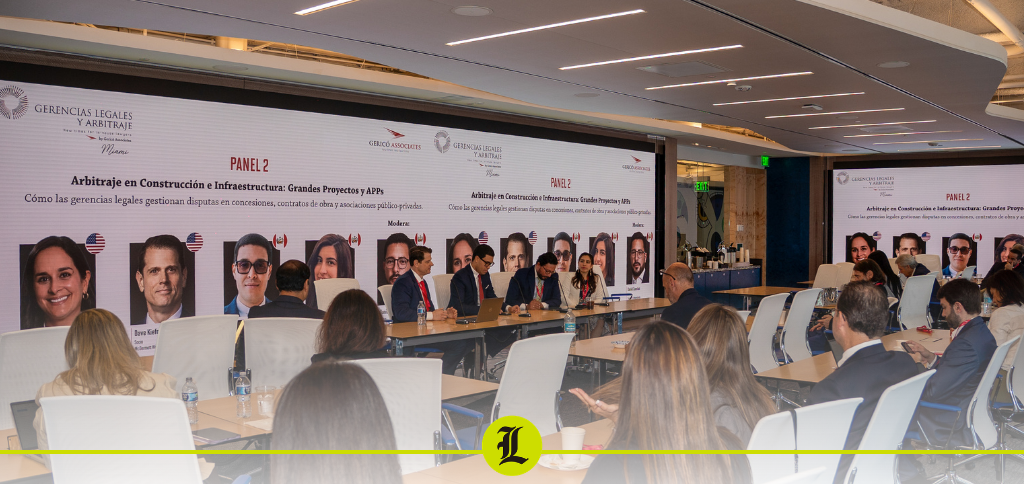
The Foro Gerencias Legales y Arbitraje Miami 2026, held at the McDermott Will & Schulte headquarters and organized by Gericó Associates, brought together legal leaders, international arbitrators and corporate legal officers, with the participation of leading global companies and organizations such as FIFA, OHLA, Binswanger and Akerman, consolidating Miami as a meeting point for international arbitration linked to Latin America.

Throughout the day, one of the main points of consensus was clear: arbitration can no longer be understood solely as a reactive mechanism, but as part of a comprehensive strategy for risk prevention, contract structuring, and business decision-making.
In the area of infrastructure and construction, experts agreed that many controversies are not new, but persistent, and are due to structural failures in project management.
Daniel Cuentas, an arbitrator in Peru, noted: “Problems in construction contracts are not new, but they are persistent. Prevention measures exist, but they compete with project pressures and the individual interests of each party. Furthermore, the integration of technical and legal aspects remains the weakest point and probably the main reason why disputes escalate to arbitration.”
Along these lines, Giorgio Schiappa-Pietra, legal manager at Binswanger (Peru), emphasized the importance of anticipating conflicts from the contract design stage: “It is key to establish preventative clauses and define appropriate timelines to anticipate contingencies. It is also essential to train engineers and lawyers so they speak the same language. Furthermore, claims in arbitration disputes should not be inflated, and it is necessary to consider labor, occupational health and safety, and environmental aspects, while also differentiating the risks between public and private works.”
Grace Castro, senior legal and PMP at Cementos Pacasmayo, reinforced this preventive vision: “It is essential to manage conflicts through early warning clauses and proper risk management, as well as to promote training that aligns the contractual language between lawyers and engineers.”
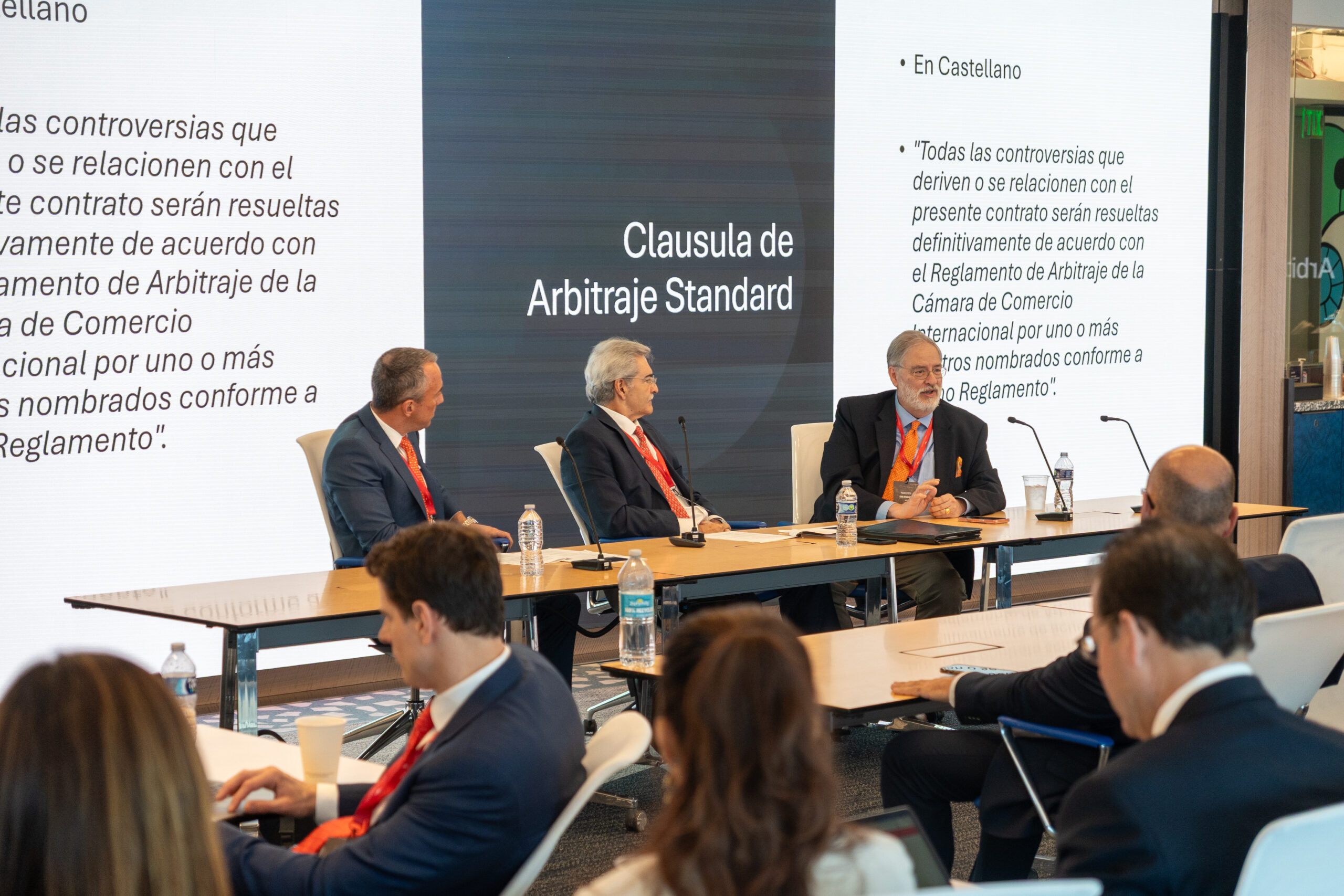
In the field of investment arbitration and large international projects, the need for comprehensive risk management was highlighted.
Sandra Jiménez, general counsel of Sinohydro Perú, explained: “In investment arbitration, the best defense begins with prevention and early risk management. In infrastructure projects, sound contractual governance is key to supporting positions and protecting the investment. Furthermore, the risk in cross-border operations is not only legal, but also operational, cultural, and reputational. The choice of forum and the conduct of the proceedings directly impact costs, timelines, and efficiency.”
Technological advancement is generating new types of conflicts, especially in the financial and digital spheres.
Camilo Vázquez, president of the Arbitration Committee of ICC Nuevo León (Mexico), emphasized: “Disputes arising from financial or fintech contracts will include regulatory, data processing, and technological issues. It is essential to involve legal management from the initial phase of selecting the dispute resolution mechanism, in order to map regulatory authorities and associated risks. Arbitration, due to its privacy, confidentiality, and specialization, is a particularly suitable tool for these types of disputes.”
Beyond conflict resolution, the forum focused on the strategic value of litigation and arbitration within the company.
Daniel Becker, partner at BBL Advogados, stated: “Litigation is a strategic asset that can help reduce and control the risks of disputes. To achieve this, collaboration between in-house and external lawyers and the various business areas is essential, as is drafting tailored arbitration clauses for each contract, avoiding the use of standard templates.”
In sectors such as energy, the role of the in-house lawyer is gaining increasing importance in decision-making.
Alberto Villanueva, global legal counsel at SoEnergy International, noted: “In-house counsel must assume a strategic and preventative role in the energy transition in Latin America. Constant support and clearer, more effective communication with the business are key.”
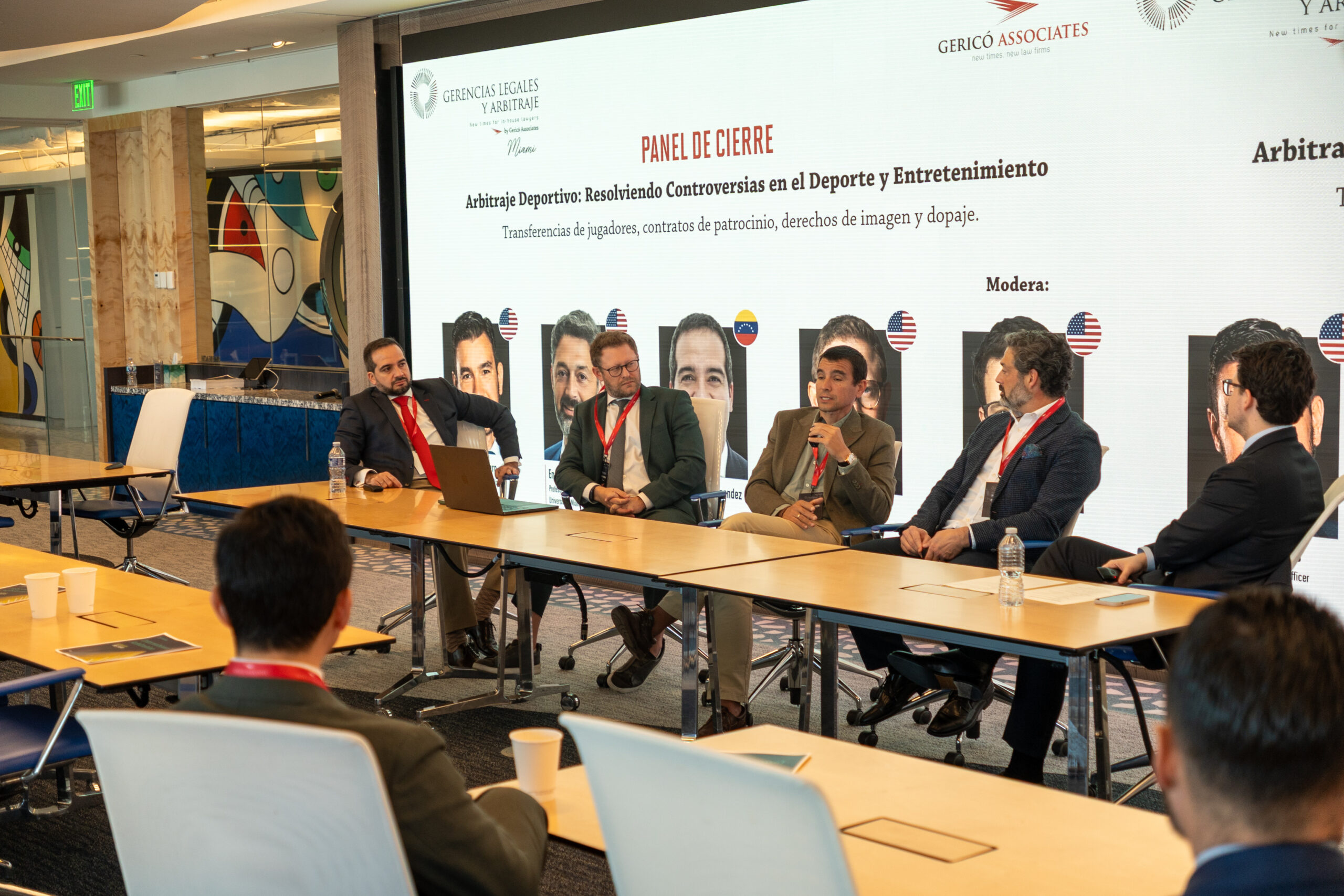
The forum also addressed the growth of arbitration in emerging sectors such as sports and esports.
Luis Fernández, an arbitrator at the CAS, explained: “There is a key difference between sports and commercial arbitration regarding the enforcement of awards. While in other areas it can be complex and lengthy, in sports arbitration, especially in football, it is usually swift, as non-compliance leads to sporting sanctions. Furthermore, esports are generating a growing volume of disputes and require more developed legal, contractual, and dispute resolution structures.”
Along the same lines, Felipe Hasson, general counsel at GMX Group, pointed out: “The esports ecosystem remains largely amateur and requires more effective and specialized dispute resolution systems.”
Finally, Marc Gericó, global managing partner of Gericó Associates, concluded that: “This forum confirms that arbitration has ceased to be a purely reactive tool and has become a strategic element within business management. Today, the most advanced companies are integrating conflict prevention, contract sophistication, and legal decision-making into the core of their business strategy. The role of the legal function is rapidly evolving toward a much more proactive, cross-functional profile, closely connected to the operational realities of organizations.”
The Foro Gerencias Legales y Arbitraje Miami 2026 highlighted the growing prominence of arbitration as a central tool for risk management in Latin America, especially in highly regulated sectors and large-scale projects.
The choice of Miami as the venue reinforces its position as an international hub for the resolution of disputes linked to the region, in a context where contractual sophistication, conflict prevention and legal specialization are consolidated as key factors for business competitiveness.