

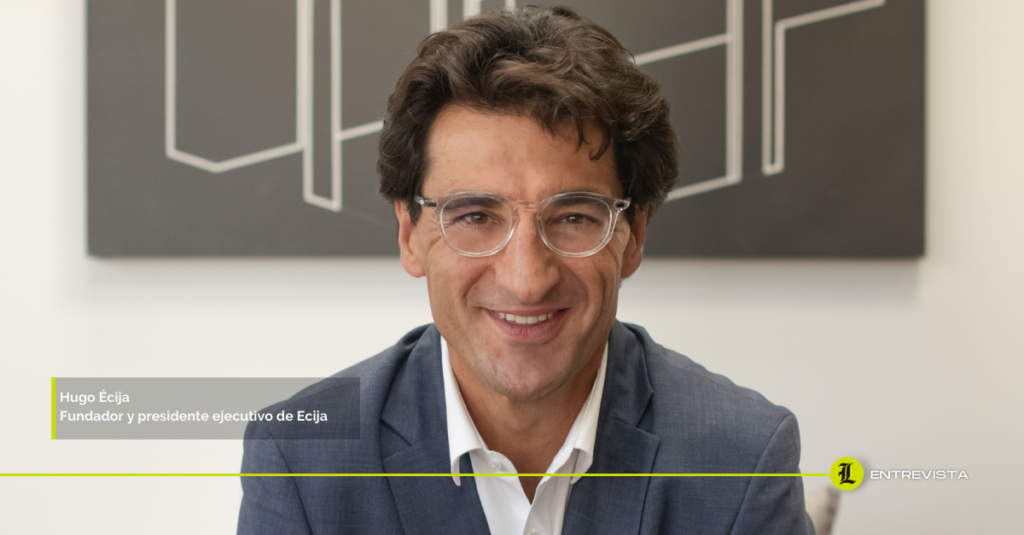
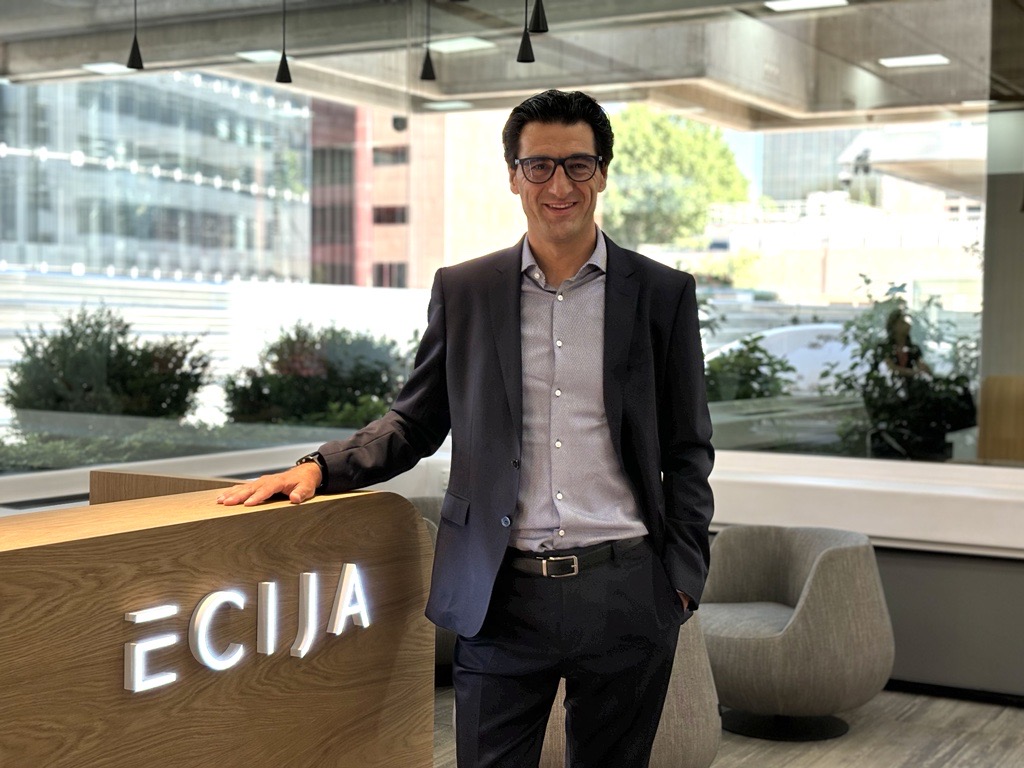
The final conversation in the special feature Leaders 2026 couldn’t end with a conventional perspective. Hugo Écija, founder and CEO of Ecija and a leading figure in the legal market in Spain and Latin America, heads one of the firms that has most clearly committed to restructuring itself to anticipate the future. Under his leadership, Ecija has consolidated an Ibero-American platform that integrates law, regulation, data, and artificial intelligence into a single operational architecture. In this interview, he explains why sustained growth depends not on size, but on design, and why 2026 is not a goal, but a stage within a structural transformation.
Exceeding €102.3 million in 2024 is, for Hugo Écija, a milestone that must be viewed in context. The target for 2026, he explains, is part of a roadmap shared by all partners globally, a plan agreed upon by all offices, with a clear horizon: reaching €150 million in 2028.
But he adds a relevant nuance: that figure, “given the evolution of the business, we do not rule out being able to anticipate it as early as 2026.”
Growth, however, is not simply a matter of numbers. “The key to sustaining that growth is to operate differently,” he points out. Hence the restructuring of Ecija Tech, which doesn’t function as an independent unit, but rather as a cross-functional layer that integrates technology, data, and artificial intelligence into the firm’s daily operations.
“This is what we mean by a Full AI model: designing the firm to operate with technology at its core, not incorporating it later as a complement.”
The difference is not semantic. It is structural. This approach allows scalability without relying solely on more hours or more infrastructure, improves service consistency, and enables the integrated development of areas such as legaltech, crypto, and digital solutions.

An Ibero-American firm by design
Half of the business is generated outside of Spain. And, in Écija’s words, that’s not due to a specific financial objective, but rather to the very nature of the project:
“We are, by design, an Ibero-American firm, with a solid base in Iberia and the largest presence of a Spanish firm in Latin America.”
The fact that approximately half of the activity takes place outside of Spain “is not a financial objective, but the natural consequence of this model.” And it expects this balance to be maintained in 2026.
Portugal plays a key role in this axis, reinforcing the Iberian base and serving as a natural bridge between Europe and Latin America. Its growth—with over 140 professionals integrated—reflects this regional logic.
The entry into Peru in 2024, through the integration of Berninzon & Benavides Abogados, responds exactly to the same vision: to incorporate local leadership in a strategic market to continue building an Ibero-American legal platform prepared to scale in the long term.
“We are not looking to grow by size, but by capacity”. The integrations they are evaluating must bring senior talent and specialization to the intersection of regulation, technology, and business, “which is where legal value is being redefined today.” The focus is not on closing deals, but on integrating them into a common architecture of culture, governance, and technology.
“It’s not about adding technology as a complement”
The integration of Nimerya is consistent with this evolution. As Hugo Écija himself explains, “we have been working for some time on the model of operating as a technology company with in-depth legal knowledge, and the integration of Nimerya is a step in that evolution.”
And he emphasizes this clearly:
“It’s not about adding technology as a complement, but about integrating it into the way we provide services.”
Nimerya strengthens the ability to unite law, data, artificial intelligence and business to support clients not only in regulatory compliance, but also in decision-making and execution.
This move strengthens the Digital Solutions division and consolidates its position in the digital economy. At the same time, the reinforcement of CL Cripto reinforces its leadership in regulation, taxation, and business model design in increasingly complex environments, especially in Latin America.
In cybersecurity, the progress is equally structural. “We have incorporated our own technical capabilities, which allow us to offer comprehensive support, from strategy and regulatory compliance to technical execution and operational response.”
Capital to accelerate, not to replace
The Lawyer award and the influx of private capital are, in their opinion, external validation of a strategy they have been implementing for years. “External capital doesn’t replace the project; it organizes it, professionalizes it, and accelerates it.”
Opening up the capital had a clear objective: to accelerate growth, give the project greater ambition and strengthen its development, always preserving independence and decision-making.
The next step is to scale this model through Ecija Tech as a cross-cutting axis. The restructuring of the technology division—Legaltech, Legal Ops, Digital Solutions, blockchain, and digital assets—allows for progress toward a model in which legal, technological, and business-focused advice operate in an integrated manner.
“Being a Full AI Firm is not a technological label, but a different way of organizing, governing, and scaling a law firm.”
The problem is not technology
When analyzing the adoption of RPA, cloud, or data analytics in the sector, his diagnosis is straightforward: “The problem is not a lack of technology, but that it is being misused.”
“For years,” he says, “tools have been implemented without changing processes or decisions. And that doesn’t transform anything.”
“At Ecija Tech, we don’t sell solutions; we redesign legal operations by combining automation, data, and artificial intelligence with legal criteria.”
That’s what he defines as “real performance”: less friction, better decisions, and a legal department that stops reacting and starts leading within the business.
From experimenting to integrating
Regarding 2026, Hugo Écija avoids making firm predictions, but he does identify a distinct stage in the digital economy: greater maturity. “We’ve moved from testing to applying, from experimenting to integrating.”
Artificial intelligence will become increasingly embedded in key processes; regulation will gain importance; and security, governance, and traceability will cease to be an added layer and become part of the design.
“The key will be the convergence between AI, regulation, and business.” In that scenario, the competitive advantage will not lie in using more technology, but in knowing how to integrate it well with the business and the regulatory framework.
Real impact: talent and clients as part of the same project
In a rapidly evolving market, doubling impact doesn’t just mean increasing revenue. For Hugo Écija, true impact is measured in transformation.
“Creating an environment where talent can grow and build a meaningful career at the intersection of law, technology, and business.”
This environment is not just rhetoric. It involves offering real responsibility, international exposure, and active participation in a model that is redefining how a law firm operates.
In parallel, the approach to the client is also evolving. “Offering solutions that can be implemented, not just legal opinions.” Advice can no longer remain at the level of analysis; it must translate into implementation, concrete decisions, and operational support.
“Real impact is not measured solely in size, but in the ability to help others transform. That is the project we want to continue building.”
Capital and meritocracy as a cultural structure
In a context of globalization, capital and meritocracy are complementary elements. “External capital doesn’t replace the project; it organizes, professionalizes, and accelerates it. It allows us to invest in technology, structure, and career development with a long-term vision.”
But the investment needs a coherent recognition system.
“Meritocracy is the other pillar. Today, talent doesn’t seek seniority or rigid structures; it seeks projects, responsibility, and a real capacity for impact. In Ecija, that means professional growth depends on what you contribute, not on how long you’ve been there.”
The combination of both elements – a solid financial structure and a genuine meritocratic culture – is what allows a firm to be attractive in a competitive global market.
Leading a demanding project
On a personal level, what motivates him to continue leading Ecija is long-term development.
“To continue building a demanding, long-term project. I am motivated to accompany Ecija through a period of transformation and ensure that what we are creating is solid, coherent, and sustainable over time.”
He acknowledges that it is a challenge that demands focus and perseverance. And here he introduces a revealing analogy:
“Sport has taught me a lot: to advance step by step, to embrace the effort, and to understand that relevant results are not immediate, but they are lasting if the work is done well.”
The legal career as a discipline in depth
For Hugo Écija, law is not a sprint, but a marathon. “With constant work, sound judgment, and adaptability.”
Building a solid career path involves thinking long-term, accepting that learning is ongoing, and having clarity about the project you want to contribute to.
“When there is consistency between what you do every day and where you want to go, your career is built almost naturally.”
In this context, patience is not passivity. “Knowing how to wait is not holding back, it’s moving forward with purpose.” It allows for making coherent decisions over time and adjusting the pace so that growth is shared and solid.
Dare and balance
He offers young lawyers one clear piece of advice: don’t be afraid to step off the beaten path.
“The challenges that truly help you grow almost always generate uncertainty at the beginning. Facing them with effort, courage, perseverance, and a willingness to learn is the best way to build a meaningful career with long-term potential.”
And when faced with the final question – profitability or growth? – he doesn’t hesitate:
“Both, but in that order.”
Without profitability, there is no sustainable growth. Without growth, there is no long-term project. The real challenge lies in balancing them without sacrificing coherence or purpose. Following this logic, the 150 million target is not an isolated goal. It is the natural consequence of a comprehensive roadmap that, if the model performs as it has so far, could be achieved as early as 2026.
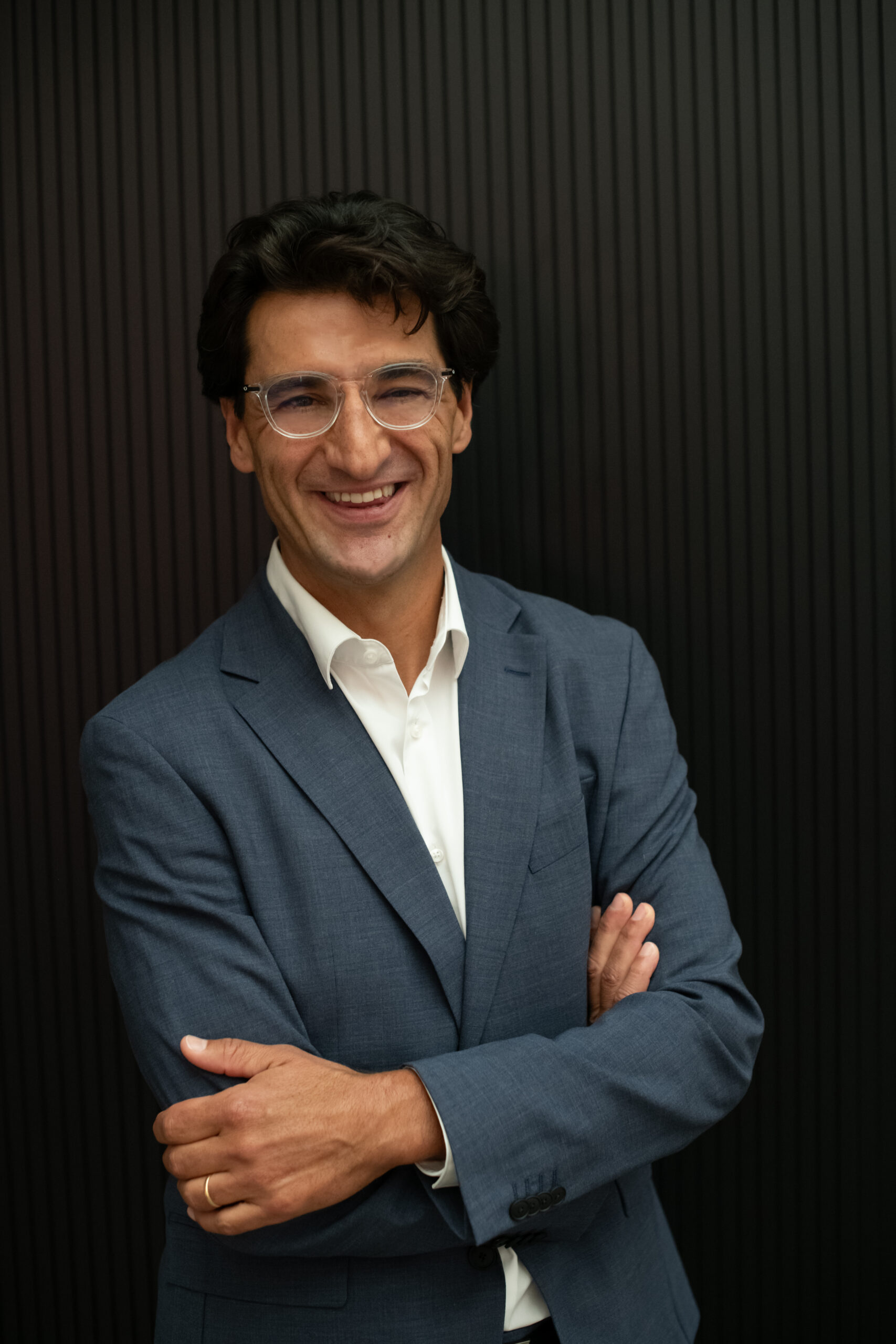
This conversation concludes the special report [ alcanzar los 150 millones de euros en 2028.8] Leaders 2026: vision and challenges of Spanish law firms . [/ alcanzar los 150 millones de euros en 2028.8] And it is no coincidence that it does so with Hugo Écija.
If there’s one recurring theme throughout this series of interviews, it’s a fundamental question: how must companies evolve to remain relevant in a transforming market? In Ecija’s case, the answer hasn’t been reactive, but rather structural.
Hugo Écija doesn’t speak of technology as a tool, but as architecture. He doesn’t understand growth as accumulation, but as integration. And he doesn’t conceive of profitability as an isolated objective, but as the foundation that allows a coherent project to be sustained over time. His vision reveals more than a business strategy: it shows a way of understanding law in which design matters more than inertia, culture more than numbers, and anticipation more than belated adaptation.
If the target of 150 million is reached in 2028—or even sooner—it will be a natural consequence. The key, as he hints throughout the interview, is that the model is ready to scale without losing its identity, that talent finds purpose, and that the firm supports its clients’ transformation through execution, not just advice.
This final conversation in the special report leaves one thing clear: The legal market is not adjusting to minor changes. It is entering a different stage.
And, in the words of Hugo Écija, the future is not waited for. It is designed.