


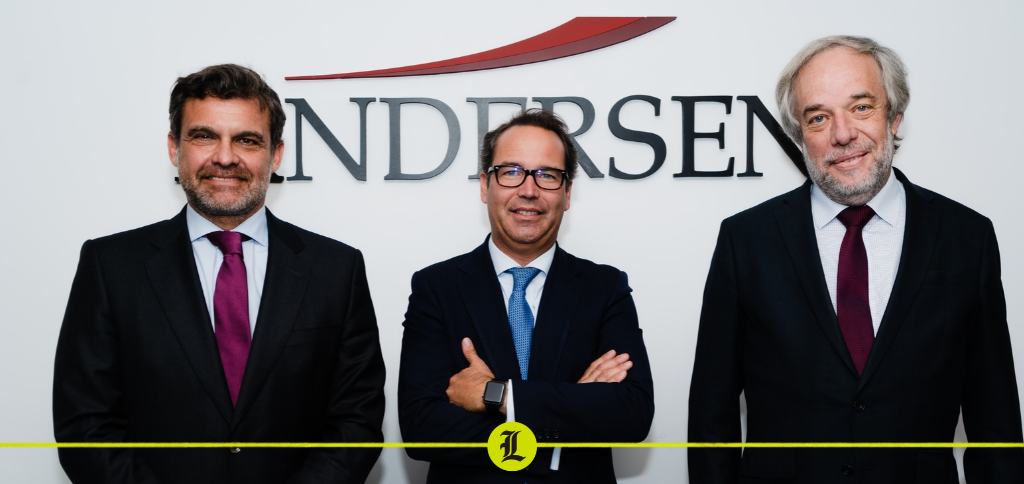
Andersen has appointed Ignacio Ruiz as a new partner in its Tax department. With this addition, the firm continues to develop its capabilities in transactional taxation and strengthens its advisory services to large national and international groups in the analysis and management of tax risks associated with M&A transactions. Ruiz joins a team comprised of Andrea Gonzalo, senior associate, and Miguel Ponce, consultant.
Upon his arrival, José Vicente Morote, managing partner of Andersen Iberia, stated that “Ignacio’s addition aligns with our strategy to continue developing highly specialized areas within an already well-established tax practice. In increasingly complex and international corporate transactions, integrating tax analysis from the outset is essential to anticipate risks, provide legal certainty, and facilitate decision-making.”
Ignacio Ruiz holds a law degree from the Complutense University of Madrid (UCM) and furthered his education with a Master’s in Stock Exchange and Financial Markets from IEB, a Master of Laws (LLM) in Corporate Tax Consulting, and an Executive Course in International Taxation from IE. Throughout his career, in addition to participating in tax due diligence processes and taxpayer defense proceedings before the Spanish Tax Agency, he has advised business groups, large companies, and family offices. The new Partner also has extensive experience coordinating multinational teams on complex tax advisory projects.
On the occasion of his joining, Pablo Gómez-Acebo and Borja de Gabriel, partners and co-directors of Fiscal, pointed out that “Ignacio’s experience in M&A processes and in the coordination of multinational teams will allow us to delve deeper into the analysis of tax risks and contingencies and support clients during all phases of the operation, from the initial review to its structuring and execution.”
Andersen’s Tax department, focused on strategic and complex advice
The Tax department at Andersen Iberia comprises over 100 professionals, 24 of whom are partners. It advises national and international companies on the analysis of the tax implications of their operations and on the design of solutions that combine legal certainty, efficiency, and compliance. This applies to both routine tax management and complex transactions, including restructurings, due diligence processes, project finance, and tax planning, with an approach aligned with the business and the specificities of each sector and jurisdiction.