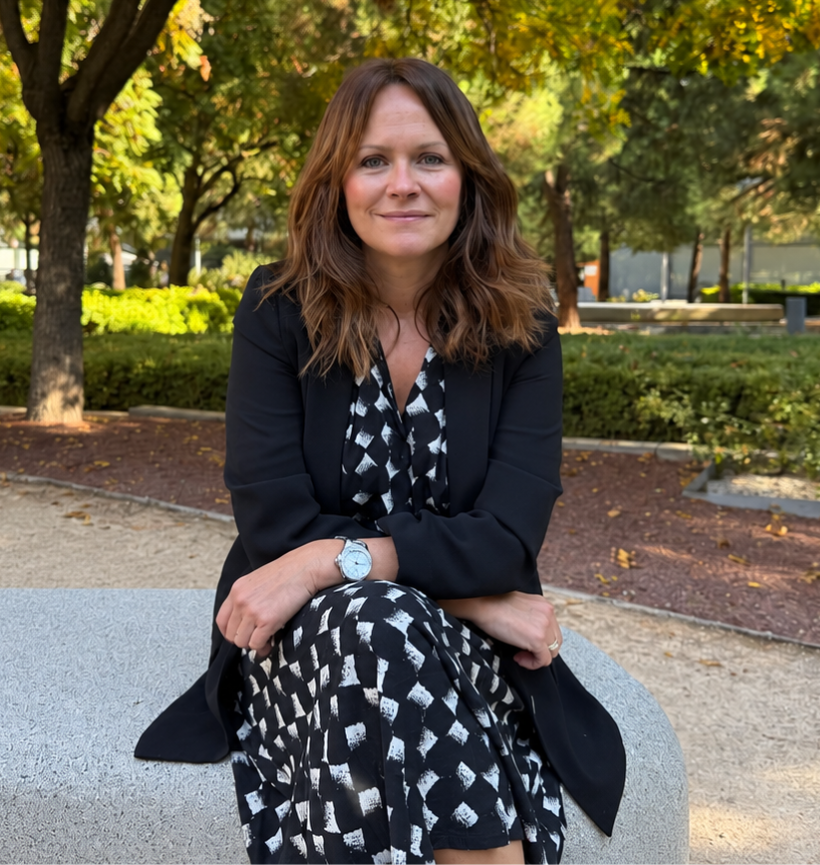



The first instalment heard from Aníbal Sabater, Damián Vallejo, Andrés Arnaldos, Margarita Oliva Sainz de Aja, Isabel Fernández de la Cuesta, Javier Fernández-Samaniego, Simón Navarro, José Ignacio García Cueto and José A. Morán on why they left Spain, what it was like to arrive in a market unfamiliar with their track records, and whether salary or career progression weighed more heavily in the decision. This second part examines what came next. It looks at what they had to unlearn from the Spanish way of working and what proved an advantage. It asks when their origins stopped being a label and became part of their professional profile, and how they assess their position today, inside and outside the firm. The answers are nuanced. Not all of them regard nationality as a differentiator, patience is the lesson cited most often, and professional fulfilment sits alongside the personal cost of living far from home.
Once established, several of them changed course a second time. Isabel Fernández de la Cuesta left her partnership at King & Spalding to sit as an independent arbitrator. Aníbal Sabater joined Chaffetz Lindsey in 2015, after more than a decade at Fulbright, wanting to be “more of a lawyer and less of a manager”. Javier Fernández-Samaniego founded his own firm in Miami. Damián Vallejo established the Manhattan office where Andrés Arnaldos and Margarita Oliva Sainz de Aja are now also partners. Each decision says a good deal about the autonomy they sought and the position they have reached in the market.
This instalment turns to the less visible side of these careers: the craft. The interviewees talk about drafting, team structures, client relationships and how to reason across civil law and common law. They also talk about identity, a subject on which their answers resist any single narrative.
The interviewees
Andrés Arnaldos. Partner at Dunning Vallejo & MacDonald LLP, New York. In the United States since 2007. Previously an associate in the corporate department of Cuatrecasas in Barcelona.
Isabel Fernández de la Cuesta. Independent international arbitrator and founder of Fernández de la Cuesta Arbitration, New York. In the United States since 2003. Former partner at King & Spalding.
José Ignacio García Cueto. Partner in charge of Clifford Chance’s international arbitration practice in the Americas, Washington DC and New York. In the United States since 2013. Previously in the litigation and arbitration team at Garrigues in Barcelona.
José A. Morán. Partner and head of the North America Energy and Infrastructure Practice Group at Baker McKenzie, Chicago. Has practised in the United States since 1996. Previously at Gide Loyrette Nouel in Madrid.
Simón Navarro. Partner and global co-leader of the Arbitration and International Trade practice at Sidley Austin, New York. In the United States since 2015. Previously at Uría Menéndez and Clifford Chance.
Margarita Oliva Sainz de Aja. Partner at Dunning Vallejo & MacDonald LLP, New York. In the United States since 1994. Previously a lecturer at the University of Granada.
Aníbal Sabater. Partner and member of the Executive Committee of Chaffetz Lindsey LLP, New York. In the United States since 2003. Previously at Gómez-Acebo & Pombo in Madrid.
Javier Fernández-Samaniego. Managing Director of Samaniego Law, Miami. In the United States since 2014. Previously managing partner of Bird & Bird in Spain.
Damián Vallejo. Partner at Dunning Vallejo & MacDonald LLP, New York. In the United States since 2015. Previously at Albors Galiano & Portales in Barcelona.
What they unlearned, and what proved an asset
Each system has its own way of working, and adapting to the American model meant giving certain things up. Sabater had to leave behind the caseload volume and high leverage of Spanish firms. García Cueto had to drop the subordinate clauses typical of continental legal prose. Arnaldos lost the early autonomy he was used to, in contrast to what he describes as being kept on a short lead. Oliva, who came from academia, had to adopt a commercial mindset. At the same time, several found that something they had brought from Spain worked in their favour: experience with foreign clients, proactivity, collegiality and a personal touch. Fernández de la Cuesta was asked which way of working she had to abandon when she left Big Law to set up her own practice.
Aníbal Sabater

One thing I had to give up was running many cases at once. When I moved, a good friend, who now leads one of the largest arbitration practices in Spain, said to me: “Goodness, you’re going to have a mountain of work in the United States.” It is true that you are expected to work long hours, and intensely. But you usually handle far fewer cases than in Spain, and devote more time to each. So yes, the hours are long, but they are organised, and you have the chance to think the issues through properly. I am very grateful for that, and I am convinced my professional life is far more orderly, and generally calmer, than it would have been had I stayed.
The other thing I had to leave behind was the leverage of Spanish firms. I don’t know what the figures are now, but when I left it was entirely normal in Spain for each partner to have five or six associates. The United States is different. When I arrived at Fulbright the ratio was roughly one to two; at Chaffetz Lindsey it is closer to one to one, or one to one and a half. That makes for a very small, tight-knit group, but it also means each lawyer carries more responsibility, juniors included.
What helped me a great deal was that, as I mentioned, I was very used to working with foreign clients at Gómez-Acebo & Pombo. When I arrived in the United States I had, I think, a clear sense of how the firm’s clients liked to be kept informed, how involved they wanted to be in decisions, and so on. The transition was very smooth.
Andrés Arnaldos
In the American market, at least in large firms, hyper-specialisation and orthodoxy are prized. Work follows a set method, a template, a precedent. This ensures that less experienced lawyers always have clear guidance on how to proceed. On the other hand, they are generally not expected to solve problems on the fly or to deal with the client or the other side, except in tightly controlled circumstances. Many partners insist on reviewing every email an associate sends before it goes out. That can leave junior lawyers paralysed when something unexpected comes up or instructions are unclear.
I came from a model in which, for a significant part of our work at least, we were given matters very early on and ran them almost entirely on our own. Out of necessity you learn to get yourself out of trouble, to take ownership of moving things forward and to resolve problems as they arise, without always waiting to be told what to do or how. In the US I initially struggled with being kept on such a short lead, but I recognise that it taught me a great deal about how things are done here. My proactivity, moreover, has been highly valued.
José Ignacio García Cueto
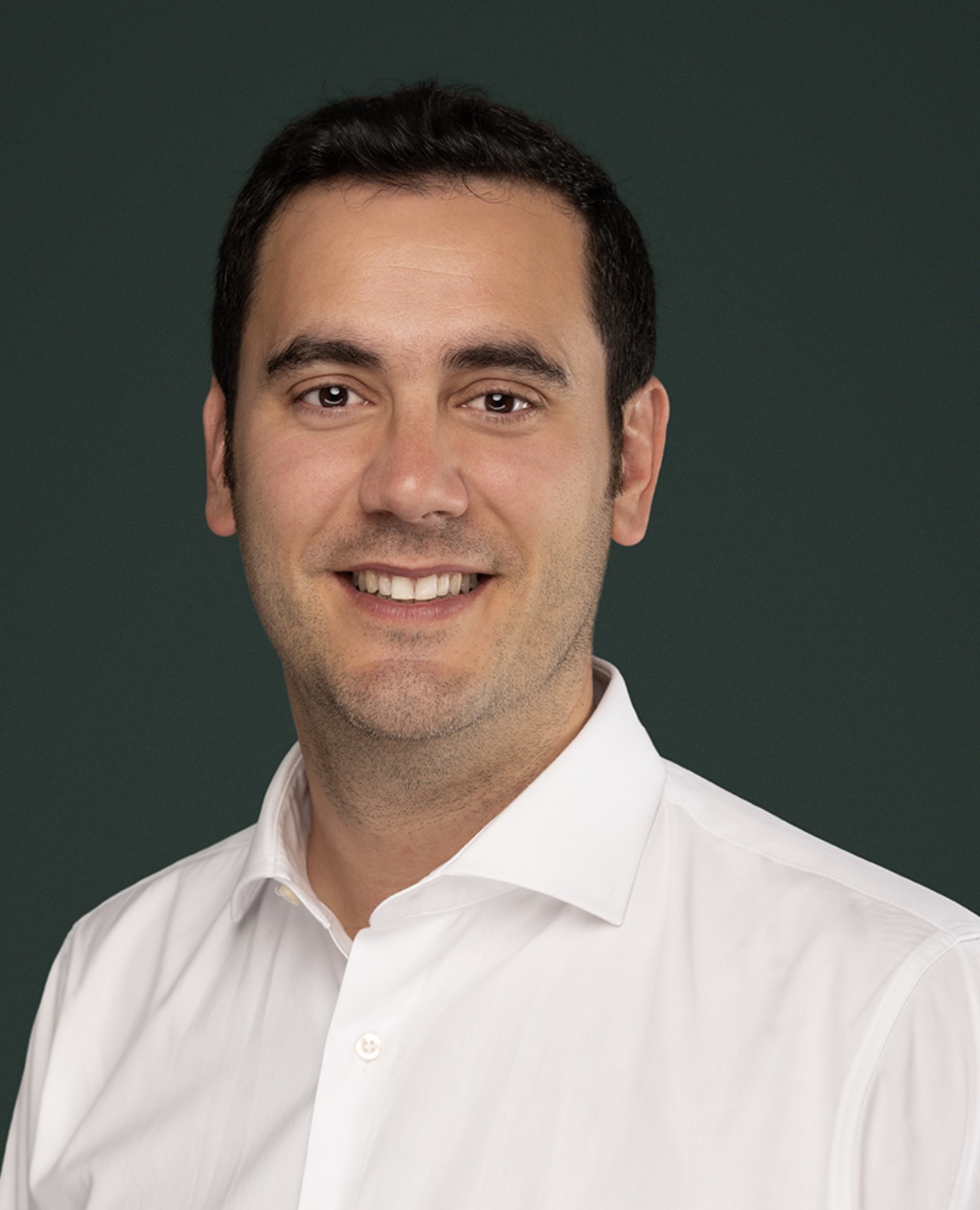
The main adjustment was in writing style, and above all the need to cut back on subordinate clauses. American litigators write in a very concise, direct way. The continental legal tradition, by contrast, tends towards longer and more elaborate prose.
Margarita Oliva Sainz de Aja
As I had little experience of private practice, I arrived more or less as a blank slate, ready to learn how things were done here. What I had to acquire was a thoroughly commercial mindset: always thinking about the business and the client’s objectives. That is a significant shift for someone who studied law in Spain, where the emphasis was entirely on legal theory. Here, legal and commercial analysis is a means of solving a real problem.
Simón Navarro
The American market is perhaps more practical and, as they like to say here, more client-focused. Legal technique may be similar, but to develop legal intuition in another system it is best to set aside preconceptions and clichés. Study and dedication remain fundamental. What sets you apart, though, is client service and an understanding of the client’s business.
Javier Fernández-Samaniego
I am not sure what the “Spanish method” is, as I worked for only five years at a Spanish firm; the rest of my career has been spent at British firms and in my own practice. But I clearly had to become more direct and efficient. What has always worked in my favour is the collegiality, camaraderie and human connection that lawyers in Spain cultivate so carefully. It has helped me deal with those who still believe there is something to be gained from “being aggressive”.
Damián Vallejo
I think Spaniards, and people from Latin cultures generally, tend to be warmer and more affectionate. In a profession such as law, which depends on building trust with clients, the traits that set us apart from other cultures become genuine assets. A close relationship with clients, and an approach that is not purely about business, strengthens the personal ties that are central to what we do.
José A. Morán

The way American law firms work is defined by efficiency, transparency and the lawyer’s complete commitment, with the client’s interests always first. That is the method in which I was trained and on which I have built my career.
When I joined in 1997, Baker McKenzie was already a global firm and a pioneer of a model combining local legal expertise with an international outlook.
At Baker, my training in both civil law and common law, together with my bilingual and bicultural background, has been a considerable advantage in advising on cross-border transactions. It allows me to identify the right legal framing for each deal from the outset, understand our clients’ objectives and help them navigate both legal systems. I also found other lawyers at Baker who had trained in more than one jurisdiction, which allowed me to integrate seamlessly and contribute to the growth of the practice and of the firm’s client base.
Isabel Fernández de la Cuesta
I had to let go of the hierarchy. In a large firm, work is distributed across the team according to each member’s experience and availability. As an arbitrator, that structure disappears, because the mandate is personal. I read every document and every piece of evidence, and I draft my own procedural orders and awards. I also had to let go of the advocate’s mindset. Twenty years spent building the strongest possible case for one side trains you to persuade; sitting as an arbitrator demands listening to both parties with equal attention and equal scepticism.
The unexpected advantage was precisely those years as counsel on complex, multi-faceted cases, which demanded a great deal of organisation and discipline to make sure every piece fell into place. I know the effort it takes a team to prepare a written submission, and what follows from an unrealistic procedural timetable or an ambiguous order. That allows me to run proceedings more efficiently and more predictably for the parties. A lean structure is also fast: as an emergency arbitrator, the ICC Rules allow fifteen days to issue the order, and there the agility of my own practice is a real advantage.
Origin: label or asset?
The question of origin divides the group more than any other. For Oliva, Vallejo, Morán and Navarro, being Spanish is a clear competitive advantage, whether because of language, cultural affinity or the weight of Spanish companies in the US market. Others are more nuanced. García Cueto distinguishes between nationality, which in itself does not set him apart, and being a native Spanish speaker, which does. Sabater has made a point of not confining himself to Hispanic clients or matters, and Arnaldos warns that, without first-rate legal work, origin counts for nothing. For Fernández de la Cuesta, the question is when that origin became a personal asset, independent of the firm she worked for.
Margarita Oliva Sainz de Aja

Over the years, my origins stopped being a label and became part of who I am. At first I was “the Spanish lawyer”; today, it is precisely what allows me to bring something different.
Beyond language, what matters is translating between legal systems. We come from a civil law background and work in a common law environment. Understanding how the other side reasons, and explaining it to a client who thinks differently, avoids costly misunderstandings. Add to that a cultural sensitivity we bring from home: looking after relationships, being patient, and understanding that trust is built through dealing with people, not only through the contract. And in New York, where being foreign is the norm, that different perspective is highly valued.
Damián Vallejo
I don’t think being Spanish was ever a label; it has always been a defining feature of what sets me apart professionally in the US, for better or worse. I say “worse” not because there is anything inherently negative in it, but because, as a lawyer focused on litigation and arbitration, being foreign can in some contexts be seen as a disadvantage: for example, when you go to court and the lawyers on the other side are American, which is common. But I have always regarded being Spanish, and foreign, as a competitive advantage here. Language, culture, the ability to build certain personal and professional relationships and an affinity with certain cultures are part of our personal and professional identity, and they set us apart. Professionally, we should also remember that the US is a very important market for Spanish and Latin American companies, and professionals with profiles like mine have a great deal to contribute there.
José A. Morán
American society genuinely embodies the idea of the melting pot: everyone keeps their own customs, language and traditions while absorbing the culture of the country. It is very characteristic of the US. Here I feel very Spanish in some respects and very American in others. I try to keep what I consider the best of both countries and cultures.
My background also fits my practice, which focuses on energy and infrastructure. For years, Spanish companies in construction, transport and environmental infrastructure concessions, and energy, particularly renewables, have been leaders in many countries. Their expertise and their ability to execute, finance and operate projects have made them a benchmark.
Many of the major Spanish banks with a significant presence in the US have accompanied them along the way.
In short, I have always been myself here, but I have never stopped learning something new every day: from my partners and colleagues, from opposing counsel, from my clients and from their own partners.
Simón Navarro
I have always kept close ties with Spain. From New York I have continued to advise many Spanish companies with interests abroad, as well as the Kingdom of Spain, which I currently represent in proceedings resisting the enforcement of investment awards before US courts. I am also involved in preserving Hispanic and Portuguese art in the United States through the Hispanic Society Museum & Library. The Spanish dimension has always, ultimately, been a defining feature of my practice. I still travel to Spain frequently to meet our clients’ needs.
Javier Fernández-Samaniego
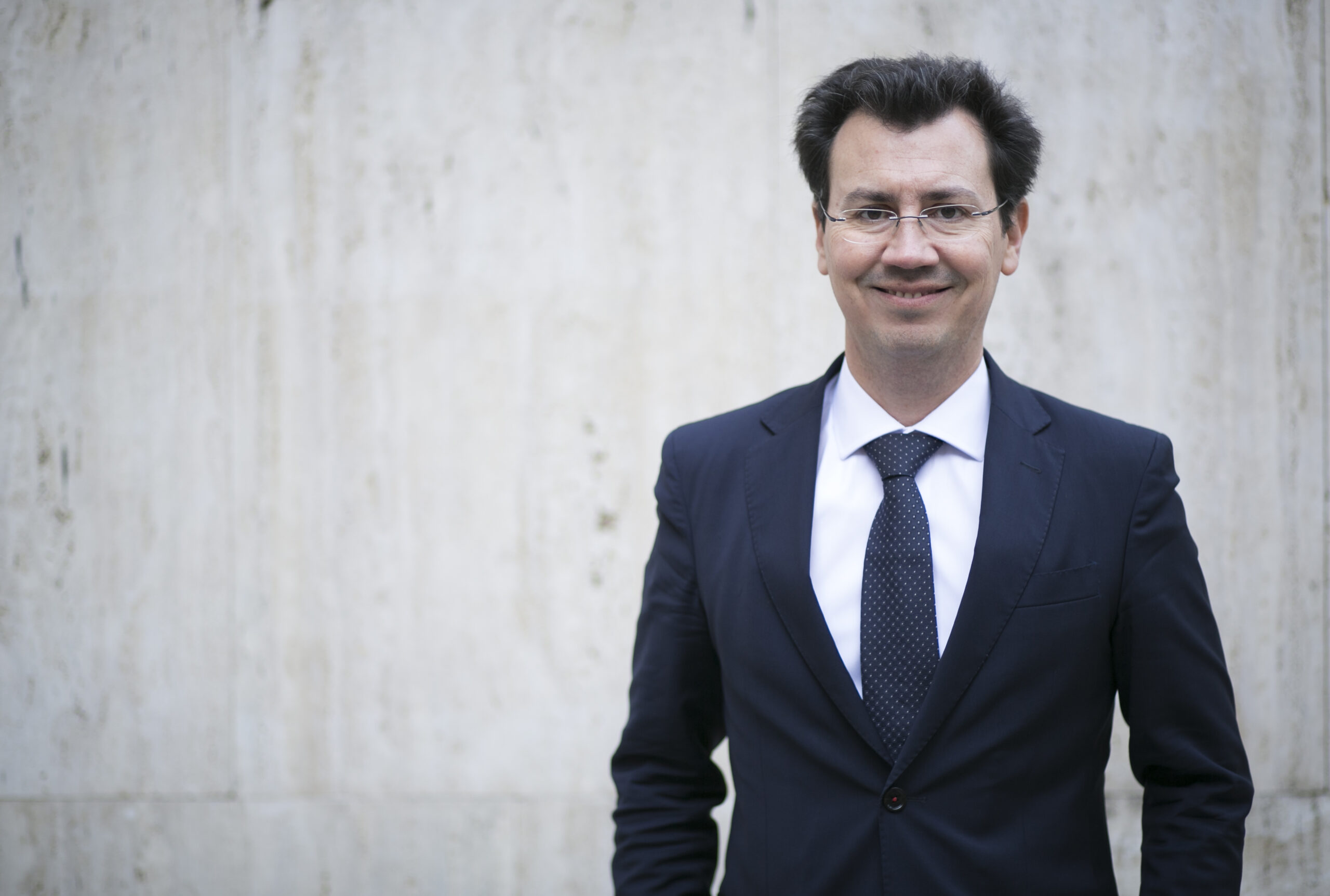
Someone recently remarked, in connection with the cultural events we organised through the Florida Chapter of CEIA (the Spanish and Ibero-American Arbitration Club) during Miami Arbitration Week, that there is always a “European touch” to everything I organise. We Spaniards attach great importance to food, to culture, to the historical heritage we take care to preserve, and to human relationships. That, I believe, is a very positive hallmark of our identity.
Isabel Fernández de la Cuesta
It always was. International arbitration by its nature requires understanding different legal systems, knowing how to work within them and managing very different perspectives, often within the same proceedings. Having studied in two countries, Spain and France, and practising in a third, the United States, gave me that perspective from the start. It never depended on the firm I worked for; it was mine from day one.
Today I sit as arbitrator in proceedings before arbitral institutions around the world, in both English and Spanish. In many of these cases the parties are looking specifically for someone who understands the different legal and cultural worlds involved without needing a translator, literal or figurative.
José Ignacio García Cueto
My Spanish nationality has not, in itself, become a differentiating factor. What does give me a distinct professional advantage is being a native Spanish speaker.
Aníbal Sabater
I don’t think there was a particular moment I could point to, and frankly it is not something that has concerned me. American society in general, and arbitration lawyers in particular, are a very eclectic group, with people from all over the world. At the firm there are days when you hear more Spanish, French or German than English. More than cultural background, the challenge is to stand out through the quality of your work and your team.
It is true that when you share a culture with the client or the counterparty it is usually easier to build bridges, but I have tried to maintain a global practice and not to confine myself to Hispanic clients or matters.
Andrés Arnaldos

To build a long-term career in the US, you have to accept that the first and most important thing is to do the best possible legal work. Without that, being Spanish or speaking the language is of no use, even if it helps a great deal on certain deals or in winning clients. I was fortunate always to work on matters where the Spanish connection was irrelevant, which meant I could never rest on my laurels. I always felt, and still feel, that I had to prove I was at least as good as, if not better than, any American lawyer who might be advising on the matter. That also means overcoming any inferiority complex about not being from here.
Taking stock: what they would tell their younger selves, and what they have now
Looking back, the word that recurs most is patience. García Cueto and Vallejo agree that careers move at their own pace and that early frustration comes from short-sightedness. Oliva stresses that not everything needs to be planned, and Fernández de la Cuesta advises against overthinking the decision to leave partnership. Arnaldos offers the most candid counterpoint: the move is worth it, but it involves personal sacrifices that, in his words, neither money nor prestige can make up for. In their present lives the professional and the personal sit side by side. Several speak of the families they have built in the United States, and Oliva and Vallejo admit they had not imagined that when they arrived.
Margarita Oliva Sainz de Aja
To the person I was the day before I left, I would say that you don’t need to have everything planned. I didn’t, and when I arrived in the US I thought that was a handicap. I had never intended to go into private practice, nor did I know whether I would like it; it was by trying things that I discovered what I wanted to do. Sometimes the best decisions come when you allow yourself to explore and do not worry too much about how things will turn out.
Today I have something I never imagined then: a family in the United States. Our life is very American, but with many European, and particularly Spanish, influences. I always try to take the best from every place I have known and lived in, and apply those lessons day to day, at work and at home. Every culture has its strengths; the key is knowing how to recognise and absorb them.
José Ignacio García Cueto
I would tell him to be patient. Mountains are climbed step by step, and every advance means waiting for the right moment. When you resume a career after several years practising in another jurisdiction, it is natural to feel some frustration at taking on tasks that, at first sight, do not seem to contribute to your development as a lawyer. Over time, however, you realise that this perception comes from a short-sighted view. Building a solid foundation as a jurist, a drafter and an analyst of case law makes you, in the long run, a more accomplished lawyer and a more rounded professional.
Damián Vallejo
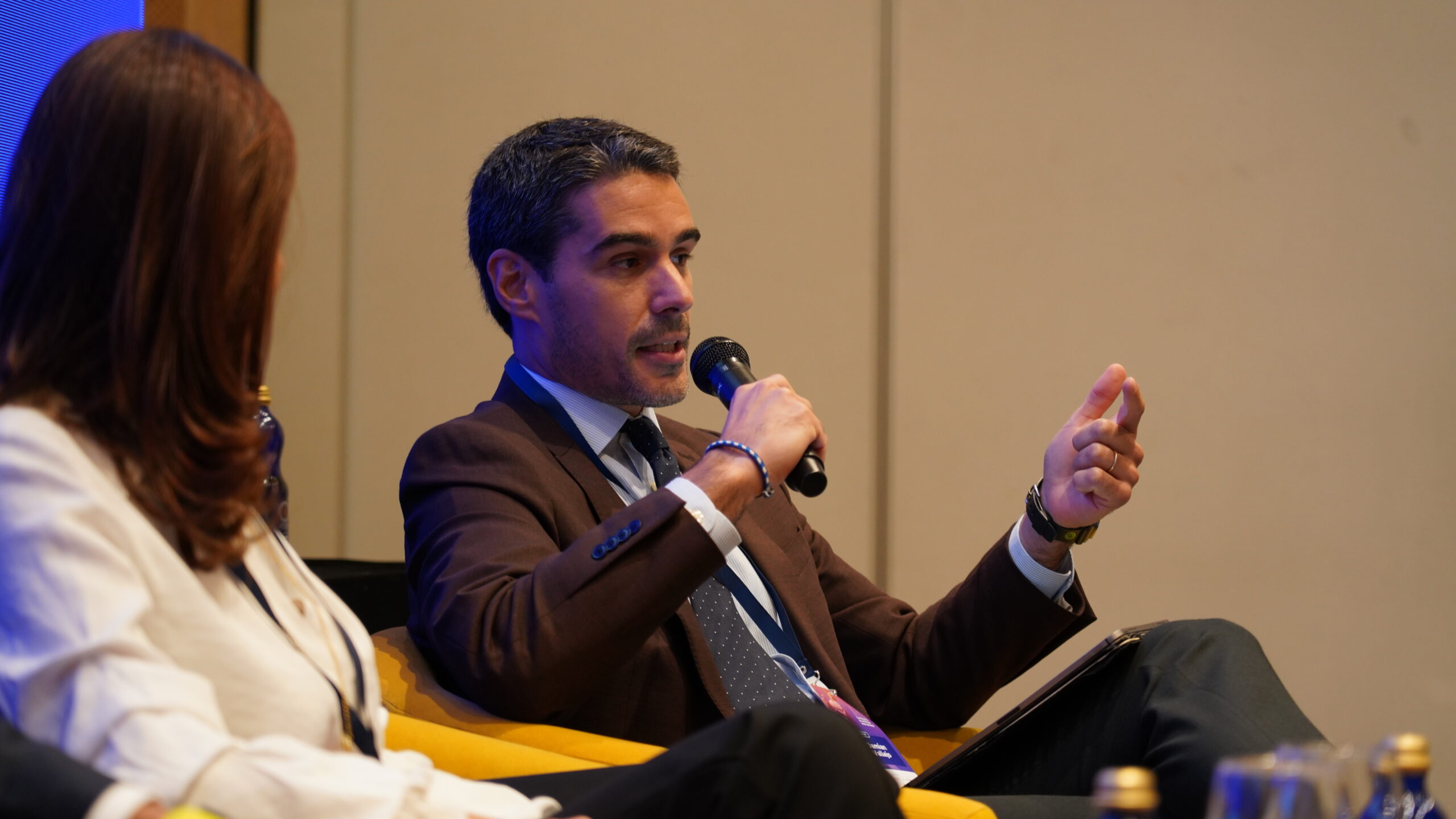
It may sound like a cliché, but two things: enjoy it and be patient. Enjoy every stage, which is often hard because we are focused on the end goal. But the journey is part of the process, perhaps the most important part, and it is where you learn. And be patient, because everything comes in its own time. Careers may move faster in the US, but our profession demands a certain amount of experience, and we have to give ourselves time to acquire it. I still tell myself both things today. There is a long way to go, and ours is a marathon, not a sprint.
As for what I have today that I did not imagine: when I came to the US more than eleven years ago, I did not imagine I would put down roots here and build a family, and a law firm, in Manhattan.
Andrés Arnaldos
I would say that building a career in the US is a challenge worth taking on and at times very rewarding, but that it also involves greater sacrifices than you can imagine, above all personal ones, which neither money nor prestige can make up for. For all the good things this profession and this country offer, you pay a real price for being far from home and from the people you love. Moving to the US is not a decision to take lightly and, in my view, working here should not be an end in itself.
Javier Fernández-Samaniego
On a personal level: however much parents want the best for their children, our dreams (our “American dreams” included) are not necessarily theirs, and we should not impose them. Professionally: however established you may feel when you arrive, if you are starting from scratch, you are starting from scratch, and that means studying local law from day one, even if you do not intend to practise it.
Today I have what I sensed then without knowing it: a personal brand, and the conviction that, whatever happens, making it here means I can make it anywhere. Always without forgetting that, as the French say, “pas sans effort”, and without resting on my laurels for a minute.
Aníbal Sabater
I would probably tell him that being in the United States has given me the chance to appear before people with far more varied legal philosophies and approaches than I ever imagined. The other day I did some calculations and realised that in the past three years alone I have appeared before arbitrators from fifteen countries on three continents. Each arbitrator has their own style and approach, and that forces you to think carefully about how to present the case so that it persuades someone whose way of approaching legal issues may be very different from yours. I think that is a fundamental difference from other places, where practice tends to be more regional and arbitration lawyers usually appear before arbitrators of a more uniform or predictable profile.
Isabel Fernández de la Cuesta

I would tell her not to overthink it: the decision was the right one, and what worried her most, setting up the whole structure alone and the uncertainty of the first few months, would turn out to be the easiest part.
What do I have today that I could not have imagined then? Time of my own, and the freedom to decide how to spend it: on the cases I accept, and on the arbitration community, through the vice-presidency of Atlas and the editorial board of Iurgium, out of conviction rather than obligation. They say that if you love what you do, you will never work a day in your life. More than three years on, I can say it is true.
José A. Morán
The sky is the limit. Victory is the will of the victor, and never give up.
Professionally, I particularly value the opportunity and privilege of finding solutions to complex legal problems for highly sophisticated clients who lead their sectors; the lasting relationships of trust I have built with them, many of which have become friendships; and an exceptional group of partners with whom I work every day, all year round and all over the world.
Personally, I have a wife and children who mean everything to me, true friends, and the mountains of Wyoming, which are my own fountain of youth.
Simón Navarro
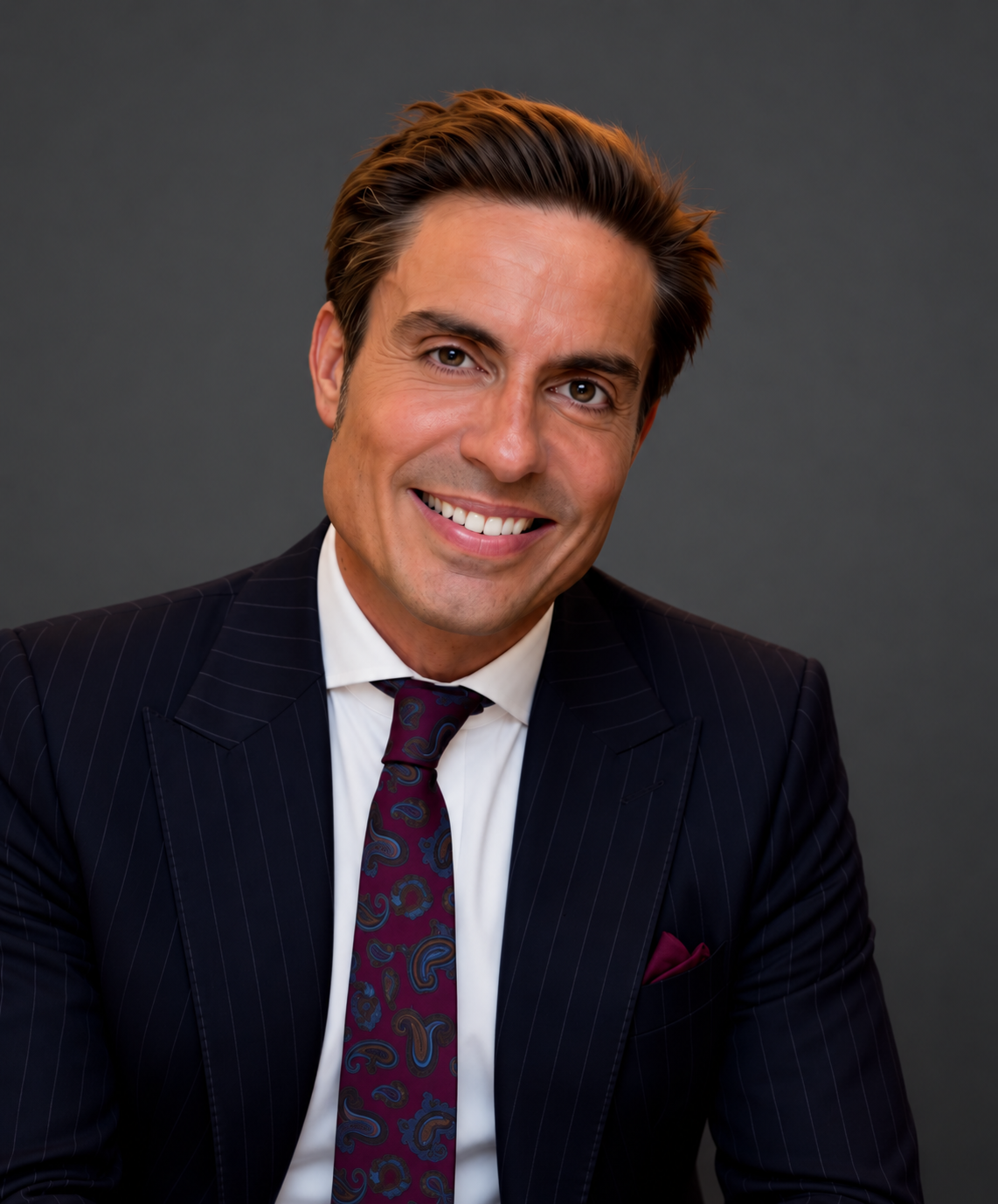
Life between two continents is enriching and rewarding, but it also breeds nostalgia. In the end your adopted country becomes your own, to the point where you live in a permanent state of longing: in the United States you miss Spain; in Spain you miss the United States. I think that is a good thing. It is part of the cultural and emotional richness that ties you to the places where you grew up.
Taken together, the two instalments amount to more than a collection of personal stories. The nine lawyers arrived with training and experience that opened doors, but their success depended on their ability to adapt their methods, make the most of the skills they already had and build a reputation in a particularly demanding market. For law firms and in-house legal departments on both sides of the Atlantic, their careers confirm a trend. As transactions and disputes increasingly cross legal systems, lawyers who can move between civil law and common law, and between business cultures, offer something distinctive. Whether that value is recognised, as several of them note, depends on the quality of their work and on their patience.