

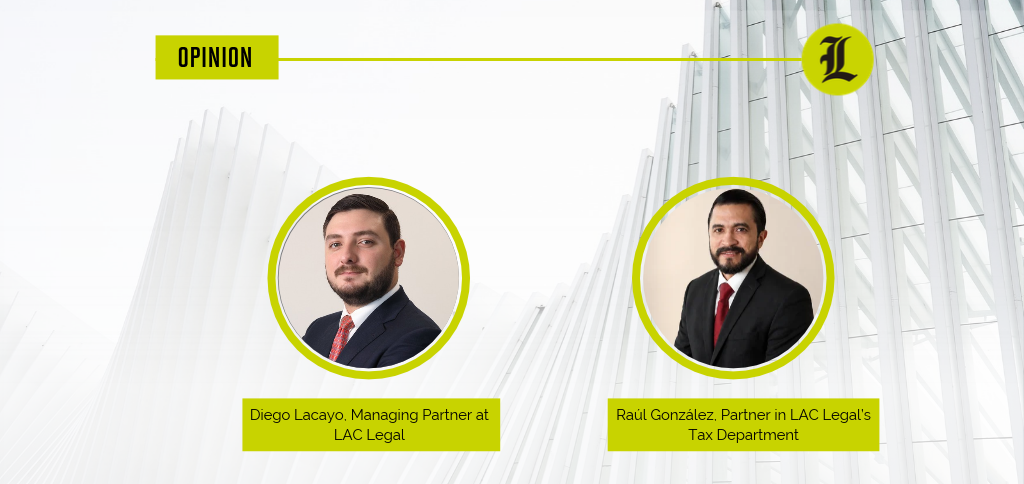
Por Diego Lacayo K. y Raúl González , LAC Legal
Panama enters a new phase regarding economic substance. Executive Decree No. 32 of 2026 regulates the provisions introduced by Law 526 of May 28, 2026, and specifies how certain Panamanian entities belonging to multinational groups must demonstrate their substance when receiving passive income from foreign sources.
For tax periods beginning on or after January 1, 2027, the analysis will go beyond the formal incorporation and maintenance of an entity. Groups must be able to explain what activities their entity carries out in Panama, what resources it uses, where decisions are made, and how all of this is documented.
Proportionality will be key
The new regime does not impose an identical structure on all entities. The sufficiency of resources will be assessed according to the nature, scale, and complexity of each activity.
An entity dedicated to holding shares does not necessarily need the same organization as one with more complex operations. But flexibility requires being able to justify why the available personnel, facilities, and expenses are adequate for the functions performed.
The question will not only be whether there is a presence in Panama, but whether that presence bears a reasonable relationship to the entity’s activity and income.
Decisions must have a real connection with Panama
For entities subject to the general regime, the regulations of Law 526 develop requirements relating to human resources and facilities, strategic decisions and risk management, as well as proportional operating costs and expenses.
The governing body must hold at least two meetings per fiscal period with physical presence in Panama and record the strategic decisions and the management of risks associated with the main activities.
These functions cannot be outsourced, delegated, or subcontracted. Suppliers located in Panama may support certain components, such as personnel or facilities, but cannot replace the effective governance of the entity.
A different treatment for holdings
Entities whose activity is essentially limited to the holding of equity shares or to the non-habitual acquisition, holding and disposal of real estate may opt for a simplified regime.
This distinction is relevant for corporate groups, family offices, and international asset holding structures. However, its application depends on the activities the entity actually performs. If it assumes functions that go beyond mere holding, it could be subject to the general regime.
Document throughout the year, not at year-end
One of the main challenges will be demonstrating compliance. The entities covered will be required to report information on their activities, personnel, facilities, outsourced services, decisions, risks, and expenses in their income tax return and attachments. Supporting documentation must be kept for five years at the entity’s Panamanian address.
Therefore, 2027 should be a year of continuous documentation. Meetings, decisions, services, and expenses must be documented as they occur. Attempting to reconstruct them at year-end can create difficulties that a timely review would have prevented.
The months leading up to 2027 offer multinational groups the opportunity to identify which entities are included, determine the applicable regime, and assess whether their operations and documentation support the substance they will need to demonstrate.
In short, the new standard requires providing evidence of what each entity does, what resources it uses, and where relevant decisions are made.
About the authors
Diego Lacayo K. is the managing partner of LAC Legal.
Raúl González is a partner in the Tax Department of LAC Legal.