
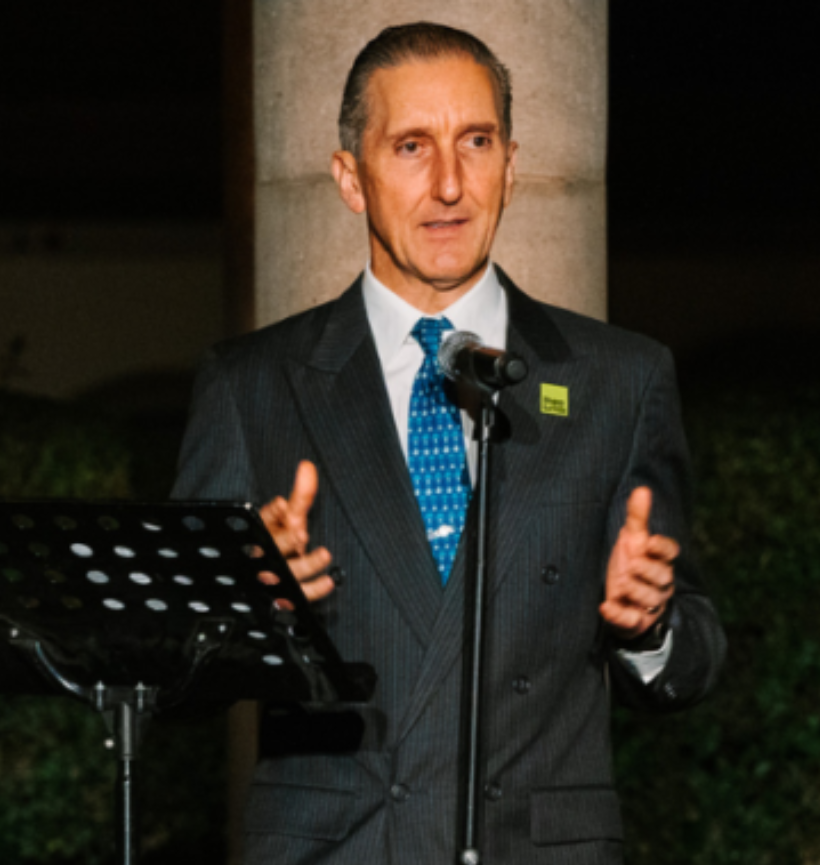
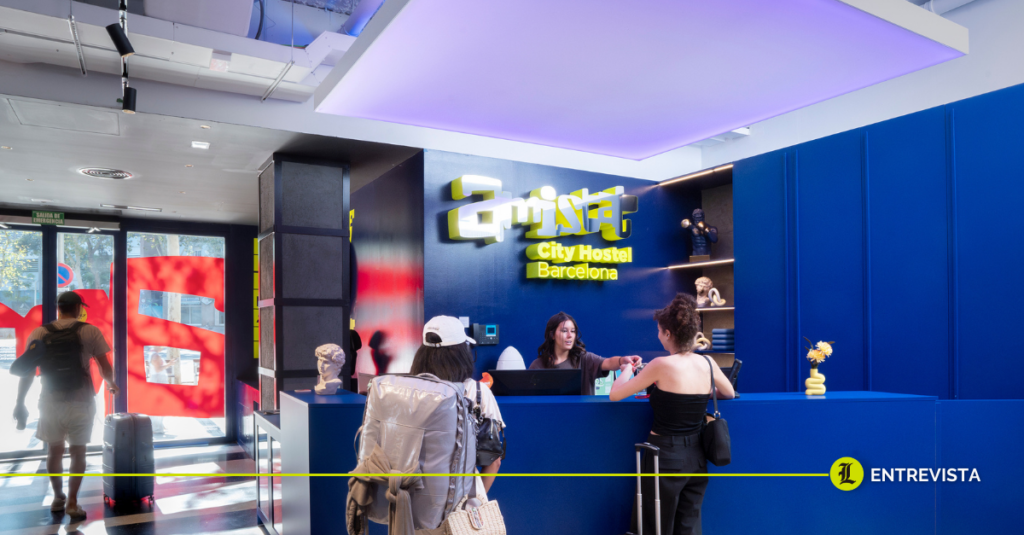
In the hospitality sector, the conversation no longer begins with design, ADR, or guest experience. It begins with the license. With the use. With the legal solidity that underpins the projected revenue flow ten or fifteen years ahead. In a context of regulatory reviews, moratoriums, and growing political scrutiny over urban accommodation, Santi Prat, CEO of Amistat Hostels, holds a clear position: without regulatory stability there is no sustainable investment, and without urban planning alignment there is no model that can withstand time.
Use as a Strategic Asset
Santi Prat does not speak of the Hostel as an alternative or generational product. He speaks of it as a legal and business category that must fit precisely within urban planning frameworks.
“A few years ago, due diligence focused on the physical asset and the financial snapshot. Today the first question is different: what legal stability supports the use that underpins those revenues and how might it change over the next ten years.”
This statement captures a profound shift in investor mindset. Regulation has ceased to be background scenery and has become the starting point. In cities where licenses are being reviewed or certain categories restricted, capital has understood that regulatory risk is not an exception — it is a structural variable.
“A license, when properly granted and compliant with current regulations, is a strong legal asset. It is not a precarious permit that can disappear overnight. But the framework can change, and that must be considered from the outset.”
In that context, the Hostel holds a clear comparative advantage.
“It is classified as traditional tertiary lodging use. It does not depend on hybrid interpretations. The discussion with the Administration is not about what you are, but how many, where, and under what conditions you may operate.”
And here he introduces the idea that underpins his entire vision: “Use matters almost as much as location.”
For decades, location was the dogma of real estate. Today, without legal stability, even the best corner can become a constant source of uncertainty.
Professionalization: The End of the Opportunistic Model
The regulatory transformation has coincided with a business transformation.
“The era of short-term speculative investment in tourist housing is over. The game is no longer about finding regulatory loopholes, but about building projects that make economic and urban sense ten or fifteen years ahead.”
For Prat, the difference between a professional operator and a fragmented owner is not merely one of scale, but of approach.
“A professional operator starts with structure, teams, processes, regulatory compliance, and long-term vision. It does not build from ‘how far can I push it,’ but from strict compliance.”
Professionalization is not aesthetic — it is structural. And the market is beginning to reward it.
The Economic Logic of the Modern Hostel
Beyond the legal framework, the model works because operations are finely tuned.
“The business begins with the bed, but it is consolidated through the experience.”
The bed sustains revenue flow. The experience generates repeat business and reputation. Profitability is built on that balance.
In most urban destinations, accommodation remains the primary revenue generator. F&B and events increase the average ticket and provide identity, but they rarely surpass beds.
The key lies in management. “In a 300-bed Hostel, every bed is a reservation. Revenue management is far more intense than in traditional lodging.”
Segmentation of typologies, group management, energy cost control, standardized processes, and applied technology make it possible to achieve margins that, from the outside, can be surprising.
“You don’t need to squeeze rates if you manage occupancy and costs properly. Efficiency is everything.”
Scale with Identity
Size is not a whim — it is operational balance. “Below 150–200 beds it is difficult to sustain 24/7 reception, community programming, and professional structure without straining the income statement.”
Between 200 and 600 beds lies the optimal point: enough scale to professionalize and distribute fixed costs, yet still with the capacity to design spaces that generate real community.
“You can create micro-worlds within the building. If you exceed a certain size, the risk is becoming a bed factory.”
Scale finances the experience; it does not replace it.

Madrid: Scale, Network, and Natural Bridge
When speaking about expansion, Santi Prat does not do so in cyclical terms. Madrid is not just another opportunity. It is a strategic piece within a network logic.
“Madrid is one of Europe’s great tourism engines and is experiencing its best moment in international visitors, spending, and city brand projection. For an urban product like ours, that is decisive.”
But the appeal goes beyond volume. Demand composition is what truly interests him. Madrid concentrates leisure, culture, international events, corporate business, and a growing flow of digital nomads.
“The 18–35 traveler today is not just looking for a room. They want a gateway to the city. They want community; they want to understand the environment from within. The Hostel plays a very natural role there.”
The third reason is the most strategic: Madrid as a transatlantic hub.
“Barajas is the great connection point between Europe and Latin America. Many routes between both continents literally pass through our doorstep.”
For a brand that shares language and culture with Latin America, that position is a structural advantage. It allows the capture of Latin travelers, understanding their patterns, and projecting the brand toward future opportunities across the Atlantic.
“Madrid is the perfect place to welcome that Latin traveler, understand their needs, and at the same time project the brand toward future opportunities across the Atlantic.”
Expansion is not accumulation.
“We do not want isolated Hostels. We want to build a true accommodation club across different Spanish and European cities. So that travelers recognize us and feel comfortable choosing Amistat at every stop.”
The ambition is continuity of experience.
“We want to be their third home. To accompany them throughout the journey and, when they look back, for the overall experience to have been coherent and clearly superior to their expectations.”
Ibiza: Competing Without Imitating
If Madrid represents scale and network, Ibiza represents positioning. “In Ibiza we play a different game. We do not try to copy traditional hotels. We offer something different.”
On an island dominated by luxury and premium hospitality, Amistat occupies a complementary space. “We address those who want to fully experience the island but not necessarily pay for it like a resort. Young, creative people who prioritize atmosphere and human connections.”
Competition is not for material luxury, but for experiential intensity.
“We do not compete for the most expensive pool, but for being the best place to start the day and the night.”
For Prat, diversifying formats brings order to the destination. “Ibiza cannot live off a monoculture of luxury. It needs coherent alternatives.”
2035: From Alternative to Urban Infrastructure
When projecting the model toward 2035, he leaves short-term thinking behind and speaks in terms of urban systems.
“I see Hostels as a key piece of urban infrastructure, not as a cool niche within tourism.”
The format will evolve: more privacy, more technology, greater service integration. But it will remain community-based.
“It will be a hybrid between accommodation, social space, and service platform. Sleeping, working, connecting, and living the city from the same place.”
The thesis is demographic and cultural. Generations prioritizing experience over ownership. Constant mobility. Remote work. Need for community.
“A well-designed Hostel combines density, competitive operating costs, and structural demand that will still be there in 2035.”
From a capital perspective, the appeal is evident: efficient land use, scalability, and clear regulatory fit. And the legal axis prevails once again.
“Many cities will need products that organize tourism within specific and regulated infrastructures. When that happens, the Hostel will cease to be alternative and become systemic.”
On that horizon, the question will no longer be whether the format is attractive, but whether it is correctly integrated into urban planning and city logic.
For Prat, expansion is not about growing in square meters. It is about consolidating a category that, when well regulated and well operated, can become one of the most solid assets of the new urban cycle.
“`