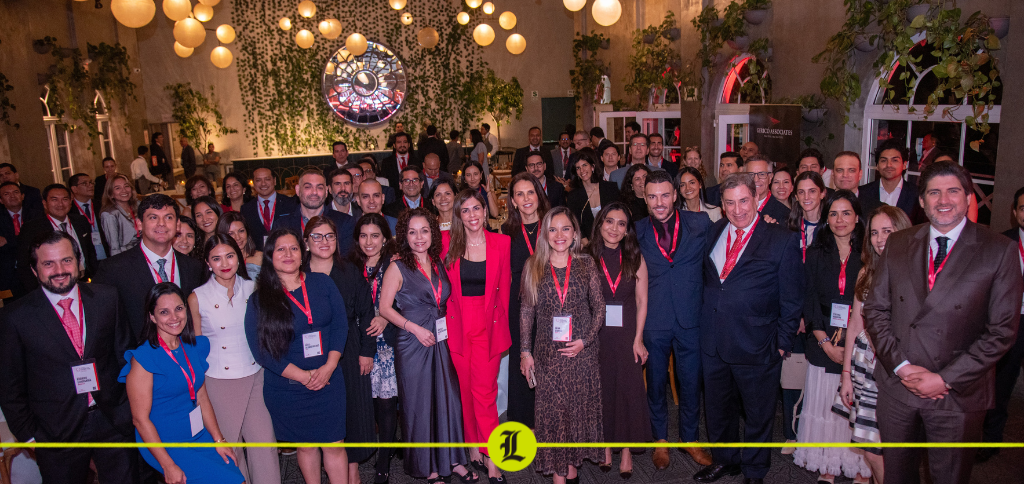

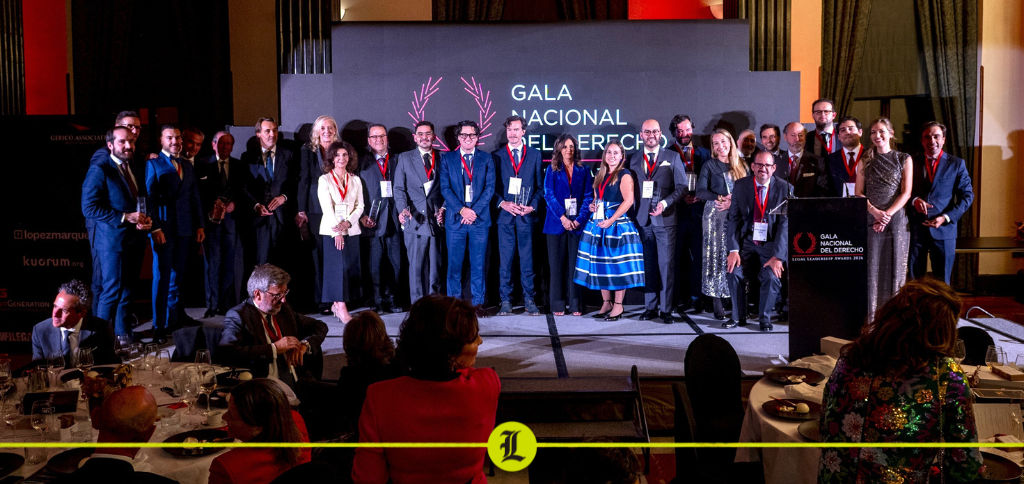
Gericó Associates held its National Law Gala on November 5th, where the Legal Leadership Awards 2026 were presented—the first edition under its new name. The awards recognize firms, legal departments, and professionals who are shaping the future of the legal sector in Spain and Latin America.
The gala, hosted by Diana Jennen, partner at Gericó Associates, was opened by Mabel Klimt, a member of the Governing Board of the Madrid Bar Association. “Leading also means setting a course that others can follow,” she stated. “The legal profession has evolved, and law firms today face the same challenges as other organizations. But it is important to remember that our profession has a defining characteristic: we work with the law and with interests, but above all, for people.”
Gericó Associates took advantage of the gala to celebrate its 15th anniversary with the presentation of its new logo and corporate identity.
During the evening, Marc Gericó, Global Managing Partner, and María Sol Rubio, a partner at the firm, also presented a collaborative book coordinated by Gericó Associates in which the jury’s legal directors share their vision of the role. “Institutionalization has advanced extraordinarily in law firms and legal departments. That’s why it’s so important to build bridges of dialogue: the market is about conversations, and in those conversations we must listen to the needs and challenges of our clients,” explained Marc Gericó. María Sol Rubio described it as “a pioneering project that brings together the experience of leading legal directors from Spain and Latin America.”
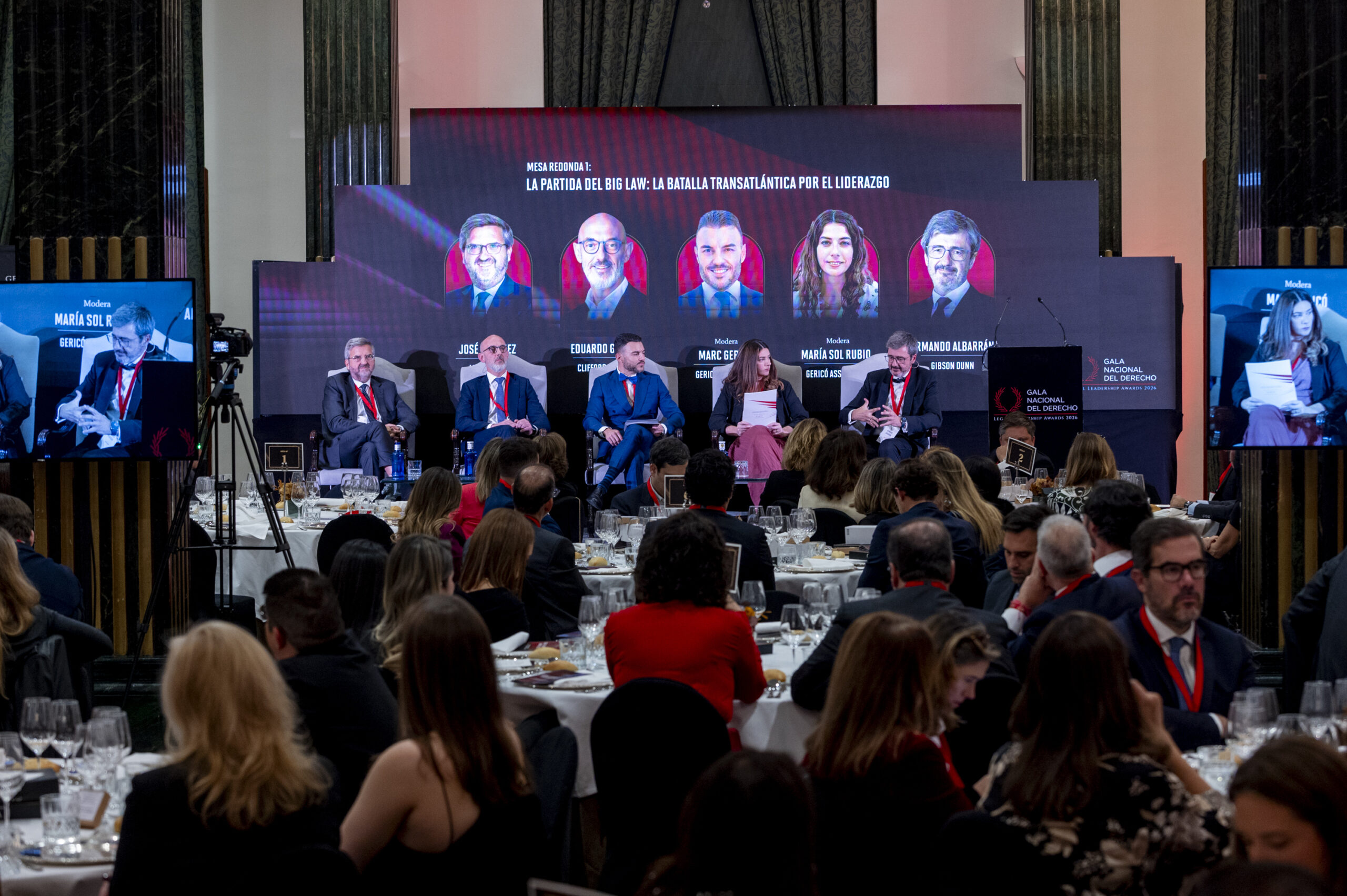
The first round table, moderated by Marc Gericó and María Sol Rubio, brought together José Giménez, National Managing Partner of Linklaters; Eduardo García, Office Managing Partner Spain of Clifford Chance, and Armando Albarrán, partner of Gibson Dunn Spain, to analyze the competition between British and American firms.
All three agreed in rejecting the idea of a battle. For Armando Albarrán, “the legal market is not a single entity; there are many: not all jurisdictions are the same, and within them, there are different markets.” He did acknowledge, however, that “American firms have been more successful in entering Europe than European firms have been in the American market.” Eduardo García emphasized that US firms “are agile in making investment decisions” and argued that European firms “should not copy them, but rather learn from them.” José Giménez framed it as “a race of business models and strategies” in which the real competition is “being top of mind for General Counsels in order to participate in the deals that truly move the market.”
Regarding the importance of technical excellence versus the platform itself, Eduardo García was clear: “Technical excellence is the gateway. The global platform has a multiplier effect.” Albarrán added, “This is a people business: you can have a fantastic platform, but without a relationship of trust, it’s difficult to close a deal.”
In the war for talent, Armando Albarrán acknowledged that “money can be decisive, but sometimes it’s not about money, but about who is doing things better. I like to think that people move because they like the project.” Eduardo García pointed to a convergence between the American and British models in terms of compensation, technology, and governance, “which doesn’t mean homogenization, because we come from different perspectives and each will learn from the other.”
Looking ahead to the next ten years, José Giménez concluded that the sector “will continue to be a people business, based on customer relationships and talent,” while Albarrán predicted that “the market will concentrate on four or five global firms.”
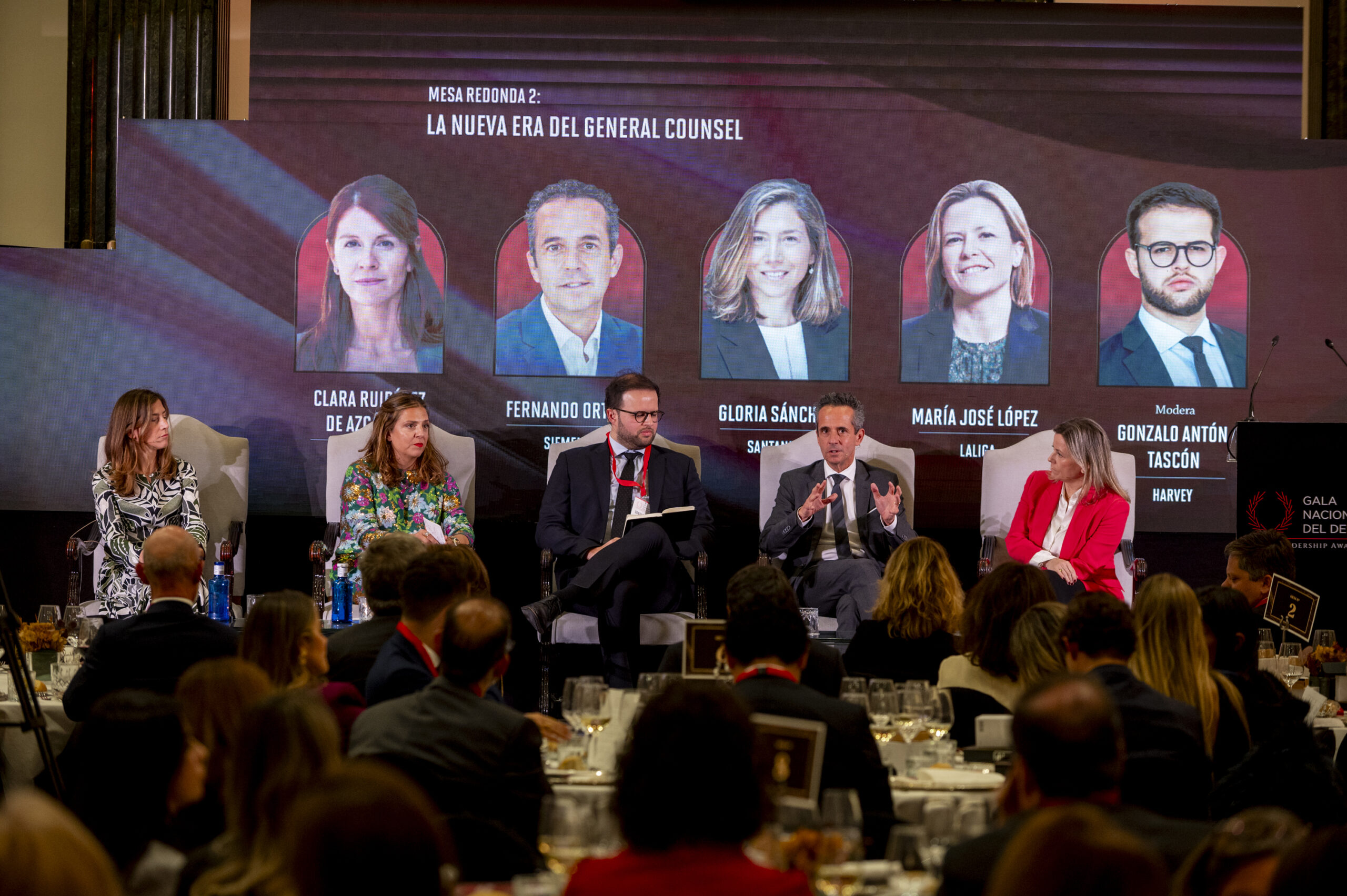
The second panel, moderated by Gonzalo Antón Tascón, Legal Engineering Manager EMEA at Harvey, included Fernando Ortega, Board Member & Company Secretary and general counsel for Spain and Portugal at Siemens; Gloria Sánchez, Group Chief Data and AI Officer at Banco Santander; María José López Lorenzo, legal director of LALIGA; and Sara Molina, partner at Pérez-Llorca.
María José López Lorenzo emphasized that “the key lies in identifying business opportunities and being present where decisions are made. To achieve this, it is essential to understand the business, grasp its needs, and address problems quickly and pragmatically.” She also argued that the General Counsel must “even deliver bad news, explain the risks, and be involved in decision-making,” without ever losing “their intelligence and independence.”
Fernando Ortega asserted that “a good general counsel is addictive” and reflected on uncertainty: “We can’t know for sure what will happen after each decision, but we have to make them and assume that we can always adapt.” He added: “No matter how much technology we have, a person will still be a person. The fundamental element in our professional relationships remains trust.”
Sara Molina explained that clients are already demanding transparency from law firms regarding the use of artificial intelligence: “They ask us what tasks we perform with AI, how many hours it saves, which lawyers use it, and how it benefits the client.” She added that “the true value of a lawyer lies in understanding risks, anticipating problems, and contributing to their effective resolution.”
For Gloria Sánchez, “it is essential to have a clear company strategy, but knowing it is not enough: you have to be able to act, make decisions and make things happen.”
The award winners
The jury, composed of 60 general counsel and legal journalists, deliberated in an independent process, the voting of which was certified by Kuorum. This year’s winners are:
– Professional Career Achievement Award: Almudena Arpón de Mendívil, partner at Gómez-Acebo & Pombo and Honorary Life President of the International Bar Association (IBA).
– Managing Partner of the year: Fernando Vives, executive chairman of Garrigues.
– Legal Director of the Year: Dorleta Vicente García, Director of Legal and ESG Affairs at Ecoembes.
– Firm of the year: RocaJunyent (Spain, Band 1), CECA MAGÁN Abogados (Spain, Band 2) and Martínez Quintero Mendoza González Laguado & De La Rosa (Latin America).
– Mejor Boutique Legal: ECIX.
– Business model transformation and applied AI: ECIX (Spain) and Hogan Lovells Cadwalader (Latin America).
– Most attractive firm for talent: CECA MAGÁN Abogados (Spain) and Payet, Rey, Cauvi, Pérez Abogados (Latin America).
– Best Marketing, Communication or BD Strategy: Communication or BD: Grant Thornton (Spain, Band 1), the Madrid Association of Family and Childhood Lawyers, AMAFI (Spain, Band 2), and PPU (Latin America).
– Best legal startup with AI: Prudencia.ai.
– Practice Leader of the Year: Carlos Alberto Saiz, from ECIX (Spain), and Mauricio Olaya, from Estudio Muñiz (Latin America).
– Best Marketing, Communication or Database Director: Miguel Verger, from Linklaters (Spain), and Ana López Pariente, from Galicia Abogados (Latin America).
– Legal Department Transformation of the Year: Insulet (Spain) and Ericsson Latam North & Caribbean (Latin America).
– Rainmaker Lawyer of the Year: Carlos Alberto Saiz, from ECIX (Spain), and Carlos R. Olarte, from OlarteMoure (Latin America).
– Best in-house legal advice: Iberdrola (Spain).
– Best internal legal management: Ericsson Latam North & Caribbean (Latin America).
– Best legal journalist: Álvaro Zarzalejos, head of El Confidencial Jurídico.
In addition, Gericó Academy awarded the Academic Excellence Award of its Next Generation program to Luis Alejandro Quintero Sáenz, from Q&Q Legal, as the best student of the 2025-2026 graduating class.
The Legal Leadership Awards 2026 were sponsored by Harvey, MyShelfCo by Auxadi, The Legal Headhunter, Burford, Palomino Flores Hernández Rodríguez Abogados, lopezmarqués, DiliTrust, CECA MAGÁN Abogados, Prudencia.ai, Kuorum and maite, and supported by the Madrid Bar Association.