

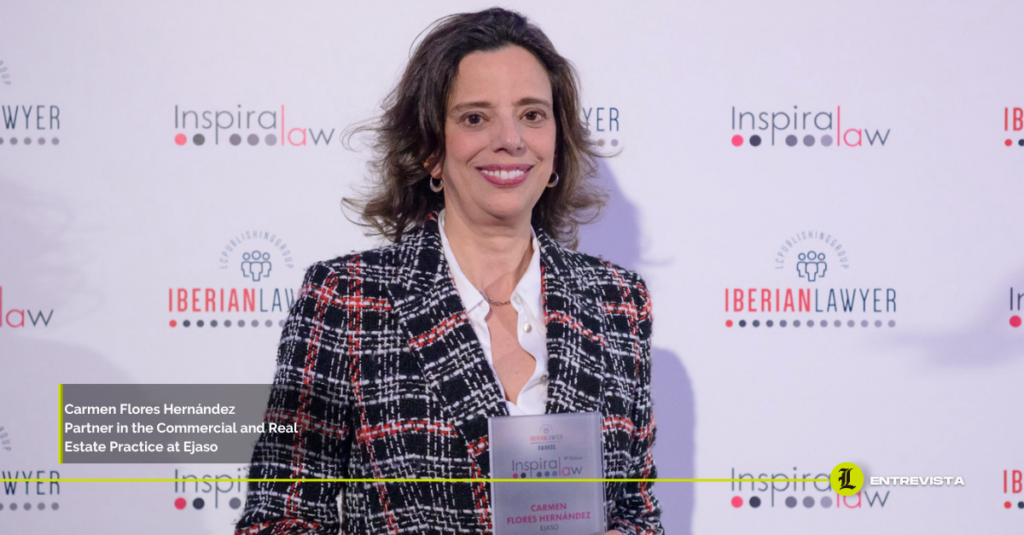
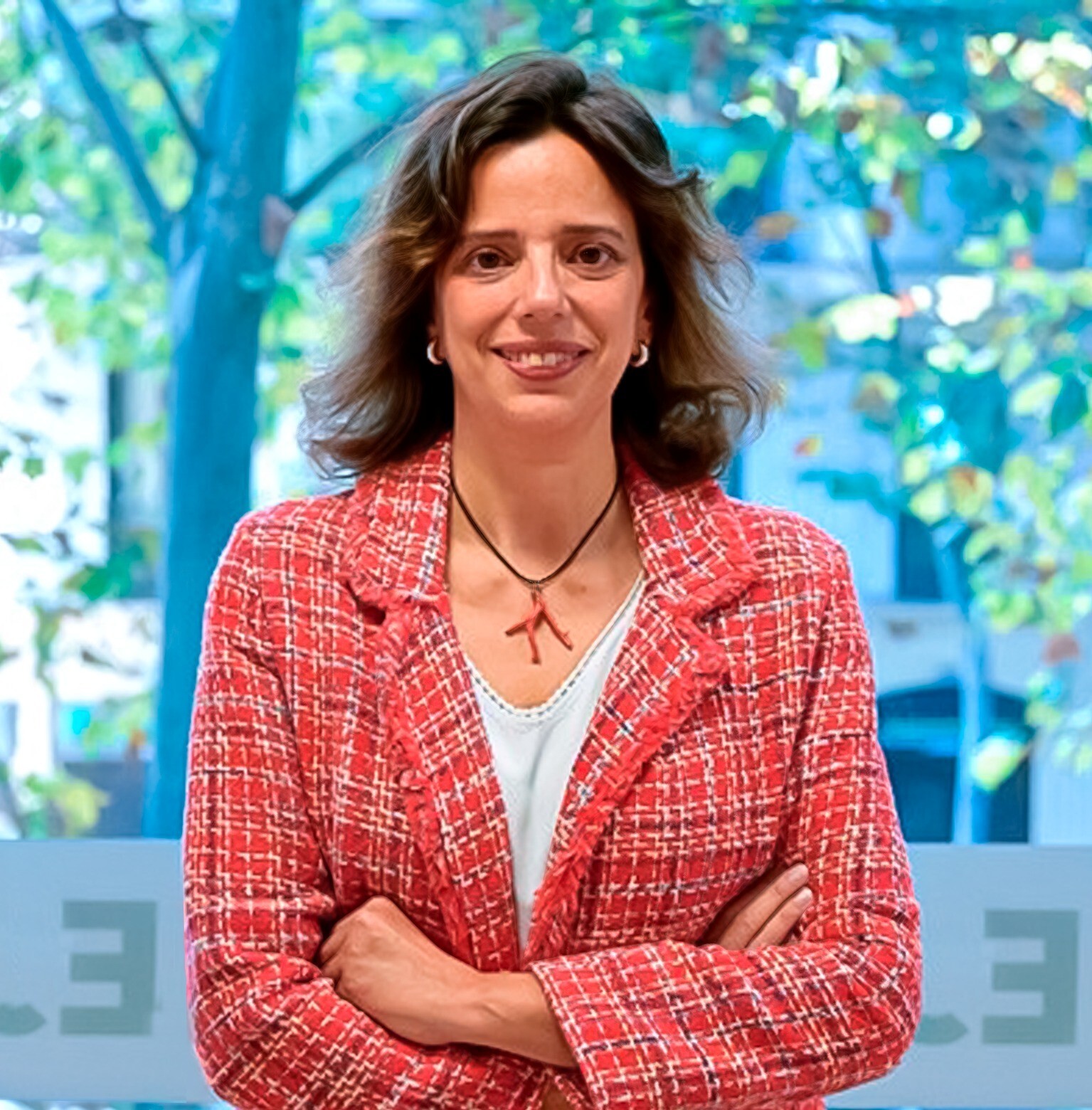
Carmen Flores Hernández has built her career on an idea that transcends the purely legal: understanding law as a tool for organizing complexity and making decisions with real impact. A partner in the commercial and real estate department of Ejaso, her vision combines technical rigor, strategic judgment, and a clear understanding of how leadership in the legal profession is evolving.
From analysis to the human dimension
His choice of law wasn’t immediate. For a time, he hesitated between architecture and law, two paths that share an analytical foundation. However, one element tipped the scales: the possibility of intervening in real-world problems.
“The possibility of solving complex problems, ordering conflicting interests and providing legal certainty using rigorous technical tools was what finally convinced me,” he recalls.
Over time, that initial intuition has evolved into a way of practicing law. For Carmen, the legal profession is not limited to interpreting rules, but involves structuring complex situations where interests, risks, and decisions coexist.
Hence his definition, which functions almost as a declaration of principles: “law allows me to apply structured thinking to solve real problems of people and organizations.”
The foundation that supports everything
In his view, professional growth begins with one non-negotiable element: technique. But it doesn’t stop there.
“Credibility in our profession is earned through rigor, preparation, and perseverance,” he states. Building on this foundation, he introduces a second layer that makes all the difference: the ability to communicate, understand the context, and manage.
This is where a key idea emerges: the lawyer who evolves is one who transcends the purely legal and develops a strategic vision. In other words, someone capable of connecting regulatory analysis with business and people.
She also emphasizes understanding a career as a long-term process. It’s not a linear path that requires taking on more intense phases, especially when combining professional and personal responsibilities, but today there are better tools to make it sustainable.
Reconciling is also leading
When she looks back, she doesn’t focus on specific milestones, but on a structural challenge that marked her career: work-life balance.
“The most significant challenge was balancing demanding professional responsibilities with family life at a time when work-life balance policies were not as developed as they are now.”
His interpretation is not static. He acknowledges that the context has changed—driven by greater social awareness and technology—and that today it is possible to better integrate both dimensions. The pandemic, in particular, demonstrated that performance is not necessarily linked to physical presence.
In that process, there are qualities that he identifies as determining factors: discipline, consistency, resilience and, above all, the ability to maintain focus in the long term.
Redefining Success
One of the turning points in his discourse appears when he talks about success. Far from a traditional view, he proposes a clear redefinition.
“Success is no longer defined solely by technical or economic results,” he explains. Without diminishing their importance, he introduces variables that are now crucial: the impact on teams, client relationships, and the contribution to the firm’s culture.
This perspective shifts the focus from individual achievement to a broader logic, where leadership also involves creating an environment, developing talent, and maintaining coherence between the professional and the personal.
Along those lines, he adds a relevant nuance: he considers part of success to be contributing to the full development of talent – regardless of gender – within the organization.
Talent without gender, but with challenges
The advancement of women in the legal profession is presented in her reflection from a balanced perspective. She acknowledges the progress made, but also the gaps that still persist, especially in leadership positions.
That’s why he sends a clear message to the new generations: don’t limit your aspirations and take an active role in that change.
“Talent has no gender,” she says, but emphasizes the importance of aspiring to positions of responsibility and contributing to a real transformation of the sector.
At the same time, he finds reasons for optimism in the new generations, who – he observes – more naturally integrate principles of equality and co-responsibility.
Continue growing in an environment that doesn’t stop
What continues to motivate her has less to do with her current position and more to do with the environment in which she operates. Commercial and real estate law, her areas of specialization, are constantly evolving, requiring continuous professional development and a strategic vision.
Added to this is a broader evolution of the sector: more flexible organizational models, greater female presence in decision-making positions, and a progressive cultural change.
In that context, continuing to grow means taking on new challenges, leading responsibly, and helping to reduce the barriers that still exist.
In the career of Carmen Flores Hernández there is a clear consistency: understanding law as a discipline that goes beyond the norm.
Structuring, deciding, supporting. That is the true thread of her career. And also, perhaps, the most accurate way to describe where the profession is heading.